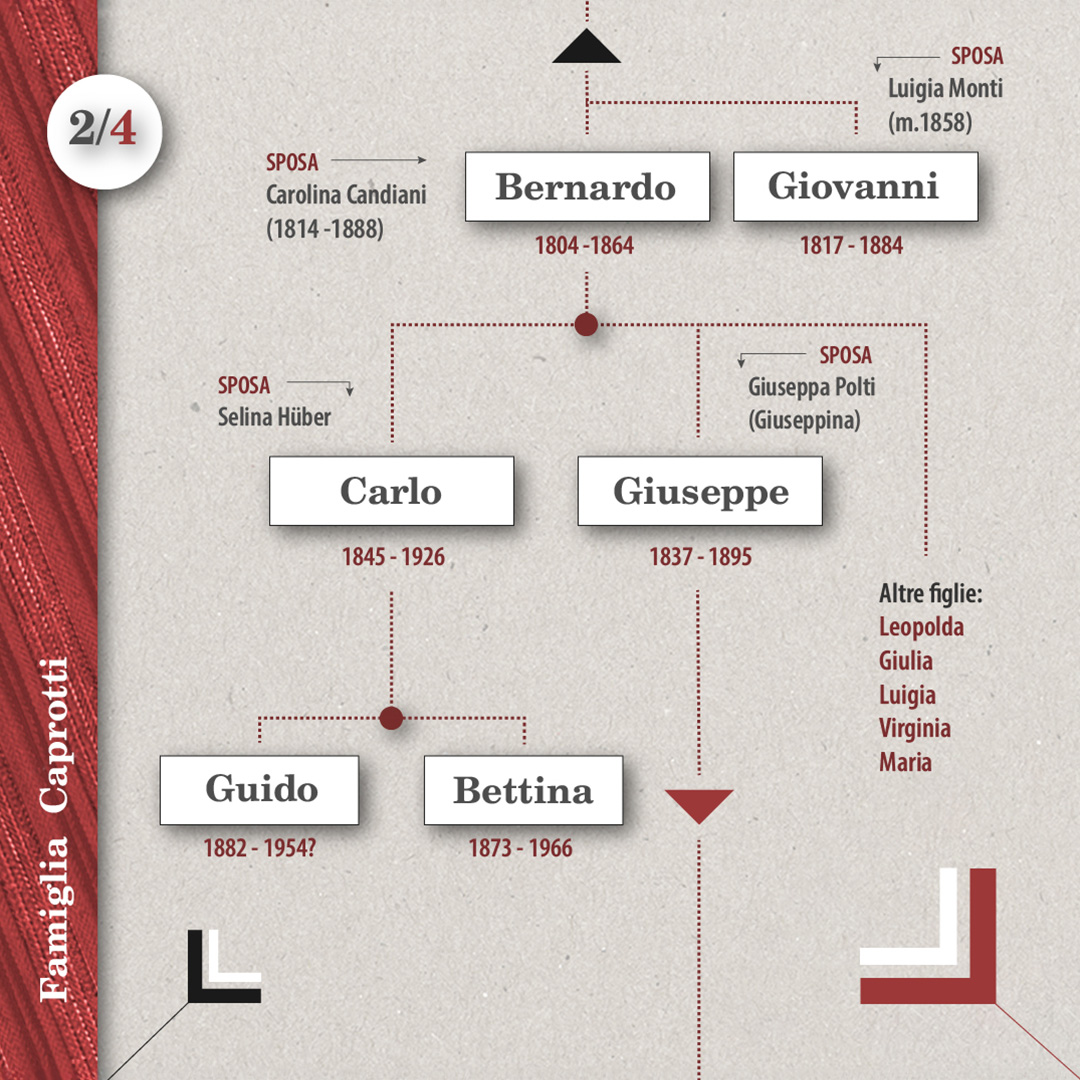
“In that same year [1859] Giuseppe, whom his brother Carlo calls Beppo (and he is my great-great-grandfather), enlists in the army and, appointed second lieutenant, is transferred to Imola along with the battalion of the National Guard of Monza. At the time Carlo was too young to contribute to the Unification of Italy but, with the Third War of Independence of 1866 against Austria, he too did not hesitate to leave as a volunteer. He wanted to join Garibaldi’s retinue but was eventually admitted to a regiment of hussars. In his letters to his brother, he expresses warlike intentions, writing that he wants to ‘visit those wicked gentlemen of the Austrians to make them taste the edge of the sabre that I now hold tightly in my fist’. However, the war lasted too short a time, and Carlo spent it entirely as a warehouseman in an army depot in Voghera where, he told Giuseppe in lines full of disappointment, his comrades fell not to enemy bullets but to disease: ‘If I cannot offer my blood to the fatherland, I suffer so much morally that I am almost driven to despair’. Giuseppe and Carlo found consolation by developing the business they had inherited from their father, which they expanded more and more by launching a capillary mechanisation project.(…)”. (Caprotti, The Bones, p. 23).
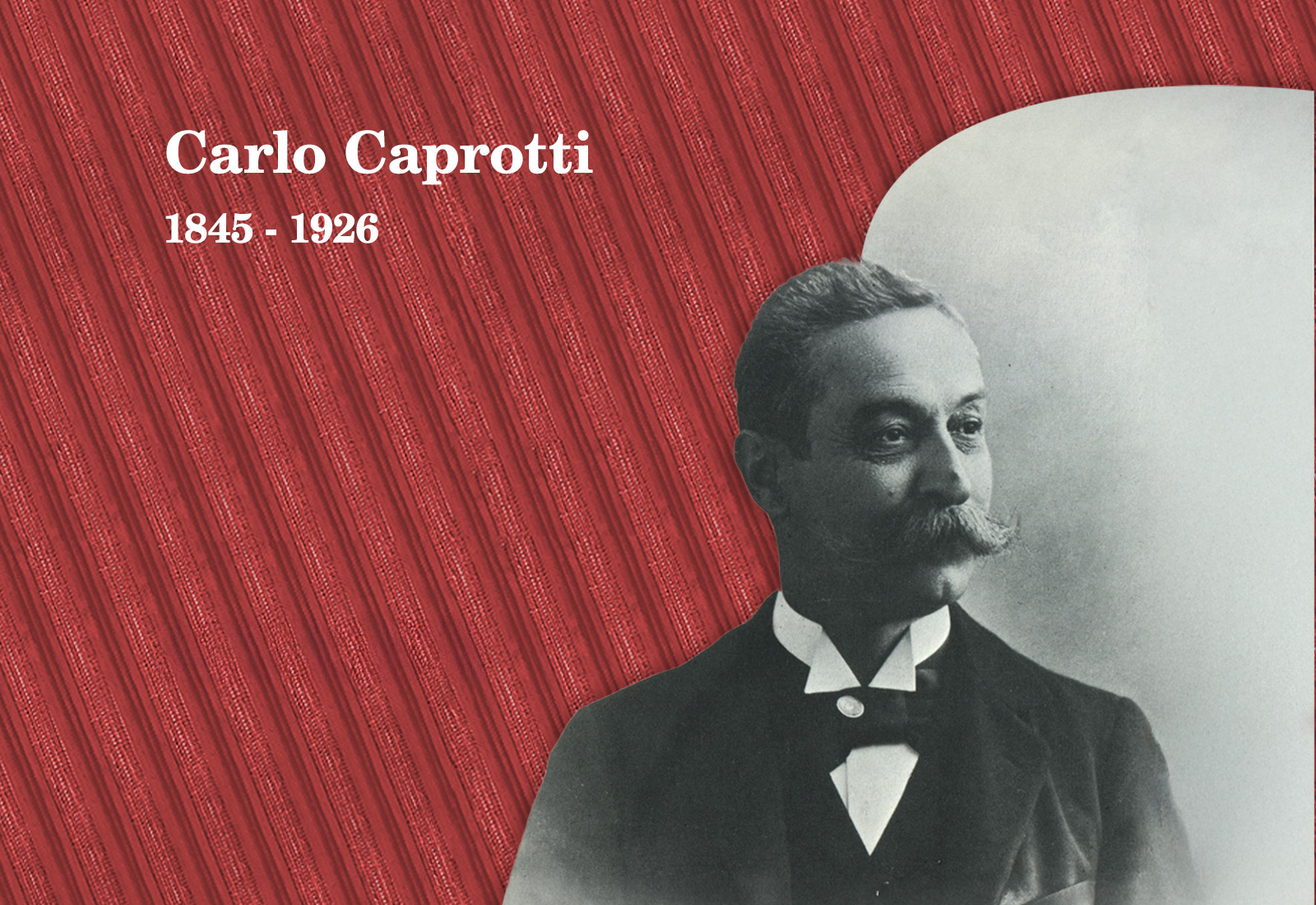
“(…) Carlo (…) will (…) have time to carve out a role of some importance in the events of the end of the century. He is certainly the most political spirit in the family. (…) In the course of his life (…) he developed inclinations such as a love of freedom and progress, anticlericalism, and contempt for the most fossilised traditions. It was these impulses that led him, in 1897, to join the Republican Party: a choice that, in the Kingdom of Italy and the Savoy, could lead to considerable trouble. (…) That year Carlo stood for election as a candidate in a constituency between Bergamo and Lake Iseo, where twenty years earlier he had started a cotton weaving mill. The programme is strongly libertarian and democratic but, strange to say for an industrialist, poor in economic proposals. He is elected neither this time nor at his second attempt, in 1900. Dramatic events occur in between. In 1898, in fact, General Bava Beccaris’ cannon shots bloodily suppressed the popular riots that had broken out in Milan. Carlo joined the Central Committee of the Republican Party. His proclamations aimed to inculcate in the population the right to disobey the king’s unjust decrees and to resist the illegalities of those in power. He does not mince his words: he denounces ‘an unconscionable government, without identity and scruples, enslaved to men of the shadiest reaction’; he wants more public education so that ‘the shame of the nation of illiterates no longer weighs on Italy’; he opposes colonialism that has ‘plunged so many mothers and wives into mourning and bled the state’s finances’. In order not to be affected by the police measures that followed the uprising and to escape the sentences imposed on his party members by the military courts, he was forced to take refuge in Germany. Together with him, his nephew Bernardo, my great-grandfather, escapes. In the meantime, he has married his first cousin Bettina, Carlo’s own daughter. Bernardo was also a member of the Republican Party and had a close and friendly exchange of letters with the deputy Luigi De Andreis, one of the most active members of the party, who was sentenced to prison on charges of being among the organisers of the Milan riots. (…)’ (Caprotti, Le ossa, pp. 26-27).
Carlo Caprotti was certainly the Caprotti with the most ardent spirit, and with enthusiasm that went far beyond the walls of the Albiatese factory. Whatever enterprise he embarked upon, he always threw himself heart and soul into it, whether it was his libertarian passions, his political commitment, his marriage or the fortunes of his factory.
Sources:
Albiate (MB), Villa San Valerio, Villa San Valerio Archives, Giuseppe Caprotti Factory Archives, Giuseppe Caprotti Archives (1837-1895).
Bibliography:
G. CAPROTTI, ‘Le Ossa dei Caprotti. Una storia italiana’, Milan, 2024/3.
R. ROMANO, “I Caprotti. L’avventura economica e umana di una dinastia industriale della Brianza”, Milan, 1980.
G. CAPROTTI, “Mostra: la meccanica della Manifattura Caprotti“, 09/10/2024.
ID., “La famiglia Caprotti, innovazione e tradizione in una manifattura italiana: Albiate e la Svizzera“, 09/10/2024.
ID., “La famiglia Caprotti, innovazione e tradizione in una manifattura italiana: operai dal prigione di San Vittore“, 13/10/2024.
E. SÀITA, “I Caprotti : private aspects, from the Risorgimento to the Second World War“, 08/11/2022.