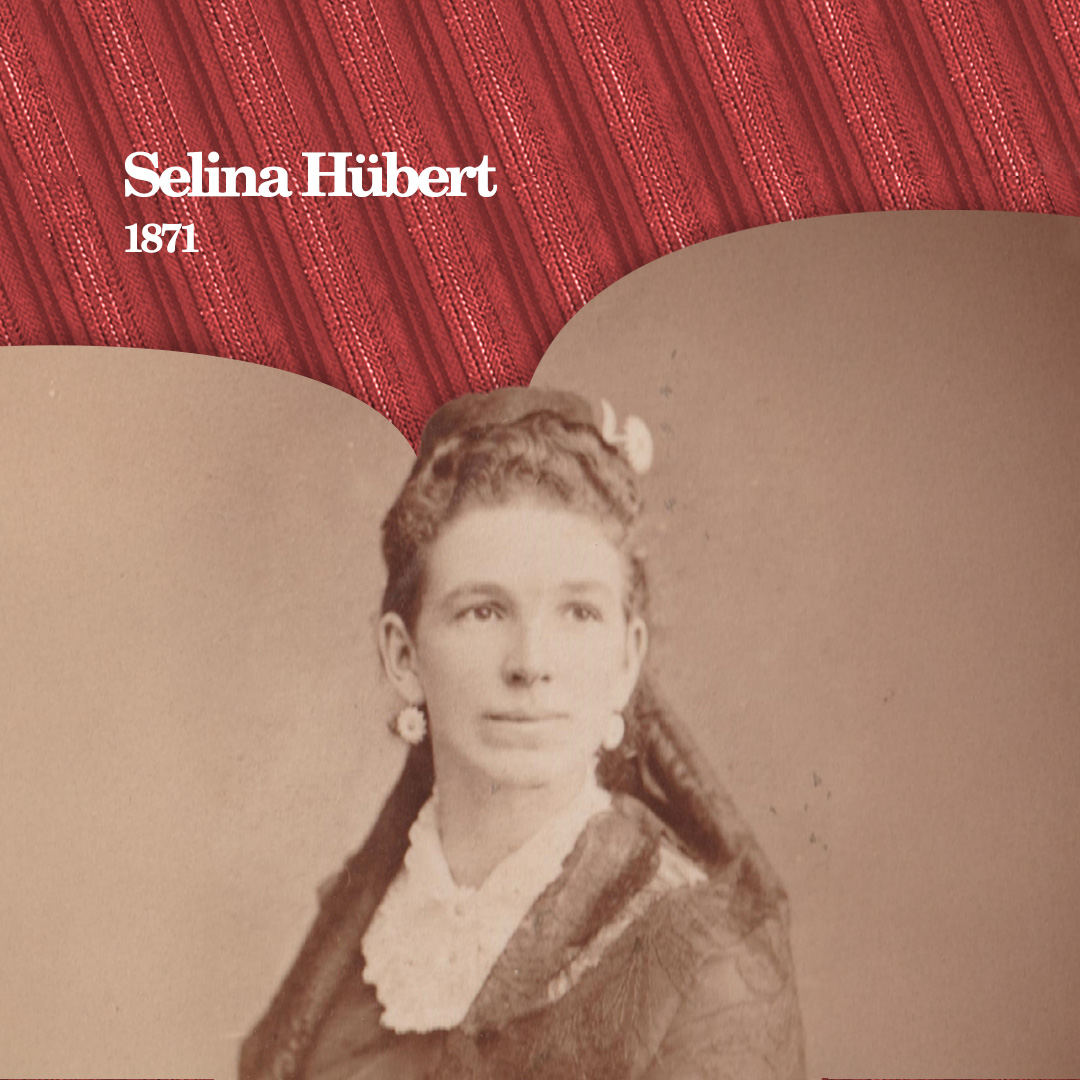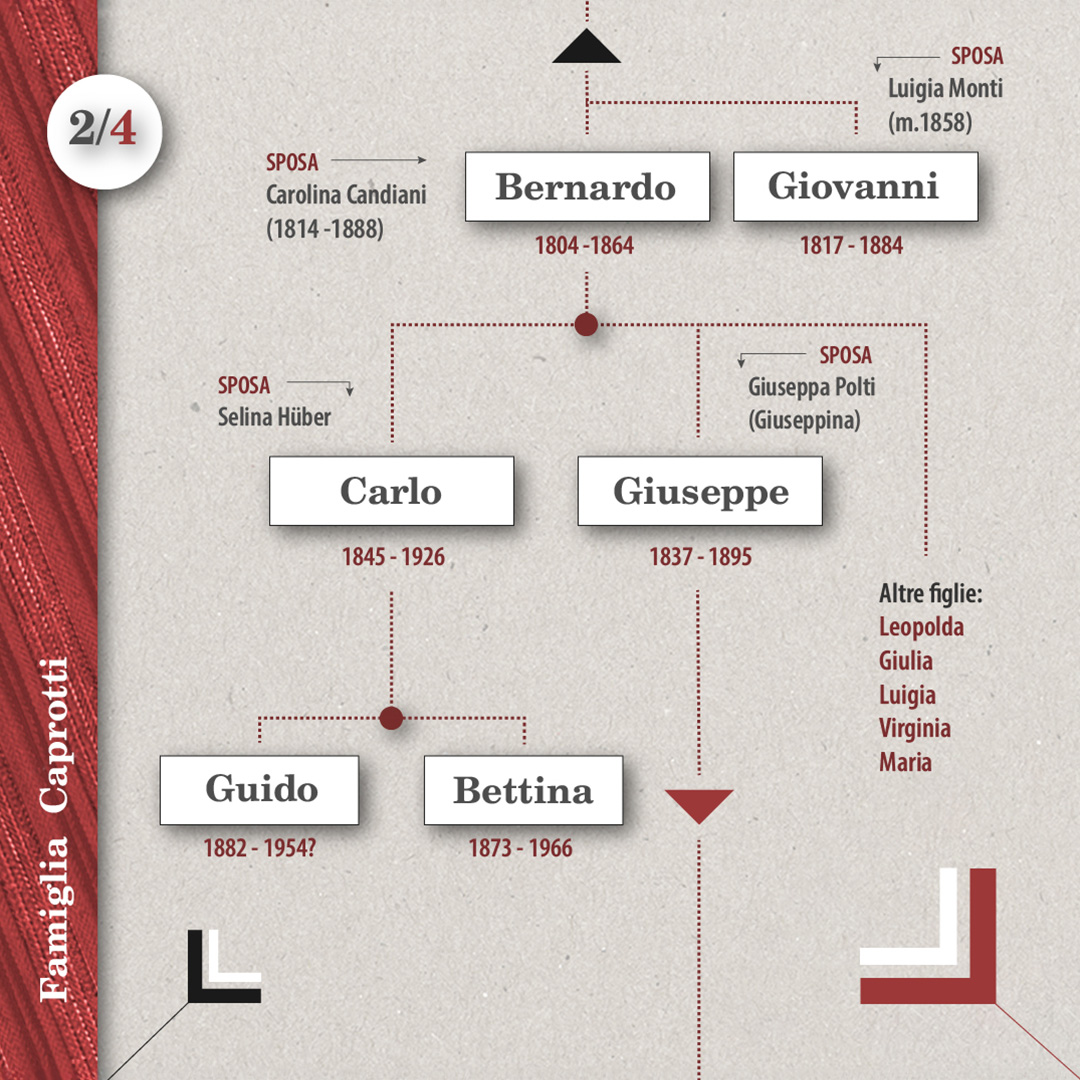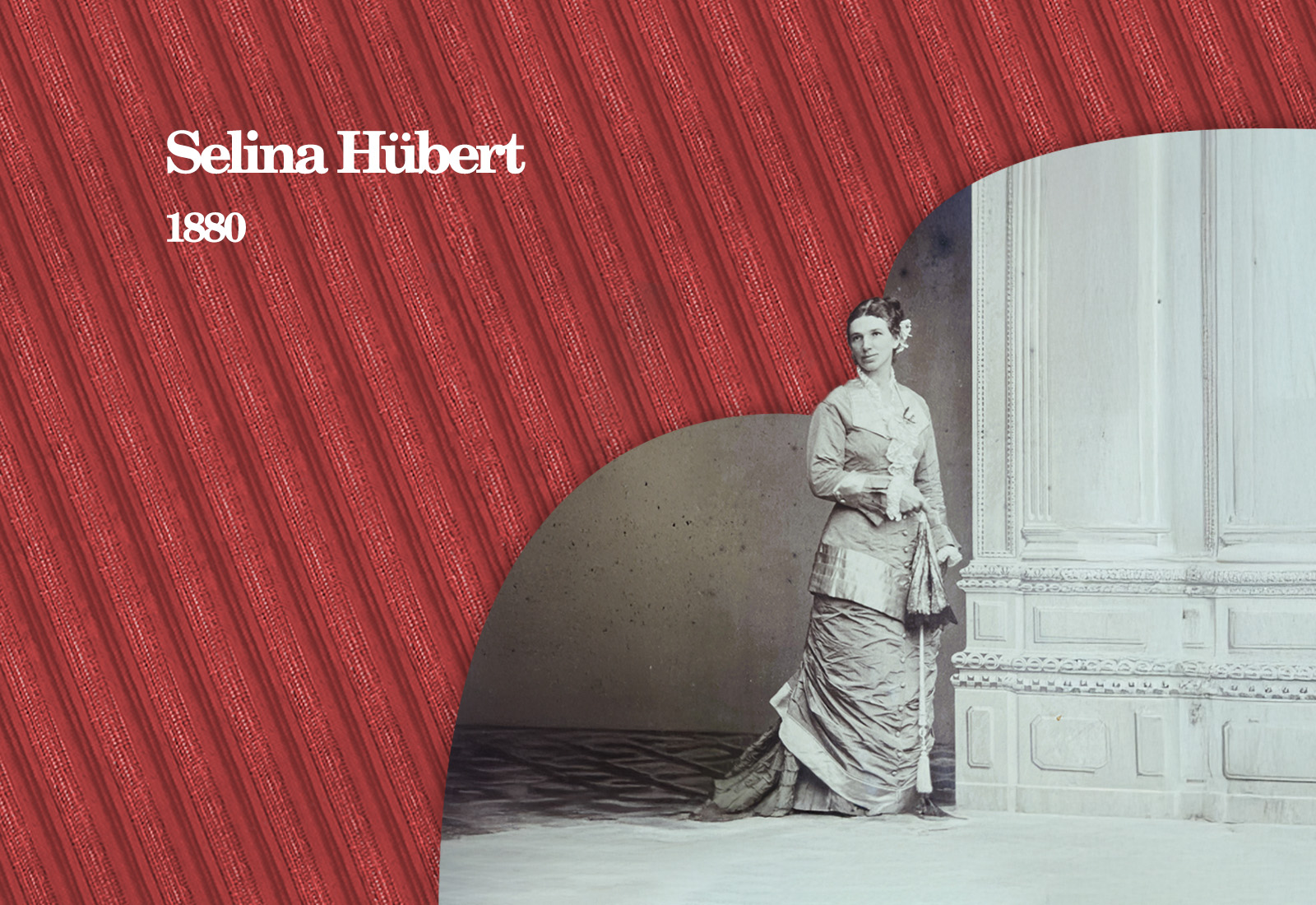
“It was (…) in Switzerland that the younger of the two brothers from the very Catholic Brianza committed a sin: he fell in love with a young Protestant woman, Selina Hübert, and married her in 1871 .Giuseppe, known as Beppo, my great-great-grandfather [the older brother, ed.] did not turn up for the wedding and Carlo wrote to him that he could not rest because of the offence to his new Swiss family. Within a couple of years, the two brothers split up their business and Carlo left his father’s company. Despite everything, however, they maintain cordial and respectful relations. In the cupboards of Albiate there is a long series of letters that Selina herself wrote “to Beppo”, in German, a language regularly spoken at home, as well as French, precisely because of the need to conduct business across the Alpine passes.”. (Caprotti, The Bones, p. 32).
Carlo’s educational trips to Switzerland, begun when he was just a teenager to train at the major textile companies and above all textile machinery manufacturers, were aimed at bringing to the family factory in Brianza the knowledge of the latest innovations that could have taken it – as later happened – into the world of advanced textile production, according to that project to modernise their father’s old system that the two brothers decided to undertake with decision. Carlo evaluated machines, bought and shipped them, purchased large supplies of yarns, and during the long period in which he was stationed in the canton, in 1869, he was also treated almost like a son and respected as an intelligent entrepreneur by Caspar Honegger and his collaborators. By this time, Honegger was the leading textile machine manufacturer in Switzerland, and one of the largest in the world, thanks also to the loom of his invention. With such a background, it is obvious that Carlo made valuable contacts and friendships, which also led him to the Zurich-based Nicholas Hübert, an entrepreneur with business dealings between his homeland and Bergamo, home to a strong and wealthy Reformed business community. Carlo fell in love with Nicholas’ daughter Selina and married her in 1871. The couple settled in Bergamo, where Carlo, after separating from Giuseppe and leaving the Albiate factory, set up his new business.
From Selina, Carlo had a daughter, Elisabetta, born in 1872 and who died at the age of a few months, a second daughter who repeated her little sister’s name, Elisabetta, called Bettina (future bride of cousin Bernardo, son of uncle Giuseppe), a son, Arnaldo, enrolled in 1877 in the registers of the evangelical community (he died young, on 12 June 1899), and another son, Guido, born in 1882, who became my grandfather Peppino’s wild, amusing and precious uncle, son of Bernardo and Bettina.
Carlo himself officially entered the reformed community on 20 January 1880, and at the same time was enrolled in Freemasonry in the Pontida Lodge.
He also believed in cremation, so much so that he was among the founders of the Cremation Society. To understand how revolutionary such an action was, for a change, suffice it to think that the “Instruction ‘Ad resurgendum cum Christo‘ about the burial of the dead and the preservation of ashes in the case of cremation”, with which the Catholic Church admits the practice, but with precise rules and in any case always preferring the burial of bodies, is from 2016.
Sources:
Albiate (MB), Villa San Valerio, Villa San Valerio Archives, Giuseppe Caprotti Archives, Giuseppe Caprotti Archives (1837-1895).
Florence, Claudio Caprotti Archives, Photographic Archives.
Per filo e per segni. Innovazione e creatività dell’ industria tessile a Bergamo tra XIX e XXI secolo, multimedia and interactive exhibition, Bergamo, 2008 (ref. “Rivista di Bergamo”, January-March 2008, monographic issue dedicated to the exhibition).
Bibliography:
G. CAPROTTI, “Le Ossa dei Caprotti. Una storia italiana’, Milan, 2024/3.
R. ROMANO, “I Caprotti. L’avventura economica e umana di una dinastia industriale della Brianza”, Milan, 1980.
M. GELFI, Capitali svizzeri e nascita dell’industria cotoniera a Bergamo, in “Archivio storico bergamasco”, n.s., n. 3, September-December 1995, pp. 4-41.
G. CAPROTTI, Le Ossa dei Caprotti. I Caprotti al femminile: Elisabetta detta Bettina (1873 – 1966). Cues from the book’.
G. CAPROTTI, “Mostra: la meccanica della Manifattura Caprotti“, 09/10/2024.
ID., “La famiglia Caprotti, innovazione e tradizione in una manifattura italiana: Albiate e la Svizzera“, 09/10/2024.
ID., “La famiglia Caprotti, innovazione e tradizione in una manifattura italiana: operai dal prigione di San Vittore“, 13/10/2024.
E. SÀITA, “I Caprotti : private aspects, from the Risorgimento to the Second World War“, 08/11/2022.