Factory Positioning: ‘MDD – IDM Strategies and Market
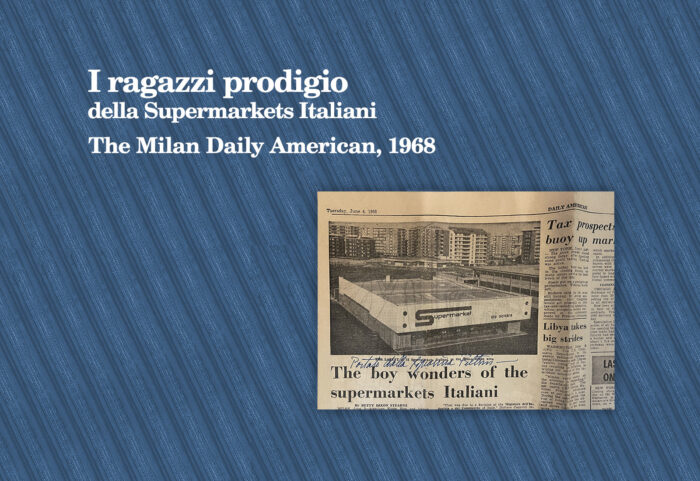
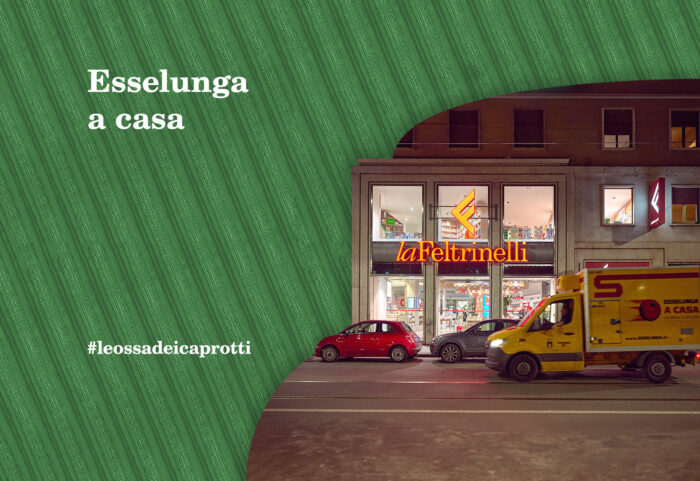
My speech will also start from some of my experiences at Esselunga, where for many years I worked on the development of projects that accompanied an important phase in the evolution of Italian distribution: the Superstores, the Fìdaty card, Esselunga at Home, the ESD purchasing centre, the development of organic products, together with the introduction of the company’s first social report. The aim, of course, is not to look back. Those experiences serve above all as a starting point to reflect on how distribution, the role of retailer brands and the relationship between industry and retail are changing today.
How Walmart became an advertising powerhouse while remaining focused on the food, non-food and e-commerce business
It is a pity that no Italian company has had the size but above all the vision to approach the world as these giants have done. In Italy everyone thought: e-commerce must be sustainable on its own. It happened to Esselunga at home until it had no rivals, but Amazon and Walmart disprove this vision. E-commerce is sustained by other, more profitable revenues
Food eCommerce today as a result of an evolution not entirely foreseen
“49% of young people now consult ChatGpt for eCommerce and soon this trend will also reach Europe. Walmart has made a deal with OpenAi because they want to control the flow of information: lists, prices and more’. The future of eCommerce has arrived
The video of ‘The future they imagined, eCommerce food today’
Today, eCommerce food & grocery, although still representing a limited share of the overall turnover of food distribution, has in several cases reached economically sustainable models. This topic was discussed at the eCommerce Food Conference during a round table discussion between Giuseppe Caprotti and Mario Gasbarrino, two historical protagonists of Italian large-scale retail, moderated by Cristina Lazzati, director of Mark Up and Gdoweek
A brief history of e-commerce
A planetary trade war, eminently political, in which the Chinese and Americans are the ‘masters’ and Europe, apart from a few rare exceptions – such as Lidl – has stood by and watched
Fulvio Pierangelini and Esselunga ravioli
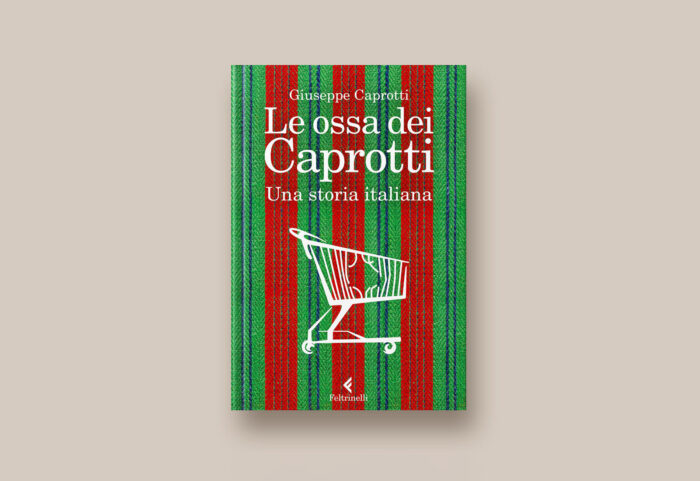
In this article there are several mentions of episodes from Le Ossa dei Caprotti , my book published in 2023 by Feltrinelli: the private-label chicken tortellini, the Zunino affair and the meeting with the ‘world’s best cook’, which enriched me personally but did not bear the desired fruit at Esselunga. Certainly not to the demerit of Fulvio Pierangelini
In Italy, small towns are emptying, even of shops: will Amazon Now provide the service in the future?
Our distributors – such as Selex and Conad – who operate consortia, and thus are unable, with some exceptions, to offer a widespread e-commerce and delivery service for basic food and household products throughout Italy – risk having to leave space and opportunity to Amazon Now over time
Our relationship with FOOD over the last 100 YEARS has changed a lot: how?
How has our relationship with food changed over the last hundred years? In the first episode of the docuseries “What We Eat”, produced together with @foodunfolded with the support of EIT Food and co-funded by the European Union, we retrace the evolution of our relationship with what we eat, which has been turned upside down in just one century
Peppino and Peppino Caprotti: America’s uncles and the Marshall Plan
In 1893 Lucie Amélie Kampmann, one of my great-grandmother Fernande's sisters, my grandmother Marianne Maire Caprotti's mother, married Baltimore-born Julian Ellinger and moved with him to the United States. Their son Alfred, grandmother's cousin, will be the conduit for obtaining Marshall Plan funds for Manifattura Caprotti.Le Ossa dei Caprotti” presentation – Chiari (BS) 8 November 2025 – Rassegna della Microeditoria Italiana
This video documents the presentation of my book Le Ossa dei Caprotti held on Saturday 8 November 2025 in Chiari (BS), as part of the Rassegna della Microeditoria Italiana. In the dialogue with Claudio Baroni, I recount the origin of the book, the work on the sources and the reasons that led me to reconstruct a family history marked by myths, conflicts and complex generational transitions
The Caprotti family: from textiles – with Manifattura – to Esselunga
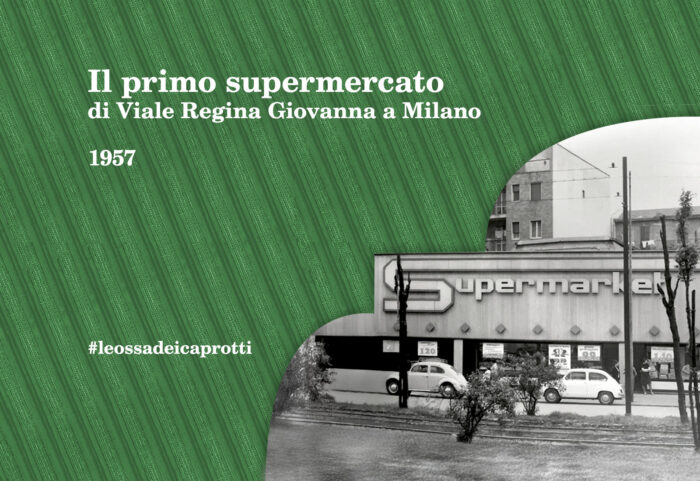
The Caprotti story begins with Antonio del fu Giovanni Battista (1685). The family’s origins lie in agriculture and textiles, until 2009 when, partly due to a sharp drop in orders, the company’s top management decided to close the Manifattura after more than 179 years of activity. In the meantime, the Caprotti family took part in the founding of Esselunga in 1957