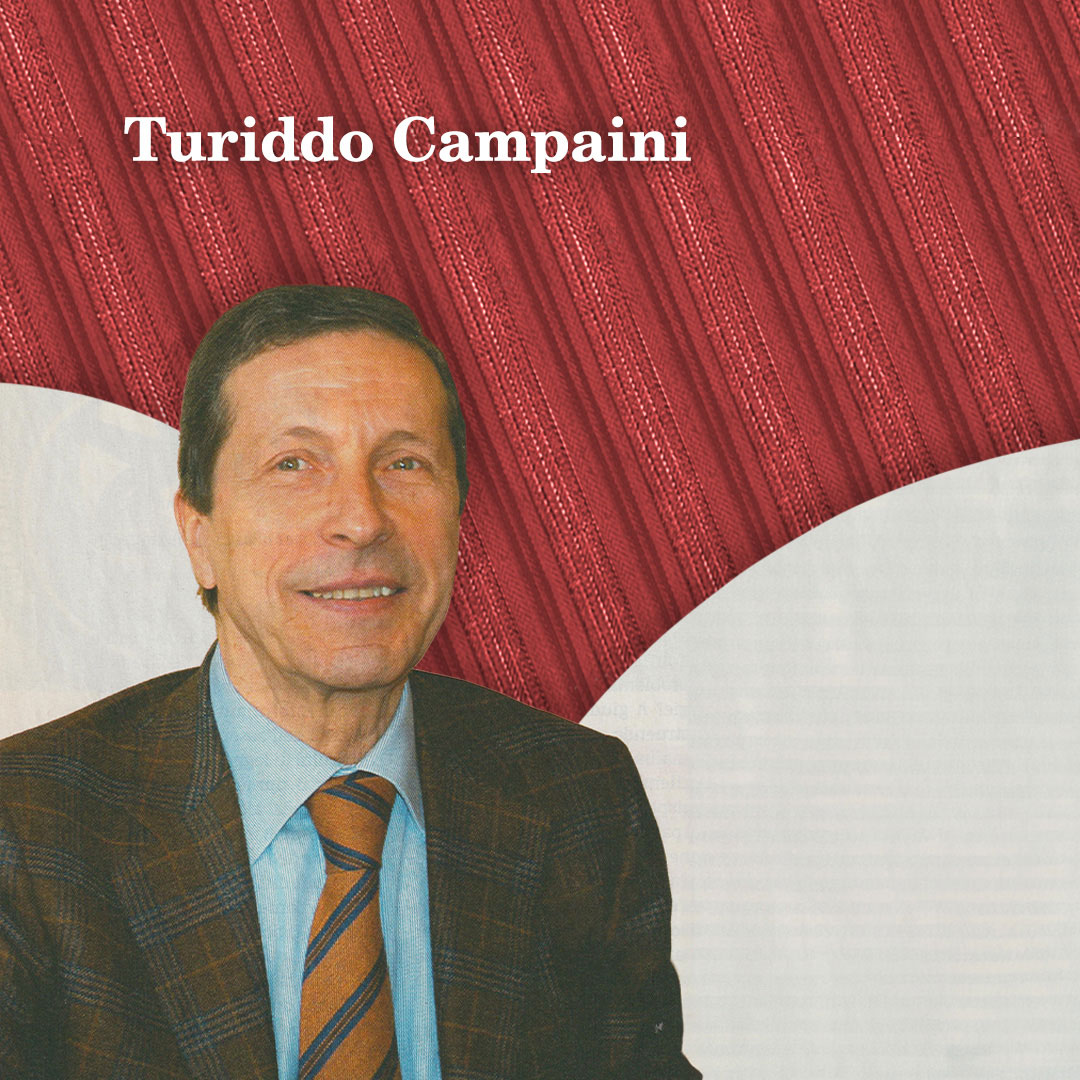
“(…) But a funny thing [is] that I had another teacher that nobody knows, he is a gentleman from the Coop called Turiddo Campaini, and he was my counterpart when I, after Chicago, arrived in Florence. I was there for a year and a half, and I was facing, as an ‘opponent’, Unicoop Firenze. Which is an exception, even my father held Campaini in high esteem, I can safely say.
Incidentally, Campaini sent someone to get my book signed when I was near Pisa a few months ago. The fact is that Campaini had a fantastic approach: great convenience and therefore great aggressiveness on prices, but also great local supply, that is, he gave the Tuscans what the Tuscans wanted to have or buy, and this Esselunga did not do at the time. We followed it and we entered this terrain heavily, also because the manager of Esselunga in Florence [Giovanni Maggioni] wanted it, so it was a big move, very important.
(G. CAPROTTI, Presentation of “Le Ossa dei Caprotti”, Orta San Giulio (NO), 17/09/2024).
Among other things, Campaini was doing something incredible, which [the Coop] still does – I think – today. There’s a very strong foreign community in Tuscany, the Chinese, 40,000 Chinese, and [the Coop] used to make leaflets in Chinese, products for them and so on and so forth, something that struck me very much. Now I have seen that some make offers [similar to this] – because we have very large Romanian communities and various -, there are facilities that make offers for Romanian products rather than. Here, one thing I did, and I had totally forgotten about, offerings of Arab products for Arabs. Yes, with the mosque in Milan (…)’.
(G. CAPROTTI, Presentation of “Le Ossa dei Caprotti”, Orta San Giulio (NO), 17/09/2024).
The lesson of the Florentine Coop is very important because the approach of Esselunga, at the time – the 1990s – is still that given by the Americans, who in the 1950s brought the supermarket formula to Italy and founded, with Italian partners including the Caprotti brothers, the ‘mother’ of Esselunga, Italian Supermarkets: ‘the bosses give the orders and the staff comply. It is this characteristic that forms the backbone of the company and its management. It seems almost miraculous in Italy, where everyone often tends to do what they want and there are not many big companies. In the long run, however, the Marines approach also has negative effects, for example on marketing: Esselunga (…) has always imposed products on customers from above, without giving supermarket managers, local salespeople and customers themselves any chance to express their opinions. (…)
As I said, however, there is no shortage of negative consequences. In the Tuscan ‘colony’ every year, after Christmas, the effects of this policy were heavily felt (…). The Tuscans did not like torrone or panettone and went back. On those festive days, even bisciola, a typical sweet from Valtellina, was on sale in our shops, which, unfortunately, no one knew what it was and no one obviously bought. Or gubana, a sweet symbol of Friuli, produced by Vogrig, with the same disastrous results.
Even to change this state of affairs will take years, but the results will be great. The directors are involved in the choices we make in Milan: from 1992 onwards we start meeting all together – a fact that surprises them greatly – to inform them of the revolution taking place, we explain to them the logic behind the ‘non-food’ products and the new layout and management of the shelves. They are also encouraged to make requests and suggestions in person, directly to me. A representation of the managers is invited to the meetings (…), where it becomes easier to discuss together what is not working in the various product categories. They finally have direct access to the weekly sales data of their supermarkets, which until then had been kept confidential and only managed by the inspectors. The managers thus become protagonists in the management of the shop, being able to participate in the choices and touch the results of their efforts. (…)”.
(CAPROTTI, Le Ossa dei Caprotti, pp. 147 – 149).
By also starting to sell typical products in the marketplace, in the case of Tuscany its cheeses, its ham, its wines, its Chianina beef and so on – but the same is true for other regions -, we are making another small revolution that changes the face of Esselunga.
Today, Unicoop Firenze, Turiddo Campaini ‘s creature, has a turnover of more than € 3 billion: UniCoopFirenze exceeds 3 billion in sales with volumes growing