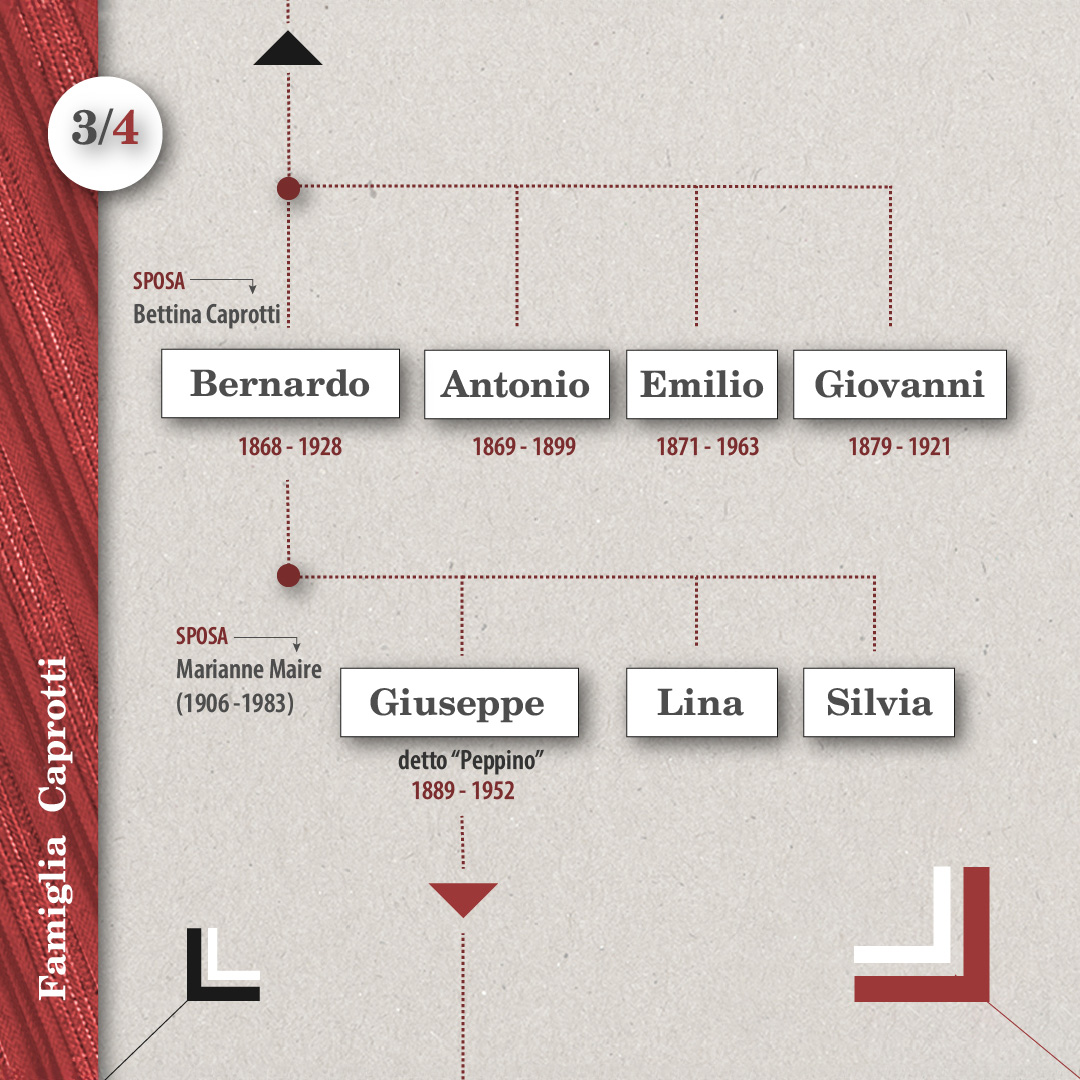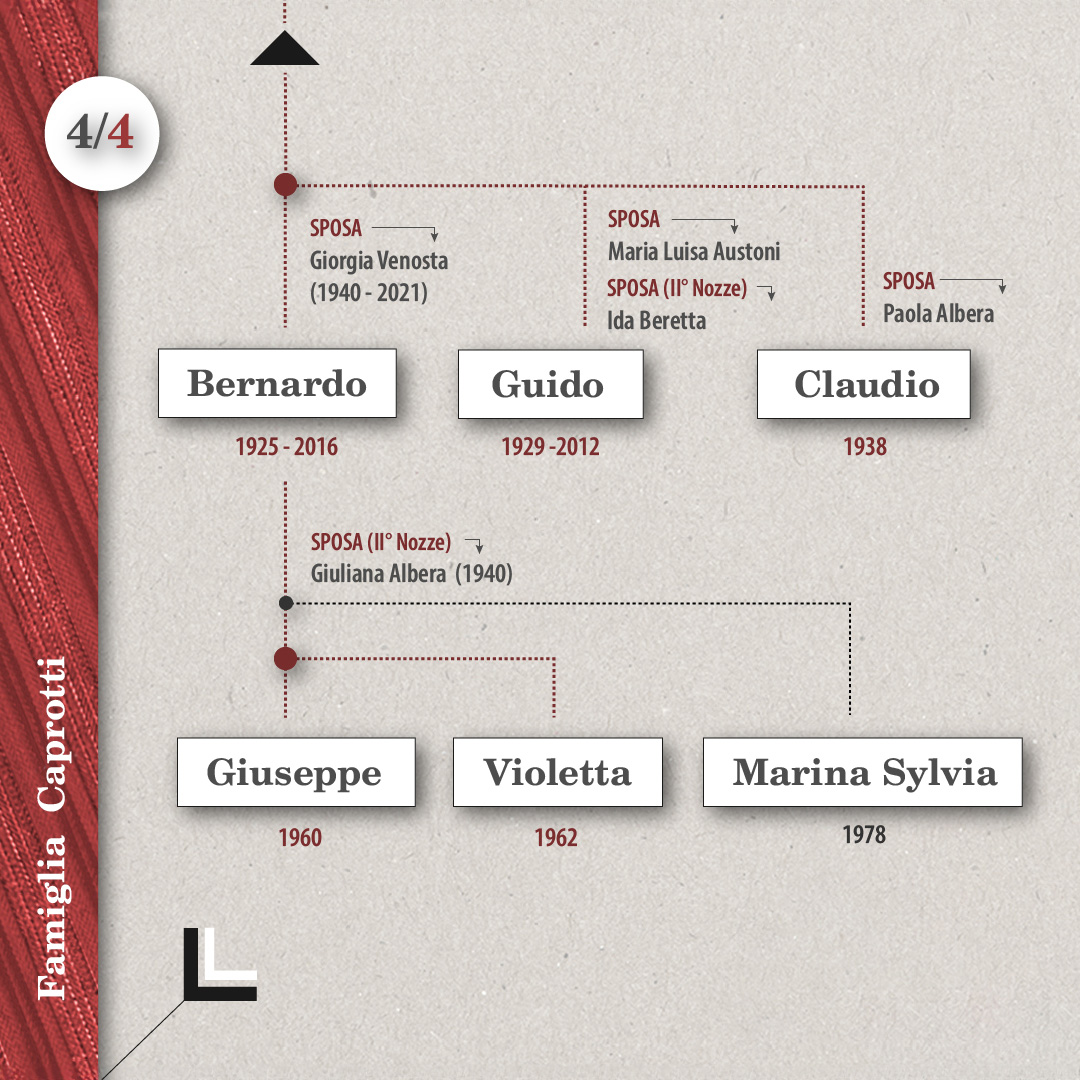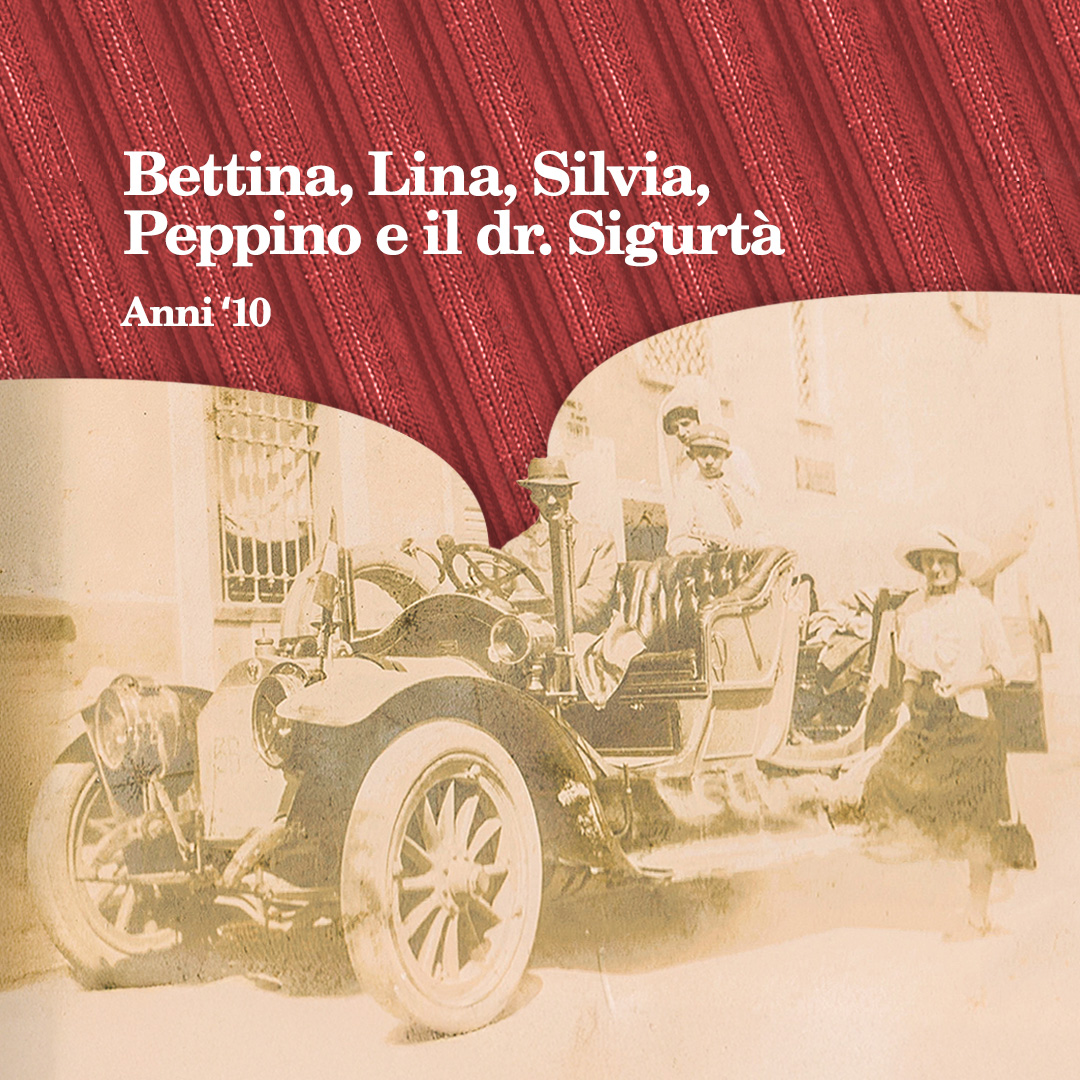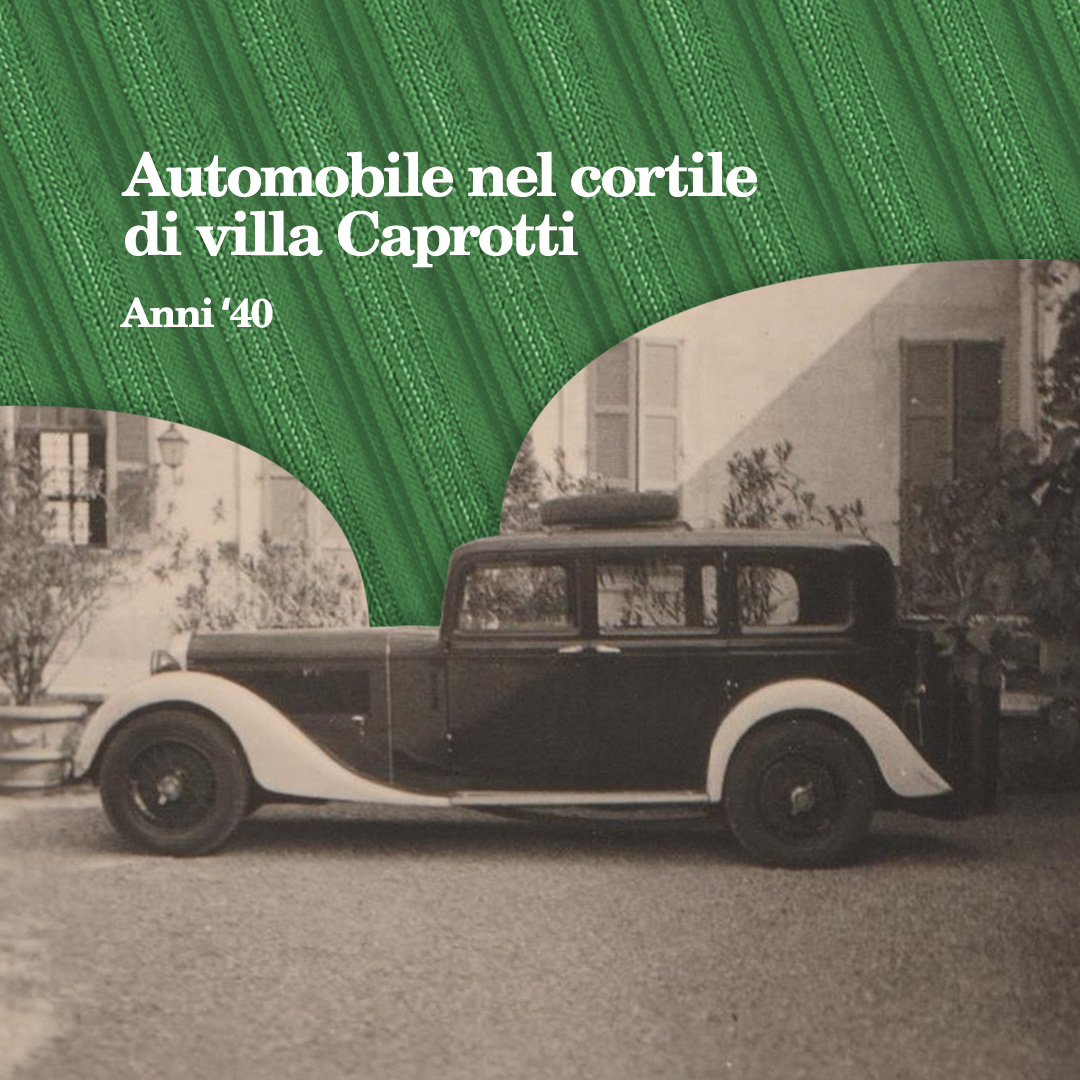
Automobiles entered Caprotti’s life early, from the very first still with tyres that were not dyed black. You would have to be an expert on vintage cars to be able to recognise and fully appreciate them, but in the sepia-toned photographs of the time that was, they are beautiful, if a little funny, especially because of who drives them. Sigurtà, the family administrator, who, sheltered from the dust by a pair of welder’s goggles worn under his elegant lobbia hat, sits behind the huge steering wheel while behind Bernando’s children, known as Nardo, my grandfather Peppino and his sisters Silvia and Lina, try to strike the best pose?
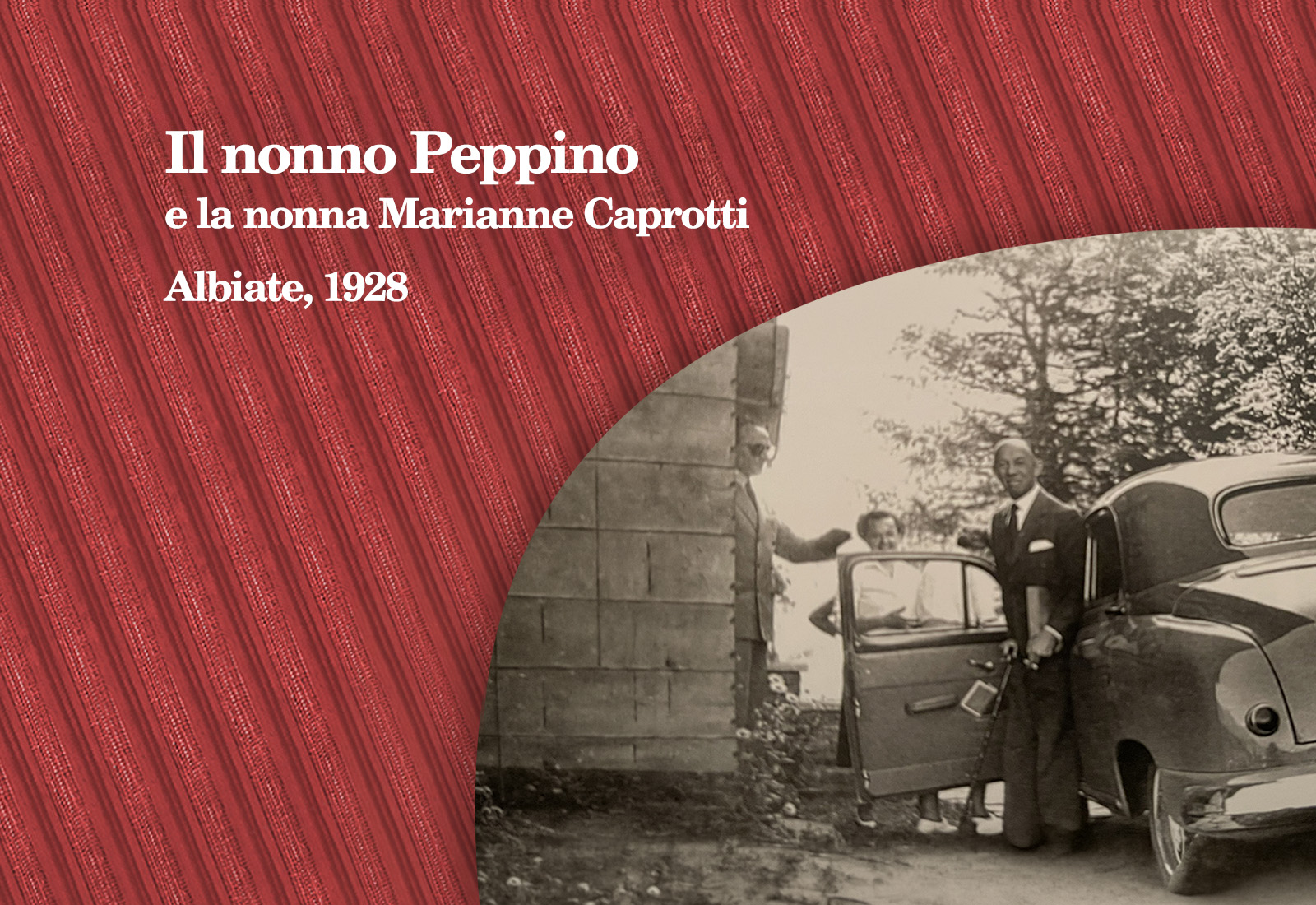
The passion for cars ran in the family. Grandpa Peppino loved cars, and he lost his life in a car accident in 1952; my father and my two uncles drove around in big, beautiful cars that they enjoyed driving.
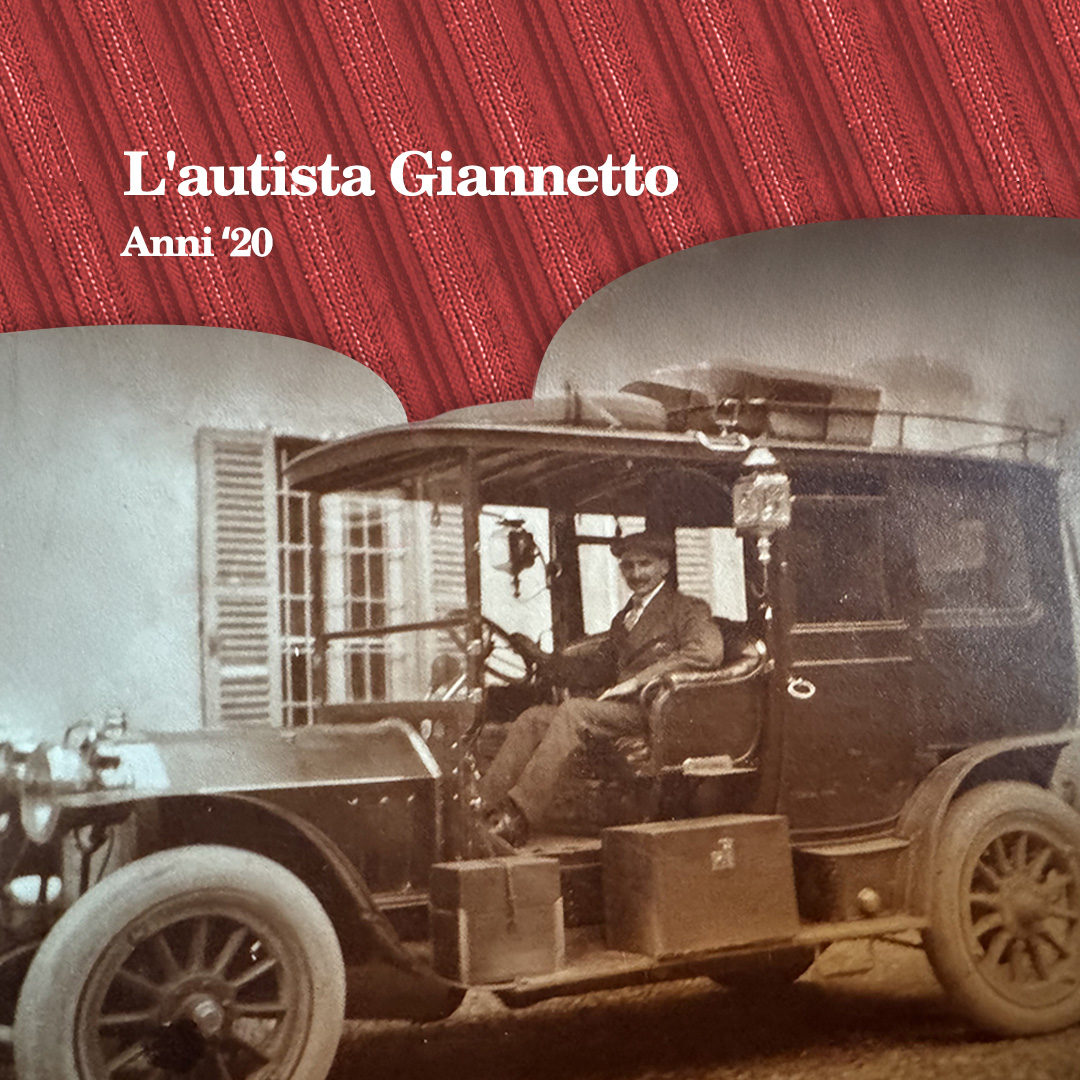
The family cars are never separated from the drivers, other key figures in the life of a family like the Caprottis.
The oldest one the images show is Giannetto, the driver from more than a hundred years ago, posing in the beautiful, polished car. In those days, with unpaved roads not only in the countryside, the driver spent a lot of time polishing cars that were always covered in dust and mud, so that they always made a good impression.
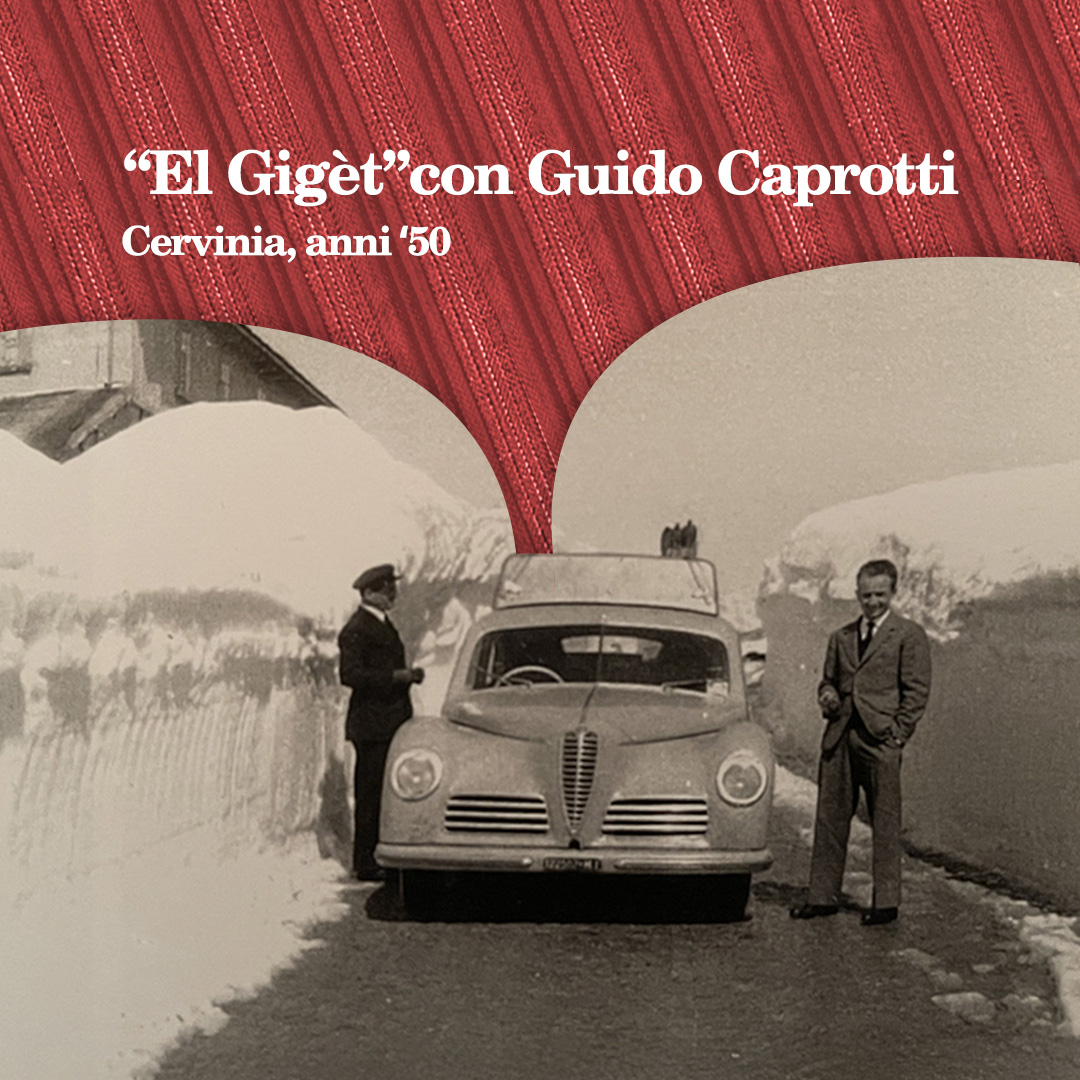
Therewas Luigi (Teodoro) Galli, ‘el Gigèt’, whom I knew very little and only remember from Albiate, but he drove everyone around and was much photographed. He was a great mechanic, mentor – for cars – to my father Bernardo, who spent afternoons with him disassembling and reassembling engines as a young man. Gigèt was Grandma Marianne‘s driver for years.
Angelo Silva, ‘el Silvèt’, on the other hand, I knew him well, he used to take us to school. He was an exquisite person, an ardent Inter fan, a great smoker (he died from it).
I particularly remember an episode, told to me by my father, concerning ‘El Silvèt‘. One year he left for Greece, taking some furniture and the then cook for my father’s house; at the Yugoslavian border, when asked by the customs officer if he had anything to declare, he calmly replied: ‘Nothing! They kept him there several days, with him only calling home with a few tokens. My father, of course, flew into a rage, asking him why on earth he had answered in that way, and the ‘Silvèt’ tried to explain himself, starting with ‘Mi g’hoo pensà…’ (I thought…), whereupon Dad jokingly told him ‘Silva, you mustn’t think!’ In fact, he could have asked… .
“El Silvèt’ I still remember him in Via del Lauro, during the ‘Years of Lead’: we had two drivers and two armed bodyguards, and he was one of the two drivers. We practically never went out without them, except to go to the record shop in Via del Lauro, or to Via Ponte Vetero where there was Galli ‘s – then a competitor of Esselunga – and the delicatessen run by the Stoppani brothers, who would later become the owners of ‘Peck’ and would always remain friends and competitors.
His son Gabriele Silva was a very capable young man; he came to work at Esselunga, but was fired for trivial reasons around my time (2004).
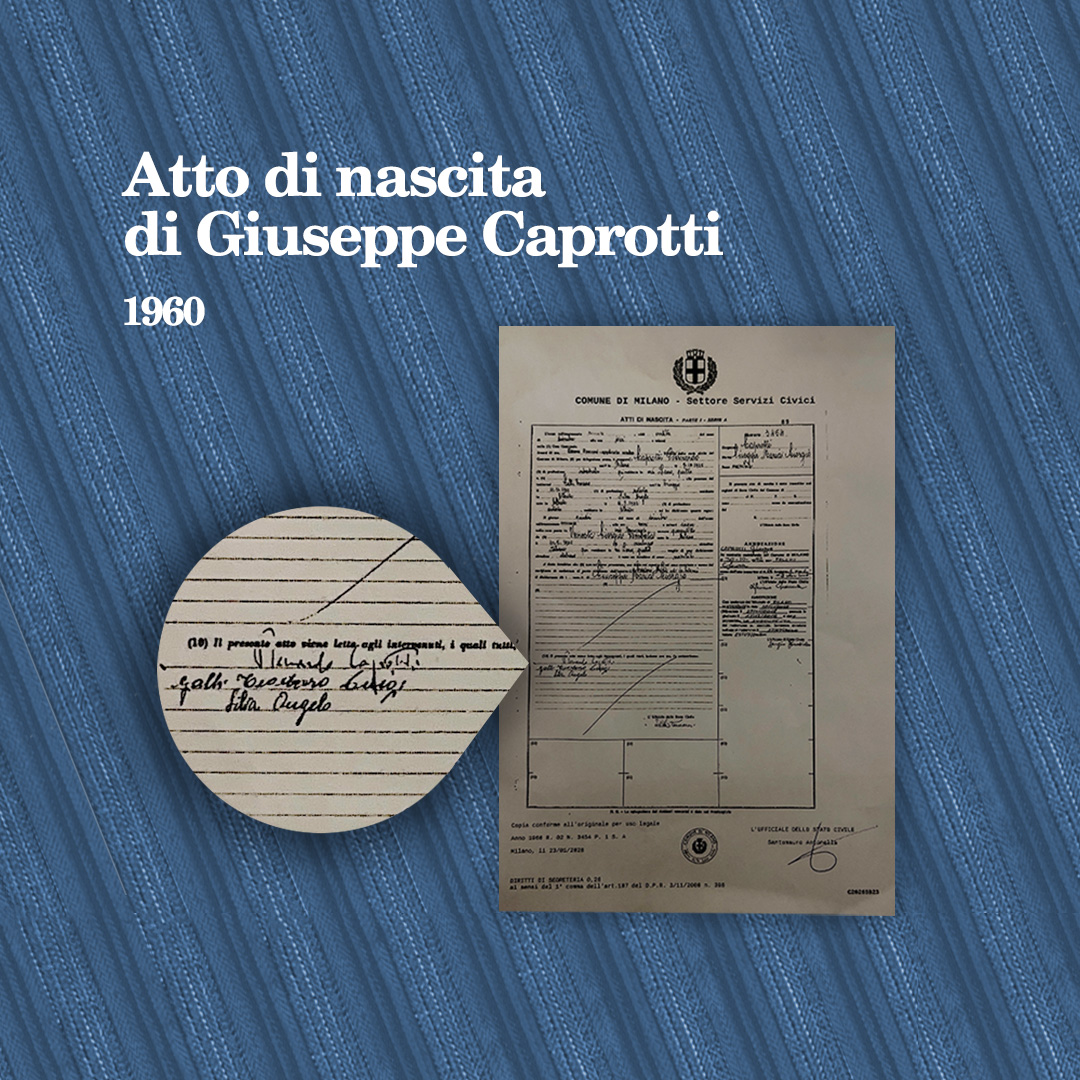
Gigèt’ and ‘Silvèt’ played a part early on in my life, as they were called by my father Bernardo to witness my birth in front of the registrar, a full week after the happy event (Dad was always very busy).
Sources:
Albiate (MB), Villa San Valerio, Caprotti Archives, ‘Manifattura Caprotti Archives; Ibid., Photographic Archives.
Florence, Claudio Caprotti Archives, Photographic Archives.
Bibliography:
G. CAPROTTI, “Le Ossa dei Caprotti. Una storia italiana’, Milan 2024/3.