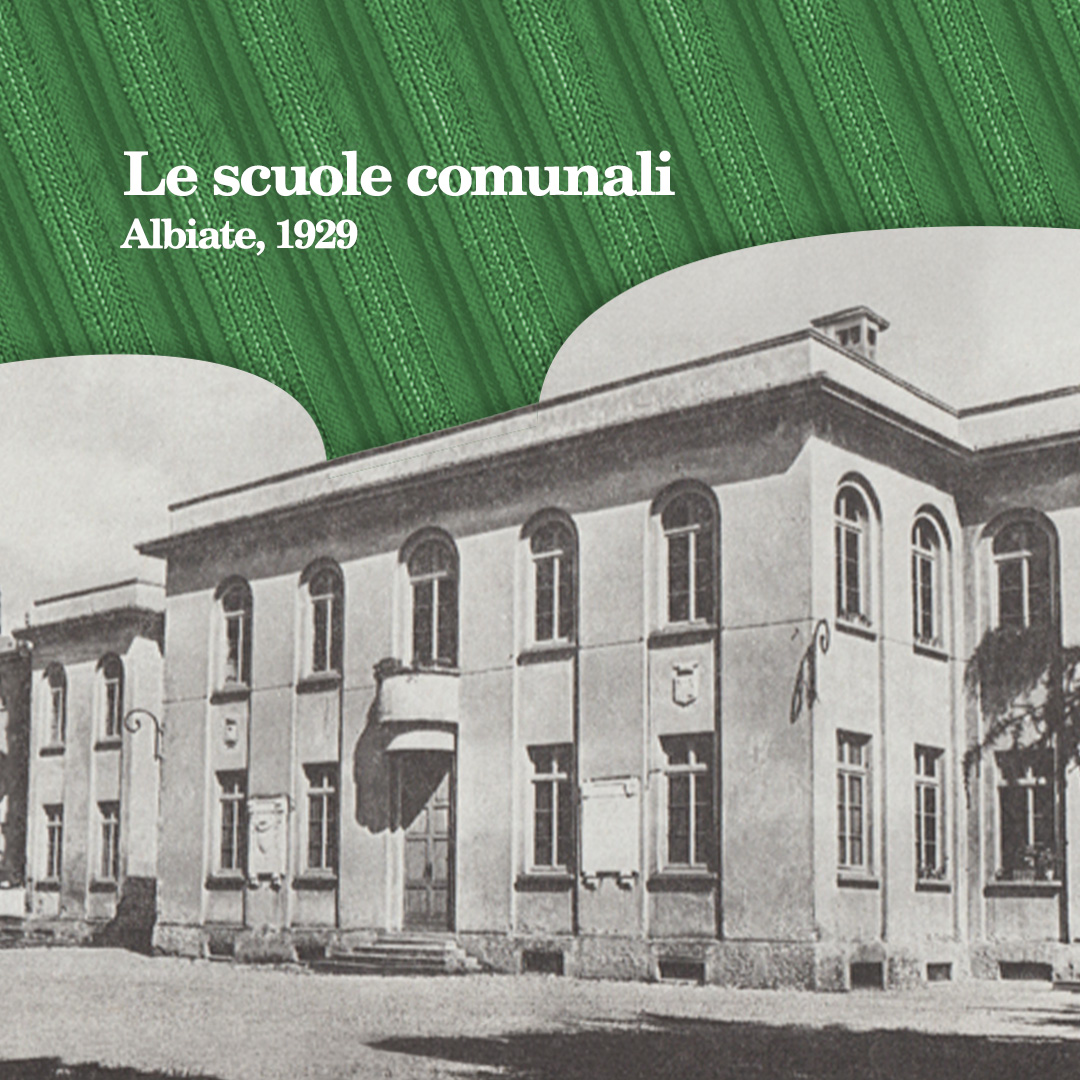
The Great War took away a world, a way of life, many things, many people. Afterwards, nothing was the same. Even in the villages, many more new things were seen in the decade following the conflict than in an entire century, and among them, in Albiate, the administrative building that would have housed, as was usual at the time, the town hall, the schools and the small doctor’s surgery.
The new building was certainly born out of the need for more suitable premises but also on the emotional wave that, following the end of the war, wanted to remember the 60 dead and missing in the village. The parish priest, Don Felice Milanese, wrote: ‘Honour and glory above all to our Dead. Quite rightly, instead of erecting a cold marble and bronze monument to them, it was decided to consecrate the grandiose Town Hall and Municipal Schools building to their name. The Viale della Rimembranza opens into Via Elena and widens out into the open space. By vote of the authorities and the people, the building was inaugurated in October 1929 (…) (MILANESE, Albiatum, p. 87).
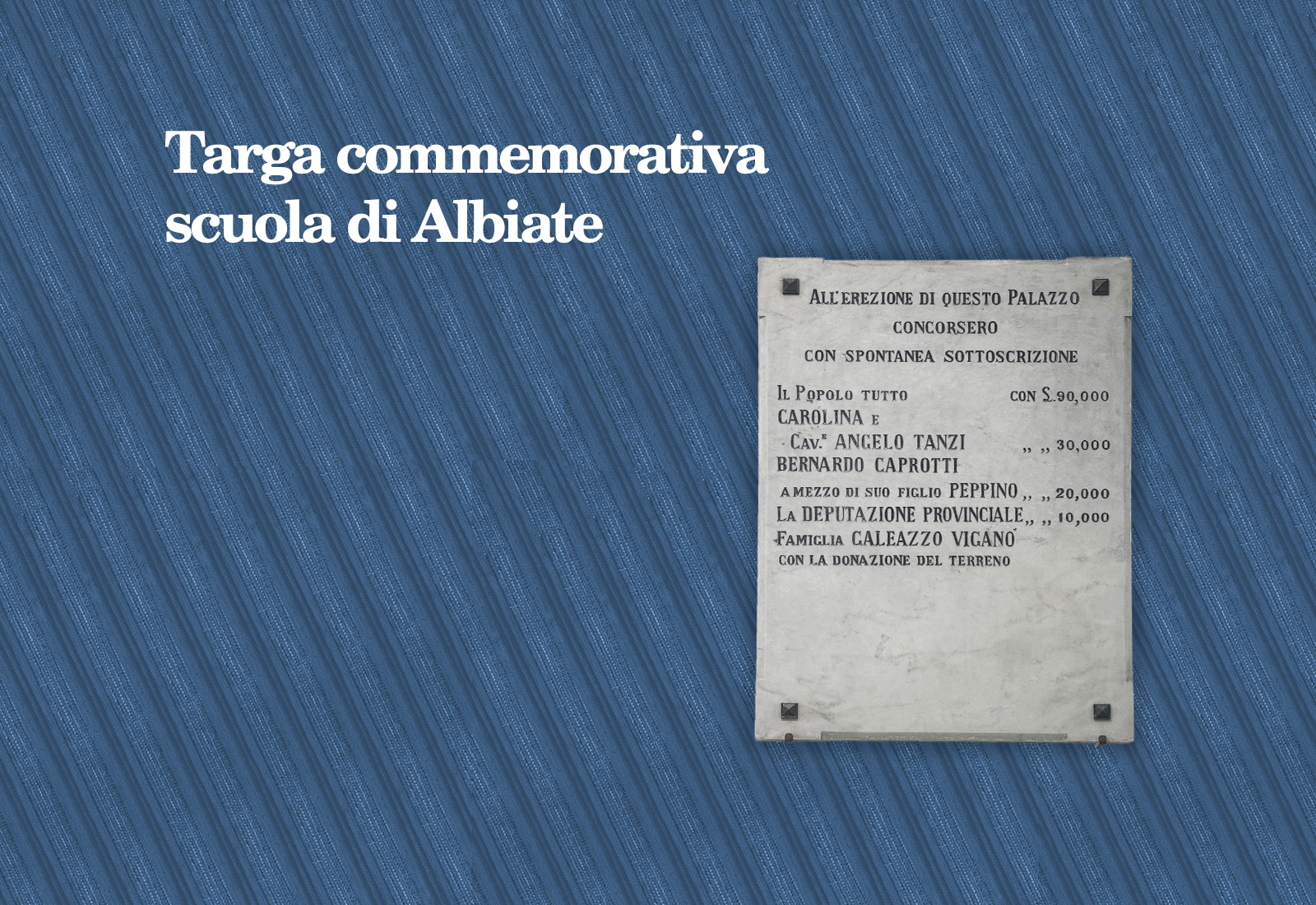
In addition to the plaques in memory of the fallen soldiers, a third plaque was placed inside the building, small and bare, in memory of the benefactors who donated land and money so that the project could be realised:
“For the erection of this building / with a spontaneous subscription / the entire population contributed 90,000 lire / CAROLINA and CAV.E ANGELO TANZI [with 30,000 lire] / BERNARDO CAPROTTI through his son PEPPINO [with 20,000 lire ] / THE PROVINCIAL DEPUTY [with 10,000 lire] / the GALEAZZO VIGANÒ family / with the donation of the land”.
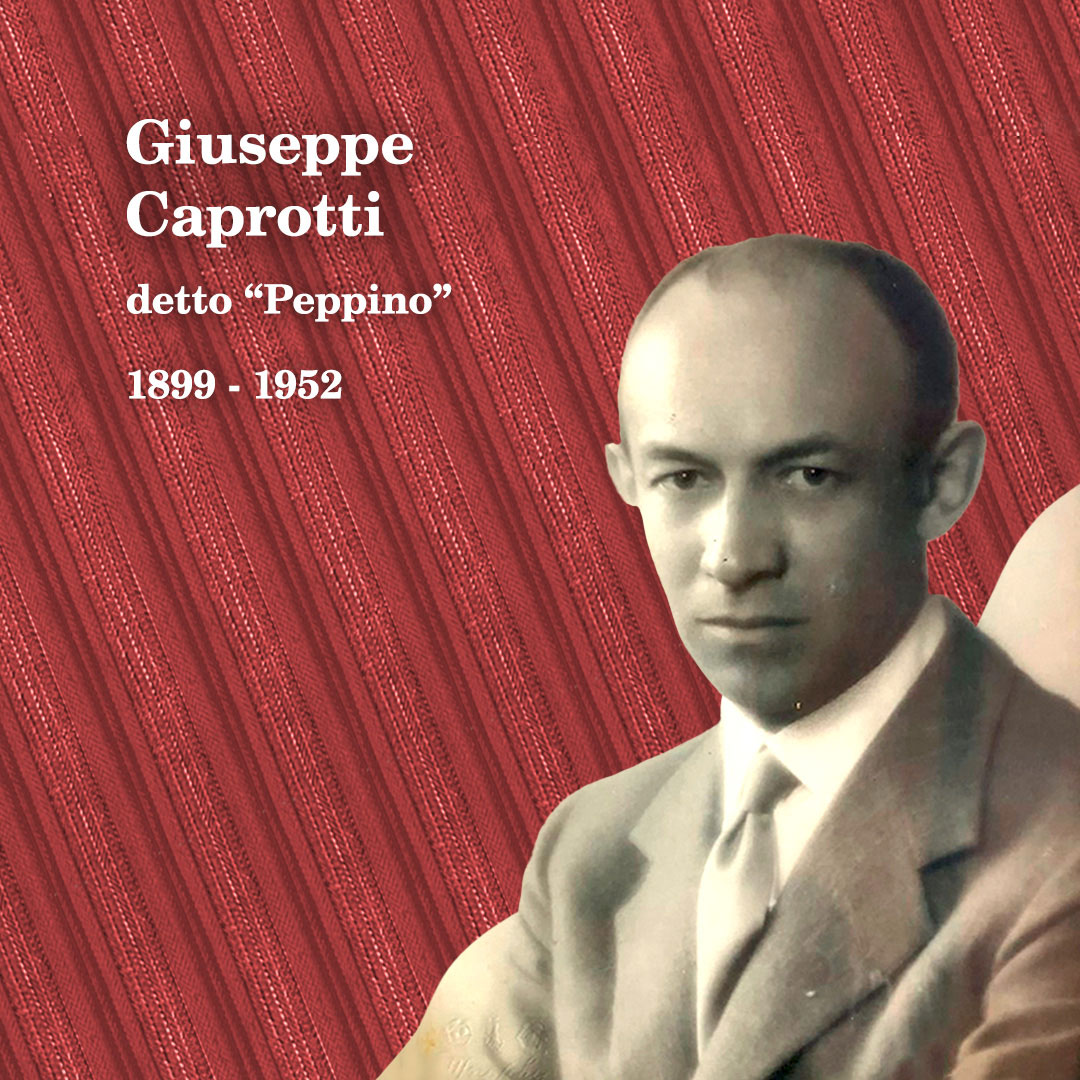
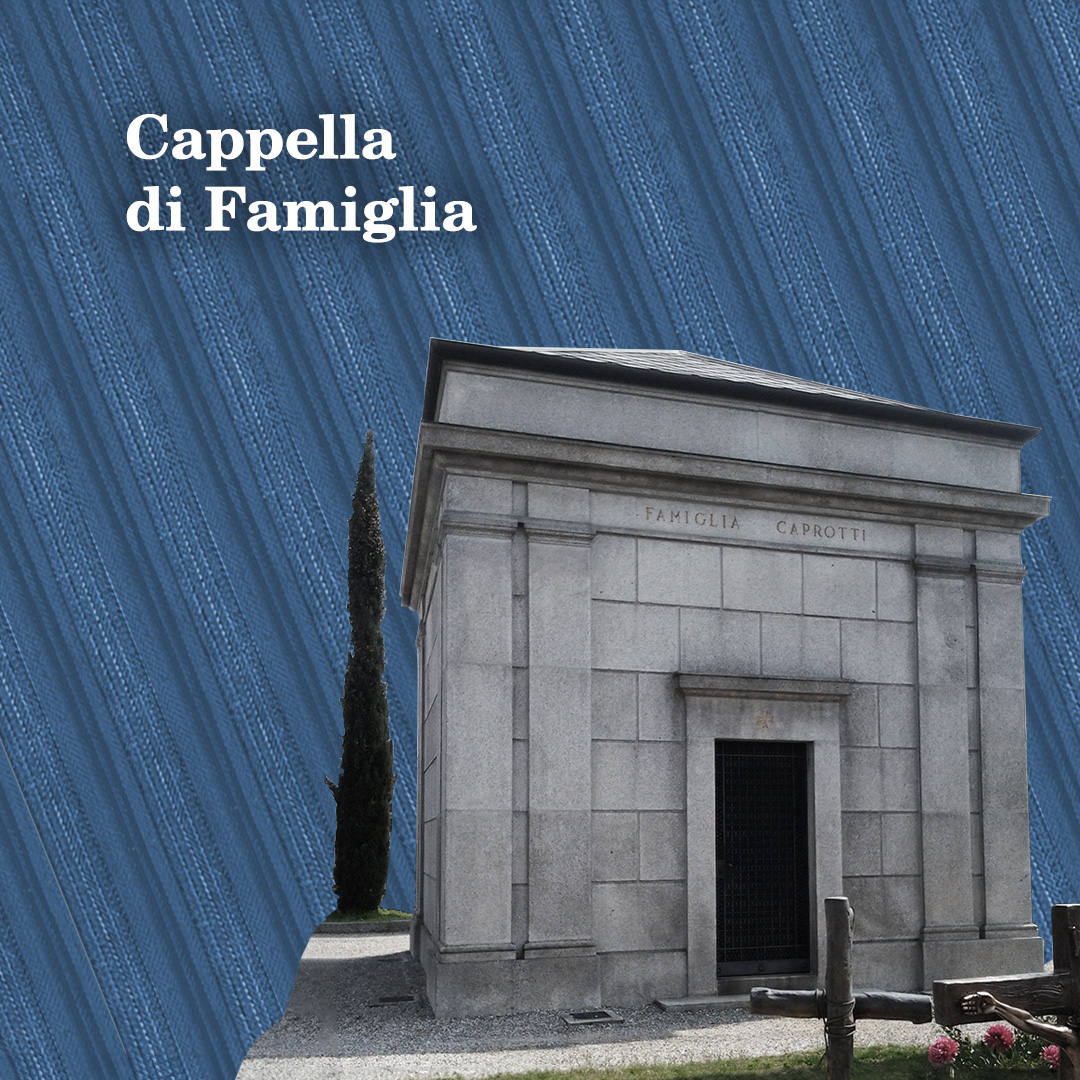
In the Villa San Valerio archives there is a large file of correspondence relating to my grandfather Peppino Caprotti’s commission to the architect Alberto Sartoris of the plans for the erection of the new school/municipal building in Albiate and the family chapel in the local cemetery (1928-29).
Peppino, who like everyone in the family had an eye for art and was passionate about architecture, did not choose a professional at random. Alberto Sartoris (1901 – 1998) was not only an architect, designer, art critic and teacher. From 1920 to 1923 he joined the Futurist Movement, and in 1928, at the time of the designs for Peppino Caprotti, he was one of the founding members of CIAM (Congrès Internationaux d’Architecture Moderne) with, among others, Le Corbusier. In 1945, he founded the ‘Athenaeum’ School of Architecture with others in Lausanne, and in 1932 wrote ‘The Elements of Functional Architecture’, a work in several volumes, re-edited several times, most recently under the title ‘Encyclopédie de l’architecture nouvelle’, which made him one of the theorists of Italian Rationalism (‘Alberto Sartoris’, Wikipedia).
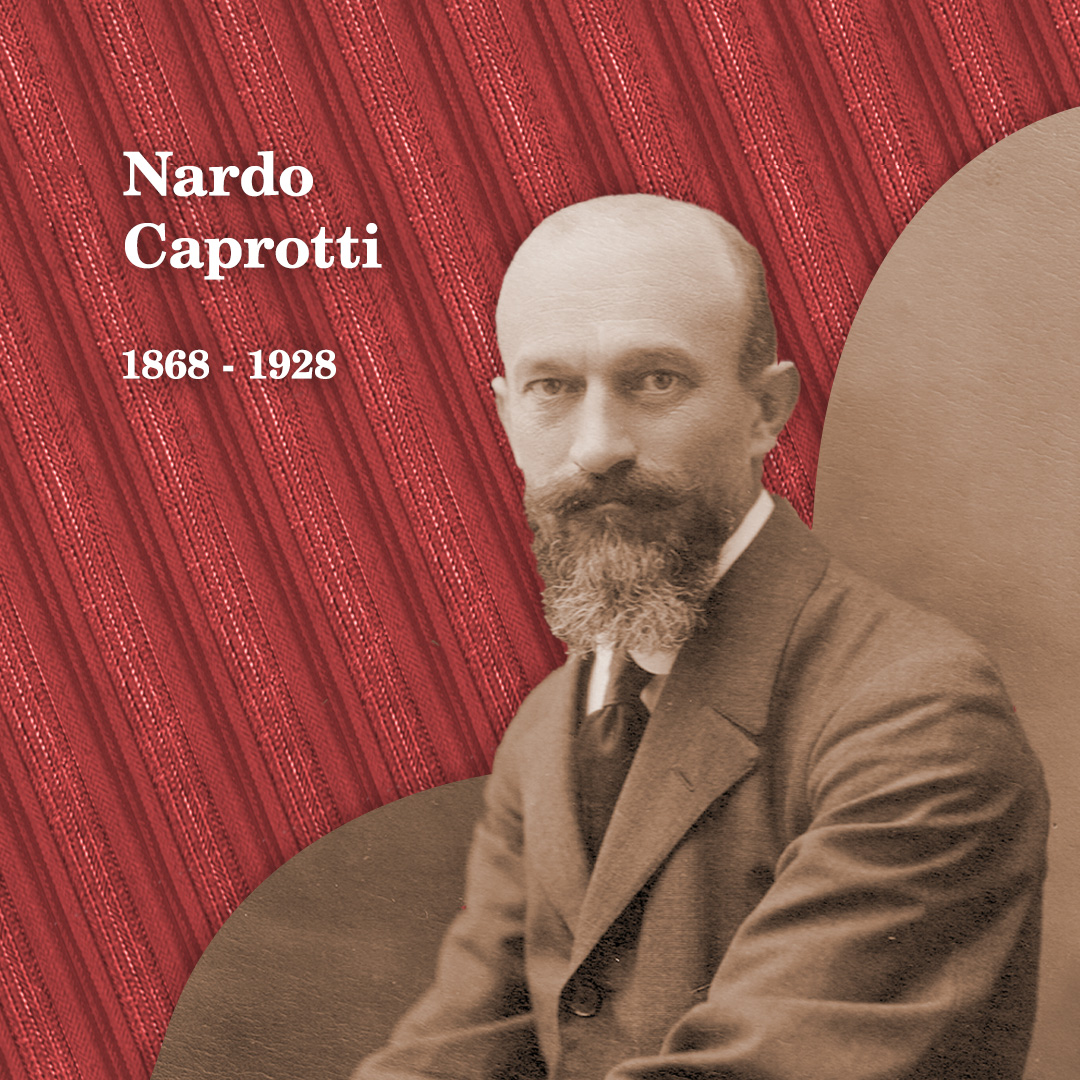
It is an interesting read, this correspondence between the commissioner, grandfather Peppino, and the commissioned, the elusive architect. The former continually solicits, irritated by Sartoris’s constant and lengthy delays (and to say he even encloses payment orders, which is no mean feat!), also because he is under pressure from the illness of his father Bernardo, known as Nardo, who is now at the end of his life and “before leaving us, he had the right to see HIS chapel” (Albiate, 27 April 1928). For his part, the architect, busy with other things because of the CIAM, responded by hesitating, postponing, stalling. When an outraged Peppino informed him on 18 June that the four months lost were inexcusable both for the schools and the chapel, since Nardo was now dead, Sartoris, after a spiel of bad rhetoric, wrote that “my poor father, even though he had his architect son, died without seeing his tomb” (Turin, 9 July 1928), which certainly did not speak in his favour.
Peppino insistently asked for the architect’s renouncement, both for the town hall and the chapel projects. If for the town hall he apparently succeeded, since the project was eventually deposited with another signature (“Sartoris”, Wikipedia), for the chapel we know that, to Peppino’s great relief, on 25 August Sartoris sent an invoice for the balance of the work. It is not clear, at least in this correspondence, whether the work was actually finished or not, but it was probably enough for his grandfather to have got the volatile genius of the most modern architecture out of the way, and to have finally seen the completion of the two projects that were close to his heart.
Sources:
Albiate (MB), Villa San Valerio, Villa San Valerio Archives, ‘Manifattura Caprotti Archives’, ‘Giuseppe Caprotti (1901 – 1929)’, B. 171, fasc. 140-3.
Bibliography:
CAPROTTI, “Le Ossa dei Caprotti. Una storia italiana’, Milan, 2024/3.
ID., “Le Ossa dei Caprotti”. I Caprotti e il loro riposo: la cappella di famiglia, Cimitero di Albiate, 1928 – 1929. Cues from the book’
Sac. F. MILANESE, “Albiatum. Albiate dall’anno mille ai giorni nostri. Notizie storiche, civili, religiose, artistiche”, Albiate, 1962, republished in “I quaderni albiatesi de “Il Cittadino della domenica””, no. 35, 1989.
A: CUNIETTI, “Scuola elementare Giuseppe Ungaretti, Albiate (MB)”, entry in Regione Lombardia, “LombardiaBeniCulturali”, 1995 (updated by A. MOZZI, 1998).
“Alberto Sartoris”, entry on “Wikipedia, 25 years of Free Encyclopaedia”
“Sartòris, Alberto,” entry in “Treccani. Online Encyclopaedia“
Antoine Baudin: “Sartoris, Alberto,” in: Historical Dictionary of Switzerland (DSS), 2009 version (entry in the printed edition of the DSS, updated 31.01.2011)(translation from French). Online, accessed 26.03.2026.