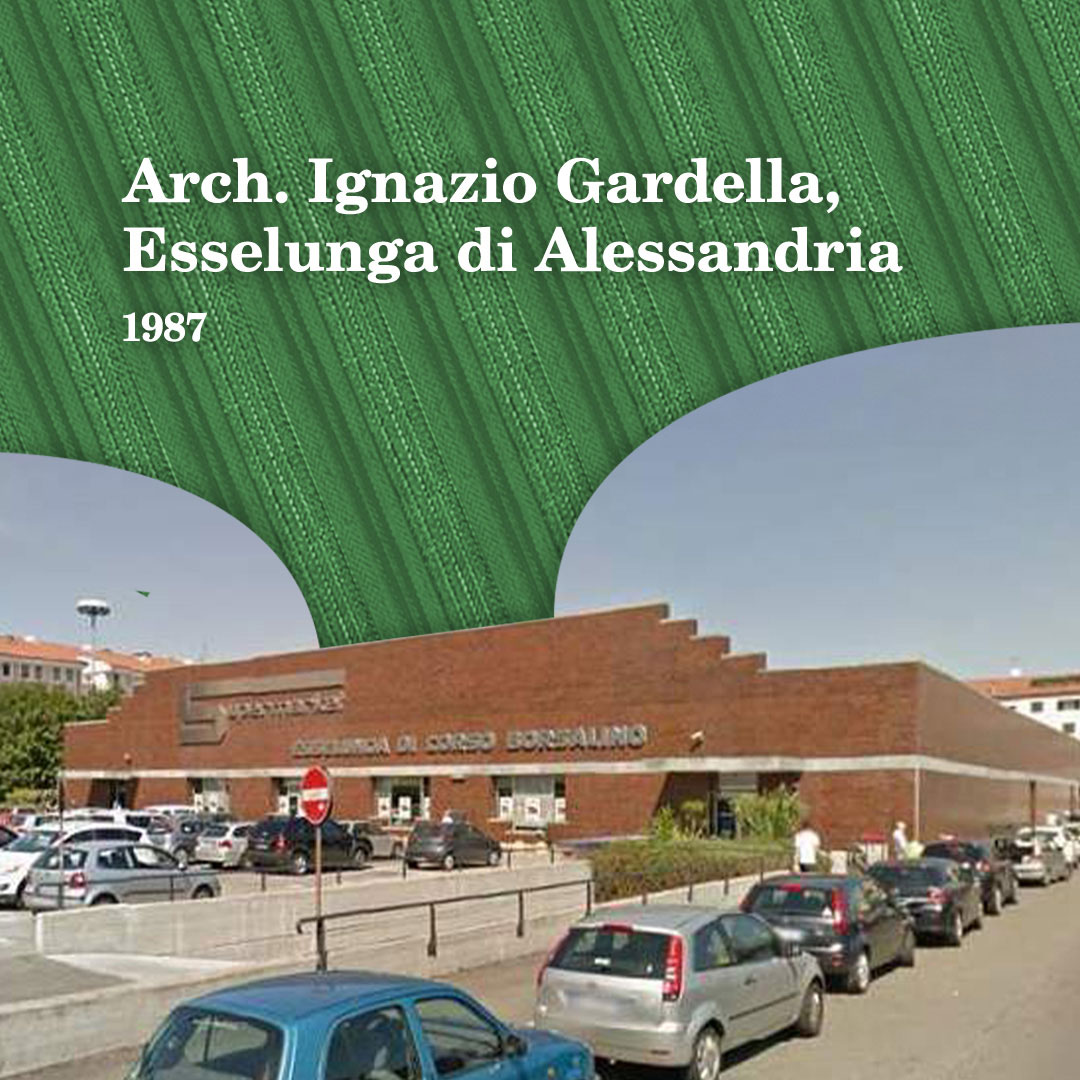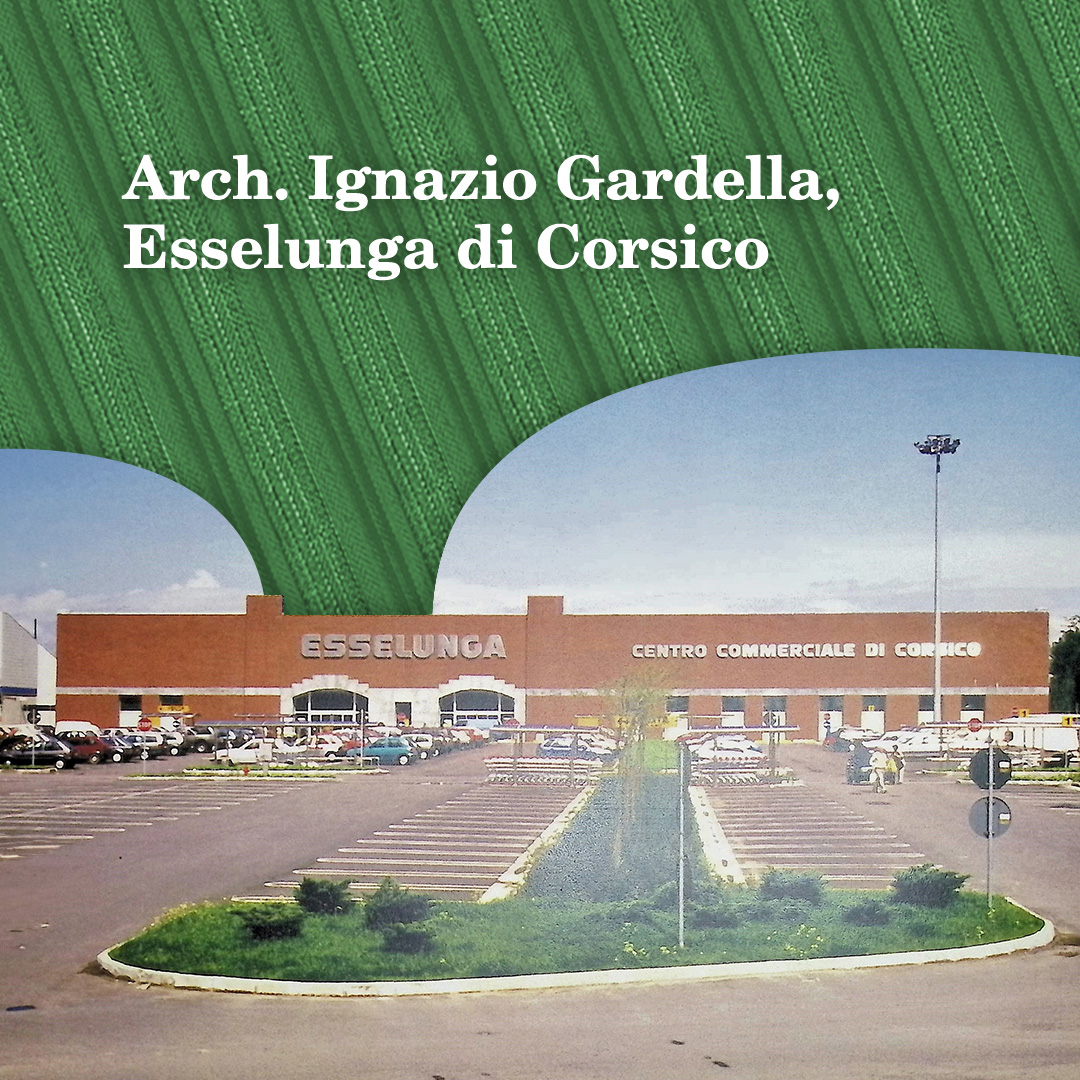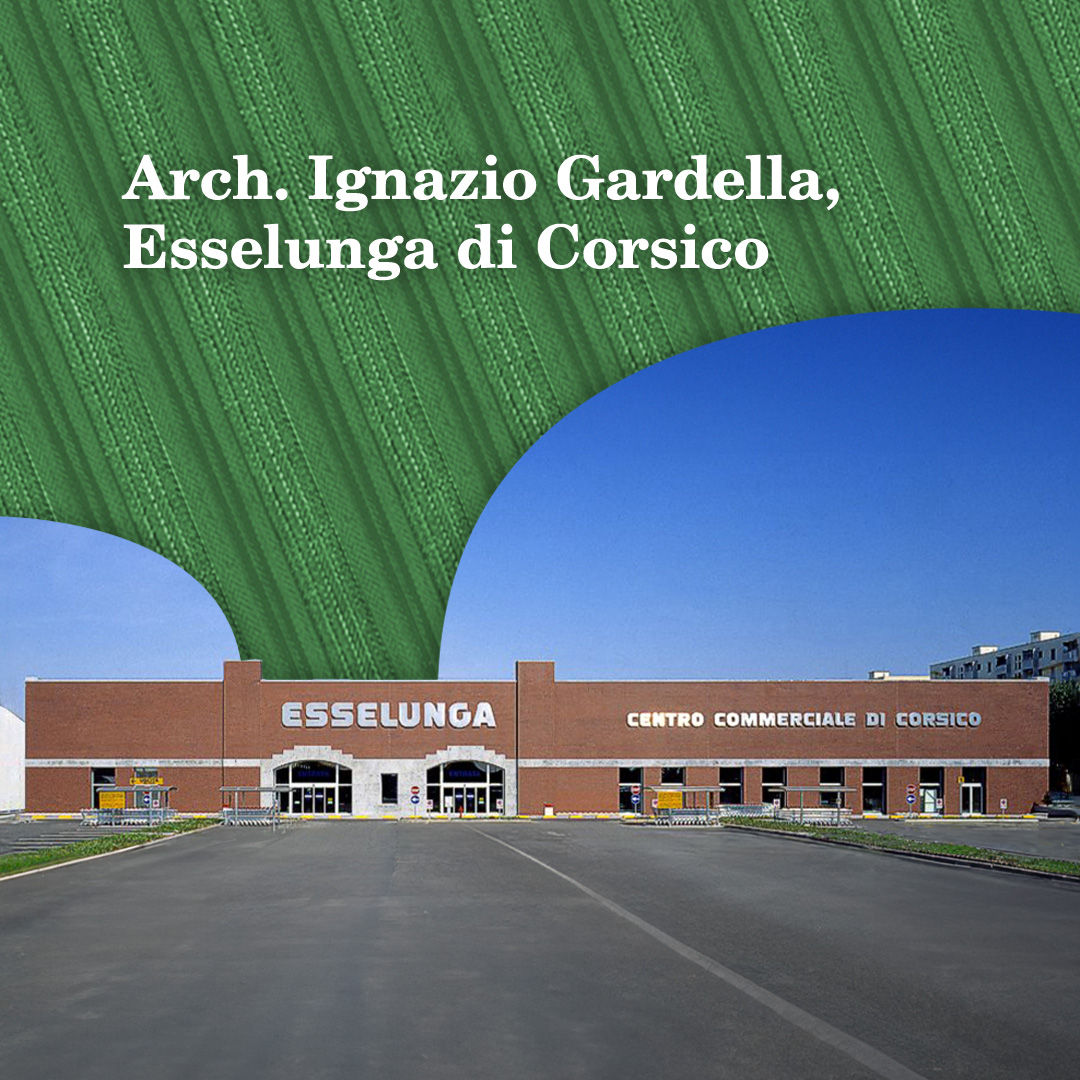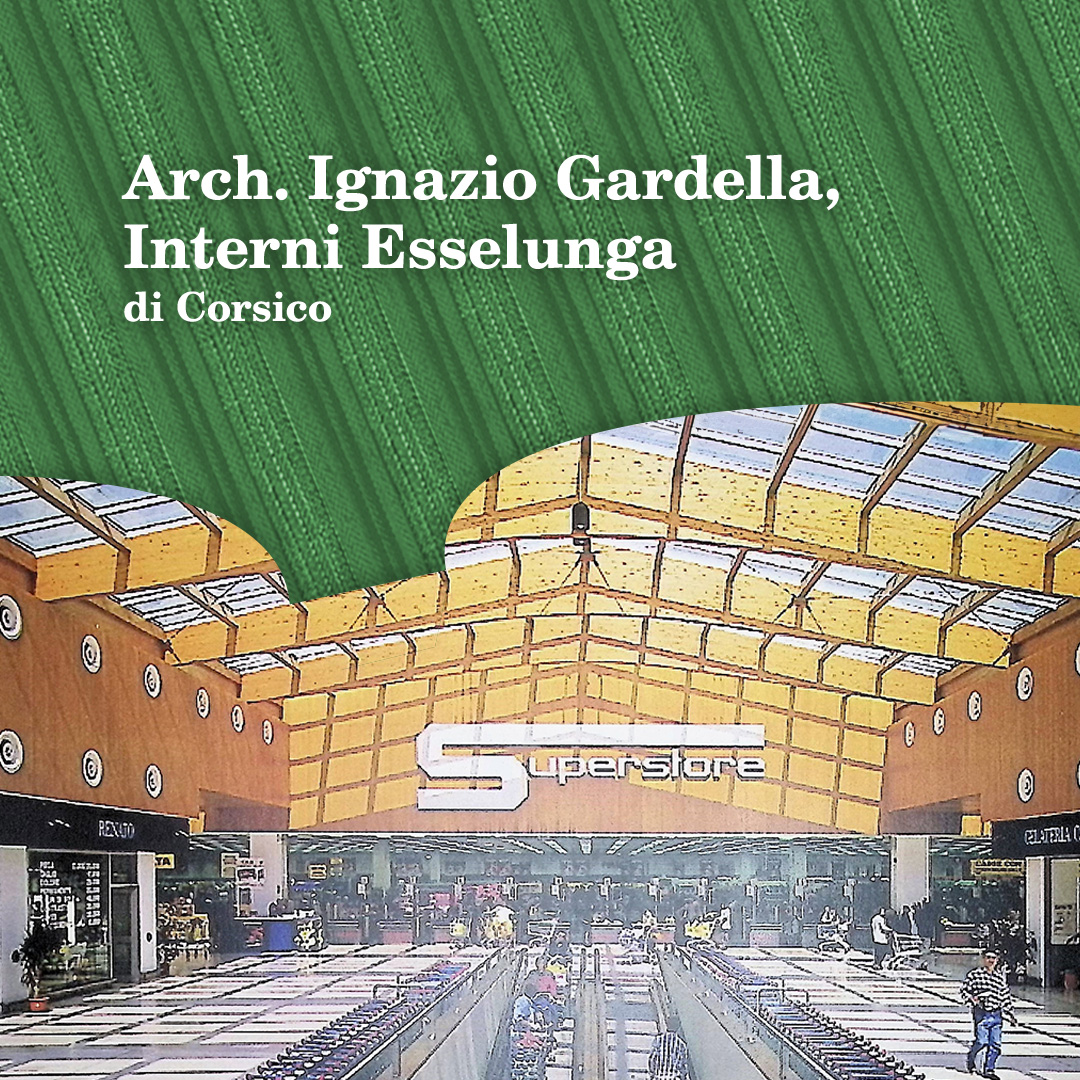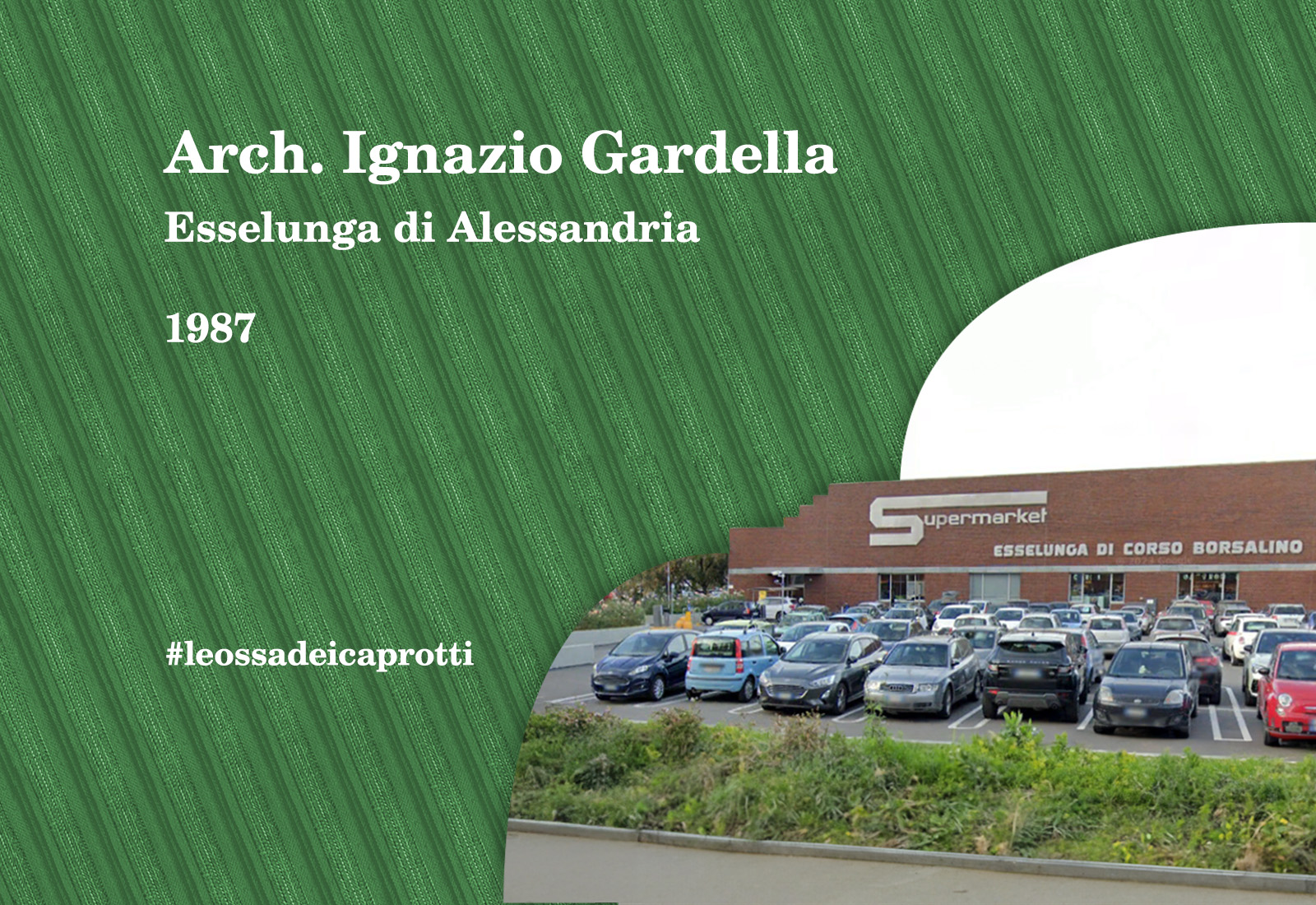
“Another (…) great merit [of my father Bernardo Caprotti] is that he set up the birth of larger supermarkets: if the first ones did not exceed 1000 square metres in surface area, and the number one in Viale Regina Giovanna was 400 metres, it was Bernardo, convinced by his uncle Claudio [Caprotti], who made the first leap and went as far as 1500 metres. Then, in 1987, he even inaugurated one over 2000 metres, in Alessandria, designed by Ignazio Gardella. He carried out this development with great intelligence, because he almost always managed to identify the best areas in which to invest and because he chose to collaborate with great architects. He will have the problem, when he gets to the superstores, of not knowing what to put in them, because the commercial side remains his weak point. Fortunately, by that time, I will have found my true vocation in the company and will take care of it. (p. 135) (…)
Bernardo in his soul probably wanted to be an architect. He even received an honorary degree from the Faculty of Architecture at La Sapienza University in Rome. He likes to develop the plans for new superstores and have them built. He loves botany and imagining the green spaces surrounding the new supermarkets. He is in contact with or has all the greats of the industry working on them, Renzo Piano, Ignazio Gardella, Mario Botta and many others. As a good former industrialist, he is fascinated by supermarket plants (…)’ (G. CAPROTTI, Le Ossa dei Caprotti, p. 159).
There is, however, as mentioned, a ‘but’: the superstores have so much space, which must be filled. “The experience [in Chicago] turns out to be a real school of war. I got on well there and, above all, I began to develop my project, which was to prove fundamental for us: the superstore, with the inclusion of ‘non-food’ and services in the Esselunga of the time. It was in Chicago, in fact, that I realised how our father was unable to make good use of the increasingly large supermarkets he was opening, including the one in Alessandria, the first above 2000 square metres. Nobody in Esselunga really knows how to fill it: I remember huge shelves full of peeled tomatoes of the same brand, or packs of pasta. It is like that in all sectors. If you have too many identical goods, you risk throwing them away and you also waste a lot of space (…). The superstores are very different from both normal supermarkets, which have a forcibly more limited offer, and from hypermarkets, the model that is popular in Italy at the moment and is seriously competing with Esselunga, attracting more and more people to do their shopping outside the city centres, at weekends. (…)”. (Ibid., p. 140).
The inclusion of ‘non-food’, which can be translated as ‘everything that is not food’, transforms the Esselunga superstore into a supermarket where, however, you can find everything from peeled tomatoes to laundry, from delicatessen to crockery, from vegetables to light bulbs and numerous new services (perfumeries, bars, photo development, video rental, e-commerce, home deliveries, etc.). And this proves to be an incalculable advantage.
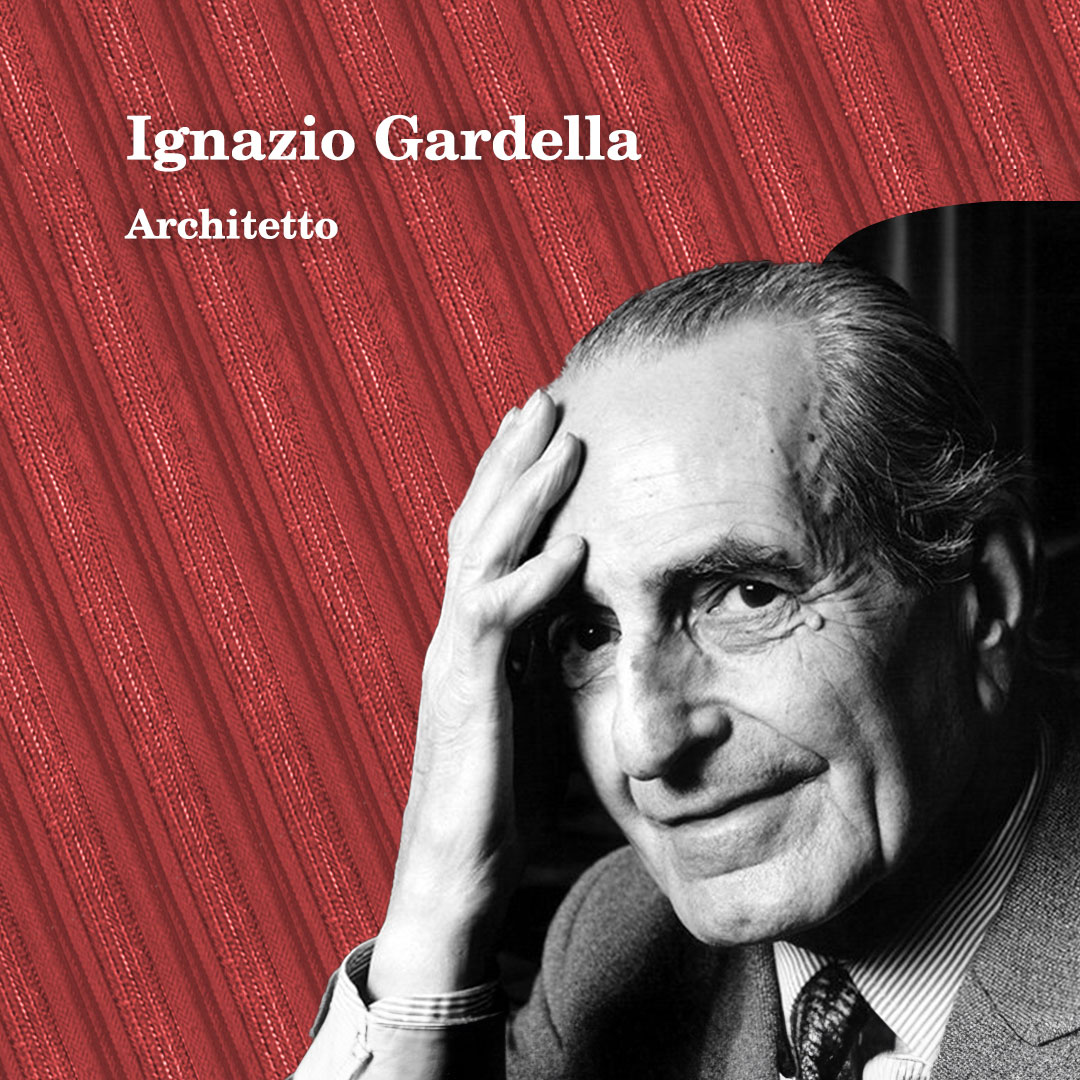
Ignazio Gardella (Milan, 1905 – 1999) was born into a family of architects and engineers. After finishing high school he enrolled in the Faculty of Engineering at the Milan Polytechnic, graduating in 1928; at the end of the 1940s he also graduated in architecture at the IUAV in Venice. His works include the Padiglione d’Arte Contemporanea (PAC) of the Galleria d’Arte Moderna in Milan, rebuilt in 1996 together with his son Carla after the 1993 bombing that destroyed it, the reconstruction of the Carlo Felice Theatre in Genoa (1981-1990) with Aldo Rossi and Fabio Reinhart, and the Lambrate railway station in Milan (1983-1999) with his son Carla.
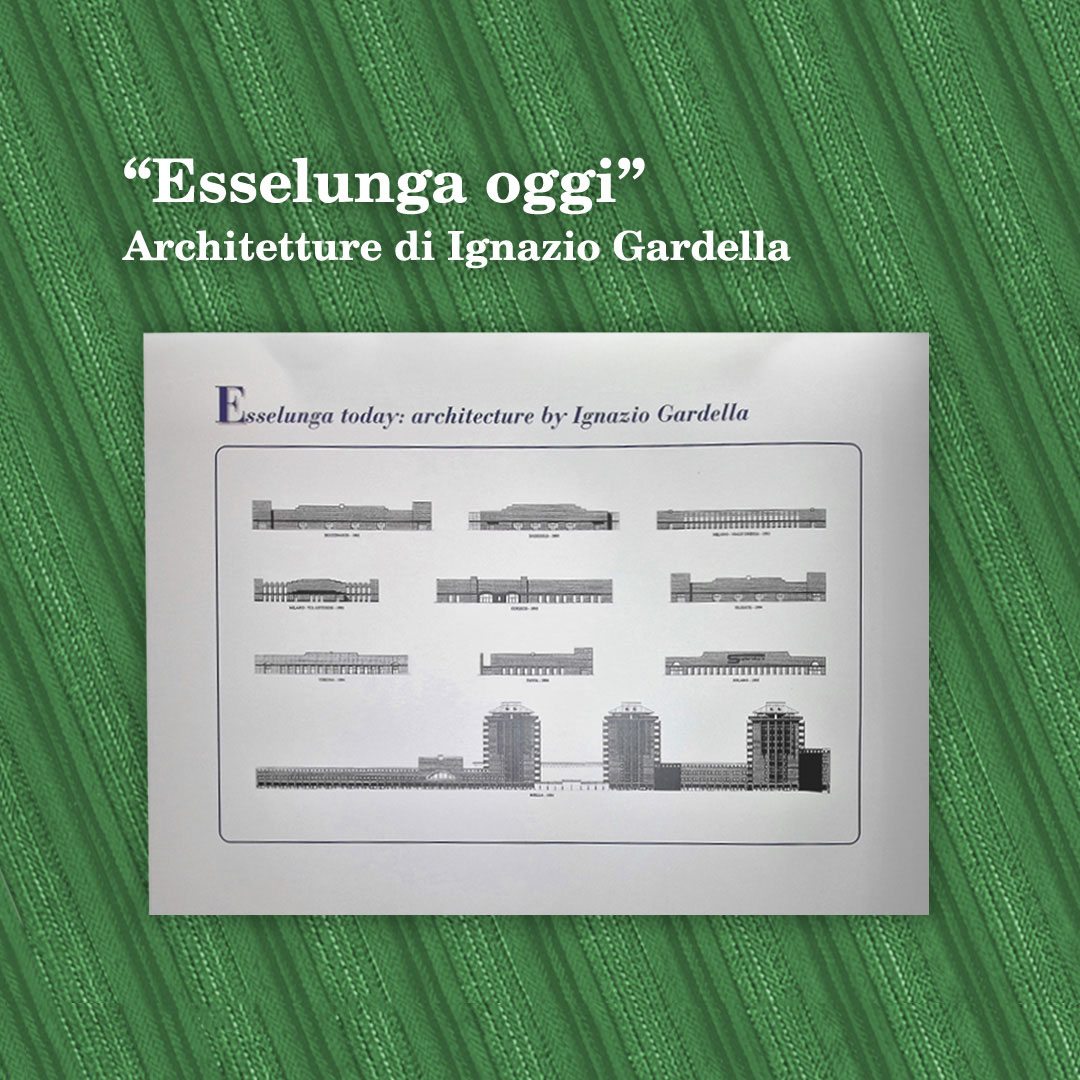
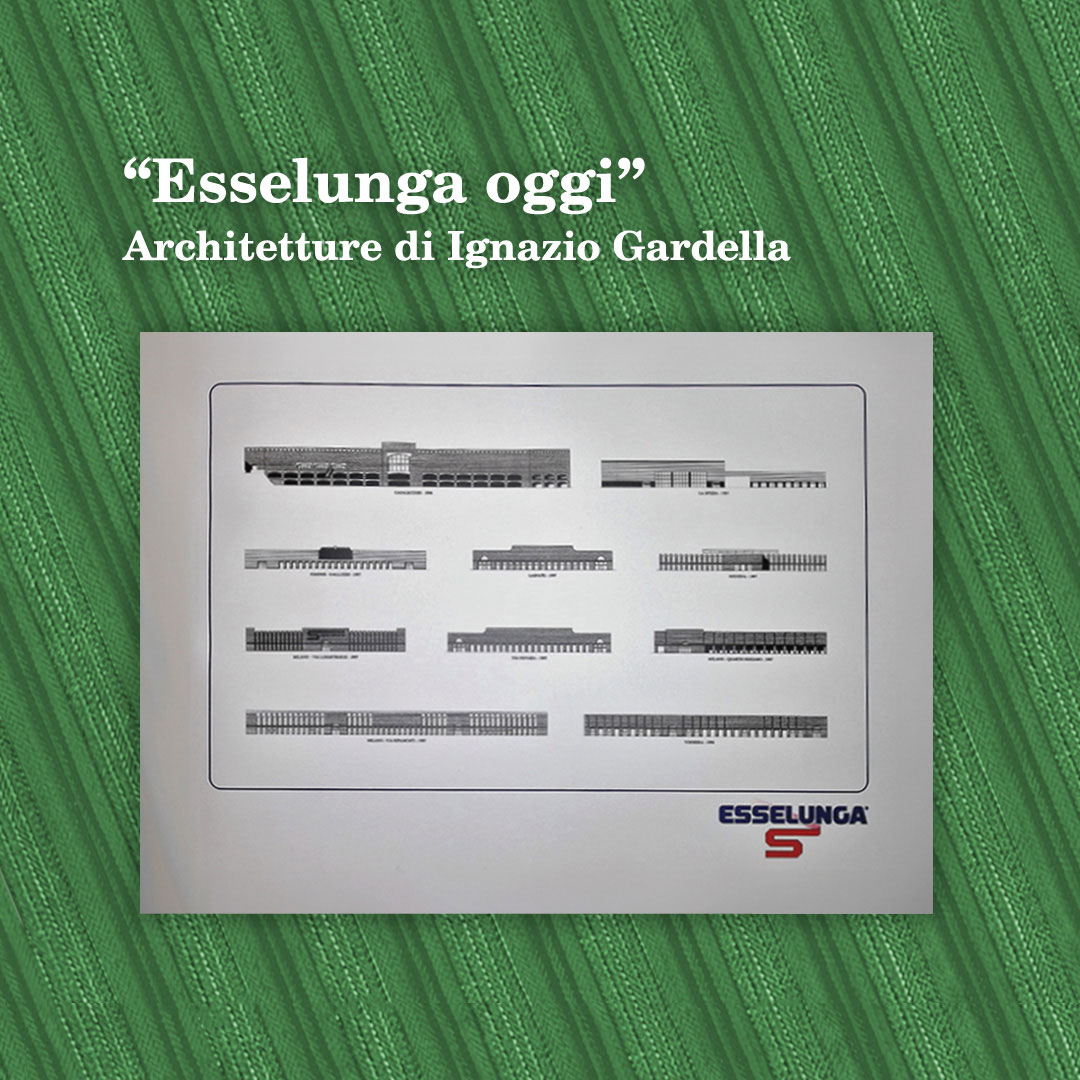
His collaboration with Bernardo Caprotti began with the idea of the superstore, which also renewed the image of the supermarket, transforming it from a simple impersonal “container” into a simple but distinctive architectural model, which “allowed Esselunga to renew its image in the territory in just a few years, reinforcing the recognisability of the brand (…). The strength of this design strategy has shown its effectiveness above all in the suburbs, where these architectures-supermarkets have established themselves as a central service to neighbourhoods. (…)”. (A. COPPA, “Interviews. Architecture-supermarket”). In a presentation brochure with English text, which I had made in the early 2000s to illustrate Esselunga’s progress in a long photographic journey, two pages are devoted to drawings of the façades of some of the many supermarkets designed by Gardella for the company, often with a common stylistic signature, sometimes detached from it, such as the gigantic structures in Biella and Casalecchio di Reno.
Sources:
Villa San Valerio, Albiate, Villa San Valerio Archives, Esselunga Archives, Esselunga, English-language brochure illustrating the history and development of Esselunga from its origins to 2001.
External Bibliography:
I. RIGGI, “Remembering Ignazio Gardella. Conversation with Jacopo Gardella“, in “Archimagazine.com”, 28 December 2009 (with extensive excerpts from the Gardella Historical Archive, Milan).
A. COPPA, “Interviews. Architectures-supermarket“, interview with Carlo Alberto Maggiore, in “Ceramica-info”, October 2021
Follow Le Ossa dei Caprotti family
on Instagram
on Facebook
on Youtube
on LinkedIn
on X
Below, last two photos: the drawings are for shops in Buccinasco 1993; Sassuolo 1993; Milan via Antonini 1993; Corsico 1993; Verona 1994; Pavia 1994; Biella 1994; Casalecchio 1996; La Spezia 1997; Florence Galluzzo 1997; Lainate 1997; Modena 1997; Milan Lorenteggio 1997; Milan via Novara 1997; Milan Quarto Oggiaro 1997; Milan viale Ripamonti 1997; Voghera 1998.