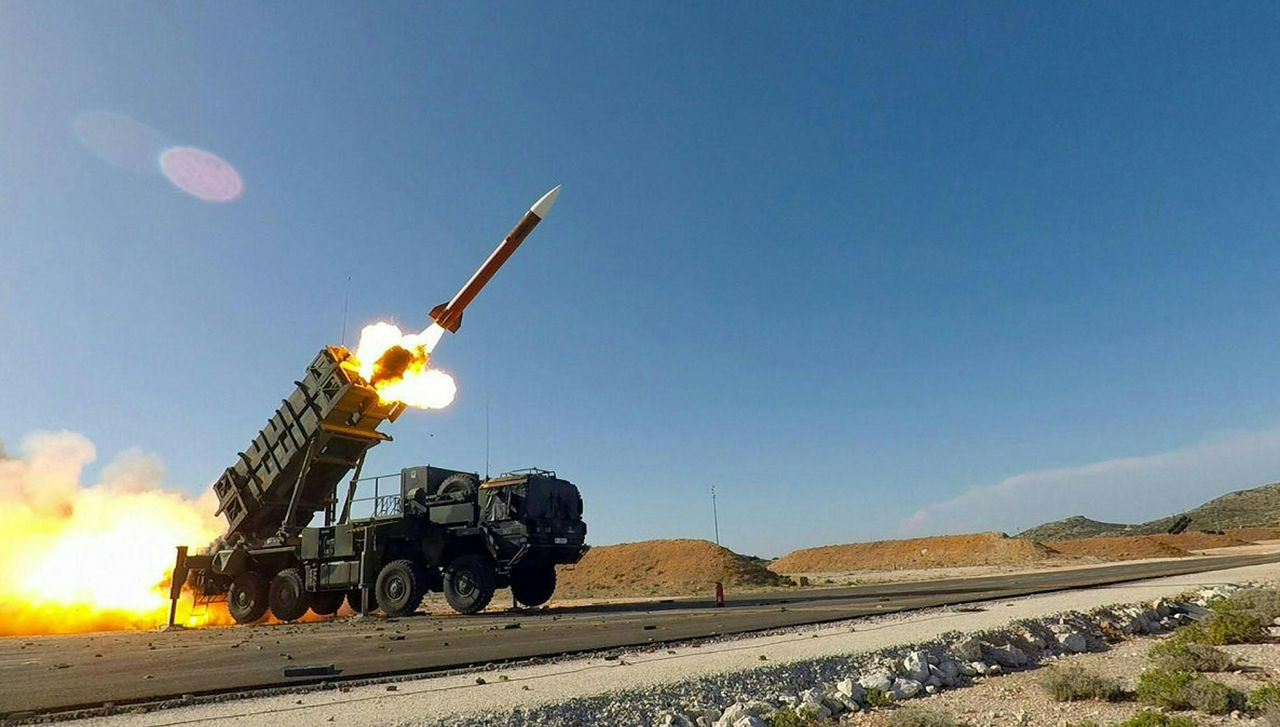
Published on 22 August, updated on 24 August 2026. Above: a Patriot missile system.
A senseless war in which there are no winners? We share our thoughts on this with these three points.
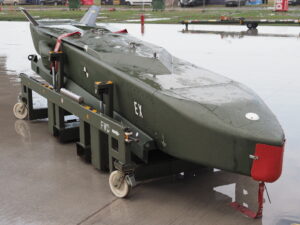
The main obstacle to supplying Ukraine with an adequate quantity of long-range precision missiles is the internal divisions within the German coalition government, as Germany possesses a large quantity of sophisticated Taurus missiles that it could supply immediately.
Chancellor Friedrich Merz’s left-wing coalition partners fear that sending these weapons to Ukraine could provoke a Russian retaliation against Germany. Like the European leaders who believed that pandering to Trump was the way to keep him on their side, the German Social Democrats have argued that dealing with Russia requires a soft approach.
This is an illusion that Germany and Europe can no longer afford. As demonstrated this week, only a firm and resolute Europe will be listened to, by both Trump and Putin.
Bill Emmott (former editor of The Economist).
You can also read this piece on the Taurus – pictured below.
Interview by Benjamin Quénelle and Thomas Wieder Published on 9 February 2026
Interview In an interview with *Le Monde*, the researcher analyses the West’s relationship with war. He argues that Europeans are refusing to consider the possibility of a conflict with Russia within the next few years, which he describes as a form of recklessness.
A historian specialising in the First World War, Stéphane Audoin-Rouzeau is Director of Studies at the School for Advanced Studies in the Social Sciences (EHESS) and chairs the Great War Historian Research Centre in Péronne, in the Somme. He has also researched the genocide of the Tutsis in Rwanda. The author of numerous books, he published *Notre denial de guerre* (Seuil, 60 pages, €5.90) in January.
You say that Europe is in a state of denial, particularly regarding the situation in Ukraine, which you believe is inevitable. What evidence are you basing this on?
I am a staunch supporter of Ukraine, whose defeat strikes me as morally unbearable. But war is a matter of the balance of power. In my view, the turning point was the failure of the Ukrainian counter-offensive in the spring and summer of 2023, in the face of Russia’s impenetrable defences. On the eve of this operation, French General Vincent Desportes, former director of the École de Guerre, had warned that breaking through the Russian front would require 30 to 40 times more military resources than those available to Kyiv: a warning we did not want to hear.
Today, Ukraine has lost 20 per cent of its territory. By failing to reclaim these lands, it is, inevitably, losing the war. Let us transpose this situation to that of France in the spring of 1918. Had it signed the armistice at that time, in the midst of a German offensive, it would have had to accept the loss of 10 per cent of its territory and would therefore, in effect, have lost the war. But, at the time, a turnaround was possible during the summer thanks to what the Anglo-Saxons call ‘game-changers ’: the arrival in the French army of armoured vehicles that were finally effective, and the entry into the conflict of American troops. Unfortunately, today, we cannot see what ‘game-changers’ might bring about such a reversal of the situation and enable Ukraine to recover its lost territories.
Would Ukraine’s defeat mean victory for Russia?
I very much doubt it. Tactically, on the front line, Russia has probably already won, but at such a disproportionate cost that, strategically, it is defeated: its political objectives have not been achieved, given that its ambition was the complete subjugation of Ukraine. To achieve a depopulated and devastated Donbas, the human, material, economic, diplomatic, cultural and other costs were so heavy for Russia that the sacrifices seemed absurd.
In hindsight, Russian President Vladimir Putin’s decision to invade Ukraine on 24 February 2022 was strategically absurd from the point of view of Russia’s interests; just as the decision by the major European powers to go to war in 1914 had been irrational, given the outcome four years later. But the fateful decision was taken.
Russia’s territorial gains are very limited. Russia’s war of attrition is devastating its own population and weakening its economy. Does this not offer hope for Ukraine?
This reassuring rhetoric seems to me to be part of our denial of the war, which dates back well before 24 February 2022. This war and the prospect of a Ukrainian defeat are unbearable for us. Ukraine’s defeat will be our defeat. We have supported it in its struggle; it has fought with extraordinary courage; but by failing to provide it with all the necessary resources, or by providing them too late, we have forced it to fight with one hand tied behind its back.
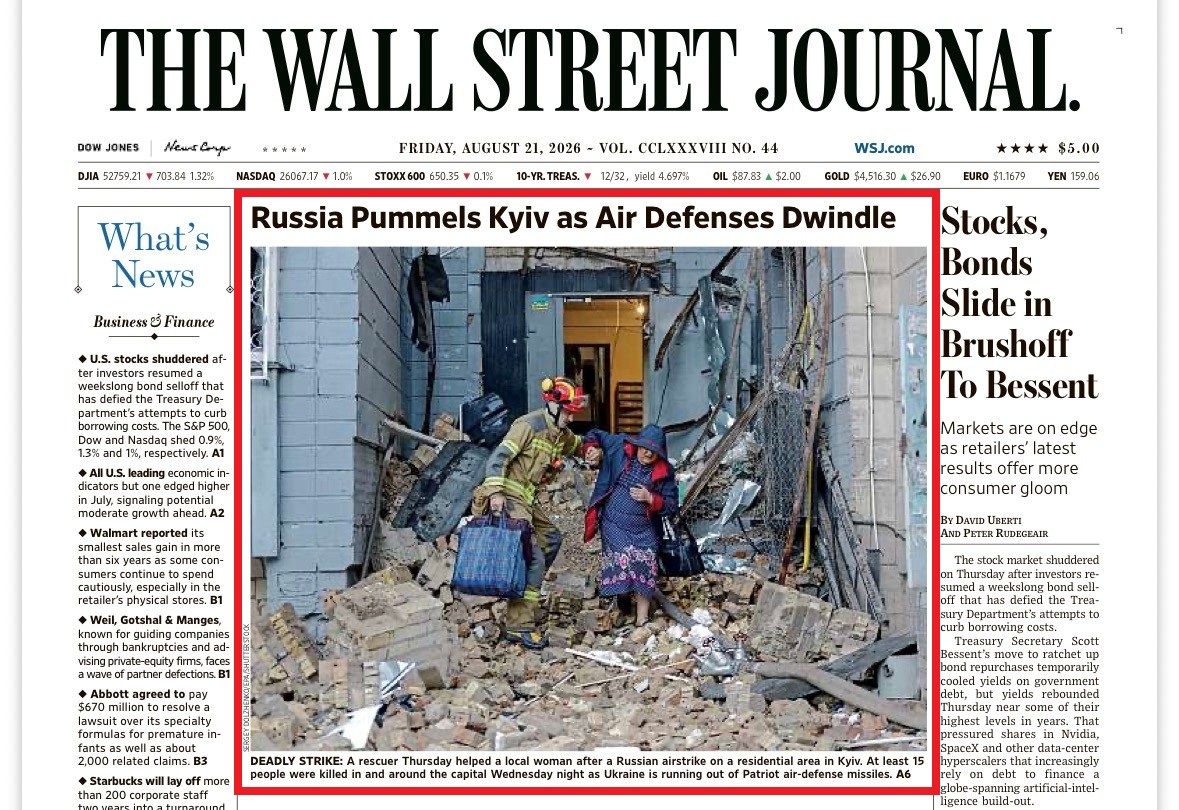
Below: “Russia pounds Kyiv as air defences weaken”
As the former Secretary-General of the North Atlantic Treaty Organisation, Jens Stoltenberg, acknowledged, it would have been necessary to arm Ukraine in advance and perhaps even send troops there earlier to have any chance of deterring the Russian regime. Then it took an interminable amount of time to deliver the heavy weapons that Kyiv needed: the German Leopard 2 tanks, the American F-16 fighter jets… We also prevented Ukraine from using long-range missiles.
The West allowed Ukraine to be locked into a war of position, where the advantage lies with the defence, but did not allow it to counterbalance its initial inferiority. The loss of 20 per cent of Ukrainian territory is entirely our fault; most of these territories were lost as early as 2022.
Our original sin was to have considered an attack by Russia impossible. It was the result of an absurd consensus amongst politicians, intelligence services, staff and academics, all convinced that Russia would not attack. Russia had already entered a state of war. This disconnect proved fatal. Today, the Ukrainian President Volodymyr Zelenskyy is beginning to blame the Europeans, which we are taking very badly: is he not right?
Does this denial continue today, with our refusal to accept that the war could become global, between Russia and the West?
Since the autumn of 2025, political and military leaders have been increasingly vocal in their efforts to prevent a possible conflict within five years. The German army has also recently declared that it will be ready within two or three years, anticipating the evacuation of 1,000 wounded soldiers a day. This is a turning point.
Yet, even as concerns are voiced in Europe, this new reality has not yet taken hold in our societies, as demonstrated by the stir caused by the statement from the Chief of the Defence Staff, Fabien Mandon, regarding the possibility of ‘losing our children ’. Pacifist reflexes are resurfacing, in a form reminiscent of the 1930s: we knew that war was looming, but we wanted to prevent it at all costs. Nazism was, in essence, an ideology and a promise of war. In thefaceof it, any form of pacifism seems unjustifiable.
Is Europe making the same mistake today in the face of Putin?
I truly fear that we are operating within the same line of reasoning: we do not want to see the bellicose nature of the Russian state. Yet this has been evident since 2008 with the war in Georgia, followed by the start of the conquest of Ukraine in 2014, and the intervention in Syria. When the Russian army intervened in 2015 to save Assad’s regime, the Syrian rebels said that Russia would eventually turn against us. We did not want to hear such a warning. Just as we did not want to take into account the fears of the countries of the former Soviet bloc, which were far more concerned about the Russian threat.
Russia after the collapse of the USSR is compared to Germany after its defeat in 1918: decades later, both are ‘replaying the war they lost’. Should history warn us that Moscow is seeking a more widespread conflict?
This idea stems from a thought by [the philosopher] Raymond Aron in *Les Guerres en Chaîne*, a book published in 1951, in the midst of the Korean War, when there were fears that the Cold War would escalate into open warfare.[The philosopher] Raymond Aron, who had remained in Germany in the early 1930s during the rise of Nazism, warned: “To bring down the monster [the USSR] ’, but to ensure that it does not draw new strength from the bloodshed, which could subsequently make it even more dangerous.
Similarly, it was not necessary for post-Soviet Russia to repeat the pattern of post-, which, having been defeated, re-emerged asa power under the Third Reich and once again threatened the world in a far more brutal manner than the empire of Wilhelm II. The USSR lost the Cold War, which was child’s play for the West. But we have overlooked the fact that Russia has never acknowledged its defeat and has therefore not accepted our conclusions from the period 1989–1991. Does what is happening today with Putin’s Russia evoke what Aron feared: a Russia that has become more dangerous than the Soviet Union ever was?
In *The Origins of Totalitarianism*, Hannah Arendt writes: ‘We can no longer afford to take what was good in our past and call it our heritage, whilst rejecting what was bad on the grounds that it is a dead weight destined to fall into oblivion. Do we, in Western Europe, tend to regard war as belonging to a bygone past?
Yes, yes. From this point of view, our view of the20th centuryis quite revealing. By dating it from 1914 to 1991, we are treating this ‘twentieth century’, to use the phrase coined by the British historian Eric Hobsbawm in 1994, as a tragic interlude from which we emerged with the fall of the USSR and the supposed triumph of liberal democracy. Such a view of events led us to believe that we were on the path to perpetual peace, a sort of parousia – that is, the coming of Christ at the end of time. I use this religious metaphor because such a belief is a profound aspiration of our societies, a legacy of the old Christian millennialism.
What is paradoxical is that the experience of the two world wars, far from shattering this great hope for a definitive peace in Europe, has, on the contrary, strengthened it. This is the very foundation of European integration. Since the failure of the European Defence Community in the 1950s, this has been achieved by sidestepping the issue of a common foreign and defence policy. We wanted to believe that the creation of a large common market, like the ‘soft trade’ of the 18th century, would be enough to banish war from our expectations. Today we are paying the price for this recklessness.
Has our view of the United States also been based on denial?
I fear so. When Donald Trump returned to the White House in January 2025, I heard reassuring voices saying he would be an heir to Ronald Reagan – certainly a somewhat peculiar one, but part of a sort of conservative continuity. We now realise that Trumpism is a form of fascism, in the sense that it carries within it a revolutionary and subversive dimension that sets it apart from classical authoritarianism.
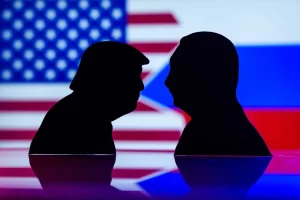
We Europeans find it hard to admit that we are facing a radically new power. And are we grasping the extent of the collusion between Trumpism and Putinism, which thus calls our ways of thinking into question? To become aware of this is to mourn the entire world order inherited from 1945 and 1991. And above all, it is to discover ourselves as we really are: that is to say, totally dependent on the United States for our security, and incapable, for the time being, of ensuring our own defence.
Benjamin Quénelle
Tommaso Wieder [ /vc_column_text]

Drones from Kyiv have partially or completely destroyed seven warehouses belonging to Russia’s largest online retailer.
Putin has ordered the Russian government to help rebuild the warehouses destroyed in a series of Ukrainian drone attacks this summer that devastated Wildberries, the country’s largest online retailer. The Russian president told officials on Wednesday that the country’s logistics and storage capacity “must be rebuilt, including with government support”. …
Ukraine’s attacks on Russian refineries have forced one of the world’s largest energy exporters to import petrol and introduce rationing at the pump in its biggest fuel crisis since the collapse of the Soviet Union. Drone attacks on Russian Black Sea ports have also paralysed its wheat exports and cut off one of the main routes for its oil sales.
Putin admitted that the drone attacks and Western sanctions were holding back Russia’s GDP growth, which rose by just 0.6 per cent in the first half of this year. He added that “there are no and cannot be any critical consequences from these attacks” in his remarks on Wednesday. “But, of course, they are causing us harm; that is obvious.” The announcement offers a potential lifeline to Wildberries, the struggling e-commerce retailer whose business has become a key target of Ukraine’s drone campaign.
The attacks have killed at least 10 people and left the company facing losses that Russian analysts have put at up to Rbs878bn ($10bn) in destroyed stock and facilities. Ukraine has justified the attacks on the grounds that Wildberries sells drone components and other dual-use equipment to the Russian military. Denys Shtilerman, co-founder of FirePoint, the defence manufacturer whose drones have been heavily used in the attacks, said that Ukraine hopes the losses will trigger a wider economic crisis by forcing Wildberries to default on its debt to state-owned banks, including VTB, its main partner.
The total cost of bailing out Wildberries could rise to Rbs1.3tn ($15 billion) in new debt financing, whilst the company’s turnover has fallen by 25 per cent after the small businesses that make up the majority of its sellers lost their stock or left the platform, according to the independent Russian news site The Bell. Putin did not say how much Russia would spend to rescue Wildberries or mention the company by name, but he promised that the destroyed warehouses would be rebuilt to a “qualitatively new technological level”. He suggested that the support could include tax breaks and subsidised loans. The central bank has already instructed banks to restructure the debt of Wildberries’ sellers on favourable terms, whilst the company itself has promised some financial support to those hardest hit.
Russia has also inflicted increasing damage on Ukrainian cities in recent weeks through an intensified campaign of missile and drone strikes.
Ukraine’s air defences are unable to stop ballistic missile attacks, having exhausted the interceptors for the US-made Patriot launch batteries, the only technology capable of shooting them down.
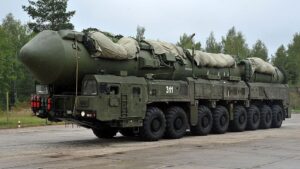
A Russian Oreshnik missile