

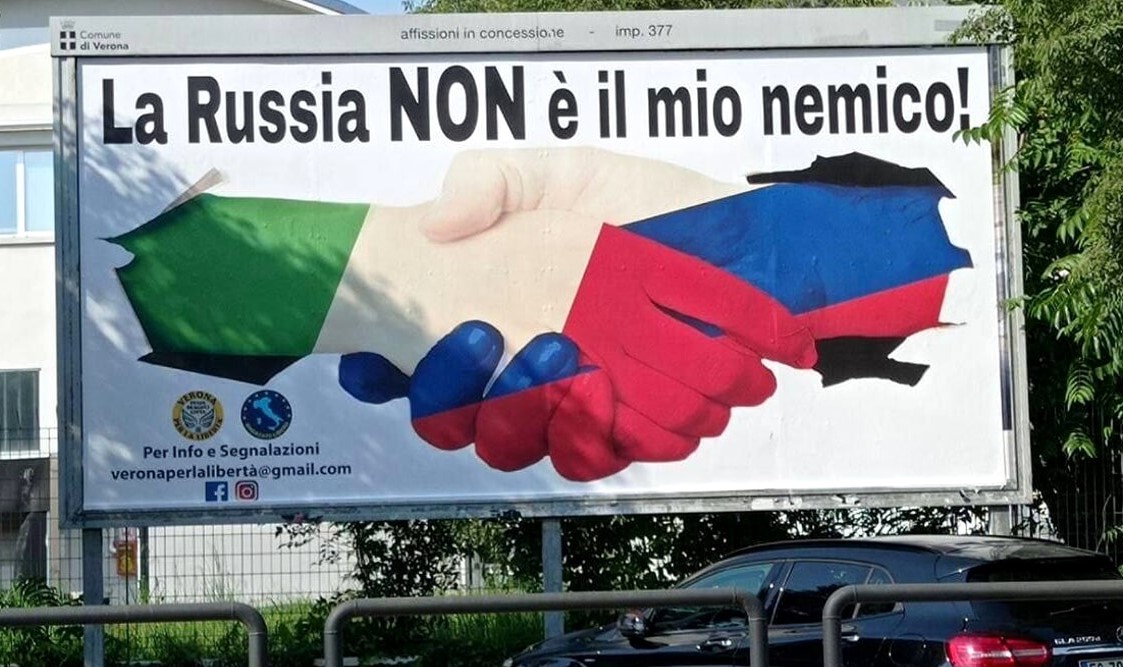
Compiled 15 May, updated 10 August 2025. Above: Russian propaganda campaign in Italy. On its developments read here.
Press freedom according to Reporters Sans Frontieres: Italy, within two years – from 2022 to 2024 – went from 41st to 49th place.
I had mentioned this at the Teatro Parenti, at the presentation of my book, Le Ossa dei Caprotti.
I had already mentioned it, regarding the events that concerned me, a few years ago. But also in the affairs concerning the Nestlé waters or the acquisition of Auchan by Conad, with the related redundancies, where the Italian media were very careful not to report the news.
This ‘anomalous’ behaviour has also affected events such as the one that pitted Esselunga against Coca-Cola or il Fatto Alimentare against the San Benedetto group (water and soft drinks).
Looking at the overall picture of the media, in 2025, the situation has worsened, in Italy and worldwide.
I describe it better through an article in Il Bullone, a partner of the Guido Venosta Foundation.
You can find my conclusion at the end of the piece.
the first commitment: growing press freedom now under attack and threat
Authors: Edoardo Grandi
April 12, 2025
Making People Think, The Bolt’s Dossiers, The Bolt, The First Commitment, Thinking
B.Liver Edoardo recounts the murder of journalist Zavala, a symbol of an increasingly threatened freedom of the press, amid cartels, authoritarian governments and censorship; also in ‘problematic’ Italy according to RSF.
Edoardo remembers Zavala, journalist killed in Mexico. A lucid and painful analysis of press freedom under attack, also in Italy and worldwide.
Zavala, freedom of the press and fear: when informing becomes a heroic act
This name may not mean anything to you, but we would all do well to remember it: Kristian Uriel Zavala.
a 28-year-old Mexican journalist, he was murdered together with his driver Axel Yahir in the state of Guanajuato on 2 March.
He is but the latest victim of an endless massacre of reporters that has been staining Mexico with blood for decades, thus confirming it (among nations not at war) as one of the most dangerous places in the world for those who practice this profession. Even for people like Zavala, who in theory should have benefited from a federal protection programme initiated by the government in recent years. The official figure of journalists killed in Mexico from 2019 to 2024 amounts to 37, but it is an approximate number by default: often the authorities who provide this data only refer to well-known personalities, and do not take into account those who have disappeared and are most likely dead by now. This carnage is mainly related to their denunciations of the powerful drug cartels, but also concerning political corruption.
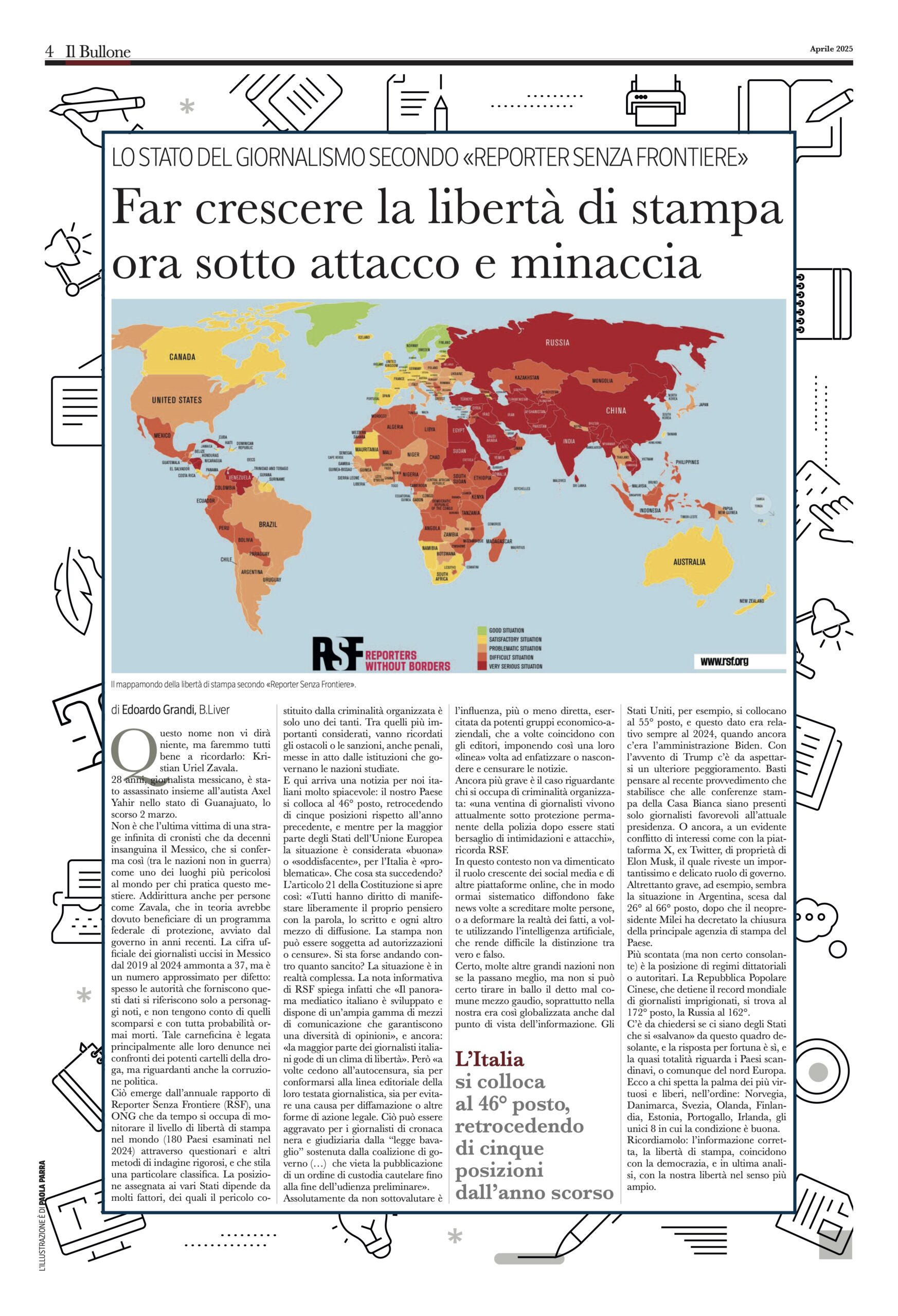
Italy going backwards: the report by Reporters Without Borders
This emerges from the annual report by Reporters Without Borders (RSF), an NGO that has long been monitoring the level of press freedom in the world (180 countries in Inel 2024) through questionnaires and other rigorous survey methods, and which draws up a particular ranking. The position assigned to the various states depends on many factors, of which the danger posed by organised crime is only one. Among the most important ones considered are the obstacles or sanctions, including criminal sanctions, put in place by the institutions governing the nations studied.
And here comes some very unpleasant news for us Italians: our country ranks 46th, down five places from the previous year, and while for most European Union states the situation is considered ‘good’ or ‘satisfactory’, for Italy it is ‘problematic’. What is happening?
Article 21 of the Constitution opens as follows: ‘Everyone has the right to express his thoughts freely by word, writing and any other means of dissemination. The press may not be subject to authorisation or censorship’. Is this going against what is enshrined? The situation is actually complex. The RSF briefing note in fact explains that ‘the Italian media landscape is developed and has a wide range of media that guarantee a diversity of opinions’, and again: ‘most Italian journalists enjoy a climate of freedom’. However, ‘sometimes they succumb to self-censorship, either to conform to the editorial line of their media outlet or to avoid a libel suit or other forms of legal action. This can be exacerbated for crime and justice journalists by the ‘gag law’ supported by the governing coalition (…) which prohibits the publication of a custody order until the end of the preliminary hearing’.
Absolutely not to be underestimated is the influence, more or less direct, exerted by powerful economic-business groups, which sometimes coincide with publishers, thus imposing their own ‘line’ aimed at emphasising or hiding and censoring news.
Even more serious is the case concerning those who cover organised crime: ‘some twenty journalists are currently living under permanent police protection after being the target of intimidation and attacks,’ RSF recalls.
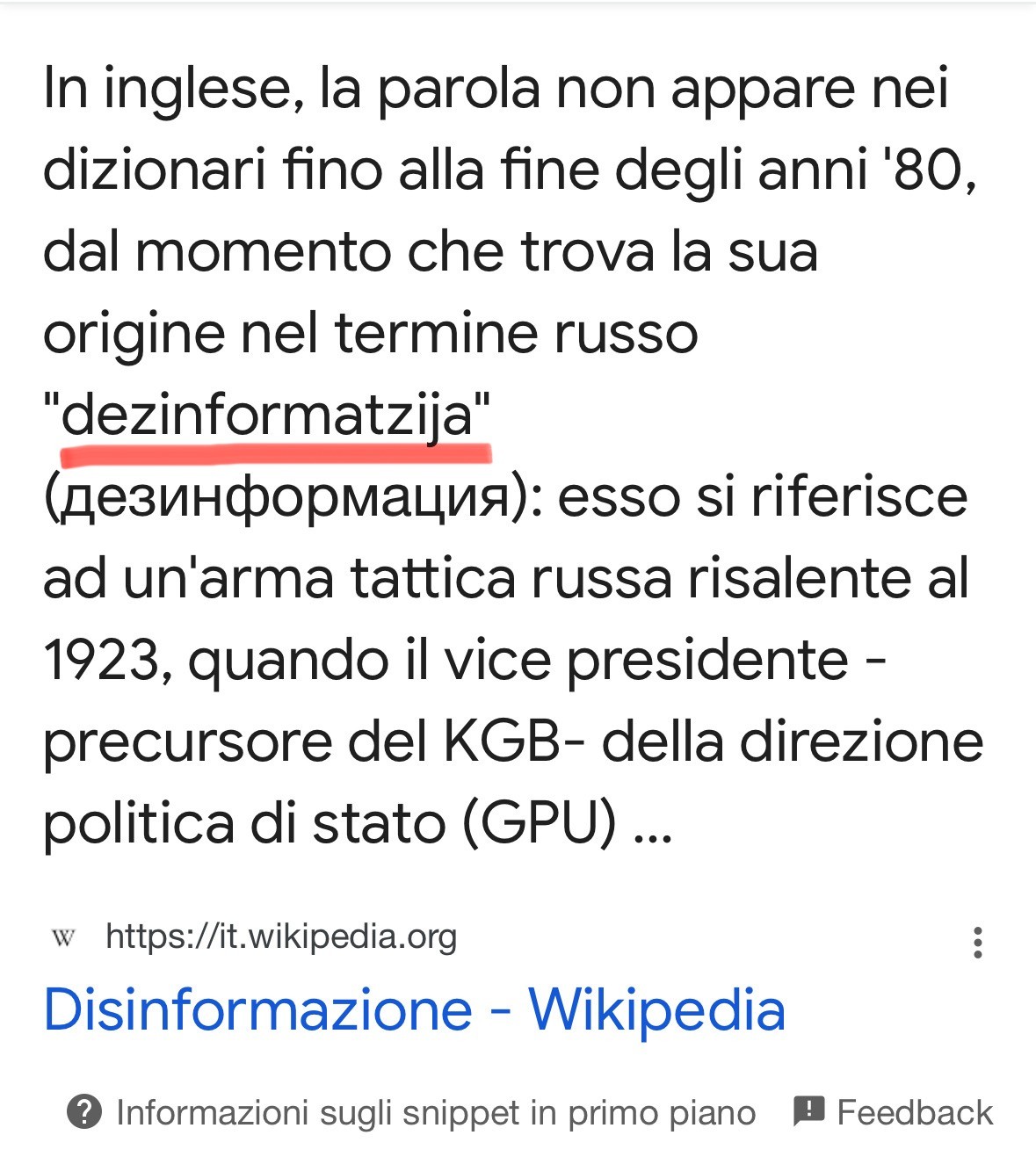
In this context, one should not forget the growing role of social media and other online platforms, which now systematically spread fake news aimed at discrediting many people, or at distorting the reality of facts, sometimes using artificial intelligence, which makes it difficult to distinguish between true and false[this is used on a massive scale by Vladimir Putin’s Russia, which invented disinformation in 1923].
The virtues of the freest countries: a beacon of hope?
Of course, many other great nations do not fare any better, but the saying mal comune mezzo gaudio cannot be invoked, especially in our era, which is so globalised even in terms of information. The United States, for example, ranks 55th, and this figure was also relative to 2024, when the Biden administration was still in place. With the advent of Trump, further deterioration is to be expected. One only has to think of the recent provision stipulating that only journalists in favour of the current presidency may attend White House press conferences. Or the obvious conflict of interest as with the X platform, formerly Twitter, owned by Elon Musk, who plays a very important and delicate role in government.
Equally serious, for example, seems to be the situation in Argentina, which dropped from 26th to 66th place, after the new president Milei decreed the closure of the country’s main news agency.
More obvious (but certainly not consoling) is the position of dictatorial or authoritarian regimes. The People’s Republic of China, which holds the world record for the number of imprisoned journalists, ranks 172nd, Russia 162nd.
One wonders if there are any states that are ‘saved’ from this bleak picture, and the answer fortunately is yes, and almost all of them are Scandinavian countries, or in any case northern European countries. Here is who holds the palm of the most virtuous and free, in order: Norway, Denmark, Sweden, Holland, Finland, Estonia, Portugal, Ireland, the only eight where the condition is good.
Let us remember: correct information, freedom of the press, coincide with democracy, and ultimately with our freedom in the broadest sense.
– Edoardo Grandi
Conclusion :
- it is serious that the countries ‘in which the condition is good’ do not include France, Great Britain and Germany in addition to Italy.
- on the USA, I recommend this reading: How a Democracy Dies To see the transition to authoritarianism, one must measure the price of opposition. The US has already crossed the line
- the Italian situation is like a snake “biting its own tail”: newspapers provide less news, they lose more and more copies ( compared to the twelve months of 2023, when the average number of copies sold was 1.46 million, the drop – in 2024 – is 7.1% a year-on-year value that is confirmed within a decidedly narrow range (therefore probably by now structural) when compared to previous years: -8% in 2023 and -7.3% in 2022, source)
- russia is a danger because the Internet is now, even in our country, the main means by which citizens get information , and interference and conditioning, as in the case of ‘Tik Tok in Romania’, can be manifold. This is also the case with X, accused of favouring MAGA extremists and the Russians. Read also EU report, 90 countries in the crosshairs of Russian fake news. Social X basin of disinformation, hit EU vote. And in the new package of sanctions on Russia 20 entities will be subject to interdiction measures (Republic 15 May 2025) and Over 3 million pro-Russia articles infected NewsGuardchatbots, infiltrated by a disinformation network called Pravda.
- russian propaganda even lurks in school books (Zanichelli, Mondadori Education, Le Monnier, Deascuola). Since 2010, 28 textbooks have been telling Putin’s historical version in Italian schools (‘Ukraine does not exist’, Crimea has not been invaded, etc.).
- Italy, unfortunately, is the country most inundated with Russian propaganda in Europe
- If power spies on journalists and opponents: we are maintaining an ostentatious understatement towards the affair of the journalists spied on by Paragon. With the exception of this newspaper and Senator Renzi’s repeated interventions, the issue of a democracy in which a deadly eavesdropping tool can be inoculated into the mobile phones of reporters seems to leave us rather indifferent.We are maintaining an ostentatious understatement with regard to the affair of the journalists spied on via Paragon. With the exception of this newspaper and Senator Renzi’s repeated interventions, the subject of a democracy in which a deadly pick-up tool can be inoculated into the mobile phones of reporters seems to leave us rather indifferent
- When one speaks of the press, one must now include the entire web (social, sites, podcasts, etc.). And this is precisely why the manipulation of history that is taking place cannot be tolerated. Read about it : Decima MAS : if the Italian Navy ignores its History.

According to a study by the European Parliament, between 2022 and 2023, Italy ranked first among the countries that initiated legal actions to intimidate journalists, activists, editors and NGOs, with 25.5 per cent of the total number of cases. The pretext most often used to justify such legal actions is defamation, but the reality is that over 90% of defamation lawsuits against journalists are dismissed in the first instance.”
Unsustainable legal costs, years of hearings, reputation at risk. In a word: gag.


