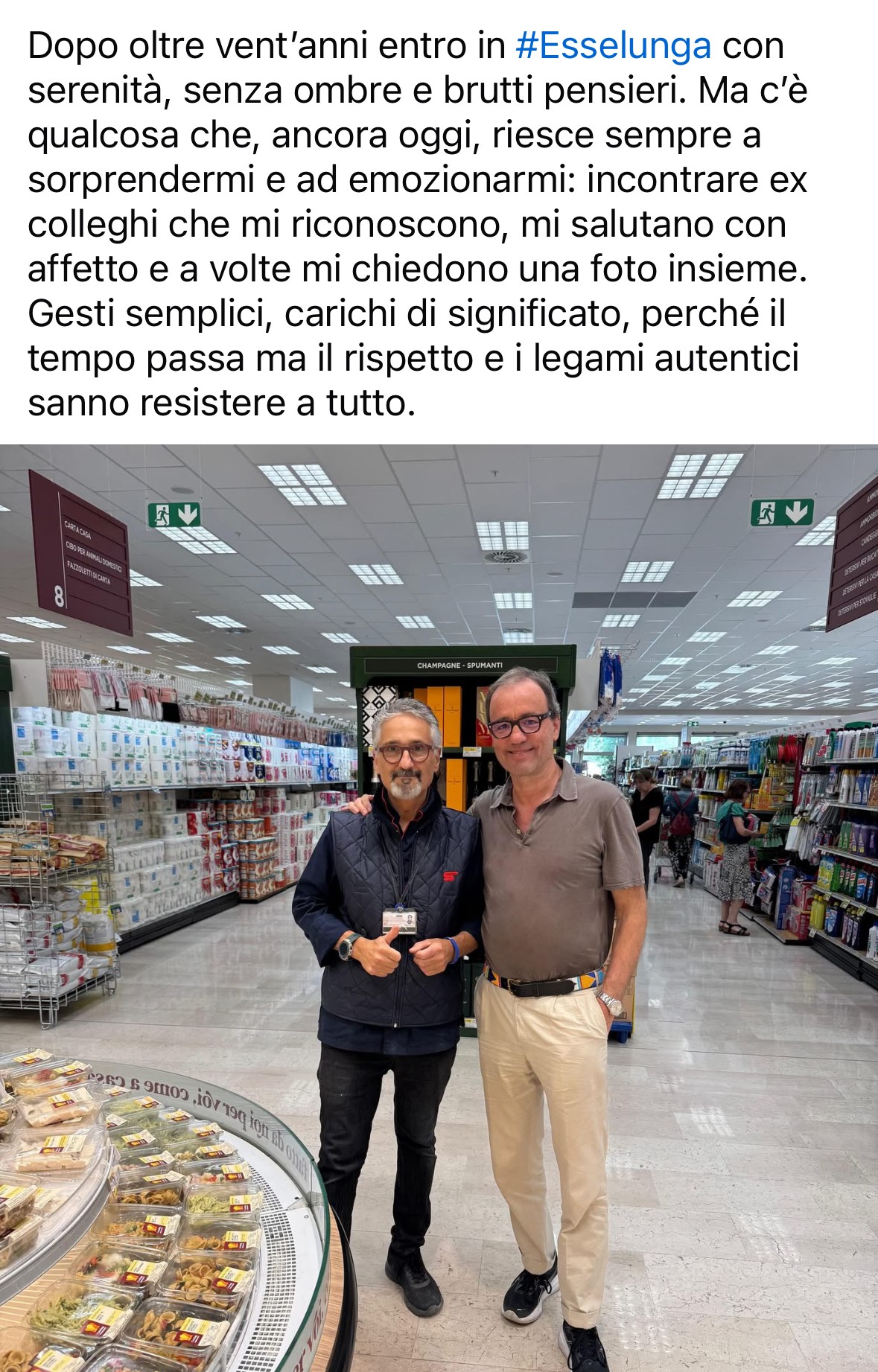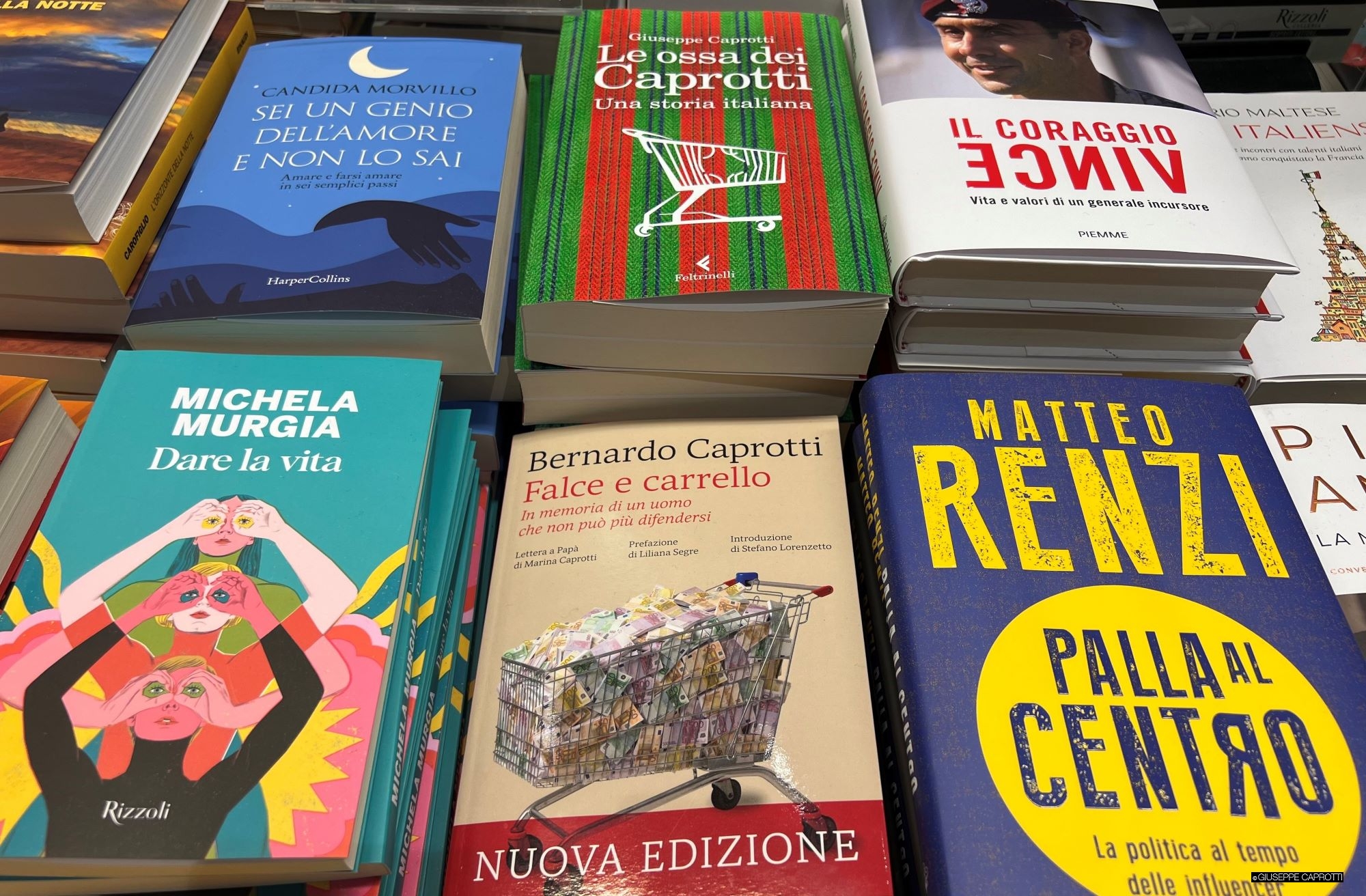
Written on 8 March 2024, updated on 15 July 2025
Above: amongst the many essays published weekly in Italy, many have a Bibliography with very sparse references. Sometimes it is even practically non-existent.
Written on 24 February, updated on 26 March 2024.
MARIO SASSI, Senior Advisor & Blogger (…), LinkedIn 15 February 2024
MS
Reading the description of their father, as presented by the two Caprotti brothers, one feels as though one is reliving the Indian parable of the blind men who are asked to describe an elephant simply by touching it with one hand. The same elephant is thus presented, to those listening to the account, in completely different ways. Some describe it as a pillar, having touched one of its legs; others as a spear, having touched its tusks; and still others as a whip, having touched its tail. A father who behaved more like a company boss towards his eldest son, spending part of his time stifling the boy’s initiative whilst in constant competition with him, whereas with his daughter he would ‘shell peas’ after a trip to the supermarket. Intolerant and cruel towards the former, affectionate and considerate towards the latter, to the point of improvising – “in the final days of his life, with a perfectly clear mind, practical instructions on everything, starting with his staff” – as his daughter Marina recounts in an interview with *Corriere*. A deep rift that had developed over the years, utterly irreconcilable, involving friends, managers and company staff at every level. Far from being resolved. ‘Falce e Carello’, however, remains a dated book, save for the ‘Letter to Dad’ and Liliana Segre’s foreword. The Italy captured by Bernardo Caprotti no longer exists. Esselunga now faces very different challenges from discount stores, new competitors and, above all, from within itself. Marina Caprotti’s ‘Letter to Dad’, which I read carefully, is nonetheless sincere and profound. It expresses the state of mind of a daughter who felt her deepest affections had been wounded and who is committed to telling the story of the father to whom she was very close. And so I understand her determination to defend his memory. Just as I do Liliana Segre’s memories. True friendships – and Segre’s friendship with Caprotti senior was just that – are valuable precisely because they reveal themselves when they matter most. Not merely as a formality. And, in this situation, they certainly did. A sincere, long-standing friendship that lasted until the death of Esselunga’s former owner. Liliana Segre was one of the very few people invited to his funeral. Caprotti was certainly instrumental in the renovation of the Shoah memorial beneath Milan’s Central Station. But it would be reductive to limit the relationship between the two to that or other specific initiatives. Liliana Segre speaks of the value of that friendship and of Caprotti’s search for ‘elective and non-elective affinities that bound two elderly gentlemen from a bygone era’.
Whatever one may think of him, Bernardo Caprotti was a unique entrepreneur, vital to the growth of the sector and to our country. He was capable of swimming against the tide when circumstances demanded it. The destiny of his family and his children has thus been fulfilled. Now it is time to turn the page. (This is an extract; if you wish to read the full article, click below)
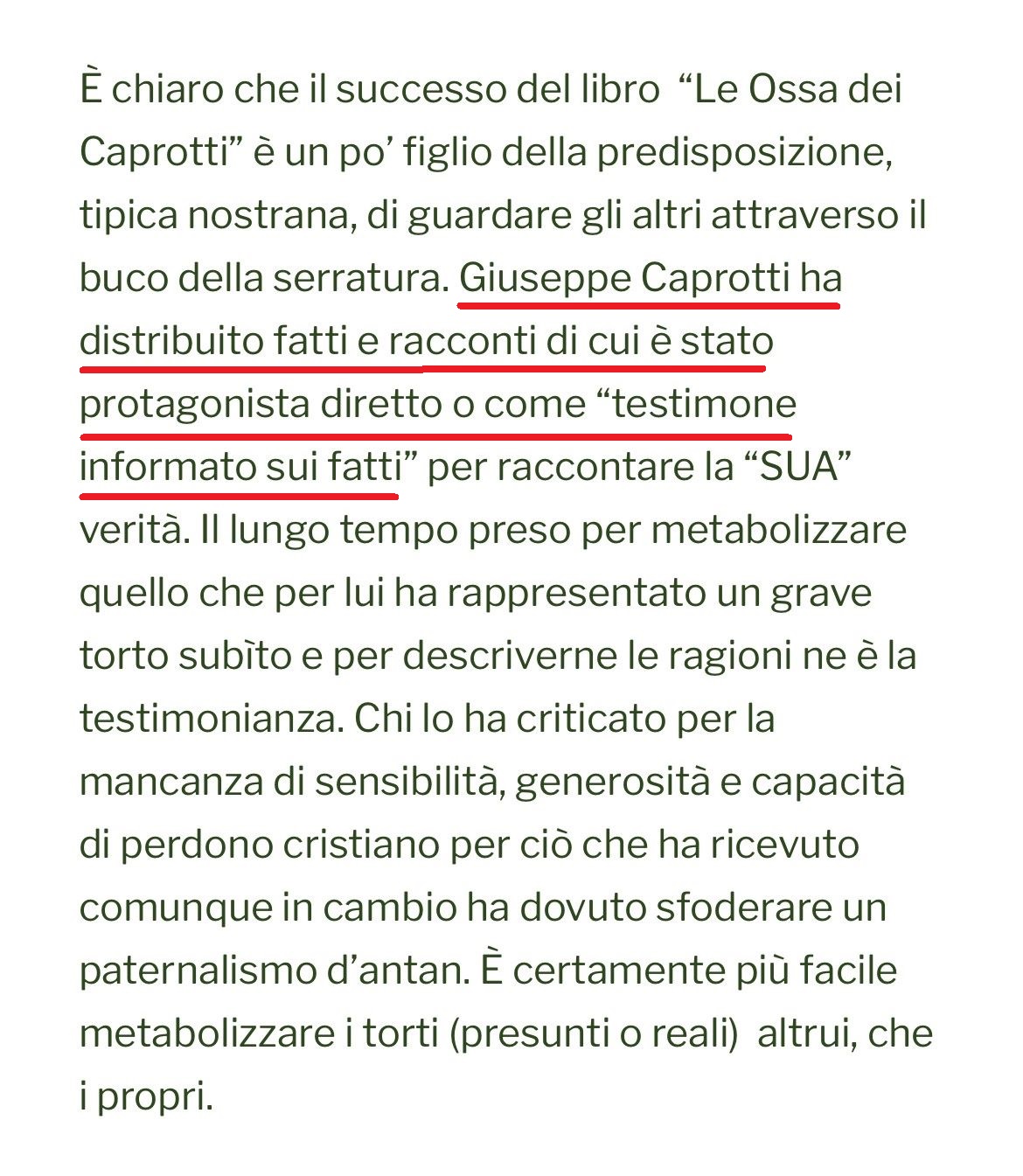
[The article continues: The Caprotti saga: between two truths, a father and two brothers.] and the author adds: Giuseppe Caprotti has shared facts and accounts in which he was either a direct protagonist or an ‘informed witness to the events’ in order to tell ‘HIS’ truth…
Comments, also on LinkedIn
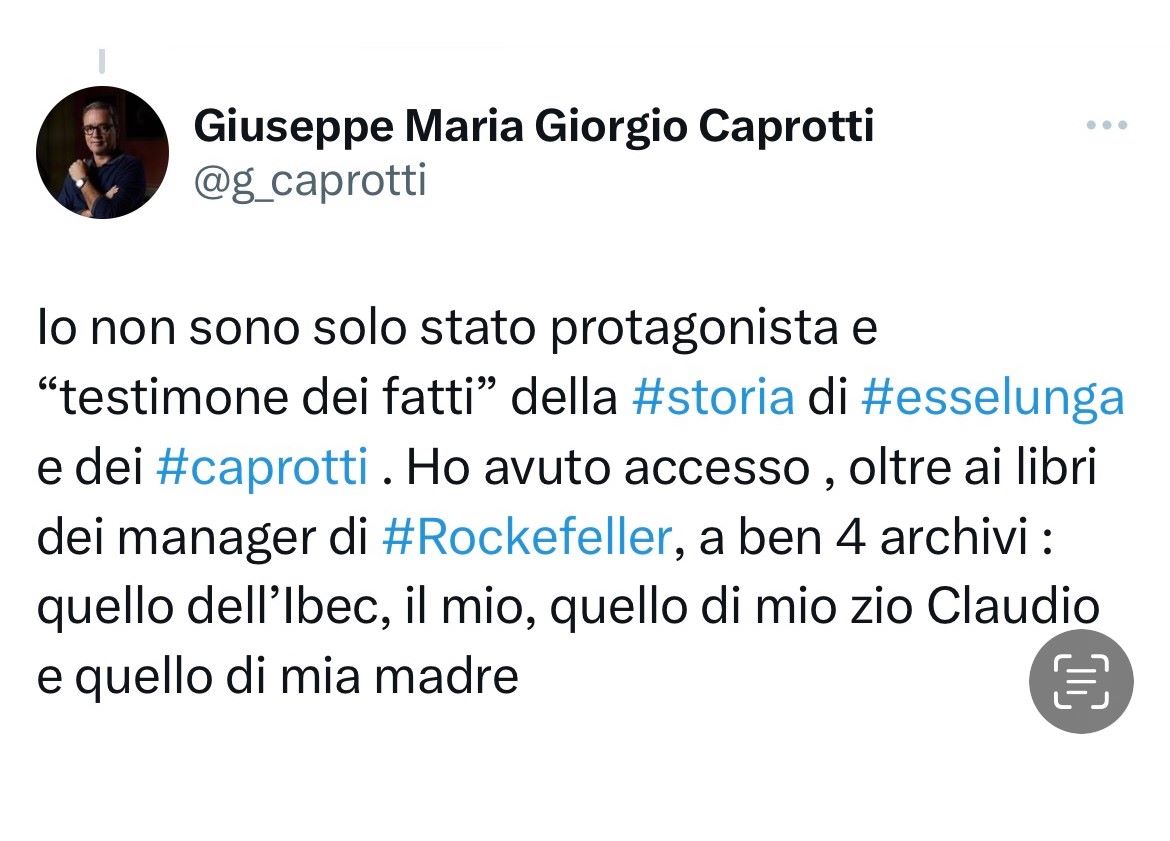
GC: I’ll leave the same comment I posted on Twitter. Be careful not to confuse carrots (!) with apples
@G. Caprotti
I wasn’t just a key figure and ‘eyewitness’ to the #history of #esselunga and the #Caprotti family. In addition to the books by the #Rockefeller managers, I’ve had access to no fewer than four archives: that of the Ibec, my own, that of my uncle Claudio [Caprotti] and that of my mother [Giorgina Venosta].
MS: Giuseppe Maria Giorgio Caprotti I’m interested in everything to do with your role as a manager in the company, the reactions, the presence of the two ‘fathers’, and the repercussions on the company and today’s key figures. With all the limitations of an outside observer. The story engages me just the right amount.
GC: MS, OK, but even when it comes to company affairs, the account is based largely on the archives
MS: GMGC, up to a certain date.
GC: MS – always testimonies from former staff and consultants
GC: MS – and I’ll tell you more: they wrote part of it themselves. Feltrinelli and I just edited it
MS: GMGC – I held some of them in high regard. Others, much less so
GC: MS but you don’t know who they are. In the book, I mention 150, but at a certain point I lost count. And some aren’t mentioned; they didn’t want to be
MS: GMGC I don’t understand this back-and-forth. I could name about ten. If two mentioned in the book are enough, I’d say an excellent manager who was later taken on by Rewe as marketing director, and a human resources director whom I didn’t rate very highly, with whom I negotiated a renewal of the national collective labour agreement.
GC: MS, that’s not them. Have a good day
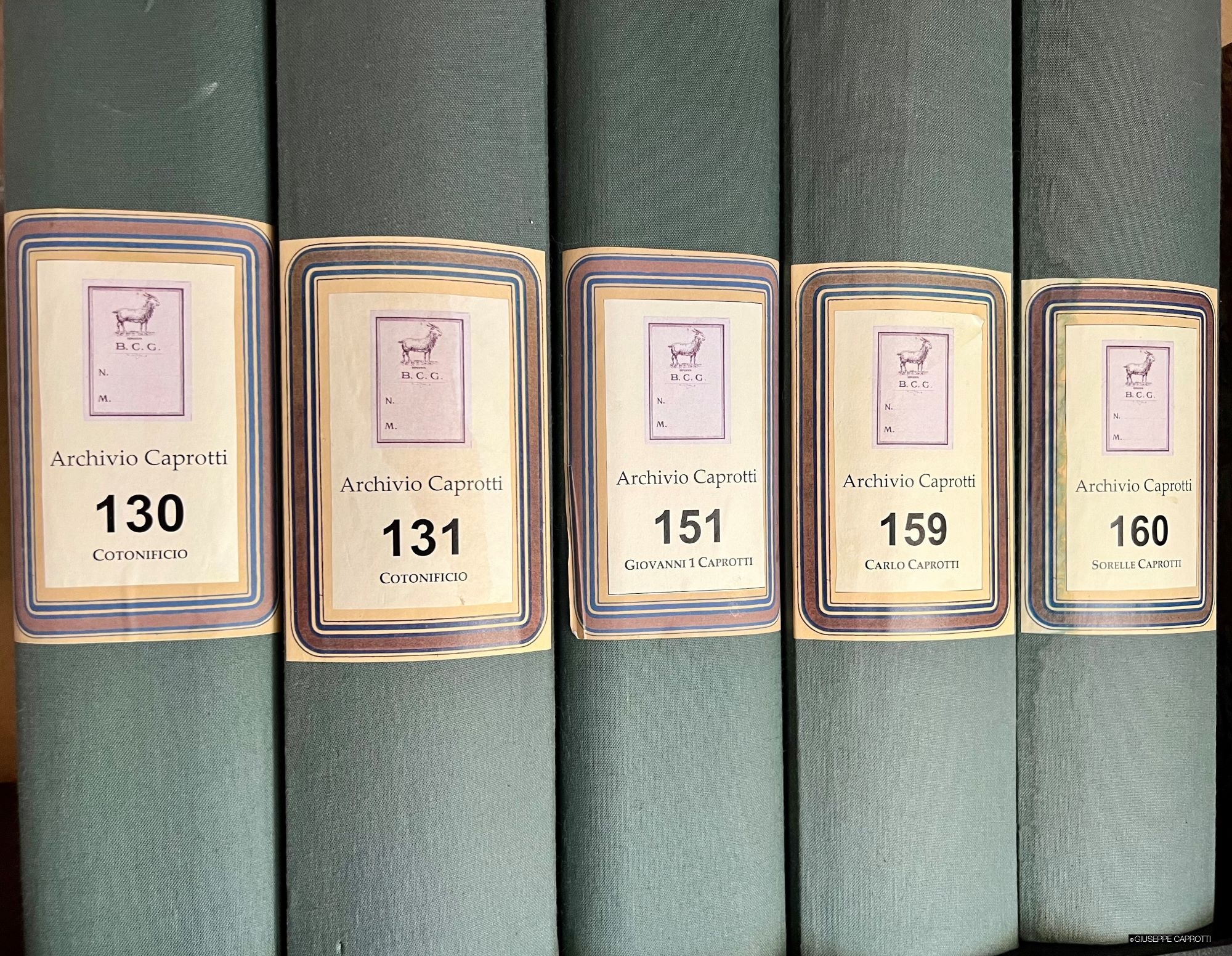
Above: archives in Albiate (B.C.G. stands for Bernardo Caprotti di Giuseppe and refers to the textile company)
My sources were:
- first-hand experience – things I did or saw being done – and childhood memories
- first-hand oral accounts
- writings by former employees or consultants
- newspaper articles
- books
- photographic material
- material from various civil and criminal proceedings
- financial statements
- my own archives, those of Rockefeller and others.
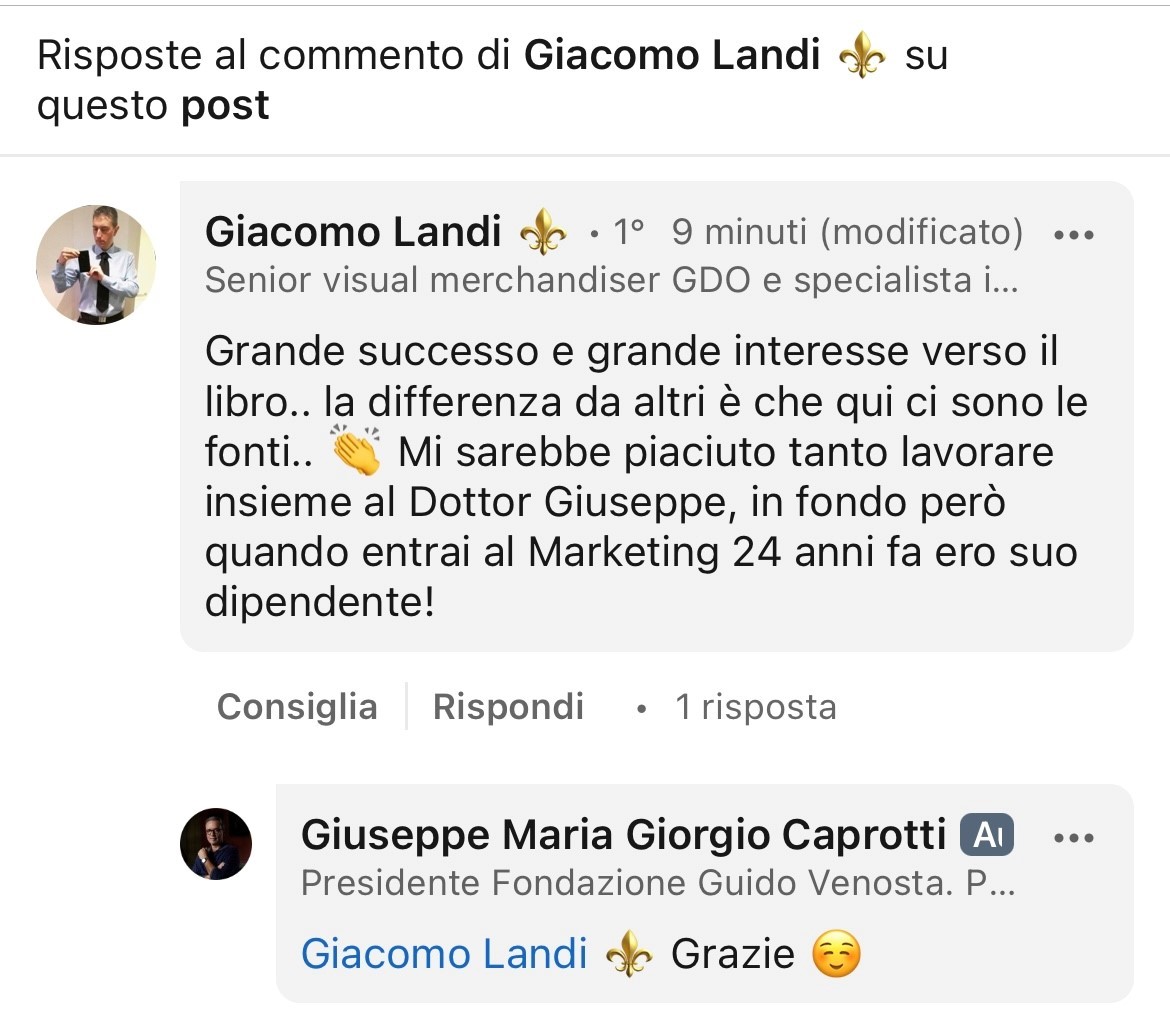
Below: fortunately, there are those who have realised this and write , ‘the difference… is that here, the sources are provided’.
Out of curiosity, I’ve bought a few books in the past by politicians or ‘leading business figures’ which, upon reading, turned out to be devoid of any real substance. A couple of them, in which the author made claims without any evidence or sources whatsoever, ended up in the bin.
I would therefore advise everyone to always check the Bibliography before buying a book!
As a historian, I’ve been ‘going mad’ for decades trying to find the name of the spy mentioned in my book – who was operating from Innsbruck against Italy – of whom I had only the surname: Clairval.
The French secret service agent’s name was Henry Clairval, page 75, note 72.
A journalist would probably have been satisfied with just the surname.
A historian would not.
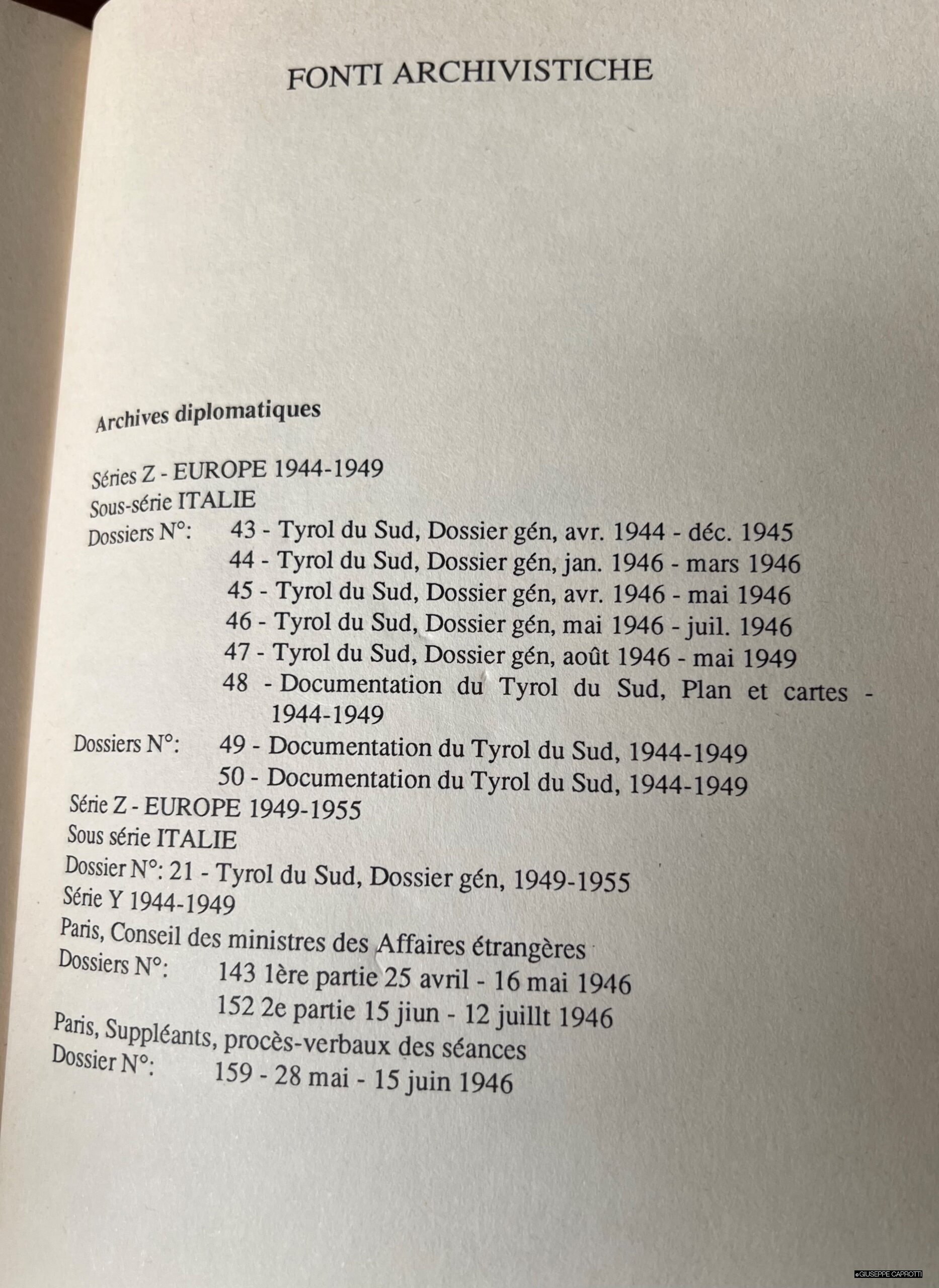
Below: the archival sources for my research on South Tyrol (full title: ‘Alto Adige o Sud Tirolo?’ The South Tyrolean question from 1945 to 1948 and its developments: a study of the French diplomatic archives.
Franco Angeli, 1988, three editions). P.S.: everything becomes clearer if you read *Le Ossa dei Caprotti*; I have once again become a ‘historian’.
Conclusion:
There is a fundamental difference between the views expressed by Dr Sassi, whom I hold in high regard, and the historical approach taken in *Le Ossa dei Caprotti*: research.
In addition to the years spent in the field carrying out research, there are those spent on:
– making enquiries of individuals and consulting private or public archives,
– reading and evaluating the material,
– selecting the relevant material,
And then, finally, the challenging task of writing the manuscript.
My book therefore goes far beyond simply having been an entrepreneur, manager, director or direct witness to the events.
There is one final point: the company was not built by ‘one person’ (Bernardo) or by a small group (my father, myself and others) but by a multitude of people (‘From “I” to “we”’).
But those who haven’t worked there, who haven’t experienced it, continue to believe in the myth of the ‘lone man in charge’.
Esselunga, on the other hand, was a company characterised by a high level of involvement – including an emotional one – on the part of its staff; it was a company with a culture of widespread entrepreneurship: I have seen, for example, cashiers demonstrate an unimaginable sense of belonging.
They were viscerally ‘attached’ to their till or their department. Suffice it to say that the majority of staff played a part in saving the company from the trade unions and the constant strikes of the 1980s.
That sense of belonging made all the difference compared to other retail companies.
I simply reinforced it, applying an ‘American’ approach (such as performance reviews across all departments, bonuses, training courses, etc.) and puttingmy ‘heart’ into it; this explains some of the current expressions of esteem and affection.