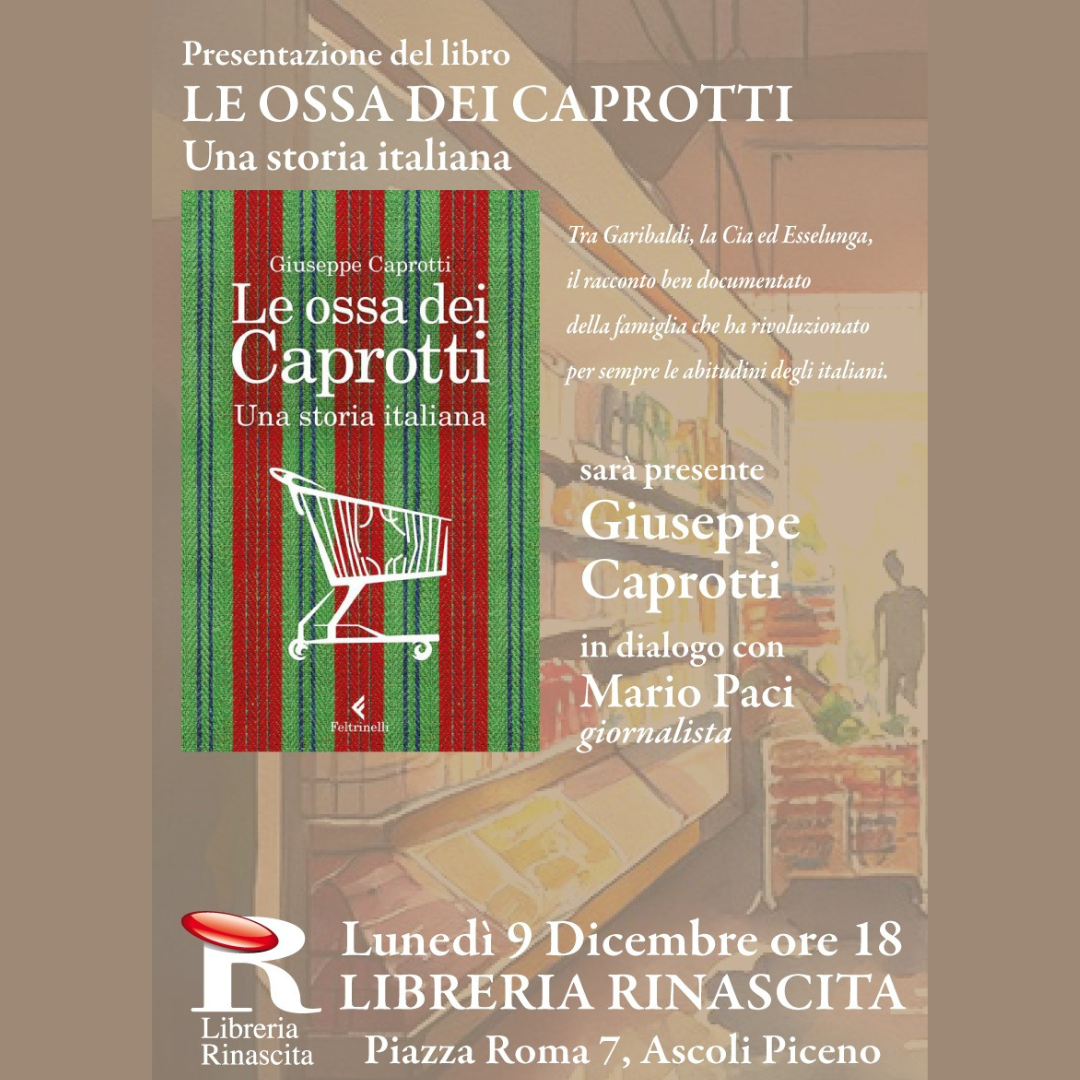

On Monday 9 December, the book Le Ossa dei Caprotti by author Giuseppe Caprotti will be presented at the Rinascita bookstore, Piazza Roma 7, at 6 pm. The author will dialogue with journalist Mario Paci.
With Le Ossa dei Caprotti, published by Feltrinelli, for the first time Giuseppe Caprotti, who was dismissed from the company in 2004 after returning from the United States in 1989, exposes his truth after many years of silence.
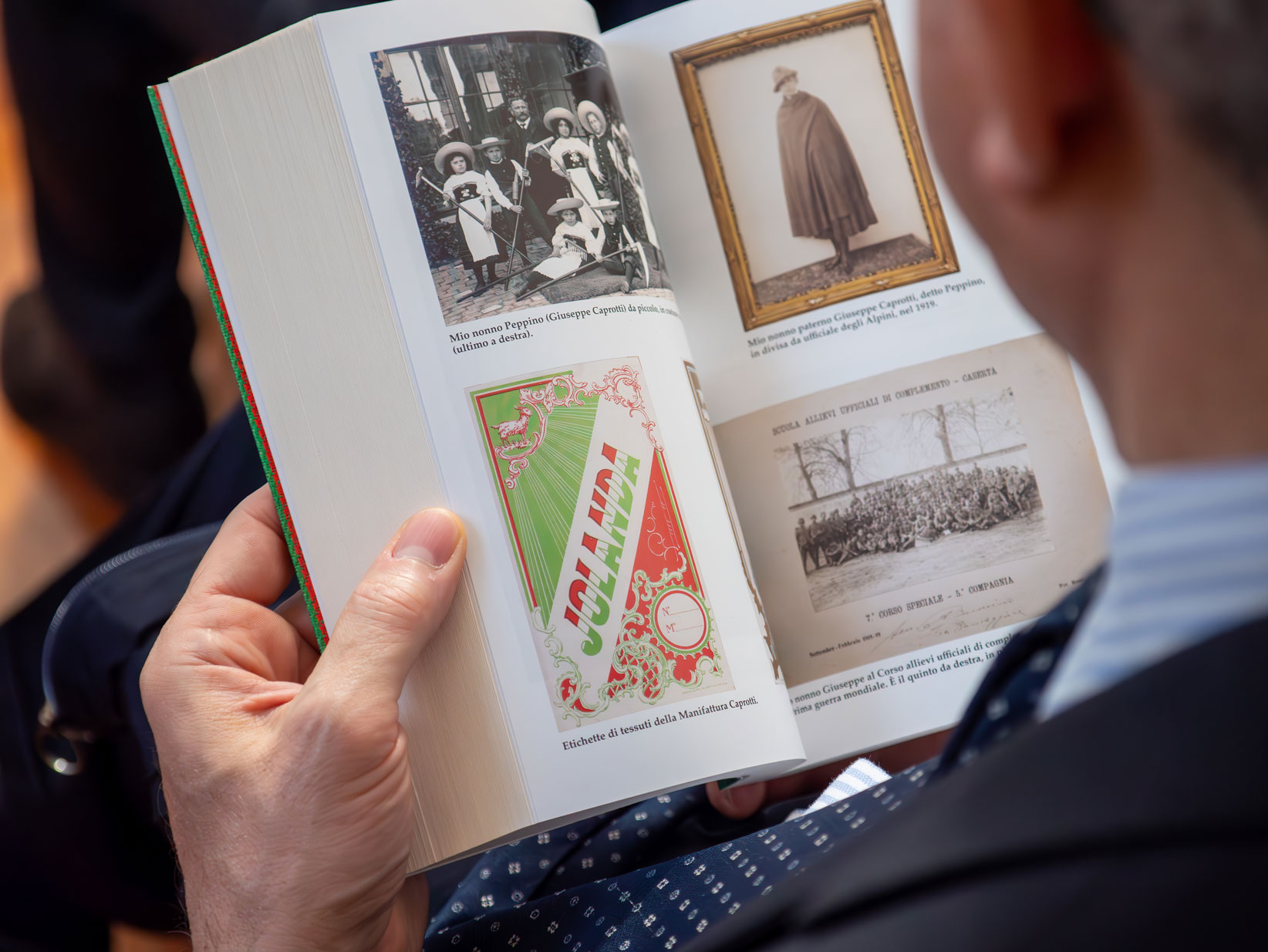
In 1840, Giuseppe Caprotti’s company Bernardo Caprotti was founded, with machinery for the preparation of cotton yarn. Expansion was such that by 1866 it had 1500 workers in Carate, Albiate, Giussano, Verano, Paina, Seveso and Cabiate. In the course of the 19th century, they arrived at the centralised factory, in Albiate, but also in Macherio. Thus the Caprottis became industrialists.
A century later, it was grandfather Giuseppe Caprotti, known as Peppino, who, on the strength of American Marshall Plan funding and his skills, made the family fortune. That fortune was used by the Caprotti brothers and their mother to participate in the foundation of Supermarkets Italiani (later Esselunga), later acquiring the majority share. The author traces the circumstances in which the current large-scale distribution company was born, which finds its starting point in the vision of the American magnate Nelson Rockefeller, who has a conservative but also political and social conception of business.
In the post-war period, Rockefeller founded Ibec, a company that had ‘the objective of opening new business activities in developing countries’. Initially active in South America, Ibec was to extend its reach into Europe: Rockefeller saw his company, which in the 1960s would control 200 companies and employ around 11,500 people in 33 countries, with a turnover of 5.5 billion dollars, as an extraordinary tool to support an anti-communist policy.
But Le Ossa dei Caprotti is not the story of Esselunga. It is a portrait of more than three centuries of Italian history, with strong American ‘interference’. There is ‘everyone’, in a large extended family: from Giuseppe Caprotti, the first industrialist, to Peppino Caprotti, the author’s grandfather, the architect of the family’s economic and social rise in the post-war period, to Marco Brunelli, the trait d’union between Rockefeller and the Italian partners and the first chairman of Supermarkets Italiani. Guido Caprotti is the protagonist of this adventure: he and Brunelli, after starting Esselunga, later founded GS, one of the most important Italian chains.
Recurring and painful family feuds are also reconstructed in the book. Among these, the most dramatic is that of great-grandfather Bernardo against his brother Emilio, when the Caprotti family were cotton industrialists, followed decades later by Giuseppe’s father, Bernardo, with his brothers Guido and Claudio Caprotti and his mother Marianne. And finally, the contrast between Bernardo himself and his children Giuseppe and Violetta.
Conflicts, these, never resolved, from which the author takes his leave with regret.
Today Giuseppe Caprotti is president of the Guido Venosta Foundation.
Established on 27 June 2000, the Foundation intends, by honouring the memory of Guido Venosta and changing his experiences, to promote and contribute to the education of the public towards the highest cultural ideals and solidarity. Guido Venosta, grandfather of the author, was one of the creators of Airc (Italian Association for Cancer Research), which he managed from 1966 to 1996.
After pain, social commitment.