

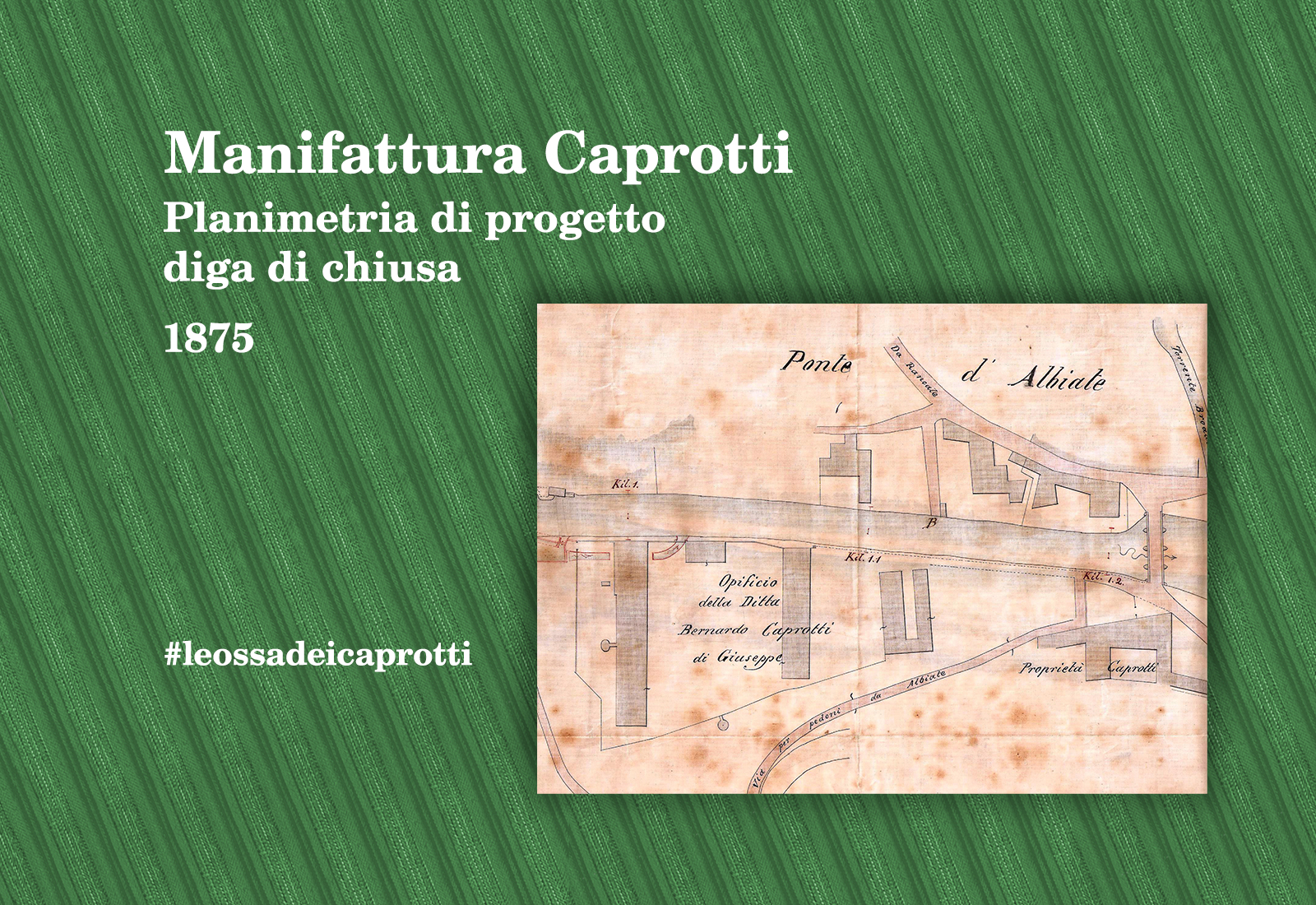
Original title : The Caprotti family, innovation and tradition in an Italian manufacture: safety at work
In November 1894, on the initiative of industrialist Ernesto De Angeli, a nationwide association was formed in Milan for the study and application of the most modern techniques for preventing accidents at work, the ‘Associazione degli Industriali d’Italia per prevenire gli infortuni del lavoro avente sede in Milano’.
Caprotti immediately joined forces with the biggest names in industry at the time, De Angeli, and then Pirelli, Cotonificio Cantoni, Stigler, Binda, Borgomanero, Zambelletti, Branca, Edison, Franco Tosi, Richard and others, particularly industrialists in the textile industry.
Already one year later, the Caprotti factories receive an annual thorough inspection visit by a technician from the Association, who, in addition to the report, also delivers or sends in specific drawings, circulars and pamphlets concerning the safety of the plants and the workers assigned to them, depending on the ‘shortcomings’ found. And they are not the only ones: the Association regularly sends its members balance sheets, letters, circulars, insurance proposals, newspaper clippings, advertisements for companies that offered safety equipment that complied with the Association’s requirements rather than the supply of first-aid kits, various literature relating to conferences or speeches on accident and prevention.
As long as theydo not start fighting in earnest, the Caprottis always show concern for safety in the workplace, even before the Association and the ever-increasing legal obligations in this regard. For example, in point V of the report on the first inspection visit on 1 October 1895, signed by Ernesto Pontiggia, chief engineer of the Association, we read how
“the grandiose weaving room, full of light, with excellent flooring, and with wide passages between loom and loom, puts the weavers in excellent working conditions and is proof of the interest you take in studying everything related to the well-being and safety of your workers (…)’.
The point is that the company is now in the hands of two of great-great-grandfather Giuseppe’s sons, Bernardo and Emilio, who are divided by deep disagreements and a very particular management vision that will lead them to wipe out three companies (including their own) within a few decades; and these disagreements, inevitably, had repercussions on expenses such as those for compliance with safety standards as indicated, at each annual inspection of the factories, in the report drawn up by the indefatigable inspectors, who with firm gentleness reminded them of their obligations, suggested remedies and work to be done, always reminding them that the more they did, the less the insurance premium would cost.
The Caprottis adjusted, slowly, and then the long minutes became a page of further brief recommendations on necessary measures, without pointing out any serious shortcomings: in the minutes of 18 April 1901, the inspector noted ‘with pleasure that you have continued with diligence and interest to take care of everything that may serve to protect your workers from accidents at work (…), that you have applied bib guards to almost all your looms (…), and that it would be necessary to “put a guard around the steering wheel” of the pump recently installed in the new dyeing plant (…); on 22 June 1903, Ing. Pontiggia wrote that he had ‘noted with pleasure that you have adopted safety provisions to prevent accidents’, but ‘to perfect these measures that have been commendably initiated, it will be good to abolish the wall or transmission ladders that you use today by adopting others that will guarantee against misfortunes’.
When it came to the printed regulations and copies to be hung in workplaces, however, Caprotti was quick and even deserved compliments from Pontiggia, as in the post-scriptum of the letter transmitting the minutes of 14-15 December 1904, dated 13 January 1905: ‘I have taken, with great pleasure, sight of the General Regulations compiled by you and have found them to be very well in line with the intentions of our Association. Thank you for your willing cooperation (…)’.
Two company regulations remain, in the form of posters to be displayed in the factory and office premises, one dated 1 November 1869 (Regolamento per lo stabilimento della ditta Bernardo Caprotti di G[iusepp]e al Ponte di Albiate), the other dated 1 January 1899 (Regolamento per l’opificio industriale della ditta Bernardo Caprotti di Giuseppe, Ponte Albiate). They show with great clarity the evolution that had taken place in thirty years in the management of the company in Albiate: from the first, simple rules, including those of the proper decorum that every worker had to maintain (see for example points 6 and 7 of the first regulation), to the assimilation of rules and laws for the protection of the workers, starting with those for the prevention of accidents, which had been greatly extended also thanks to the rules and suggestions of the Association (points 17 to 36 of the 1899 regulation, 19 in all!).
The last minute in the series dates back to 21 November 1906, when the two Caprotti brothers were really at loggerheads and Bernardo Caprotti, in competition with his brother Emilio and himself, had begun the adventure of co-partnership in the ‘Società anonima Manifattura di Valle Camonica’, which would go so badly that it would end in liquidation only seven years later. The repercussions of this state of affairs on the performance of the Albiatese factory could also be seen with regard to safety: the inspector noted, resignedly, dangerous deficiencies aggravated by the use of ‘not very good materials’ in certain plants, worsening with respect to the previous year, corrections ‘here and there’, and these are only the salient points because he did not consider repeating in detail what had been written in the report the year before. He especially hits the button on the calibration of the safety valves of the electrical installations, and says this “because even if we cannot obtain the Certificate exempting you from the payment of the surcharge, we know that you have every interest in doing what you can to avoid the possibility of a fire”.
A pity, this débâcle, because the Caprottis, like the Marellis (to whom they would later be related), were undoubtedly forerunners, and in many ways can be counted among the ‘unexpected entrepreneurs’ because they present aspects of modernity, of planning, of ideas that we would not have suspected in people who have been producing textiles since the days of looms in farmers’ homes, and are therefore concerned with a cold and impersonal thing called ‘progress’.
Follow Le Ossa dei Caprotti
on Instagram
on Facebook
on YouTube
on LinkedIn
on X
Sources and reference Bibliography:
Villa San Valerio, Villa San Valerio Archives, Manifattura Caprotti, envelopes 29, 64, 65.
R. ROMANO, I Caprotti. L’avventura economica e umana di una dinastia industriale della Brianza, Milan 1980
M. MAGAGNINO, The unexpected entrepreneur. Marelli: i primi vent’anni (1891 – 1911), Sommacampagna (VR), 2024
References in www.giuseppecaprotti.it :
G. CAPROTTI, Le Ossa dei Caprotti. Una storia italiana, Milan, 20243
ID., Le Ossa dei Caprotti. La storia della famiglia che ha creato il mito Esselunga (https://www.giuseppecaprotti.it/libro/la-storia-della-famiglia-che-ha-creato-il-mito-esselunga/ ).
ID., Le Ossa dei Caprotti. The Caprotti family, innovation and tradition in an Italian textile factory: Alessandro Belgiojoso and the ‘La meccanica della Caprotti’ exhibition. Ideas from the book (https://www.giuseppecaprotti.it/libro/la-famiglia-caprotti-innovazione-e-tradizione-in-una-manifattura-tessile-italiana-alessandro-belgiojoso-e-la-mostra-la-meccanica-della-caprotti/ ).
ID., La famiglia Caprotti, innovazione e tradizione in una manifattura italiana: Albiate e la Svizzera, 09/10/2024 (https://www.giuseppecaprotti.it/la-famiglia-caprotti-innovazione-e-tradizione-in-una-manifattura-italiana-albiate-e-la-svizzera/ ).
ID., La famiglia Caprotti, innovazione e tradizione in una manifattura italiana: operai dal prigione di San Vittore, 13/10/2024 (https://www.giuseppecaprotti.it/la-famiglia-caprotti-innovazione-e-tradizione-in-una-manifattura-italiana-operai-dal-carcere-di-san-vittore/ ).
ID., Mostra: la meccanica della Manifattura Caprotti, 09/10/2024 (https://www.giuseppecaprotti.it/mostra-la-meccanica-della-manifattura-caprotti/ ).
ID., I disegni industriali della Manifattura Caprotti tratti dall’archivio di Giuseppe, 22/10/2024 (https://www.giuseppecaprotti.it/dt_gallery/i-disegni-industriali-della-manifattura-caprotti-tratti-dallarchivio-di-giuseppe/ ).
ID., Ercole Marelli and Giuseppe Caprotti united “from ‘I’ to ‘we'”, 23/06/2024 (https://www.giuseppecaprotti.it/ercole-marelli-e-giuseppe-caprotti-uniti-dallio-al-noi/


