Compiled 21 March, updated 7 April 2026
You can find the latest article on big brands here .
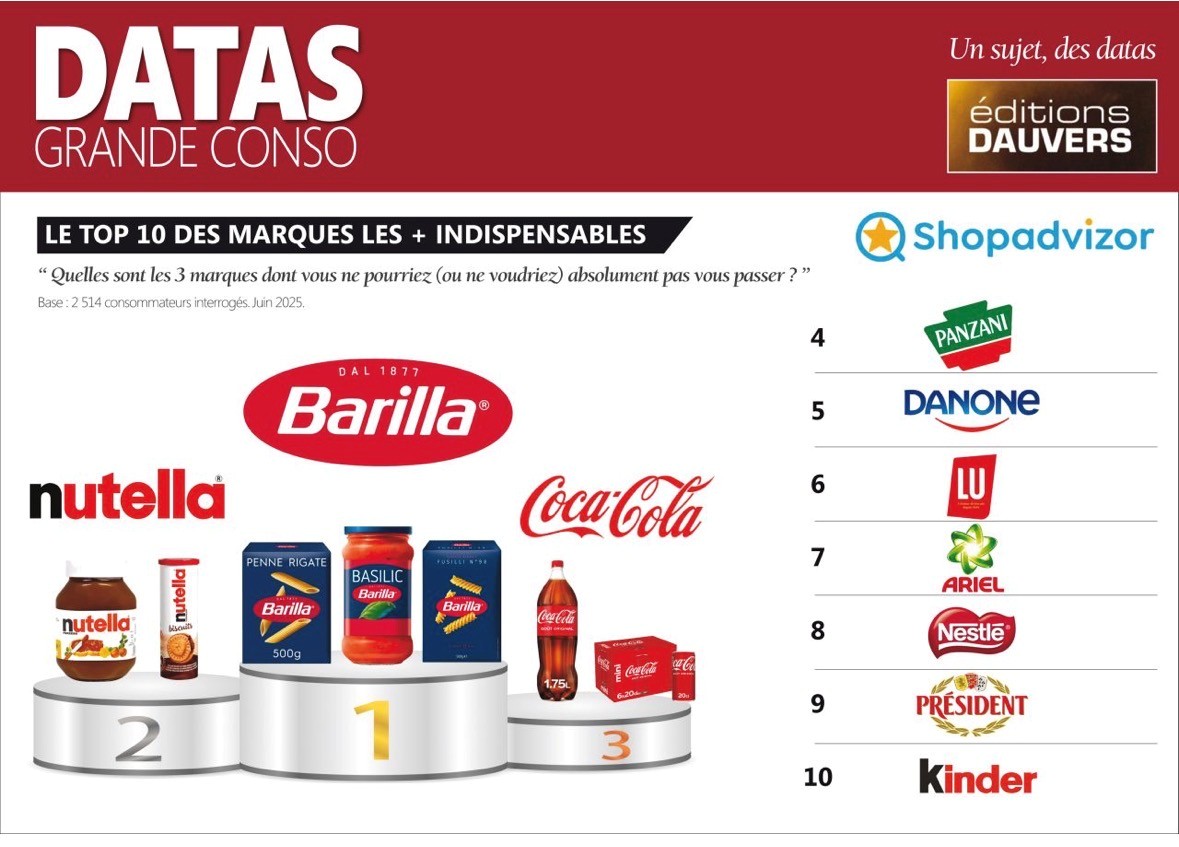
In France, Barilla, Ferrero and Coca-Cola are indispensable, according to the FMCG and FMCG influencer Olivier Dauvers.
They are followed by Panzani (pasta), Danone, Lu (biscuits), Ariel, Nestlé, President (camembert) and Kinder.
but all that glitters is not gold:
Unilever is in talks to sell its food division to smaller US rival McCormick(after selling Algida ice cream, see also : Unilever takes shape of food business split).
And Nestlé is selling a subsidiary that makes ice cream but has had big problems with water, baby food and frozen pizzas.
The Vevey-based multinational aims to concentrate on coffee, snacks and pet food.
Then there is the case of Kraft Heinz which lost control of Mac and Cheese and American consumers. New emerging companies and supermarket imitations erode the market share of the leading brand; years of cost cutting, underinvestment and corporate chaos.
Some multinationals would also be in trouble because of the success of anti-obesity drugs.
In this regard, it should be noted that weight-loss injections push the price of sugar to its lowest level in five years The futures price fell to less than half its level at the end of 2023 as GLP-1s reduce the craving for sweet snacks.
The Pepsi and Procter and Gamble affairs(Procter & Gamble misses revenue estimates due to slower growth in the US) are also signals not to be underestimated.
The exceptions – as I have already said – seem to be ours: Barilla (with an increasing share in pasta) and Ferrero (with increasing turnover and profits).
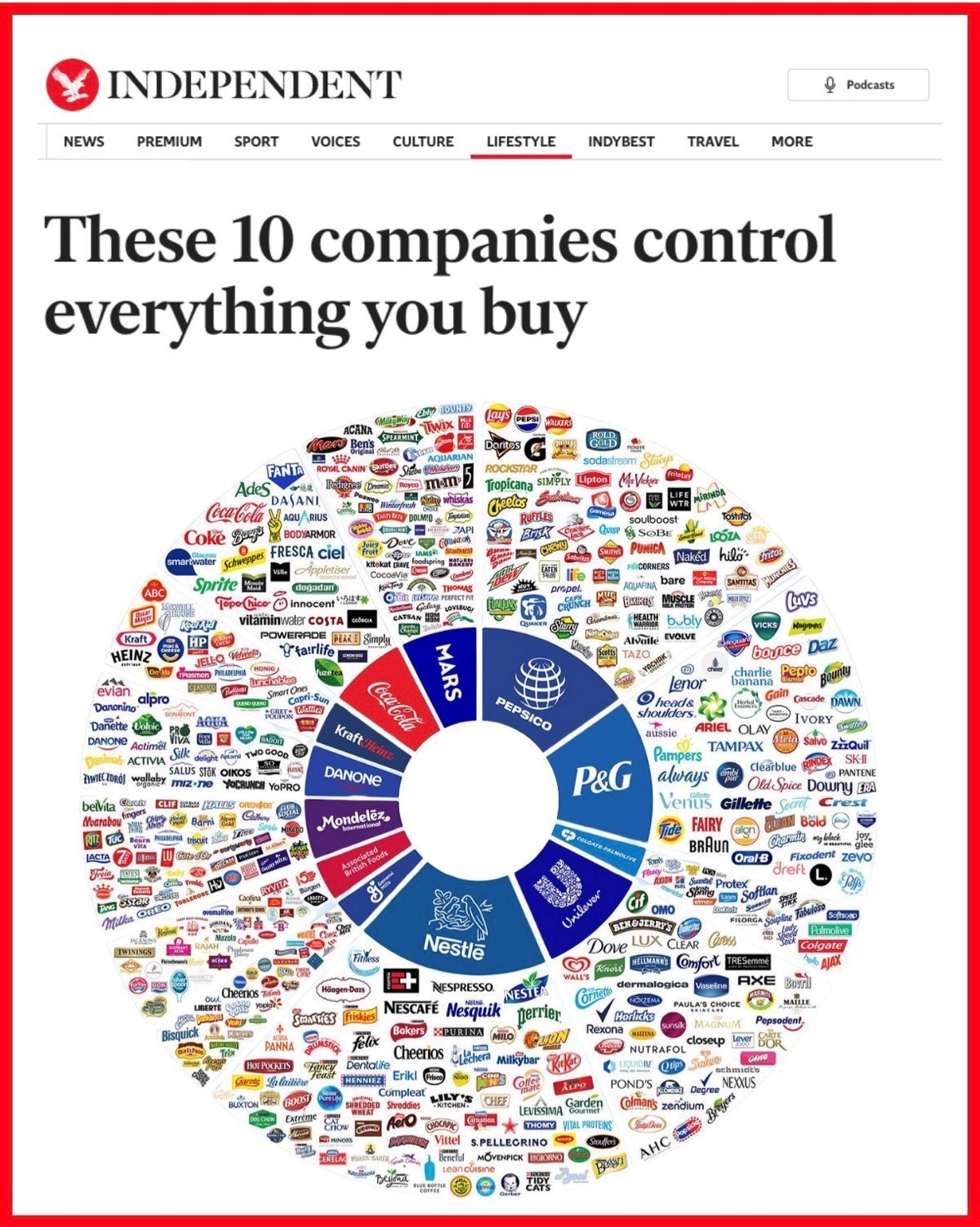
On GLP-1 read here. Below: “The 10 companies that control everything you eat” (in Great Britain). But is this still true?
An answer can be found here : In FMCG, it is mainly the smaller brands that are innovating and growing.
But according to research by the Private Label Manufacturers Association (Plma) and Circana, sales of private label products in the US continued to reach record levels and surpass those of industrial brands in 2025.
Value sales of Mdd products increased 3.3% to an all-time high of $282.8 billion in the 52-week period ending 28 December 2025. In comparison, sales of industrial brands grew by 1.2%over the same time period.
Private label volume sales also increased by 0.6 per cent, while Idm sales fell by 0.6 per cent, according to the research.
“Retailer brands are outpacing national brands across the US, growing faster, expanding their share and achieving record sales results,” said Peggy Davies, president of Plma.
Value sales of private label brands increased the most in the fresh produce category at 6 .1 per cent, followed by beverages ( 4.8 per cent), frozen food ( 2.4 per cent) and general food ( 1.6 per cent).
Over the five-year period 2021-25, value sales of private labels grew by $64.8 billion or 30%, and their value share increased from 19.1% to 21.3%, signalling continued momentum in private label offerings.
It should be noted that the 10 best performing brands in the US market are 23% more likely to appeal to Generation Z consumers and 31% more likely to appeal to Boomers than their existing customer base. Generation Z does not seem to give the same importance to domestic Boomer brands, which still hold a considerable share of the purchasing power
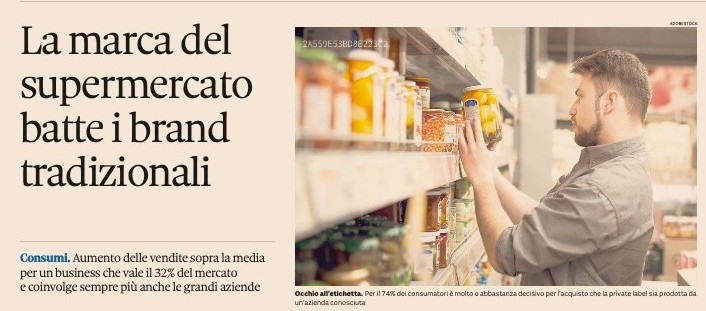
Below the evolution of the share of private label products (MDD) and big brands (Thanks to Mario Gasbarrino).
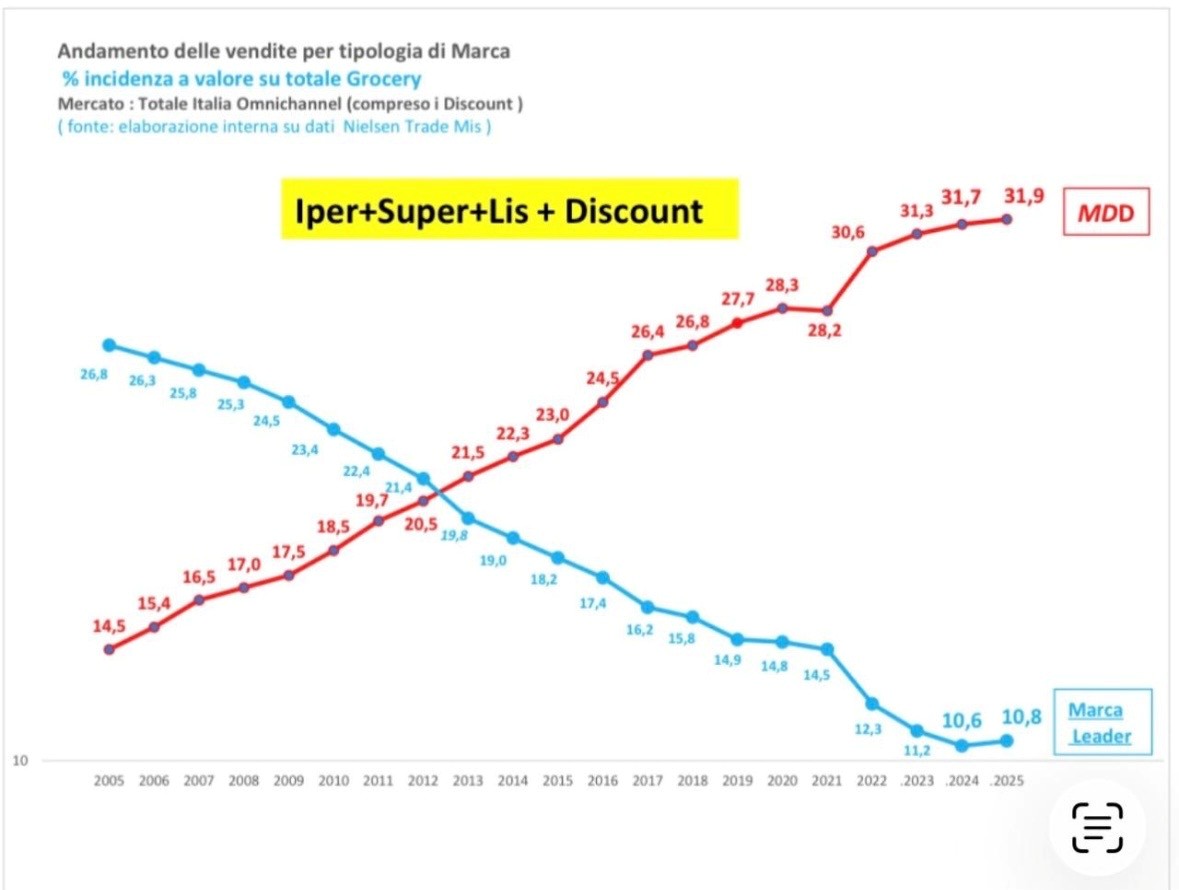
The interesting thing, however, is not so much the overall increase that is also taking place in Italy, as much as the fact that it is not the products with the lowest prices, the so-called ‘first price’ products (which grew by 3%) that are showing the most noticeable growth , but the more expensive functional products, linked to well-being and sustainability, such as the organic, ‘free-from’ or fortified food lines, which are growing by 19%.
Those who buy Mdd products, therefore, are not only motivated by the desire to save money, but also turn to this sector for more expensive products, for a choice based on trust.
Also noteworthy is the positive trend in fresh food, especially meat, and household care products.
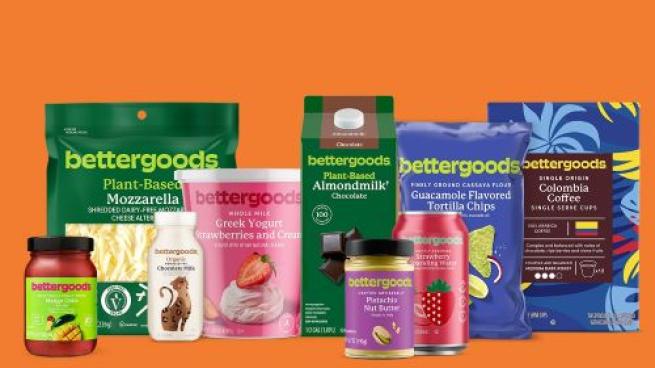
And from the United States comes confirmation: Walmart has added a premium line (the packaging underneath is not beautiful but so be it) and other chains, such as Kroger, are following.
Conclusion: both big brands and store brands must absolutely try to create value. We talked about this ‘far and wide’ in Parma recently.
What it means to create value: not to create duplicates, imitations, to have a distinctive character.
I recently cited Ferrero for its characteristic of creating unique products , but even the Alba giant has made mistakes, over time, such as Gran Soleil. I could cite historical examples, both positive and negative.
In the second case, I remember – in addition to Gran Soleil – Parmalat’s soups, a useless line extension, which every year we called into question and which only managed to stay on the shelves thanks to the lavish contributions of the ‘producer’. I put the inverted commas because I am almost certain that Parmalat did not produce them but had them made by third parties. Why it wanted to keep them on the shelf seems, at first glance, incomprehensible but it probably has something to do with the mere visibility of the brand on the shelf.
A bit like what Coca-Cola wanted to do when, in Esselunga, we denounced it to the antitrust authorities all those years ago. In the case of the Atlanta multinational – but the principle can be extended to others – one can safely say: yes to innovation, no to forced occupation, through promotional contributions, of the shelf.
A positive example from the past: Esselunga Bio, it was a unique product because if the organic had existed for some time, no one had put the brand name on it, creating a line whose launch looked very much like that of a ‘big brand’ of IDM.
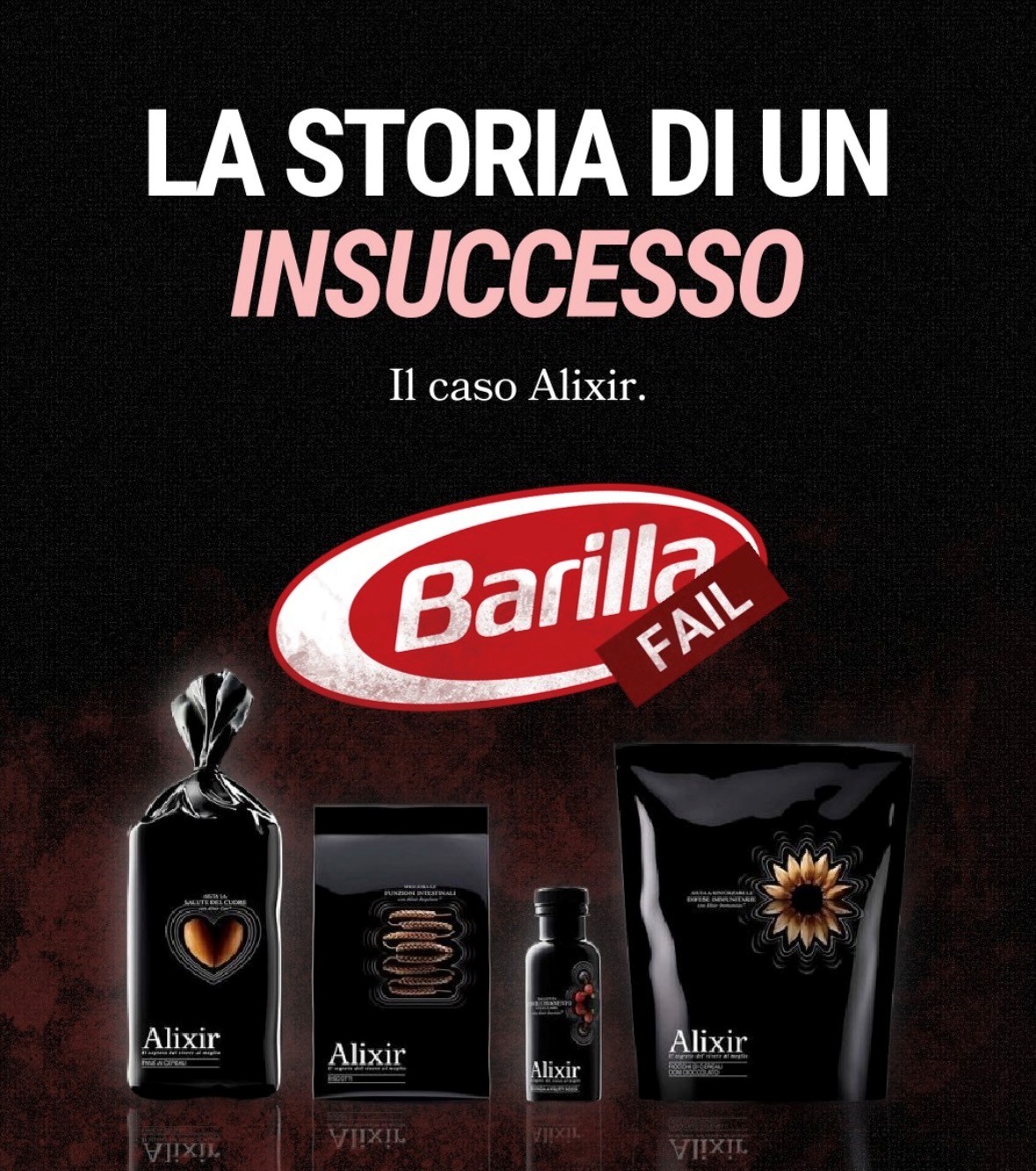
Below is another example, this time a negative one: Barilla’s Alixir line.Unfortunately, creating healthy products is not an easy thing.
In a nutshell:
given that 75% of new branded products leave the shelf after a year, extending the range, imitating a competitor’s branded product or occupying the shelf with products that have nothing to do with the ‘core business’ are definitely not recommended because they raise costs and lead to a worsening of the GDO-IDM relationship.
I advise IDM manufacturers to concentrate on what works if you do not want to continue to lose market share to the private label, which, moreover, needs to be managed just as intelligently.