

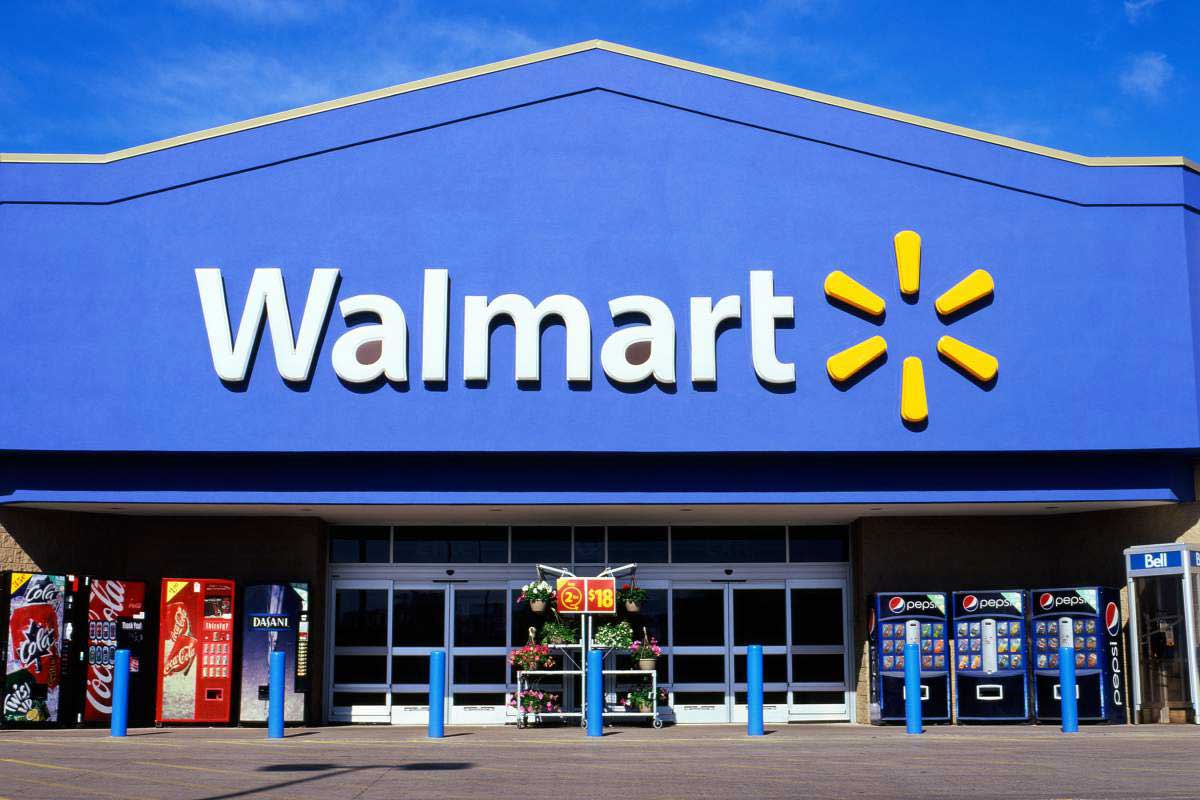
Walmart says customers are rationing petrol because of the impact of the Iran war on their wallets.
For the first time since 2022, when Russia’s large-scale invasion of Ukraine sent oil prices soaring, customers at Walmart gas stations in the US are buying less than 10 gallons of fuel per visit.
“This is a sign of trouble,” said John David Rainey, chief financial officer, during a conference call with analysts on Thursday [21 May 2026], when quarterly results were discussed.
The US largest retailer’s vast truck fleet was not unscathed, as rising fuel costs reduced the company’s operating profit growth by 2.5 percentage points in the three months to the end of April. The resulting 5% increase brought operating profit to $7.5 billion, below analysts’ estimates. It was missing $175 million in unforeseen fuel costs and, more importantly, operating profit growth was below global sales growth (7.3% to $177.8 billion).
Walmart reaches 93% of US households and is therefore a good barometer of the state of the country’s economic health and inflation.
Walmart also benefited from consumers’ search for low prices in the quarter, with US division’s same-store sales increasing by 4.1%, exceeding expectations.
Walmart said it has absorbed rising fuel costs to keep prices low for customers, but warned that this may not last. “Should the current high cost environment persist, we expect slightly higher retail price inflation in the second quarter and second half of the year,” Rainey said.
Walmart shares closed down 7.3 per cent, burning nearly $76 billion in market capitalisation. Other major retailers had mixed performances, with Kroger losing 2.3 per cent and Target up 3.1 per cent.
Offering fast home deliveries to online shoppers is a competitive battleground with Amazon.
Walmart’s e-commerce sales increased by 26%.
At Sam’s Club, which recently launched its one-hour delivery service [of this division that by-passes companies set up to do delivery and deliver pre-cooked food to the home],deliveries from warehouses increased by more than 90% in the quarter. However, Walmart also cited increased costs associated with these deliveries.
Walmart claimed to have gained market share in both the food and miscellaneous (non-food) product sectors. The latter category, which includes clothing and household goods, saw the largest increase in market share in five years.
In other revenues, it should be noted that global advertising grew by 37% in the first quarter and global membership revenue increased by 17.4%. Advertising growth reached 36% overall and 44% excluding VIZIO [smart TV], with market vendors behind a 50% increase in their advertising spend.
Walmart US Marketplace net sales also grew nearly 50 per cent in the quarter, reaching its fastest growth spurt in nearly two and a half years. Units shipped the same or next day through Walmart Fulfillment Services saw a meteoric 150% increase.
Walmart is also actively making moves to spread its commerce platform model beyond the US. The company recently launched Marketplace Cross Border in Canada and Mexico and reports encouraging early results on those fronts.
More than 36 per cent of delivery orders completed by shops in the US arrived in less than three hours in the first quarter, an improvement of more than 800 basis points over the past two years. Rainey: ‘When we see that we are able to deliver to customers in the time frame they expect, we see a much greater engagement with our customers.
For Sam’s Club, e-commerce is now responsible for 20 per cent of its net sales.
But Rainey added that: “When you take categories like membership (membership) and advertising, those two combined comprise about a third of our earnings today. That’s very different from Walmart 10 years ago,” Rainey said. “And with that more subscription-based revenue stream that we have, it actually insulates us from some of the vagaries of the economy.”
Internationally, FlipKart in India operates more than 800 micro fulfilment centres and averages delivery in less than 13 minutes across a 30-city footprint.
In China, Walmart delivered over 500 million units in the first quarter, with about 75 per cent of them arriving in less than an hour.
Company-wide, Walmart delivered more than 3.5 million units the same or next day globally.
According to Walmart, supply chain automation is responsible for this acceleration. About half of its e-commerce fulfilment centre volume in the US is now automated and more than 60 per cent of its shops receive goods from automated distribution centres. More than half of the company’s regional distribution centres are being implemented.
Walmart’s AI shopping agent, Sparky, also received some attention during the call, with weekly users doubling in Q1 alone. The retail giant said investment in the system has improved Sparky’s intelligence and response quality by 40 per cent this year. Sparky now works in-store and supports automatic reordering for repeat purchases.
Walmart confirmed its previous forecast of net sales growth of between 3.5 and 4.5 per cent for this fiscal year and adjusted operating profit growth of between 6 and 8 per cent, net of exchange rate changes.
Every week, approximately 280 million customers and members visit Walmart’s more than 10,900 shops and numerous e-commerce websites in 19 countries. With fiscal year 2026 sales of $713 billion, Walmart employs approximately 2.1 million associates worldwide.
Sources: Financial Times and Progressive Grocer.
Read also : How Walmart is taking over empty pharmacies to speed up deliveries
Below from: Walmart Q1 FY2027 Earnings Release. The year fiscally is already 2027 and the first blue columns make it clear that sales rose more than operating profit: 7.3% vs. 5%.


