Cover image generated using artificial intelligence. Written on 1 September, updated on 2 September 2026
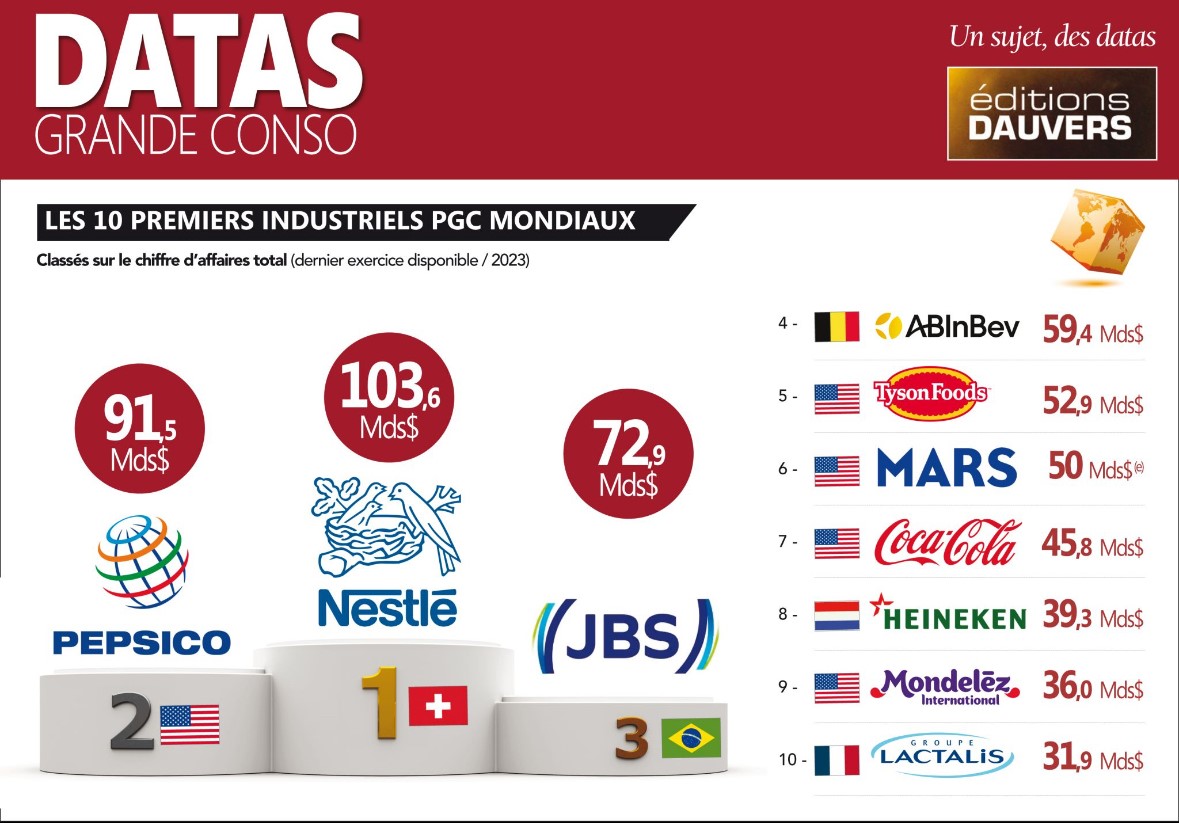
JBS is the world’s largest producer of beef, poultry and pork , and ranks amongst the top 10 food producers globally – behind Nestlé but ahead of Coca-Cola.
In Brazil, it controls 18 per cent of beef slaughtering and production capacity. Together with its two competitors, Marfrig and Minerva Foods, the group dominates the market, controlling two-thirds (approximately 66 per cent) of all beef exports.
In recent years, it has been at the centre of several scandals and/or serious allegations:
“Carne fraca”, the scandal that shocked Brazil
Rigamonti JBS (Brazil): is there a link between bresaola and illegal deforestation?
The chaos in Brazil and the billionaire twins, lords of bresaola and owners of the meat giant JBS.
The company, owned by the Batista family, has recently changed leadership, putting the third generation to the test,not least because the previous generation is unpresentable: brothers Wesley and Joesley Batista entered into plea agreements (*) as part of Operation ‘Lava Jato’ – which led to the resignation of the then Brazilian Prime Minister – on charges of corruption and illegal financing, insider trading, obstruction of justice, money laundering and criminal conspiracy.
Against this backdrop, the European Union has announced the suspension of imports of Brazilian meat from Thursday.
This concerns poultry and beef. The suspension of Brazilian imports also includes eggs and honey
At this stage, the European Commission is criticising Brazil for failing to provide sufficient guarantees that its products comply with European rules prohibiting the excessive use of antibiotics in livestock farming…
The EU wishes to reassure the public of its vigilance, having been heavily criticised by the agricultural sector and by France following the signing, in January, of a free trade agreement with the Latin American Mercosur countries: Argentina, Brazil, Uruguay and Paraguay.
In 2025, Brazil was the second-largest exporter of beef to the EU (other sources state it is the largest exporter), with over 92,000 tonnes of beef products, worth over 713 million euros.
Under European regulations, the use of antimicrobials on livestock farms to promote animal growth or increase productivity is prohibited. Furthermore, animals must not be treated with antimicrobials intended for the treatment of human infections. These measures form part of a European policy aimed at combating antibiotic resistance by preventing the unnecessary use of these drugs.
In recent years, the world has witnessed an explosion in the number of drug-resistant infections. According to the World Health Organisation, antimicrobial-resistant superbugs are directly responsible for over one million deaths and contribute to nearly five million additional deaths each year.
Brazil became the world’s leading beef producer in 2025.
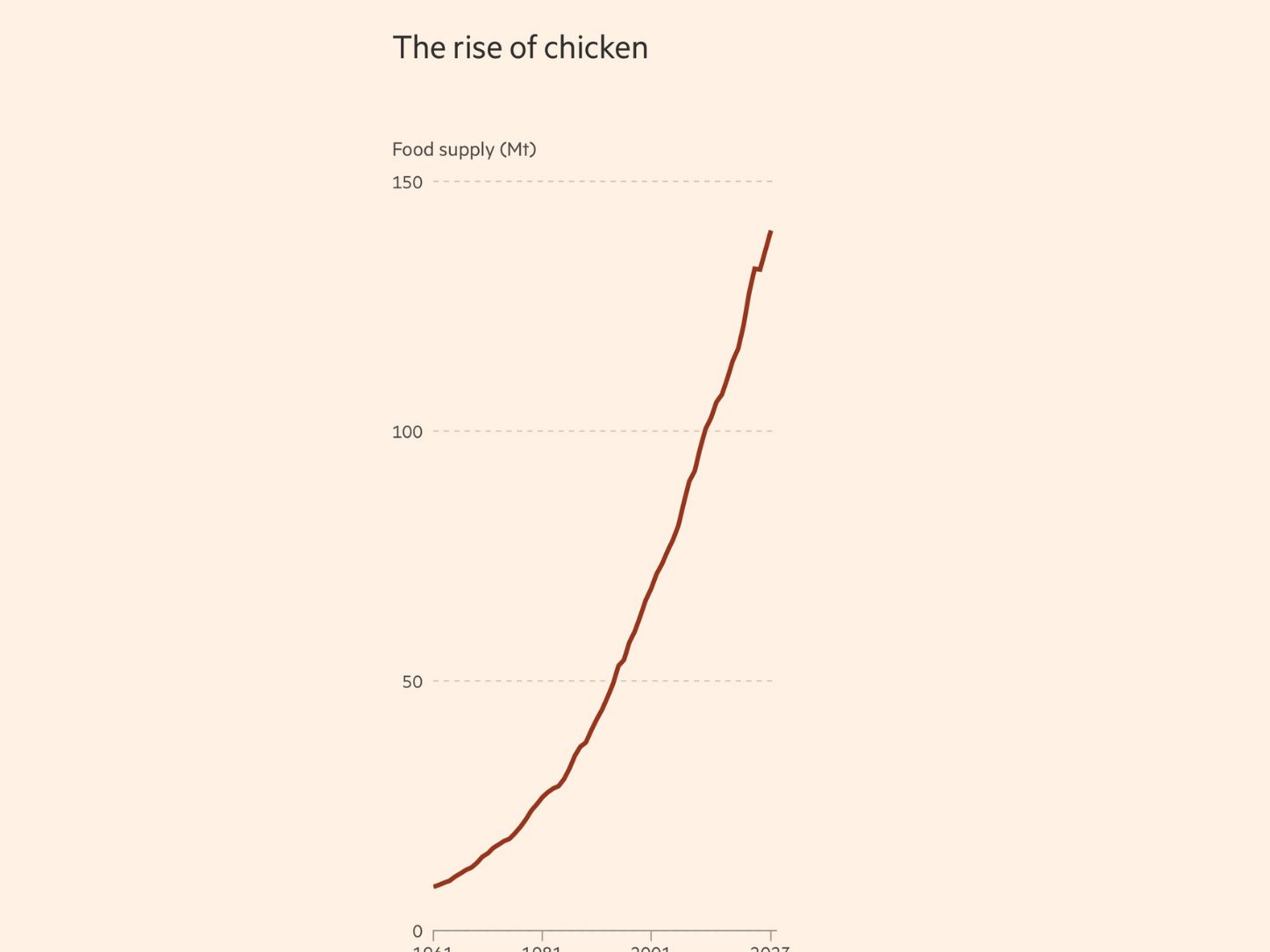
And whilst the United States pioneered the intensive chicken farming model, it no longer dominates the sector. Brazil, the world’s largest exporter, exported around 4.9 million tonnes of chicken meat in 2024, according to data from the Food and Agriculture Organisation of the United Nations (FAO) analysed by the Financial Times, compared with around 910,000 tonnes in 2000.
US exports, by contrast, have fallen in recent years (this also applies to many other agricultural commodities).
In 2022, according to the UN’s FAO, chicken overtook pork as the most widely produced meat. The Financial Times confirms this.
Brazilian meat giant JBS contradicts its own climate targets
Following the New York lawsuit, JBS aims to cut just 3 per cent of its actual emissions, leaving Scope 3 emissions out of the equation
JBS is the world’s largest producer of beef, poultry and pork
In brief
- JBS’s latest sustainability report, published in early July, no longer contains any targets for reducing Scope 3 emissions.
- The new targets – a 30 per cent reduction by 2030 and a 70 per cent reduction by 2050 – apply only to Scope 1 and 2 emissions, which account for less than 3 per cent of JBS’s climate impact.
- The Scope 3 emissions excluded from the plan exceed 184 million tonnes of CO₂, more than the entire Dutch economy emits in a year.
It was clear from the outset that it was hardly credible for the world’s largest meat producer to aim to net-zero its climate impact by 2040. So much so that a legal battle had already erupted over that pledge. The latest development is thatJBSitself is now backtracking.
The Brazilian company’s latest sustainability report,published in early July, no longer mentions any targets for reducingScope 3 greenhouse gas emissions. That is, those generated throughout the value chain, which account for the vast majority.
The New York lawsuit against JBS’s climate targets
Precisely because of its climate targets, JBS had already been taken to courtby the State of New York in 2024. At the time, the Brazilian company had heavily promoted its plan to achievenet-zero emissions by 2040 for publicity purposes, even before it had a credible plan to achieve it.
According to the prosecution, the weak point lay precisely in Scope 3 emissions. The company did, in fact, calculate these, but only partially, without takinginto account land-use change– in practice, the conversion of forests into livestock farms and agricultural fields for animal feed. All this whilst declaring its intention to increase meat production in the years to come.
In January 2025, the court dismissed the case without ruling on its merits, whilst leaving the prosecution the option to refile it. Before this could happen, JBS’s US subsidiary reached an agreement with the public prosecutor’s office. To settle the dispute, without admitting or denying the findings of the investigation, the company agreed toinvest over one million dollarsin CornellUniversity’s climate-smartagriculture programme. Furthermore, it had reworded its target for climate neutrality by 2040, describing it asan ‘ambition’or ‘goal’ rather than a ‘commitment’ or ‘promise’. It had also agreed to conduct an annual review of all consumer communications on the subject, and to report the findings to the public prosecutor’s office.
JBS abandons its Scope 3 emissions targets
In JBS’s new sustainability report, the climate targets appear significantly more modest. The meat giant has committed to cutting its emissions intensity by 30 per cent by 2030 and by 70 per cent by 2050, both compared with 2019 levels. These commitments, however, relate only to direct emissions (Scope 1) and those linked to purchased energy (Scope 2). The problem is that, taken together, these account for lessthan 3 per cent of its climate impact. All the rest – that is, 184 million tonnes of CO₂ equivalent – falls under Scope 3 emissions. Regarding this enormous volume of greenhouse gases, which exceeds that generatedby the entire Dutch economy in a year, the report merely states: ‘By improving the production efficiency of suppliers, we can reduce the intensity of Scope 3 emissions.’
…even assuming we had flawless data and technology at our disposal, it remains difficult to imagine that slaughteringover 78,000 cattle, around 149,000 pigs and more than 14 million chickens a dayis a business model compatible with the future of the climate.
Meanwhile, Donald Trump, concerned about the mid-term elections and inflation, is launching an attack on what he calls the ‘powerful monopoly’ of the meat giants in the United States.
What Trump seems to have forgotten is that the JBS group funded his last election campaign.
Turning to Europe, perhaps, given its recent history, it seems clear that JBS – the undisputed leader in the Brazilian meat industry (JBS accounts for more than 2 per cent of the country’s GDP) – cannot be trusted.
And perhaps the rules governing the import of animal proteins from Brazil should be carefully reviewed first, to protect the health of European citizens.
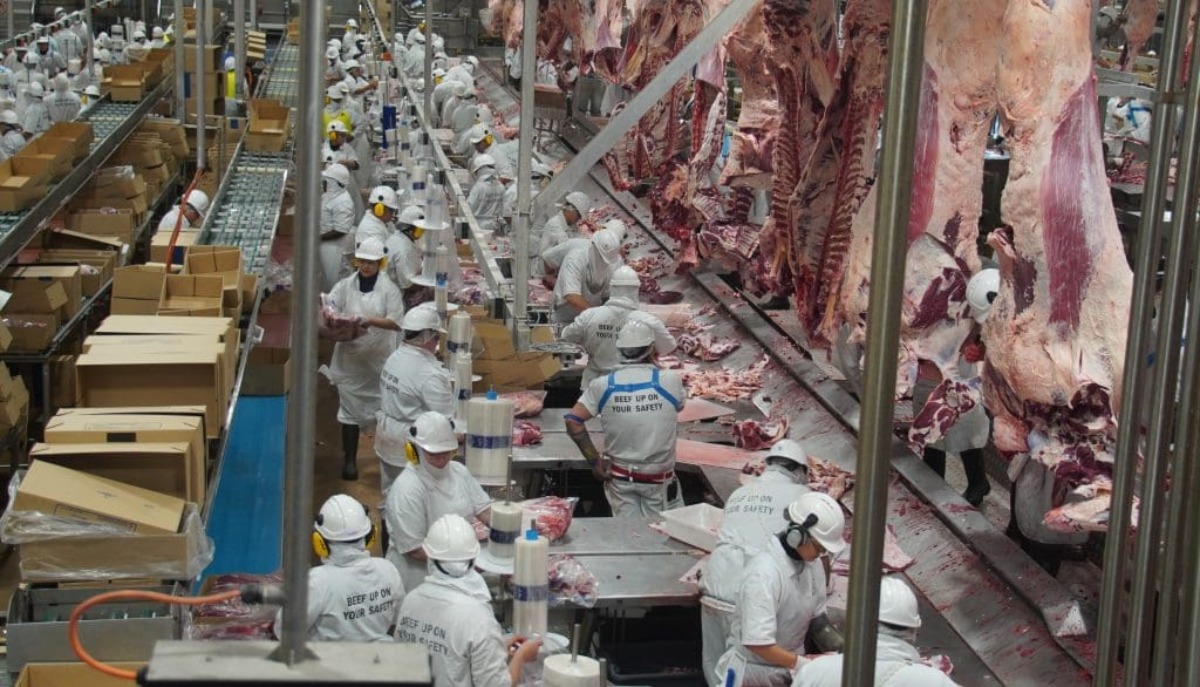
Below: a JBS factory