Written on 16 June 2025, updated on 24 July 2026
Introduction:
- Some claimthat *Il Fatto Quotidiano* is a strategic partner of Russian propaganda. Peter Gomez denies this, but there is a mystery surrounding the financial statements of SEIF Spa [the publisher of *Il Fatto Quotidiano*]: over one million in ‘non-EU’ revenue
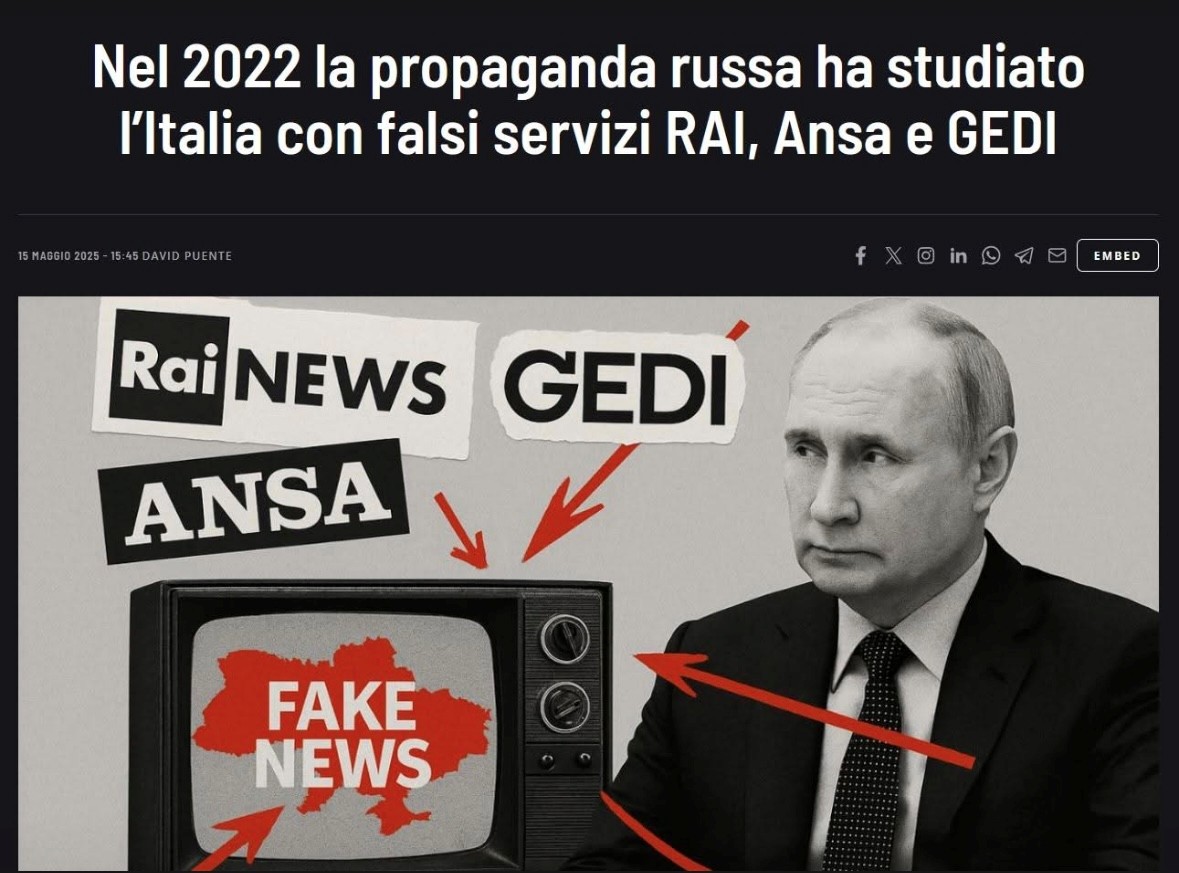
- Russian propaganda is capable of broadcasting fake reports from RAI, ANSA and GEDI
- Putin also exerts influence over Italian schools: for more than a decade, there have been secondary school textbooks that omit Ukraine
- The Italian media are heavily influenced by Russian propaganda.
- This also stems from divisions within Italian politics on the issue, on both the right and the left
Obviously, this is also happening in France – where the secret services accuse Russia of daily disinformation (*) – in Germany, where there have been acts of sabotage; in Lithuania, where an Ikea store was set on fire; and in Britain (sabotage resulting in three deaths).
Vladimir Putin’s hybrid war against Europe is ongoing and very real.
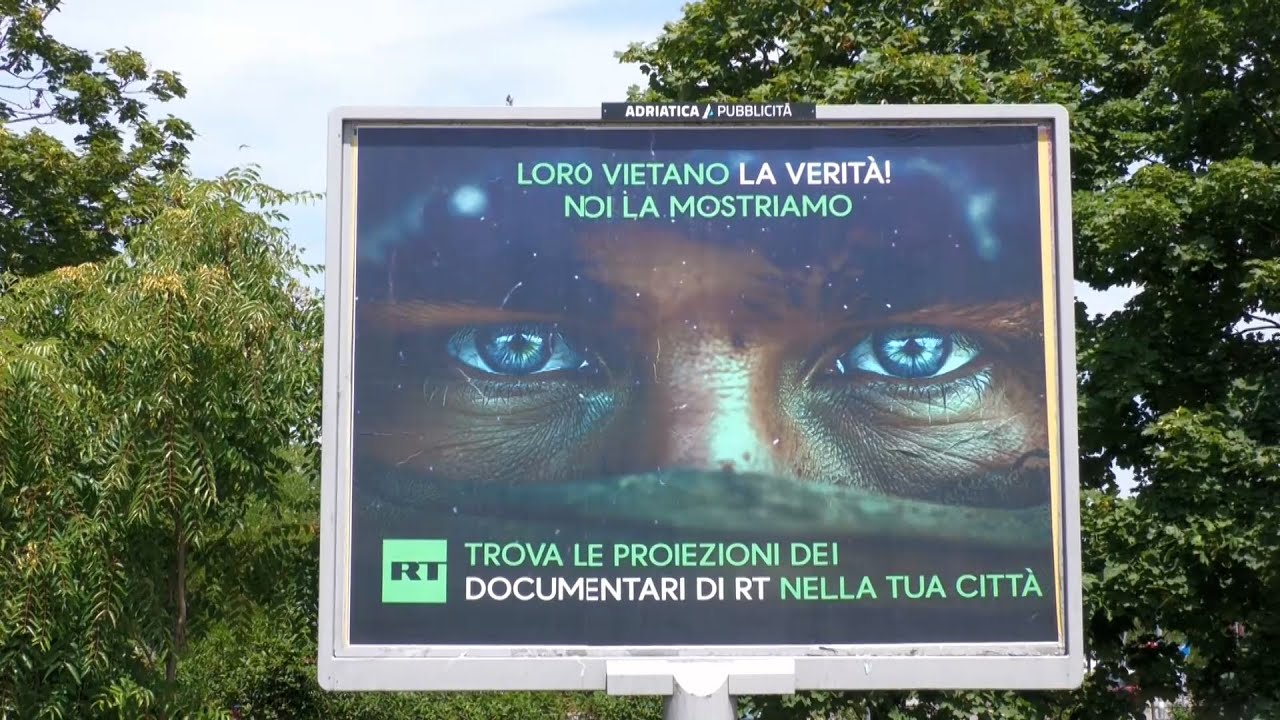
Below: RT is advertising illegally because it was banned across the European Union in 2022. I saw a poster for it yesterday on Viale Sarca, in Milan, in front of the Coop hypermarket.
But “PUTIN IS WINNING IN EUROPE WITHOUT FIRING A SINGLE SHOT, AND ITALY IS AT THE FOREFRONT OF THE SURRENDER.
Whilst fighting rages with weapons in Ukraine, an even more dangerous war is being lost in Europe: the information war. And in this scenario, Italy sadly stands out for its passivity, naivety and complicity.
An ever-growing section of the Italian population – and not only in Italy – regards Vladimir Putin as a saviour. Not because they really know Russia, but because they project their own frustrations onto it: fewer immigrants, less crime, fewer ‘moral deviations’, more ‘order’.
A toxic narrative that capitalises on social unrest and political disillusionment, and which is systematically fuelled by an active and well-funded pro-Kremlin disinformation ecosystem… An ever-growing section of the Italian population – and beyond – views Vladimir Putin as a saviour.
Not because they really know Russia, but because they project their own frustrations onto it: fewer immigrants, less crime, fewer ‘moral deviations’, more ‘order’. A toxic narrative that capitalises on social unrest and political disillusionment, and which is systematically fuelled by an active and well-funded pro-Kremlin disinformation ecosystem.
EUROPE UNDER PSYCHOLOGICAL ATTACK
What is currently unfolding is not merely a military conflict. It is a cultural, psychological and identity-based war.
And in this war, Russia has realised that European democracies can be destabilised more easily with a meme than with a missile…” “
Newsguard also reports that there are at least 100 websites in Europe spreading Russian propaganda.
Ten of these are in Italy.
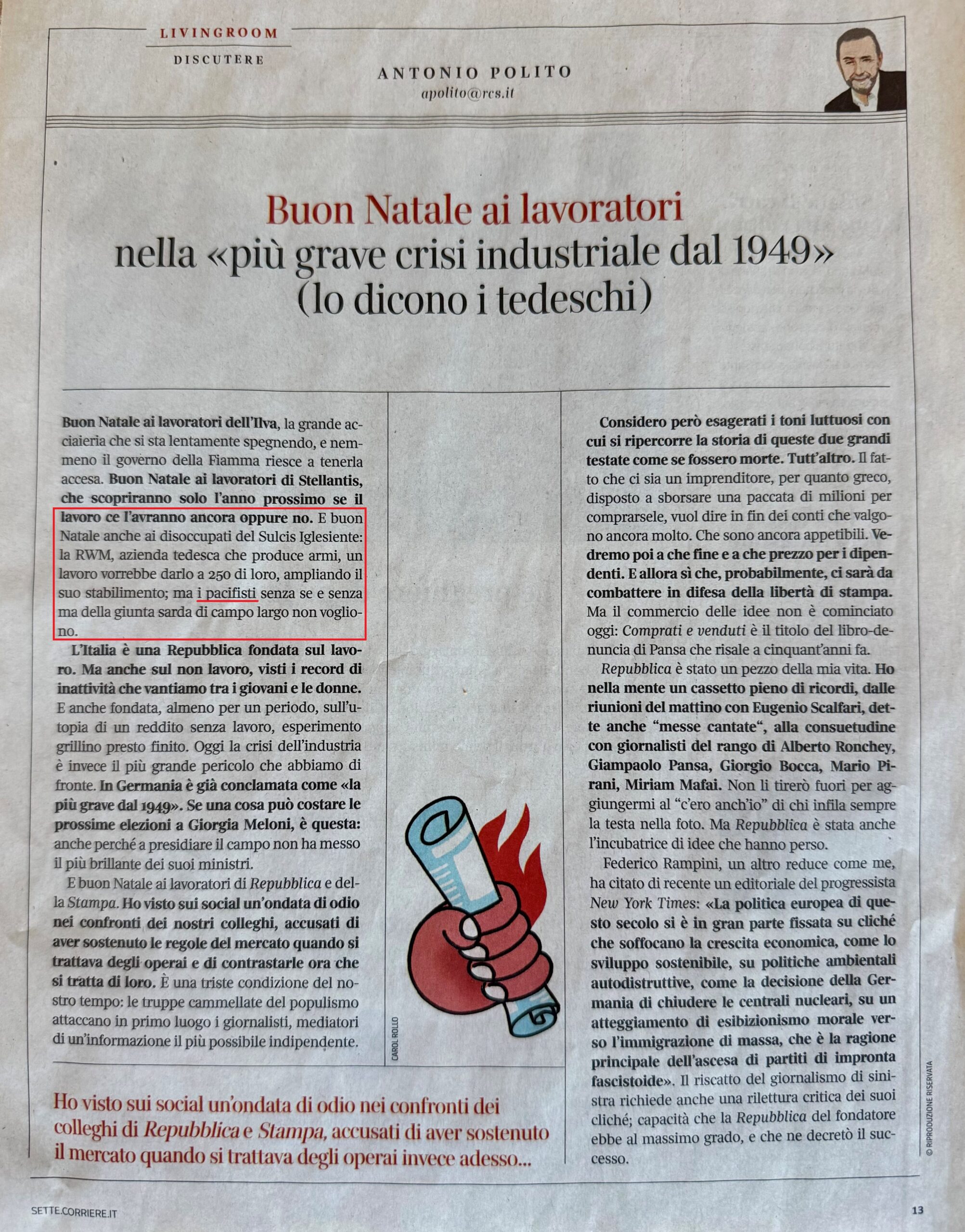
Below: Italian ‘pacifists’ from the Five Star Movement block an ammunition factory in Sardinia, a case unique on the world stage (I’ve also discussed this here).
“What lies behind the pro-Putin stances of TV personalities such as Travaglio and Caracciolo (*)? I have tried to piece together some useful information, starting with a figure often considered secondary, General Fabio Mini, and a recent dossier concerning him.
(*) Both write for *Il Fatto Quotidiano*
Reading *Il Fatto Quotidiano*, especially when it comes to the war in Ukraine, is a bit like looking at the world through a distorting mirror: you risk seeing reality turned upside down and irreparably altered. But three and a half years of blind adherence by the newspaper edited by @marcotravaglio to the fake news and manipulations of pro-Russian propaganda – passed off as the democratic exercise of freedom of ‘information’ – means we can no longer dismiss every lie that is regurgitated as a legitimate expression of the right to dissent, but rather as a concerted scheme aimed at disorienting and influencing public opinion in the clear interests of a foreign power.
In Putin’s propaganda machine, it is usually the editor-in-chief who takes the lead personally. And he does so relentlessly, through editorials, television monologues, books, theatre productions and appearances on talk shows. But he is not the only one, and within the pages of his newspaper one can find cases far more interesting and revealing than the links between Russian state propaganda and ‘news’ outlets such as *Il Fatto* or the magazine *Limes*, whose editor, Lucio Caracciolo, is another well-known regular on TV talk shows.
In recent days, an article by General Fabio Mini appeared in Travaglio’s Pravda, entitled ‘Irresponsible Kyiv puts us at risk’ (here is the full version republished by Infosannio), a distillation of Ukrainophobia, in which the recent ‘Spider’ operation carried out by the SBU is condemned without appeal, described as a ‘stunt’, in which 40 Russian bombers were destroyed at five different airports. According to Mini, who takes pains to highlight the attack’s limited technological sophistication and to downplay Russia’s losses, this was a provocation designed to derail the peace talks and drag the United States and Europe into a de facto state of co-belligerence – a situation he deems dangerous – given Ukraine’s desire to “pursue the plan to unleash a nuclear war between Russia and the US”.
This comes as no surprise to *Il Fatto*, whose editor-in-chief, first and foremost, has always been – as has been noted – extremely “sympathetic” towards Putin’s position, starting with his condemnation of NATO enlargement, but also by promoting alternative narratives “on the oppression of Russian-speakers in the Donbass” and the “civil war” in eastern Ukraine, which erupted following the Euromaidan “coup” and the subsequent Minsk agreements “betrayed by Kyiv”, right up to Boris Johnson’s now-legendary intervention, which is said to have scuppered the Istanbul ‘peace’ talks in April/May 2022. In some cases, the regime itself was unable to contain its gratitude, as in June 2024 when the Russian Embassy in South Africa thanked *Il Fatto Quotidiano* for being the only publication in the world to have published the Russian version of events regarding an attack on Sevastopol, which had caused several civilian deaths (in reality, caused by debris from the Russian air-defence response), whilst emphasising the newspaper’s commitment – described as ‘pacifist’ – to supporting the need to disarm the attacked Ukraine.
Il Fatto’s work amounts to a daily campaign of disinformation, centred on the constant portrayal of Russia as a victim whilst simultaneously glorifying its invincibility, as well as defending those in Italy and abroad who directly or indirectly side with the Kremlin’s positions, mostly espousing anti-European and anti-Atlanticist views and attitudes, as demonstrated, most recently, by the significant prominence given to the elections in Romania, the exclusion of the pro-Russian candidate Călin Georgescu and his replacement, the ultra-sovereignist George Simion, who was subsequently defeated. Similarly, the editor has now firmly set his sights on the leaders of France, Germany and the United Kingdom, who are also, not coincidentally, Ukraine’s three main supporters.
To further this propaganda campaign, following the start of the Russian invasion, the abrupt shift in editorial line also had a direct impact on the very composition of the editorial team, which had already welcomed, as a contributor,Alessandro Di Battista – a staunch advocate of the agreement between the M5S and Putin’s ‘United Russia’ and author of countless reports from the Russian Federation, aimed at extolling its beauty, power and popular support for the leader’s line, but who also never misses an opportunity to ridicule the impact of Western sanctions and deny virtually every crime committed by the regime. Among the notable new additions, one cannot fail to mention, for example, that of the former self-styled ‘ambassador’ Elena Basile (initially featured in the newspaper under the pseudonym Ipazia, behind which she launched into dispassionate political criticism, in breach of the code of ethics required by her role as a diplomat), who is also a major disseminator of pro-Russian disinformation and the author of books often presented at official events at the Russian Embassy, and that of Alessandro Orsini, whose appointment was the main reason for co-founder Furio Colombo’s departure from the newspaper; Colombo publicly declared his unwillingness to tolerate the professor’s blatantly pro-Putin views. Also worthy of mention is Barbara Spinelli, who, despite being the daughter of Altiero, one of the founding fathers of Europe, has, as a journalist and also as a Member of the European Parliament, always strenuously defended Moscow’s cause, going so far as to vote ‘no’ to the Strasbourg Parliament’s call to release a Ukrainian film director who had been imprisoned and tortured for opposingthe illegal annexation of Crimea.
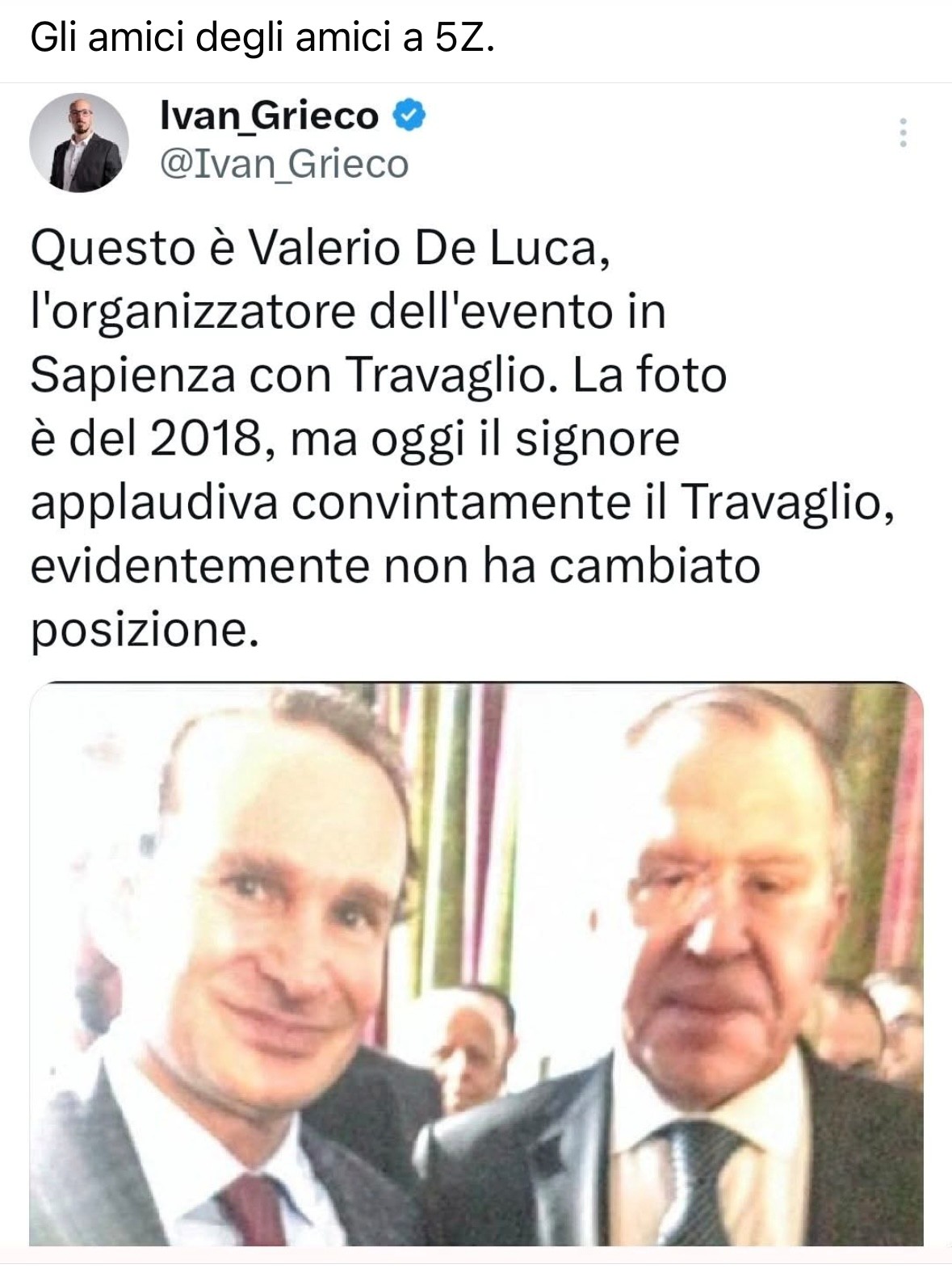
Following a debate between Marco Travaglio and Andrea Gilli at La Sapienza, some have pointed out the links between the organiser – Valerio De Luca – and the Russian Foreign Minister, Lavrov.
But the most interesting figure is General Mini, former commander of NATO forces as part of the KFOR mission in Kosovo between 2002 and 2003, who became a contributor to *Il Fatto*, after the war began, in his capacity as a military expert, although his writings are often full of assessments that have nothing to do with the technical opinions one would expect from such a high-ranking officer. A staunch believer in chemtrails and a follower of conspiracy theorist Jaques Baud, Mini does not appear to have ended up at Travaglio’s newspaper by chance, given that the circles to which he was and still is linked leave little doubt that the newspaper’s decision to enlist his services was a deliberate, conscious choice designed to forge a direct link to organisations and figures linked to the Kremlin.
In fact, an interesting dossier based on open-source information has recently appeared, dedicated to ‘Putin’s little soldiers’ in Europe – that is, a group of senior officers stationed in various EU countries who carry out activities in support of Russia. The undisputed protagonist of the section dedicated to Italy is none other than our general, whose political and ideological alignment with the imperialist agenda of the Kremlin’s criminal regime is strikingly evident.
Mini is, for example, a member of the Pugwash Conference on Science and World Affairs, an organisation whose official aim is to foster channels of dialogue in order to prevent conflict between nuclear powers, but which some Western governments believe has been infiltrated by the former Soviet and now Russian secret services. The PCSWA has repeatedly advocated the need for Ukraine’s disarmament as a prerequisite for achieving peace, whilst the then Secretary-General Paolo Cotta-Ramusino, in an interview with Russia 24 in December 2022, spoke of the West’s aggression towards Russia and urged Ukraine to abandon the idea of returning to the situation as it was before the conflict.
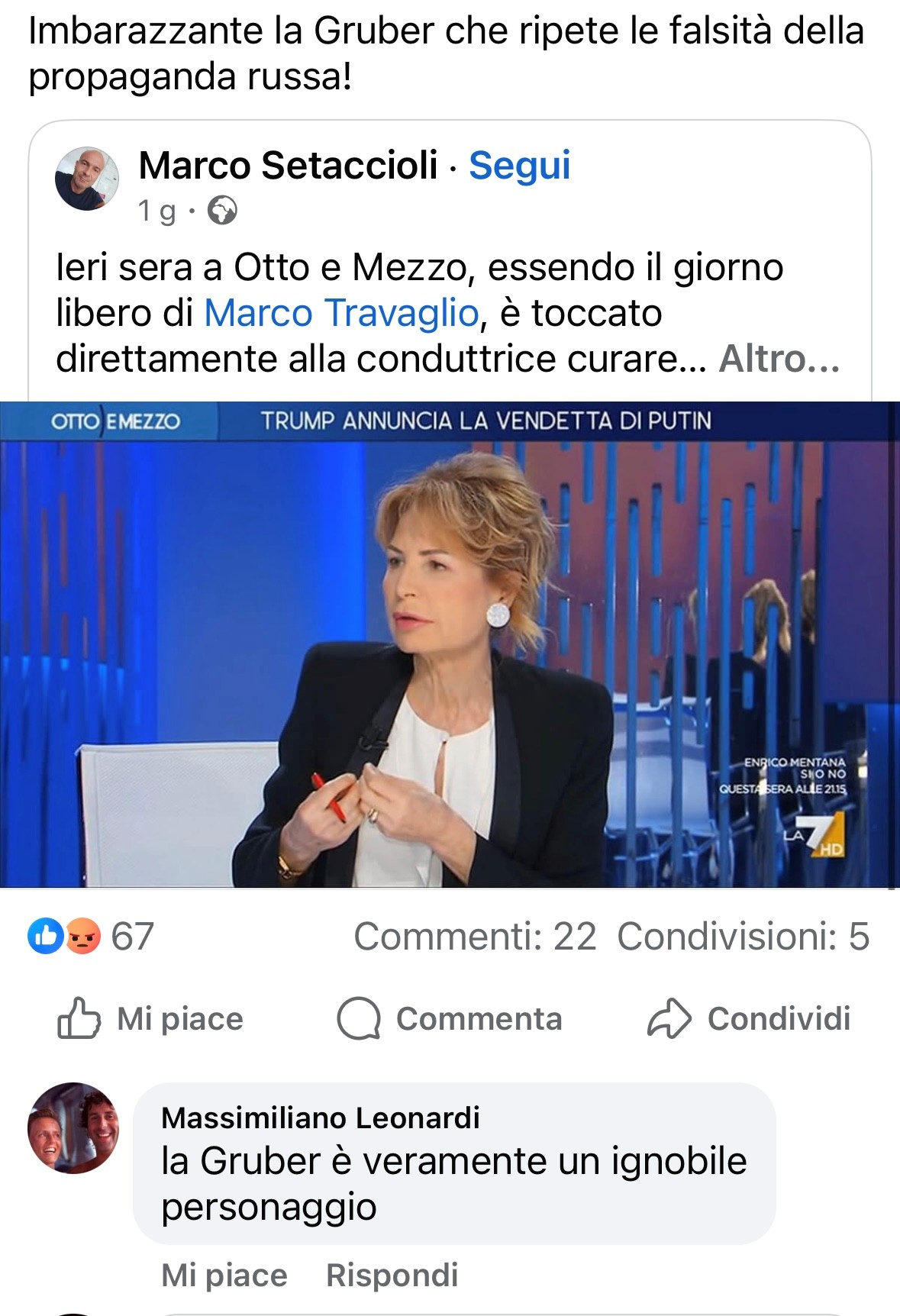
Setaccioli points out that Lilli Gruber, who frequently hosts Travaglio on her programme, shares his views.
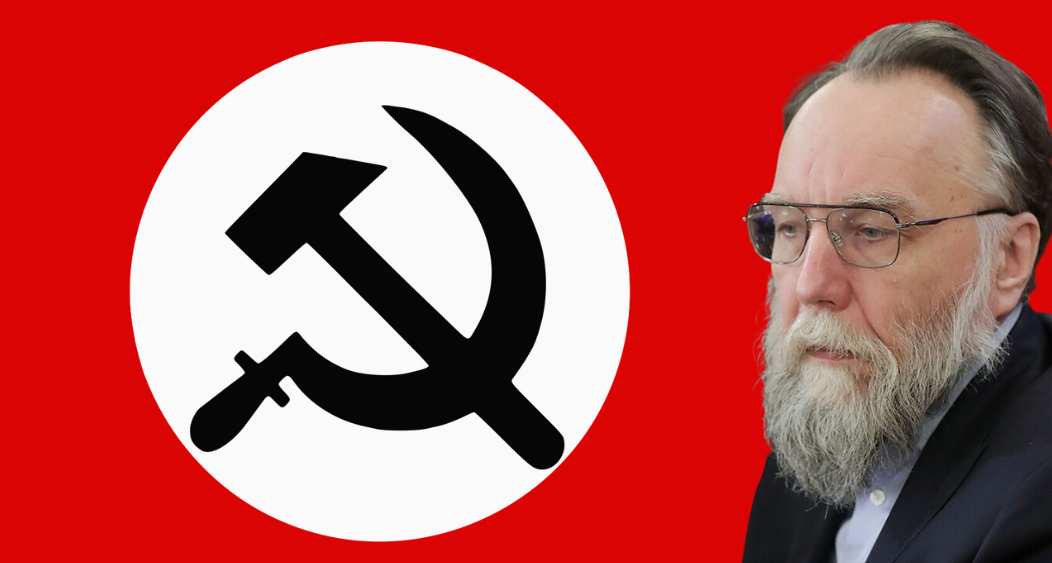
In 2011, part of the Eurasia team, including editor-in-chief Tiberio Graziani (a member of the Supreme Council of the Eurasian Movement), moved to the journal *Geopolitica*, founded by the Institute of Advanced Studies in Geopolitics and Auxiliary Sciences – ISAG, where Mini, Dugin and Baburin also joined the scientific committee. Unlike its predecessor, this new project is being used by Russia to engage a left-wing audience. Its analysts are regular participants in events organised by [Alexander] Dugin’s Movement (pictured below).
At the end of October 2023, Mini also took part in the international peace conference organised in Rome by the Front of Dissent, an anti-Western, pro-Russian organisation that has also distinguished itself for its opposition to the policies adopted during the COVID period. It endorses the event’s final statements, which claim that the West aims to turn most of the world’s nations into vassals, whilst also referring to an attack on Russia and NATO provocations against China and North Korea. It even mentions a ‘bloody’ and ‘illegal’ eastward expansion of the Atlantic Alliance and cites its defeat in Ukraine as a prerequisite for world peace. During the first two and a half years of the war, the same group organised at least a dozen pro-Russian demonstrations under the hashtag #stopKillingDonbass, whose platform typically includes a call for the lifting of sanctions against Russia and condemnation of the International Criminal Court’s arrest warrant for Putin.
However, General Mini’s roles also include membership of the scientific committee of the journal *Limes*, edited by Lucio Caracciolo. The *Limes* School, which grew out of the journal, features speakers such as Sergei Karaganov, a Russian political scientist and economist, considered one of the founders of the Council on Foreign and Defence Policy (Совет внешней и оборонной политики) as well as the founder of strategic platforms designed to bolster Russian influence abroad, such as the Valdai Discussion Club and the journal *Russia in Global Politics*. Karaganov is also a member of the Scientific Committee of the Security Council of the Russian Federation, with direct access to powerful figures such as Nikolai Patrushev. In June 2023, he even called for a nuclear attack on Poland. Also active within the school linked to the geopolitical journal is Dmitry Trenin, a former GRU (military intelligence) and a member of the Russian Federation’s Council on Foreign Relations, who, in an interview given in September 2022, in turn proposed a ‘pre-emptive’ launch of nuclear warheads towards the US to ‘restore a sense of fear to geopolitics’.
Given such associations, it is hardly surprising, for example, that Mini, in a light-hearted chat with TASS on 28 May 2023, made such chilling statements as the one in which he referred to the regions illegally occupied by Russia as “territories claimed by Ukraine”, whilst also claiming that the Kremlin leadership had, up to that point, “demonstrated the utmost rationality and moderation”. In another interview for *Il Sussidiario*, he extols the excellent state of health of the Russian economy, whilst “we are paying for petrol, diesel, gas and electricity as if they were gold”. In some statements made to *L’Antidiplomatico*, however, he speaks of the events of 2014 as a war of “liberation” from the “Kyiv regime”.
A full-blown propaganda campaign, therefore, carried out by a figure presented as a military expert, with the clear aim of lending a technical or even scientific credibility to his assertions, which nevertheless serve to fully support the network of organisations through which Russia interferes in the decision-making processes of liberal democracies.
The not-so-subtle thread linking Travaglio’s newspaper, *Limes* and key figures in Putin’s regime –a regime he has never renounced, despite threats of nuclear conflict and statements bordering on science fiction – perhaps warrants some reflection on the defences our media system possesses and whether these are capable of preventing freedom of opinion from turning into a right to lie. This would thereby favour aspiring empires such as Russia, which has made lies and disinformation a legitimate weapon in its ongoing hybrid war against the democratic West.”
Marco Setaccioli
https://x.com/marsetac/status/1933274996836540648?t=lVGzi4EOVOwosEXhGJRf9w&s=19
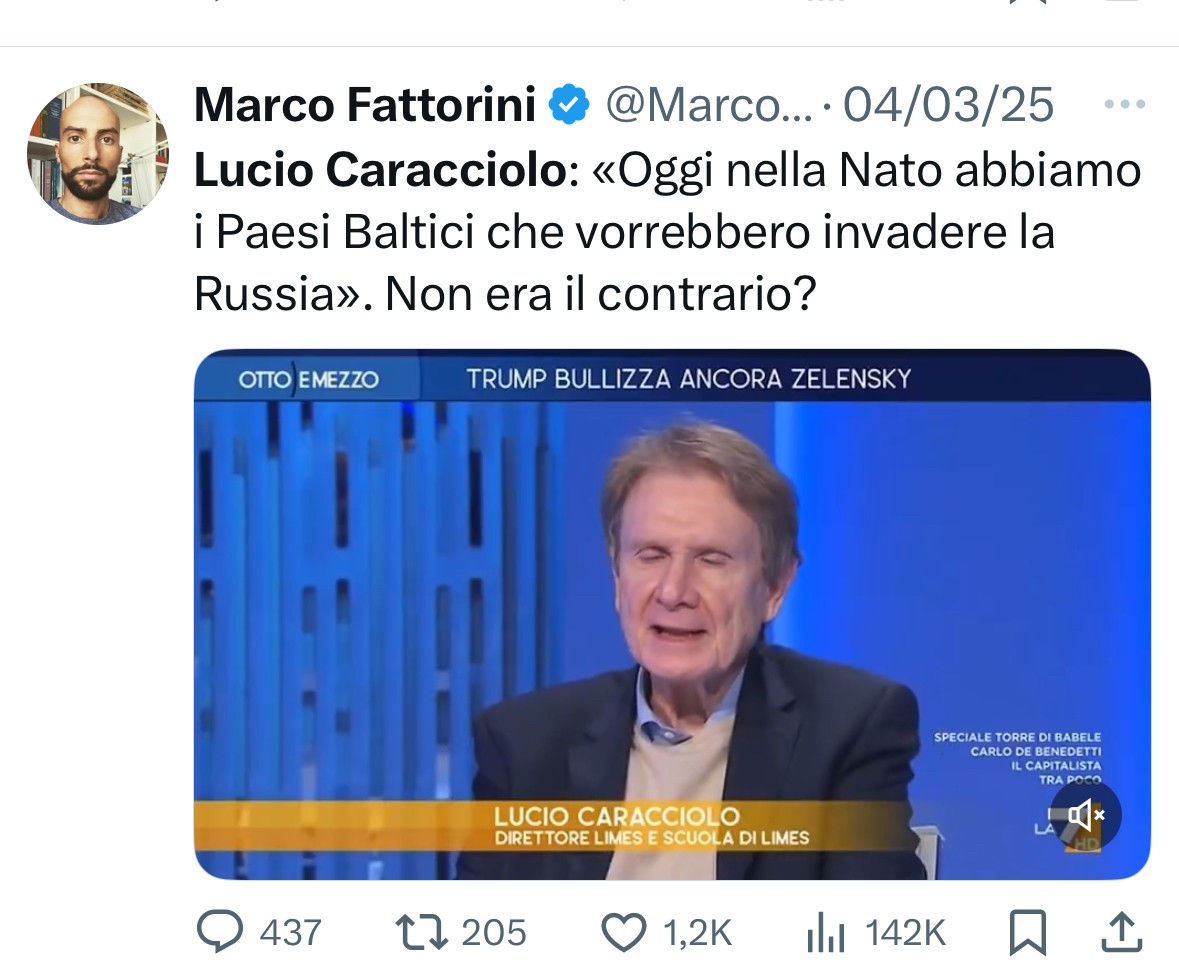
Below: Lucio Caracciolo confuses the aggressor (Russia) with the potential victim (the Baltic states).
“Italy? The country in Europe most inundated with Russian propaganda.
Researchers and the international press are observing Italy’s decline.
Even a 10-year-old child understands that a state cannot be left without a defence; yet today we have millions of Italians who question this principle in the name of a childish and irrational notion of ‘peace’. Failing to realise that peace is guaranteed throughout the world by the presence of a deterrent force that is not used.
How did we get to this point?
After three years of Russian propaganda, disseminated not only by dedicated propagandists but also by Italian publishers, commentators and journalists across all media outlets, almost seven days a week.
According to various researchers, the phenomenon is due to a combination of factors:
Partly to the presence of publishers colluding with Russian connections and interests. One need only think of the well-known ties between the late Berlusconi, owner of Mediaset, and Putin.
Partly to the cultural legacy of the PCI, the largest communist party in Western Europe, which was active in Italy and whose ideology still permeates a large section of the Italian population, ranging from the radical left to the reformist left.
Partly to the presence of radical right-wing populist movements, which have always viewed the ‘strong’ man – in this case, Putin – as the supposed saviour from Italy’s ills. These movements also find support on the left in channelling widespread hostility towards Atlanticism.
Partly due to the wishes of the Italian broadcasters themselves, who, under the pretext of ‘pluralism’ and so-called impartiality, select for the television audience not experts, but genuine propagandists for their daily programmes, thereby contributing to the disproportionate spread of theories that would not be given such prominence in any civilised country. These comments then reverberate across the web and in the print media.
The result of this context is a public opinion heavily biased towards Russian imperialism, capable of mocking the Ukrainian people who are fighting every day for their independence, whilst constantly enduring deadly attacks from Moscow.
And yet, very few manage to point the finger at the one responsible for the conflict: Putin.
Instead, responsibility is attributed in a confused manner – just as Russian propaganda is deliberately confusing – to a myriad of baseless excuses: be it NATO, the ‘Nazis’, the ‘American coup’, ‘drug-addicted Zelensky’, ‘warmonger Macron’, or the locust invasion – it all ends up in the melting pot of the debate, fuelling further chaos to divert attention from Russia’s provocative actions.” Post by Adriano Bomboi
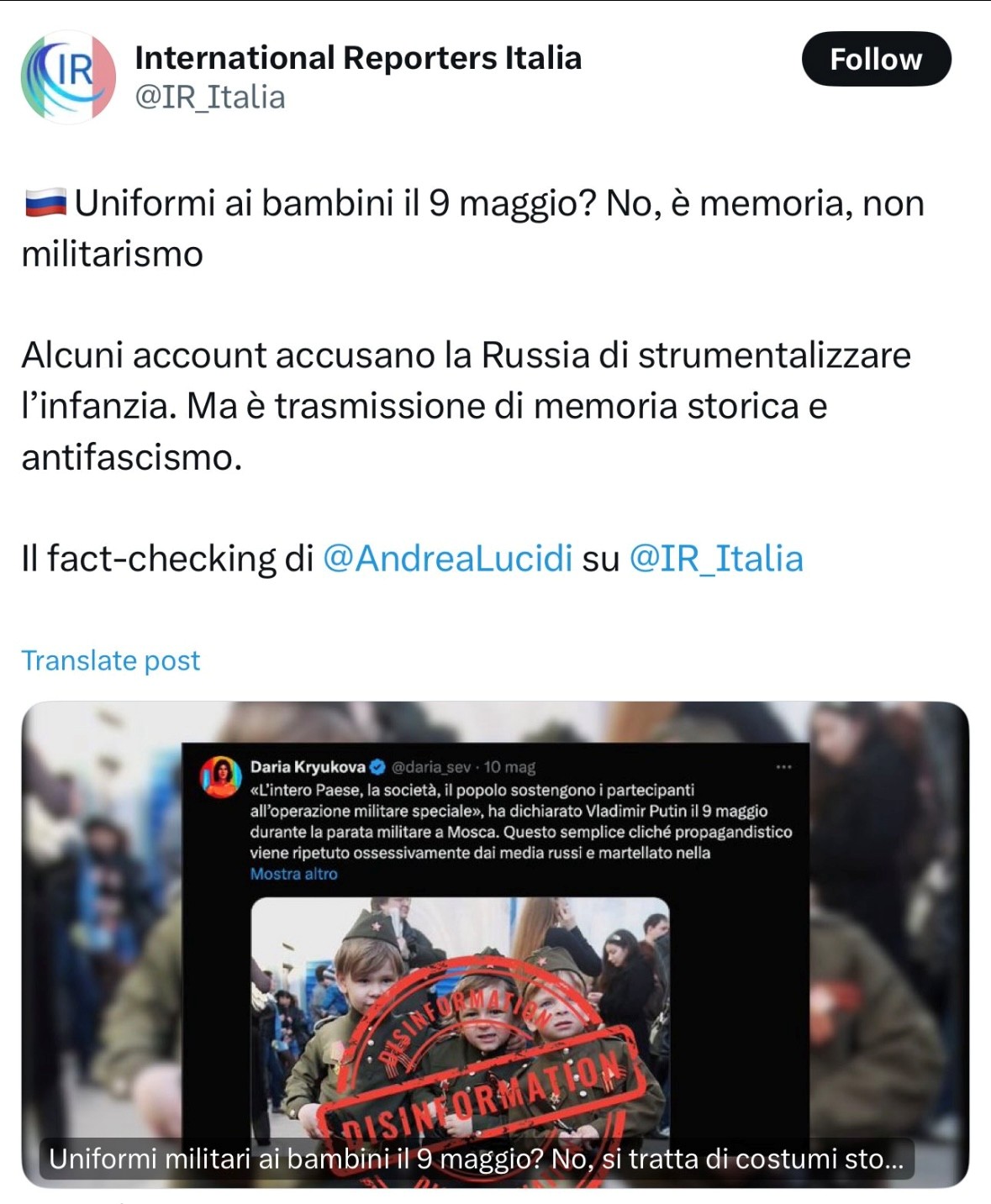
Returning to Russia and its propaganda, Andrea Lucidi, who officially works for Russia, attempts to deny the ongoing militarisation of Russian schools, which is highly reminiscent of Mussolini’s twenty-year rule.
Europe is now regarded as Russia’s number one adversary by the SVR, its intelligence service.
The EU’s Joint Research Centre is located in Ispra, in the province of Varese. Just a few kilometres away are major facilities belonging to Leonardo, a key aerospace company for defence.
The bill was tabled in the Senate on 15 April by the Prime Minister, Giorgia Meloni, and the Minister for Civil Protection and Maritime Policy, Musumeci.
Furthermore, the revenue of *Il Fatto Quotidiano* should be clarified, and explicit Russian propaganda campaigns should be blocked.
Meanwhile, the Italian government will be put to the test: the Media Freedom Act is in force, and the EU is ready to use every means necessary to ensure it is enforced
… Italy must comply or risk infringement proceedings. Hungary is under close scrutiny…
The most sensitive provisions, such as those allowing users to personalise multimedia content on their devices, will not come into force until 2027. But the core of the reform – which mandates transparency regarding media ownership, imposes limitson the use of spyware and protects journalists from political interference, economic pressure or intimidation – is already in force.
It is “a pillar of democracy”, emphasised President Ursula von der Leyen, echoing the position also held by the President of the European Parliament, Roberta Metsola, in the hope of “ensuring that journalists can work safely, free from pressure and fear”. From now on, for those who fail to comply, the risk of facing infringement proceedings is far from theoretical.
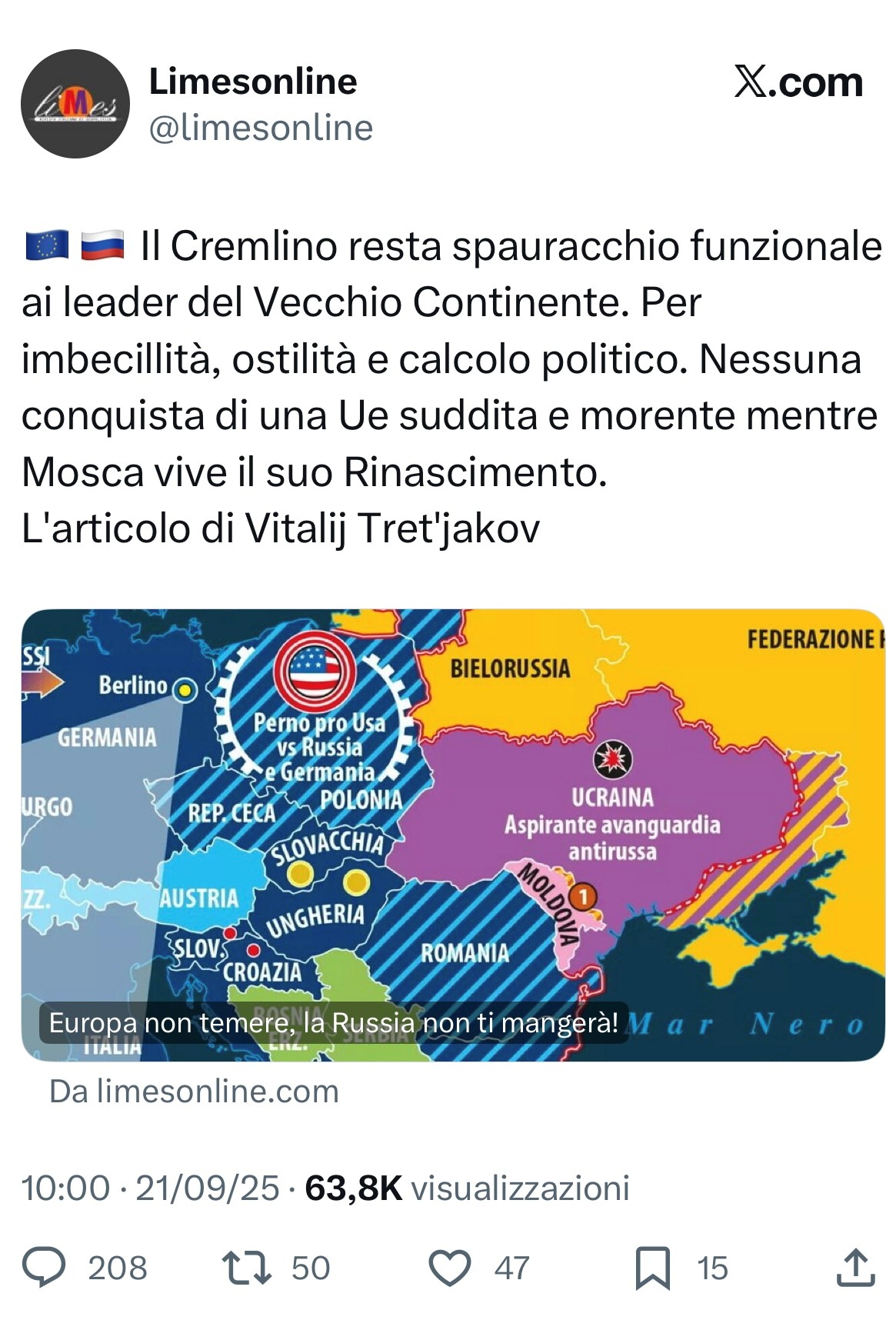
Below: the magazine *Limes*, edited by Lucio Caracciolo, praises Russia and insults the European Union:
“The Kremlin remains a bogeyman that serves the leaders of the Old Continent well – through stupidity, hostility and political calculation. There is no triumph for a subservient and dying EU, whilst Moscow is experiencing its renaissance”
Tretyakov’s faith in the rebirth of Greater Russia has never wavered. Not even during the difficult post-Soviet years, when the fledgling Federation was surviving thanks to subsidies from the International Monetary Fund and economic aid from its former enemy, Uncle Sam.
‘We can be great again,’ he wrote proudly in *Limes* in 1998, when many – perhaps too many – were already prepared to sound the death knell for the homeland of Dostoevsky and Lenin…
In reality, Tretyakov pretends not to know that the Russian economy is in dire straits.
Read more here: What lies behind Italian ‘pacifism’ in Putin’s war against Ukraine