

Written on 30 July, updated on 2 August 2026
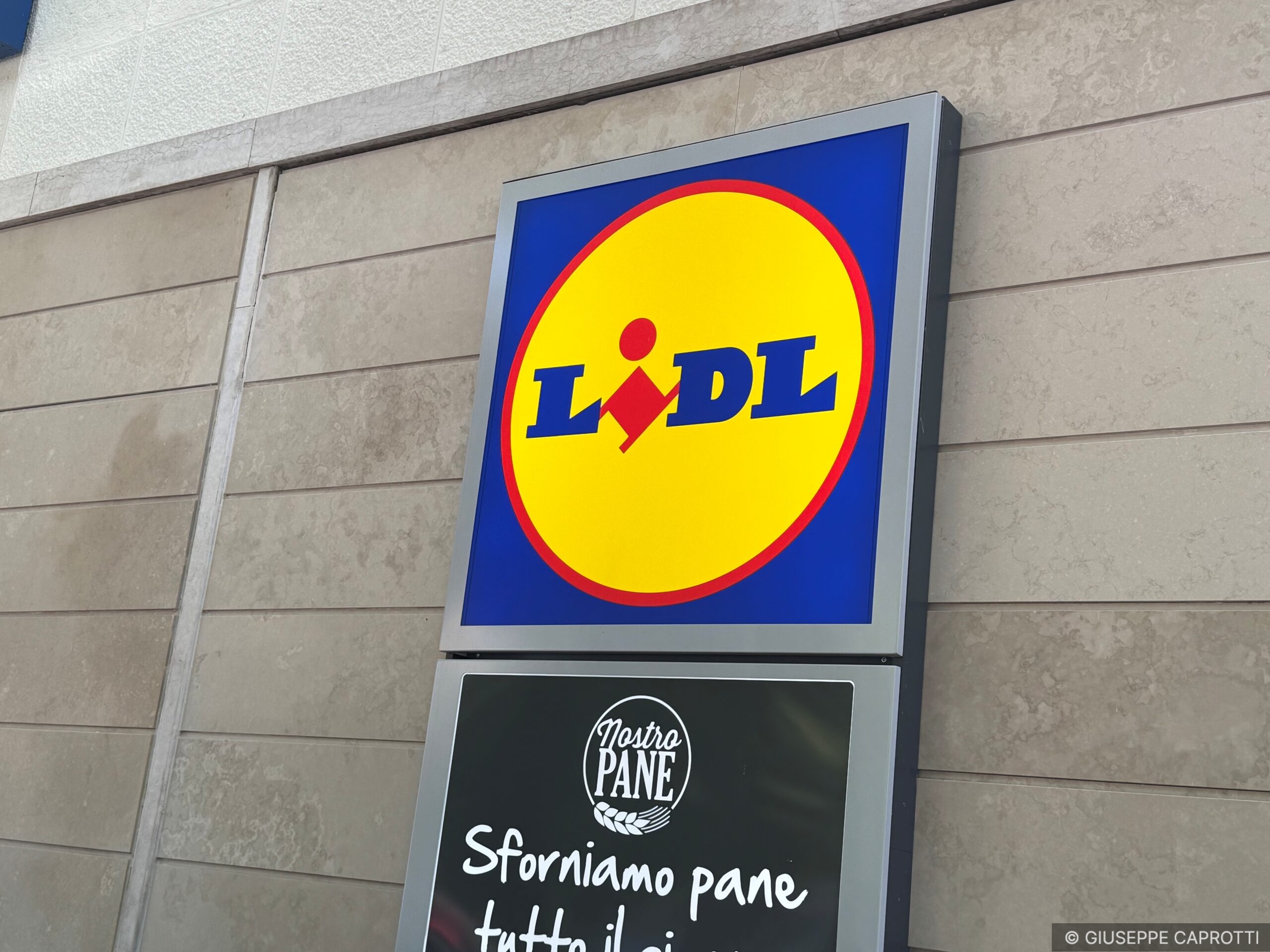
This interview with Gianfranco Marc Brunetti, Consumer Managing Director at Lidl Italia, is fascinating. I’ve compared it with some observations and photos I took during a visit to the Lidl store on Via Solari in Milan.
Fromthe slogan “Don’t change your lifestyle, change your supermarket” to the challenge of reaching 1,000 stores. This article reports on an interesting interview conducted at the Cibus Link Arena during TuttoFood with Gianfranco Marc Brunetti, Consumer Managing Director of Lidl Italia, in which he retraced the stages of a transformation that has changed not only the company but also the perception of discount retailers in the Italian market…
…One of the most significant milestones mentioned during the interview concerns the campaign launched in 2012 with the slogan “Don’t change your lifestyle, change your supermarket”.
This was not merely an advertising slogan, but the embodiment of a specific strategy: to definitively move beyond the perception of discount stores as a separate channel from traditional supermarkets and shift the comparison directly to the areas of quality, product range and shopping experience.
The economic climate also helped to accelerate this change. The financial crisis, followed over the years by the pandemic, geopolitical tensions and inflation, prompted millions of Italian households to try discount stores for reasons of value for money. But, as Brunetti explained, the real success has not been in convincing the consumer to visit for the first time, but in getting them to return.
Brunetti explained that every product undergoes four quality checks before it even reaches the shelves, in addition to the daily checks carried out in the shops.
Anyone who knows me a little knows that I don’t believe a discount supermarket can be transformed into a high-street supermarket – as, indeed, is quite evident to the naked eye at the Lidl on Via Solari in Milan.
Apart from the Lidl Plus loyalty card, the sushi, the non-food items and the Deluxe range, Lidl reminds me of Esselunga in its early days, when there were no own-brand products, only made-up brand names such as Kekasa, Maggiolino, etc.
In my view, having made-up brand names means that the retailer does not take direct responsibility for the products it sells.
I wroteabout Italiamo pastain this article.
The chain’s approach to chicken farming is interesting: Lidl Italy – the retailer guarantees a cage-free commitment across its entire range (both eggs sold fresh and those used as ingredients).
This has given rise to one of the most representative messages of Lidl’s strategy: “Come for the value, come back for the quality.”
According to the manager, it is precisely this quality that has been the main factor in building customer loyalty. The retailer has increasingly invested in fresh produce, in quality controls throughout the supply chain, and in the inclusion of certified products which, until a few years ago, would hardly have been associated with a discount supermarket: PDO buffalo mozzarella, PGI products, certified extra virgin olive oil and numerous examples of Italian excellence.
The focus on the fruit and vegetable supply chainis also particularly significant …
All fresh produce appears to be delivered directly from suppliers, already pre-packaged: this includes bread, fruit and vegetables, meat, etc. It becomes difficult to see what the shop actually does, apart from stocking the shelves, checking promotions and use-by dates, and, finally, restocking the range of items.
Having said all that, I can onlycongratulate Lidl for managing to convey something that I personally hadn’t noticed: that the German discount chain is a high-quality supermarket. Personally, I’ve only ever seen it as a place for bargains.


