Compiled 26 January 2014. Updated 4 February 2026. Cover: Armando Testa
I talked about all these events in my book Le Ossa dei Caprotti that I invite you to read.
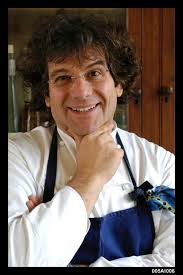
Aldo Cazzullo ‘s beautiful interview on 24 January ( http://archiviostorico.corriere.it/2014/gennaio “I did not run away with a Russian dancer…”) reawakened my memories of the relationship I had with Fulvio Pierangelini and his family many years ago.
.
But, to understand the situation better, one must first recall an episode prior to the first meeting with the magician of the restaurant il Gambero Rosso.
In 1987, I followed Esselunga‘s historic purchasing manager for Meat, Charcuterie, Dairy and Cheese, Luigi Guaitamacchi, to learn the trade.
One morning we went – as we did every week – to the old chicken market in Milan.
It was the place where the suppliers met to discuss market trends, prices and orders for chickens, turkeys, rabbits, etc..
There I met the seller of the Avedisco company who told me‘why don’t you make chicken tortellini?
That sounded interesting to me, I told my father and he told me it was a loadof rubbish.
A few months later, chicken tortellini ‘thought up‘ and made by Bernardo Caprotti appeared on Esselunga counters….
What does all this have to do with Fulvio Pierangelini?
You will know in a moment, if you have the patience to follow the story below…
I met Fulvio Pierangelini’s kitchen in Castagneto Carducci, at Luciano Maranzana ‘s wedding with Matilde Bagnoli, in the early 1990s.
I vividly remember that Pierangelini had prepared his very famous pigeon for that occasion.
Fantastic.

Then, going to the seaside near San Vincenzo for about ten years, I had the opportunity to frequent what I still consider to be the greatest living Italian chef, despite having eaten in many other restaurants of excellent quality.
I thought of a collaboration with Esselunga and proposed it to him:
he started writing recipes for Esselunga’s magazine, the so-called News…

Pierangelini also wrote the recipe for his very famous chickpea purée with prawns!
Obviously neither of us wanted to stop at recipes, so we organised a dinner at my house in Milan at the end of 1997 because I wanted him to meet my father and my sister Violetta.

My grandfather, Guido Venosta, who would pass away shortly afterwards,was also there.
Pierangelini, who had come with the whole staff and a great deal of time, energy and money (I remember perfectly the large quantity of bottles of Sassicaia he had brought and then left at my house)
He presented us with a whole series of vegetable ravioli that he could then ‘build’ for Esselunga, which did not have them in its assortment.
To say that the evening was not a success is an understatement: my father did not consider it at all. He was frosty. He didn’t even pay him a compliment.
i was embarrassed for the great chef, whose art my father had not wanted to understand.
But he liked the idea of the vegetable ravioli and my father appropriated it, as he had done with the chicken tortellini.
In fact, shortly afterwards, several types came out on the Esselunga counters, conceived by Bernardo Caprotti and Dr Renzo Buti, who was then the Production Manager.
The ‘moral’ is that in both 1987 and 1997 I had dared to venture into territory that Bernardo considered ‘his’.
And that at the time I was – since 1996 – already Commercial Director meant little:
the development of the supermarket network, town planning, construction and maintenance, and production (as we can also clearly see from the 2002 episode of Bernardo Caprotti’s resignation, which was later returned [*]) could not be touched,
Even at the expense of ultra-quality projects, such as that of the incomparable Fulvio Pierangelini (and Giuseppe, who had twice been totally by-passed by his father).
[*] the limits of these areas were not clear: both my father and I worked in parallel, without meeting (there was no internal executive committee).
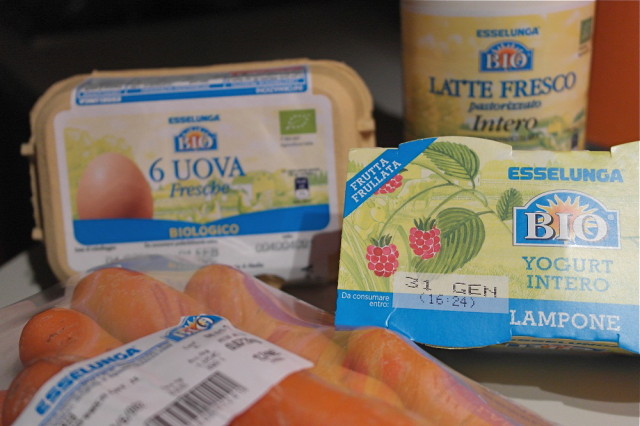
To give an example of the ambiguity of the areas in 1999, when Esselunga Bio was launched, several organic products, such as ice cream produced by our factories, were decided by me and the various managers in charge and launched without Bernardo having any objections.
Usually he was mostly interested in pasta and ready meals. The rest he did not consider.
I, for example, dismantled the historical coffee roasting plants of Kegusto or Khan (Esselunga), without him uttering a word.
My father and I also managed to make a few products together but it was very difficult for us to get along, except episodically.
For father-son relations read also ‘All about my father‘.
After that dreadful evening at my home in Via del Lauro in Milan, we just went to dinner at the Gambero Rosso, when we were in Tuscany in the summer .
I remember vividly that, during one of these dinners, my father and my sister Violetta had a heated discussion about Zunino.
She harshly criticised my father’s decision to rely on Luigi Zunino, whom I did not know at the time, for development.
It was a summer in the early 2000s.
Violetta’s criticism went on for a long time and the mention of ‘shareholding’ in my father’s note of 2003 below was about her.

p.s.: subsequent events in Esselunga and elsewhere proved Violetta right and Bernardo Caprotti took him out of trust. Note how in the letter he considered us shareholders, something he then repudiated eight years later, in 2011, when he took away our shares.
Returning to Fulvio Pierangelini the relationship, of course, waned.
He behaved like a gentleman and said nothing but I was in great distress at what had happened and above all very sorry and frustrated at what had not happened on that fateful evening when he had come to Milan!
A real shame for Pierangelini, for me and also for Esselunga.
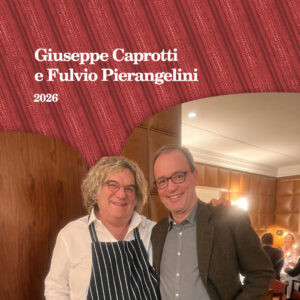
I respect him and I saw him again in Milan recently: I am happy because it was an emotional meeting!