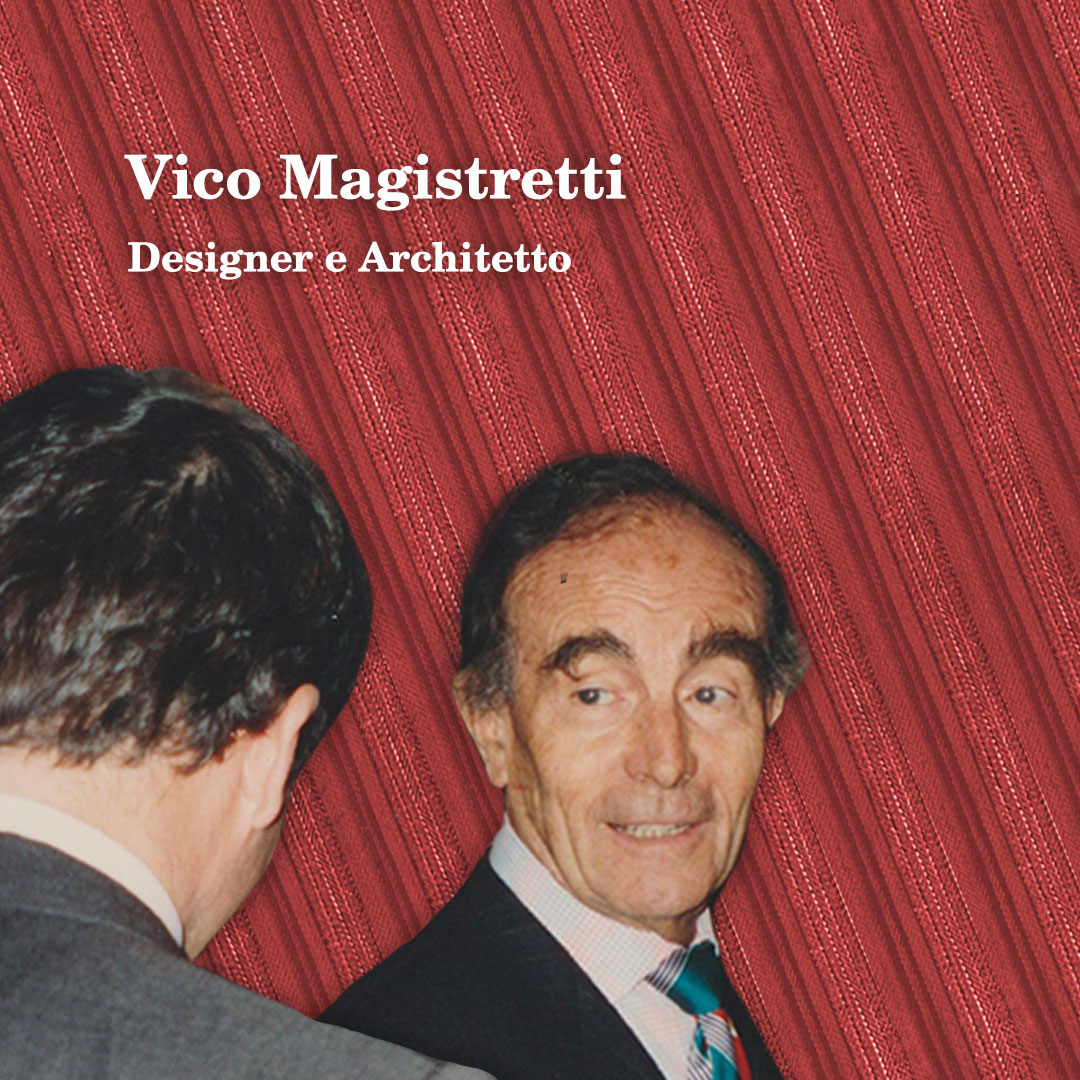
Ludovico Magistretti known as Vico (Milan, 1920 – 2006) comes from a family of architects ‘for many generations: his great-grandfather Gaetano Besia built Palazzo Archinto, which later became the Reale Collegio delle Fanciulle Nobili in Milan; his father, Pier Giulio Magistretti, participated in the design of theArengario in Piazza del Duomo. (…)”.
In the early post-war period, after graduating in Architecture, he began to make a name for himself first as a decorator, participating, among other things, “together with Castiglioni, Zanuso, Gardella, Albini and others, (…) in exhibitions organised by Fede Cheti, creator of furnishing fabrics, in her atelier. In the following years, those of reconstruction, he soon established himself as one of the most promising young architects, designing buildings such as the Torre al Parco in via Revere (1953-56, with Franco Longoni)..
In the 1960s he was also “one of the fathers of so-called Italian Design, a phenomenon that he himself calls ‘a miracle’ that could only come about thanks to the coming together of three essential components: architects, manufacturers and craftsmen. (…) He began to collaborate with manufacturers such as Artemide, Cassina and Gavina, creating objects for them that would remain classics of contemporary production”, such as the “Eclisse” lamp for Artemide, which won the Compasso d’Oro in 1967, or the “Selene” chair in 1969, “which, together with the Panton Chair and Joe Colombo’s Universale, contended for the primacy of the first plastic chair in the world” (VICO MAGISTRETTI FOUNDATION, Vico Magistretti. Biography).
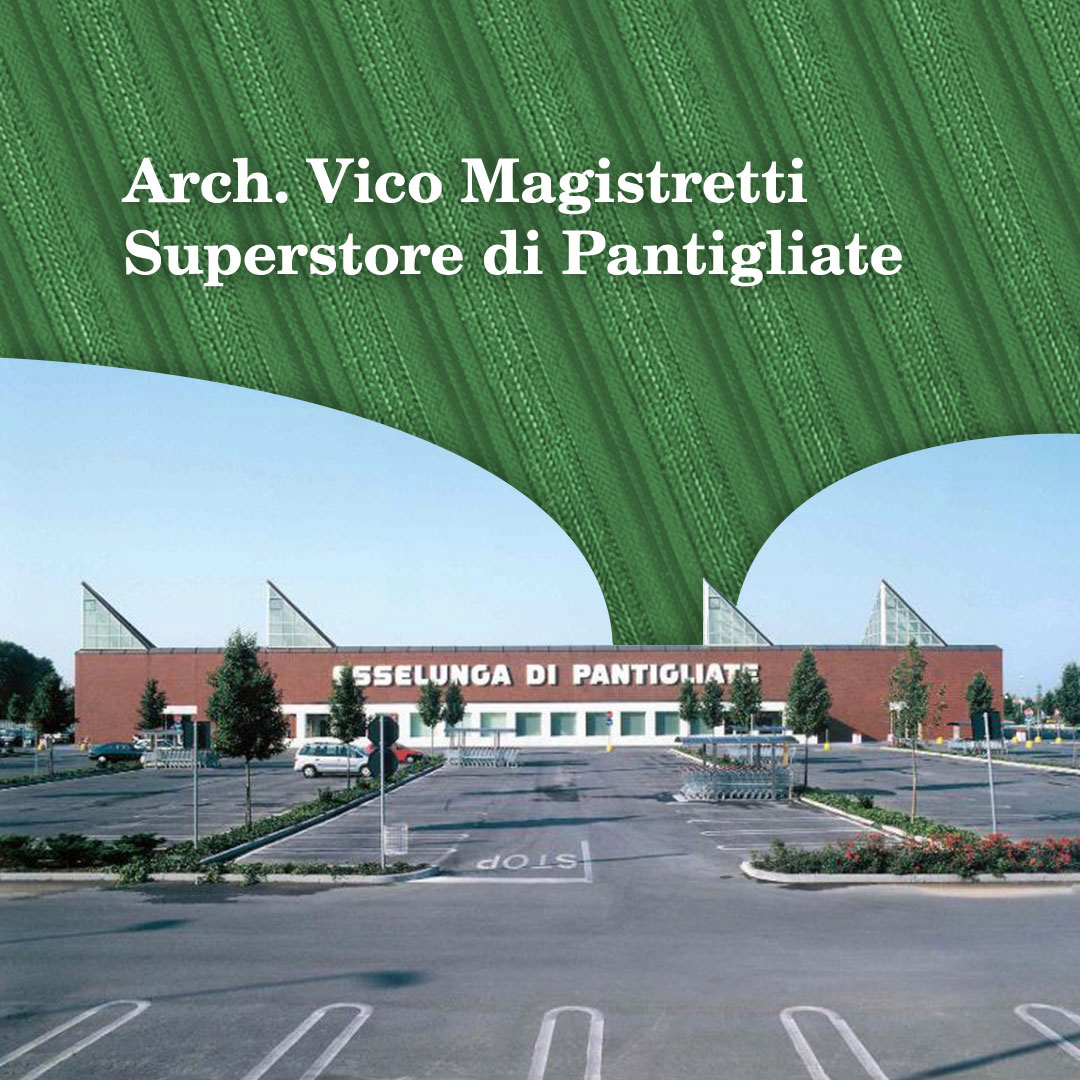
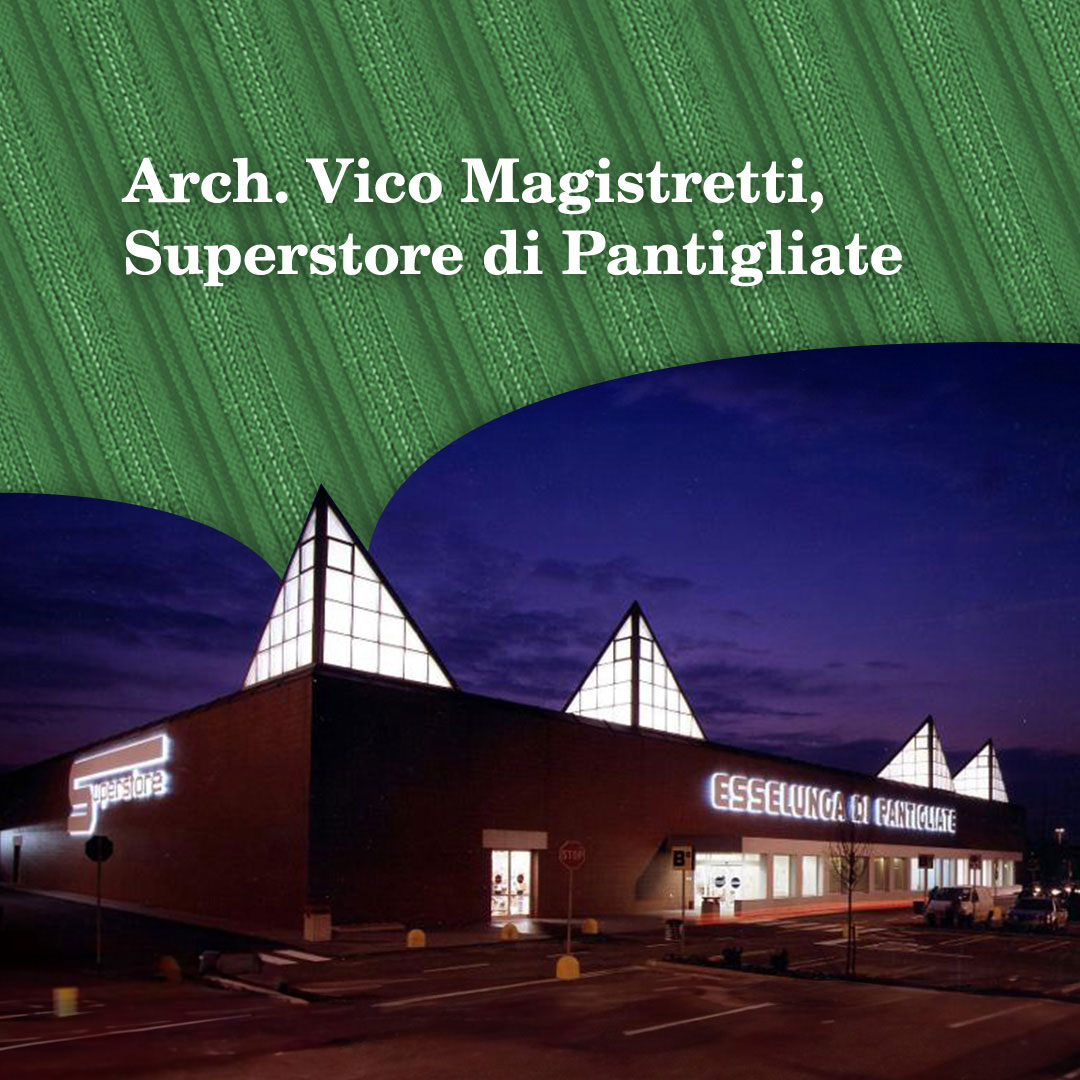
His creations have won more than one Compasso d’Oro award (and he will also receive one for his career in 1994), his is the first fully upholstered textile bed (‘Nathalie’, designed in 1978 for Flou), his are many others among chairs, lamps, sofas, kitchen furniture that will achieve fame and success all over the world. He designed furniture and buildings almost to the last, including the new Barilla offices in Pedrignano (1991-94), and the Esselunga superstore in Pantigliate (1997-2001), of which the Foundation named after him conserves sketches, plans and photographs. Another was to have been built in San Donato Milanese, but the project failed. (M. PELLINO, Esselunga, Pantigliate, file on Vico Magistretti’s project).
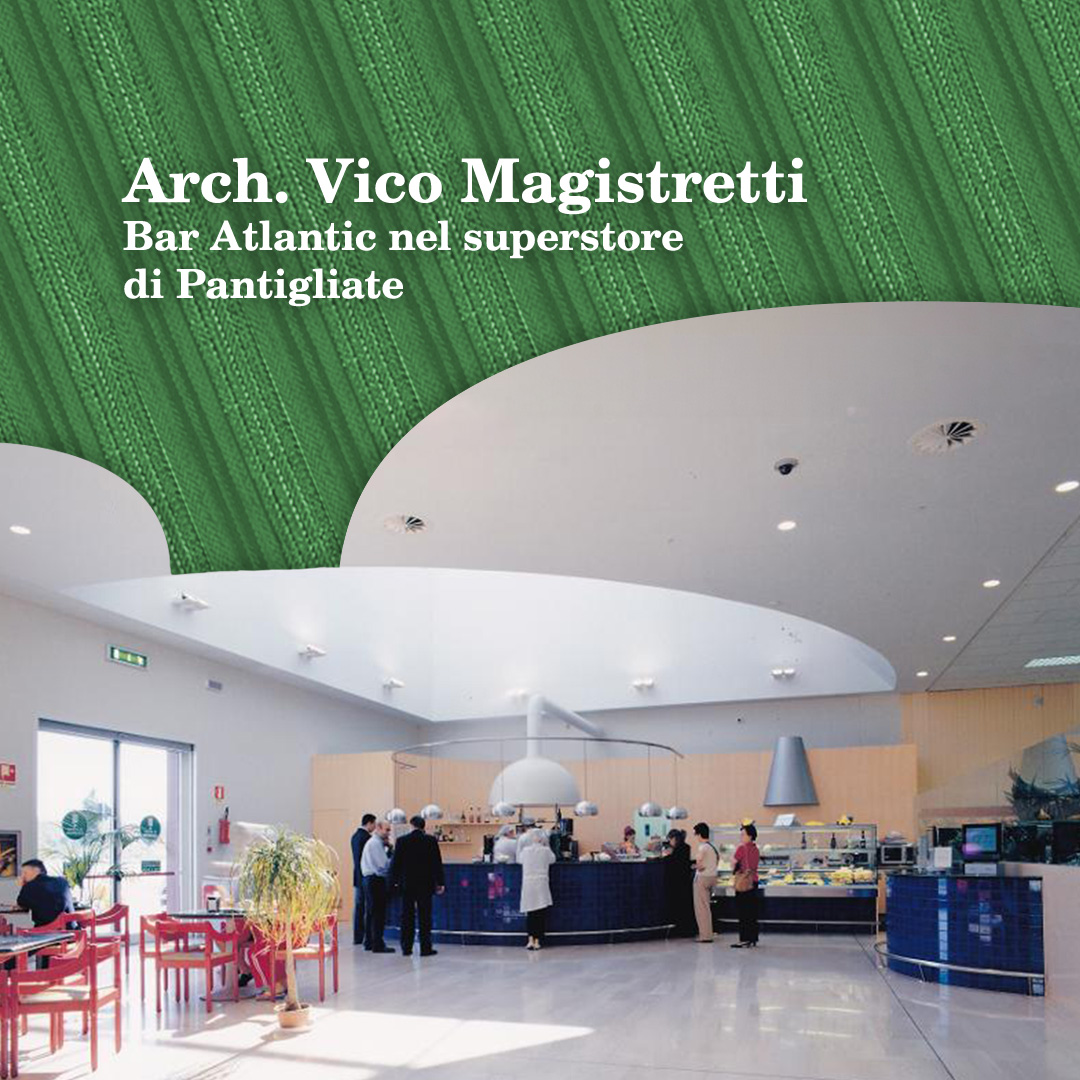
The year after the opening of the superstore in Pantigliate, my father Bernardo contacted Magistretti again because he wanted to “take the bars we had started experimenting with in the Parma and Sarezzo shops in 1998 to a new level”. I had wanted them, on the strength of my experience abroad and thanks to the fundamental support of Paolo De Gennis, one of Bernardo’s most senior and trusted collaborators (otherwise I would not have been able to realise them), and they had turned out to be an excellent idea, as customers like to have a refreshment point where they can sit and have a coffee, and at the time no other supermarket had one. Even the cafeterias, like the loose vegetables and fruit or the fridges with sliced cheeses and cold cuts in front of the Gastronomia, ‘began to convey the Esselunga label, reinforcing the perception of the quality of our brand’ (CAPROTTI, Le Ossa dei Caprotti family, pp. 167-168 and p. 205).
In 2002, returning from a trip to San Francisco with De Gennis, where we had been to find new ideas, “we reset the bars inside the supermarkets, putting in organic products and stations to connect to the web.” (Ibid., p. 219). But it was then, as mentioned, that my father entrusted Vico Magistretti with the creation of the concept for the new “Bar Atlantique”: the result was that “[Bernardo] (…) uprooted the stations, and the organic products with them, and had the bars redesigned in the somewhat Soviet canteen style that they still have today. (…)’ (Ibid., pp. 219-220). “He writes to all …‘If de gustibus non est disputandum (about taste there is no need to argue) it is nevertheless true that the ugly, the non-harmonious is an absolute value’ he asserts in his role of universal taste. But there is more: the web and the organic are his real enemies, as are computers, e-mail, slides, e-commerce and everything he cannot or does not want to understand’ (Ibid., p. 220).
And in the end I am forced to leave him in charge of the project: the bar was one of the biggest (and most absurd) conflicts in my relationship with my father.
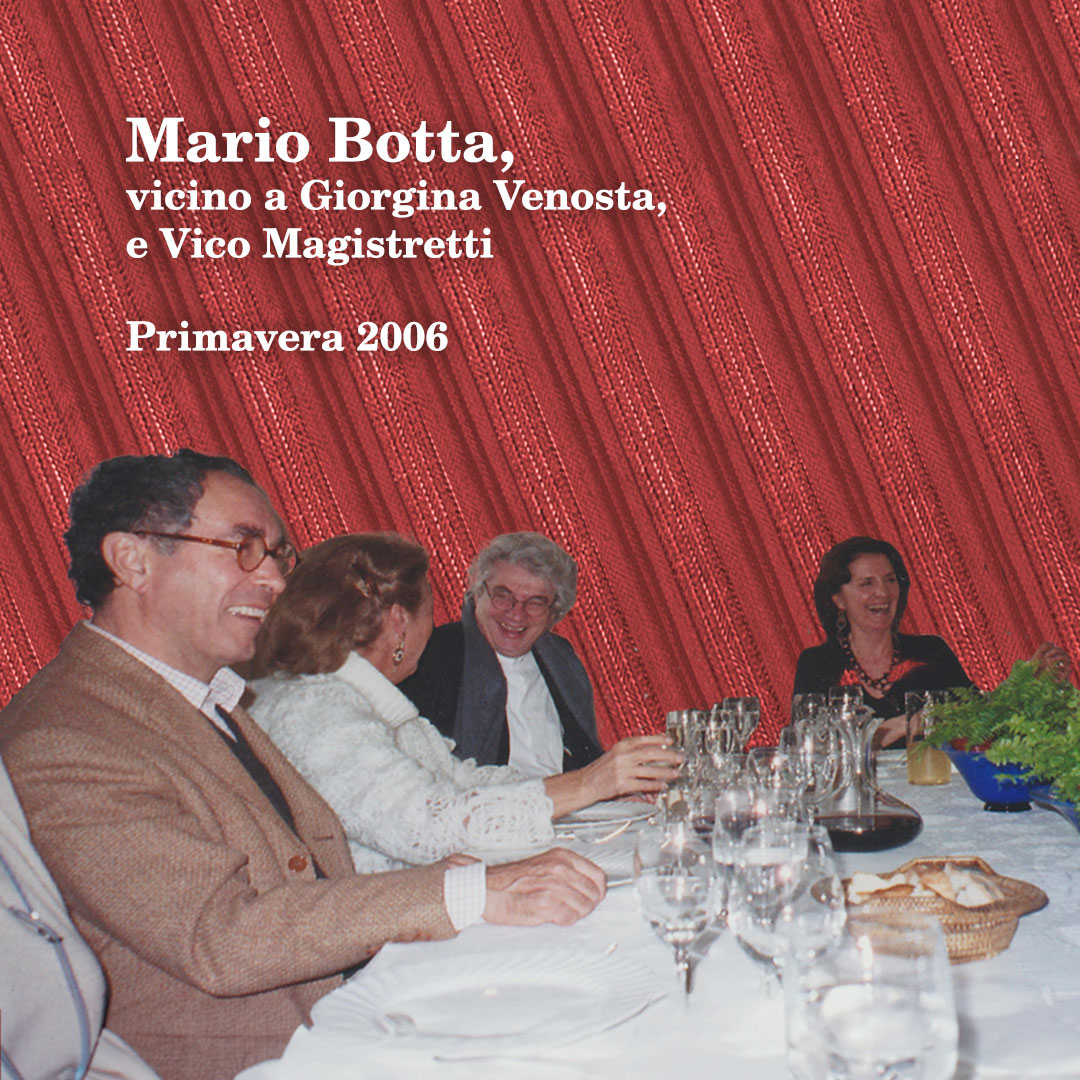
In the early 1960s, Vico Magistretti designed Villa Bassetti in Azzate, on Lake Varese, a reinforced concrete construction that still features in the pages of books and architecture magazines. Perhaps this was the beginning of a close relationship with Aldo Bassetti, one of the three Bassetti brothers who commissioned the work, and my mother Giorgina’s second husband. Vico was often a guest at their villa on Lake Monate, and among other testimonies in my archive, a series of images testifies to a lunch in 2006 where he, Mario Botta and Michele de Lucchi sat at the table, a trio of architectural and design geniuses.
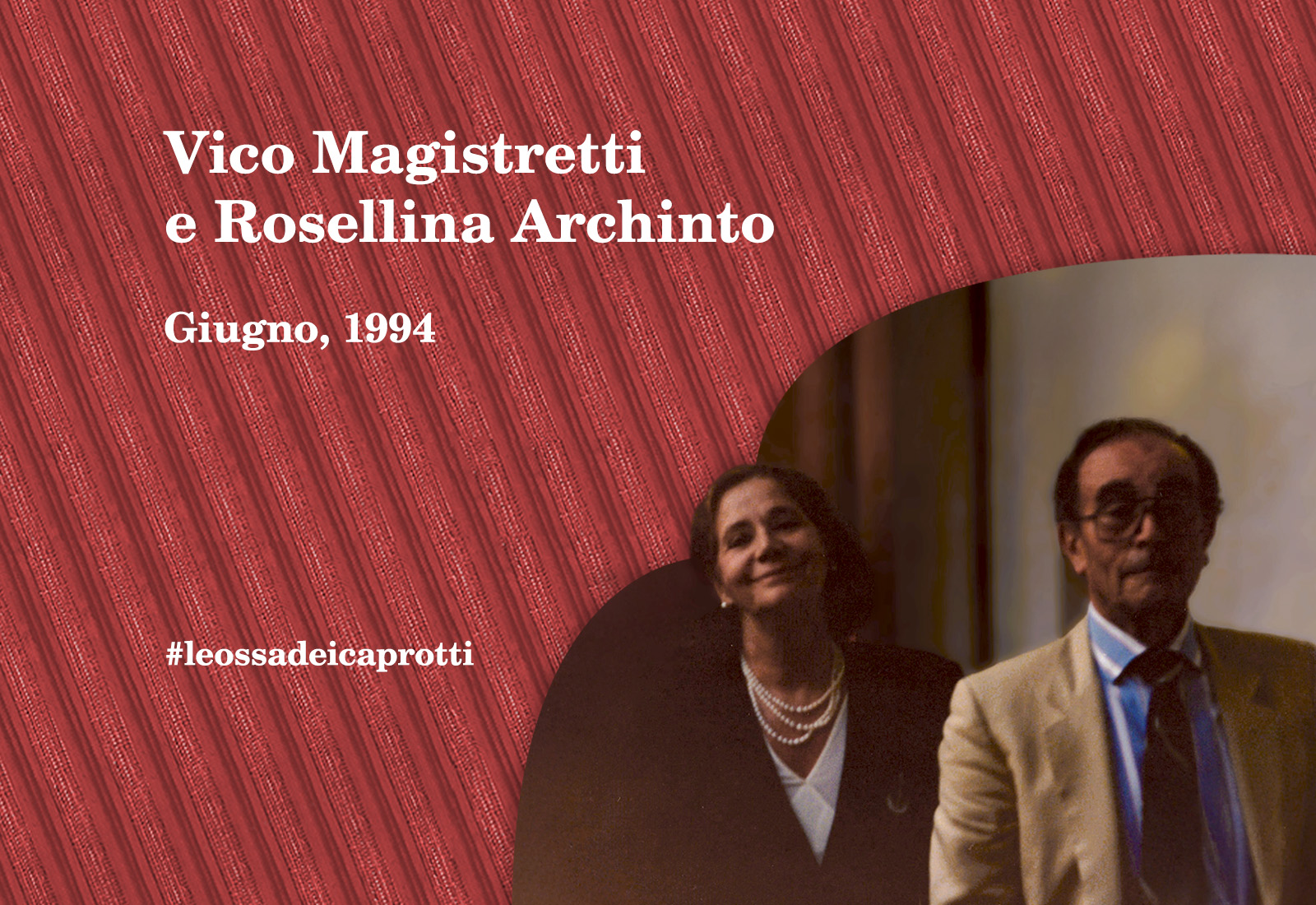
There are so many friends and acquaintances in common, as can also be seen in the picture with Rosellina Archinto, another uncommon woman, a former ‘Rinascente girl’ like my mother (her first job, designing children’s clothes), who later devoted herself, among the many things she did, to founding publishing houses – the ‘Emme Edizioni’, then the ‘Casa Editrice Archinto’ – which testify to her passion for art, paper, family, and children for whom she revolutionised children’s books in Italy. Rosellina and her partner, Leopoldo Pirelli, with whom she lived until his death after her separation from her husband Alberico Archinto, were also friends of her mother;
Her house in Milan became a meeting point for a certain left-wing intellectual world (what Indro Montanelli would call ‘radical chic’), from Marcuse to McCarthy, from Camilla Cederna to Inge Feltrinelli, from Arbasino to Pollini and Abbado.
As a city councillor and president of the Culture Commission of the Municipality of Milan (between 1990 and ’93), she celebrated my marriage to Laura in 1992.
In 2003 she sold her publishing house, Rosellina Archinto Editore, to RCS MediaGroup. He then bought it back in 2015. He does so at the age of 82. She explains: ‘Some will say I am an old fool but I only did it because I want to continue making books in my own way. I want to publish epistles and essays’. I find this choice of hers admirable.
Sources:
Vico Magistretti Foundation, Vico Magistretti Archive, M. PELLINO, Esselunga, Pantigliate, Vico Magistretti project file. Images of the exterior of the shop and the ‘Bar Atlantique’ can be found in the file available on the Web.
Villa San Valerio, Albiate, Villa San Valerio Archives, Esselunga Archives, Esselunga, English-language brochure illustrating the history and development of Esselunga from its origins to 2001.
External Bibliography:
VICO MAGISTRETTI FOUNDATION, Vico Magistretti. Biography.
E. SORMANI, La Signora dell’editoria. Un ritratto di Rosellina Archinto, in “Via Po”, 31 August 2024, pp. 9-11 (text also published on Facebook).
G. CAPROTTI, Le Ossa dei Caprotti. Una storia italiana, Milan, 2023.