The last update is in November 2021, the 20th anniversary of ‘John Lemon’.
The Armando Testa advertisements on this site can be found here.
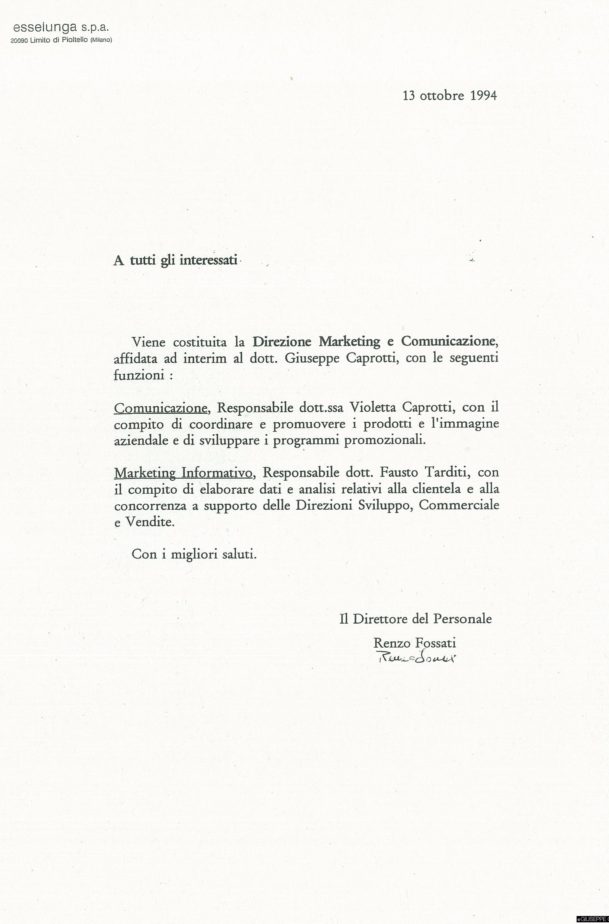
In1994, under my impetus, after my father’s investiture (*), the Esselunga marketing office took shape and I became its first director.
Marketing over time, as the company grows, is structured to manage the following areas:
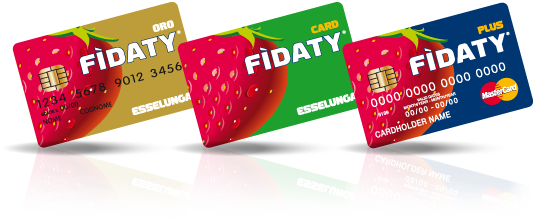
- The promotions, including the whole Fidaty world (the first test use of the card starts in 1994 in four shops) with the rewards catalogue
- The call centre (1 million reports handled in 2003)
- The press office
- Market research
- The spaces in supermarkets, with the logic of DPP with market data management by IRI Infoscan
- Advertising (there is also an in-house office that deals with graphics)
Up to that point, almost all of Esselunga’s advertising campaigns had a commercial purpose.
However, my sister Violetta Caprotti, who was in charge of communications at the time, was convinced that Esselunga needed to move away from the logic of price and find a line of communication that enhanced the quality of the company’s products.
Violetta managed to give a brief to the Armando Testa agency which, in 1995, with the team composed of Mauro Cinquetti and Mauro Mortaroli, presented a series of posters from which the first two were chosen:
Thanks to his conviction and my tenacity, we managed to bring our father to a presentation of these subjects.
Fortunately, our father is used to Armando Testa ‘s white-background posters – in Esselunga since the 1970s – and approves the first campaign, whose posters carry the slogan ‘ quality is something special with us’.
The success is overwhelming: we are showered with compliments and clients ‘play’ with us and the agency, always suggesting new subjects.
Cinquetti puts it this way:
‘It had always seemed poetic to me to see in an upturned onion a hot air balloon, or in a cherry a balloon flying through the air… I wanted the subjects to be real, as little artefact as possible… and one Sunday my neighbour, an old farmer, brought me just the pumpkin I was waiting for‘..
Those pumpkins will turn into swans in “swans or courgettes?” in fact Cinquetti does not use a computer but real fruits or vegetables for his creations which he calls “Ortolandia” and which he stores in the fridge at home (!).
Mortaroli adds:
“The success was such that the Esselunga campaign opened the doors of the Musèe des Affiches du Louvre, the recognised home of the best advertising posters created from the 19th century to the present day… just a few steps away, in short, from the Mona Lisa!“
Success also stimulates imitations, in Europe and America.
Delhaize, a company with which we have been collaborating for more than a decade, asks us for the rights for Belgium where some subjects are used.
After three years of success it is not easy to renew and the campaign ends somewhat wearily.
Between 1998 and 1999 the Testa agency lost its contractual exclusivity with Esselunga and was put in competition with Young and Rubicam, Bates, Lowe Pirella and Grey.
Bates managed to come up with an appealing campaign and even signed a contract blocking it, preventing him from proposing it to other GD companies.
The campaign is based on transpositions of film titles: Visconti’s ‘Rocco and His Brothers’ becomes ‘Rocco and His Tortelli‘ or ‘Men Like Blondes’ , as in the film with Marilyn Monroe, becomes the likeable ‘Men Like Blackberries‘.
The affiches are more “erudite” and therefore more difficult than Testa’s, but they are very enjoyable.
At the same time, Testa challenged himself and created new creative groups within himself.
And in 2001 he proposed a new campaign to myself and Dr Fausto Tarditi, who took my place at marketing (while Violetta had long since left the company), with the payoff ” Famous for quality” that debuted with the subjects “John Lemon” and “Garlic and Oil“:
This second campaign turned 20 years old.
And I think it is best to leave it to Otello Fraternale, creative director and creator, to explain it:
” the main difficulty was to evolve the previous campaign characterised by strong creativity.
The idea of using humanity to differentiate ourselves from the past brought us onto the right research ground. The problem was therefore to find an original visual synthesis of humanisation, using the product in all its naturalness and essentiality as the absolute protagonist.
Thus, a simple fruit or vegetable, with the addition of another element (headgear, goggles, etc.) gave life whose caricatured features make the product take on a leading role and distinctive personality“.
This series of subjects lasted only until the end of 2002 but left an important mark on the advertising world, and not only: again, customers and employees participated in and approved the company’s choices.
In addition to the calendars given to customers, some merchandising is also timidly developed: stationery, beach towels, sugar sachets, watches – which are given as gifts to employees who have distinguished themselves in customer service – and the book ‘from the garden to art’ from which some of the ideas in this article are taken.
Below you will find the circulars on the birth of Marketing in Esselunga:
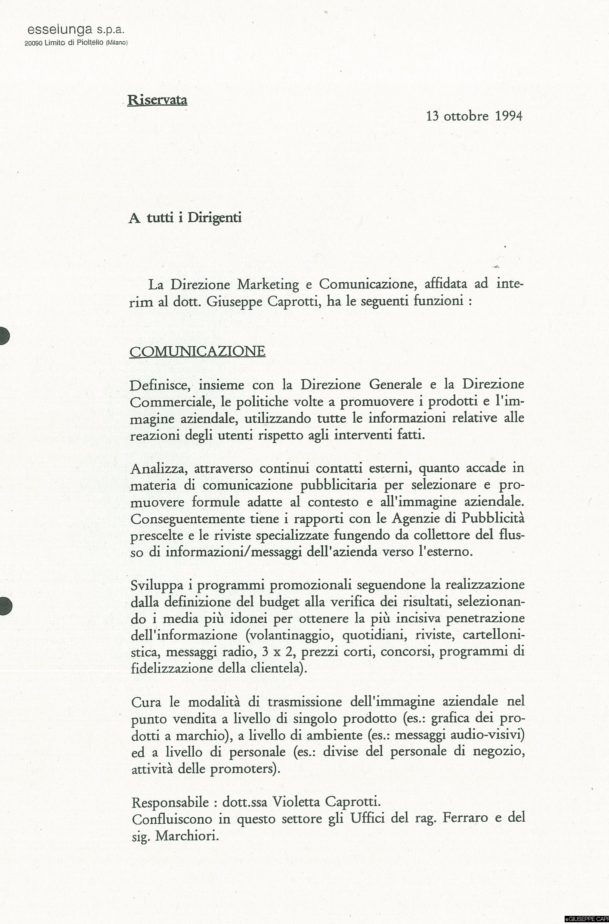
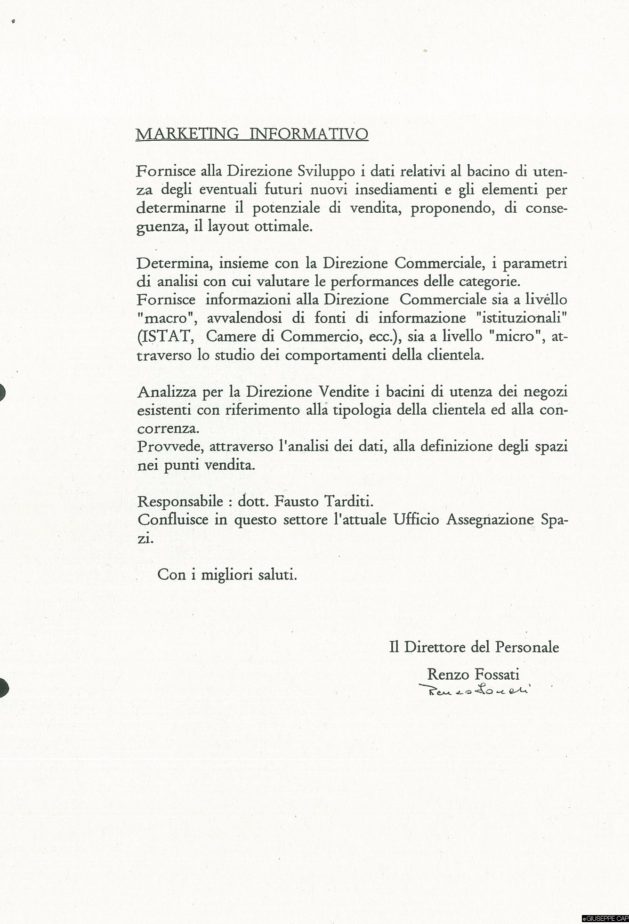
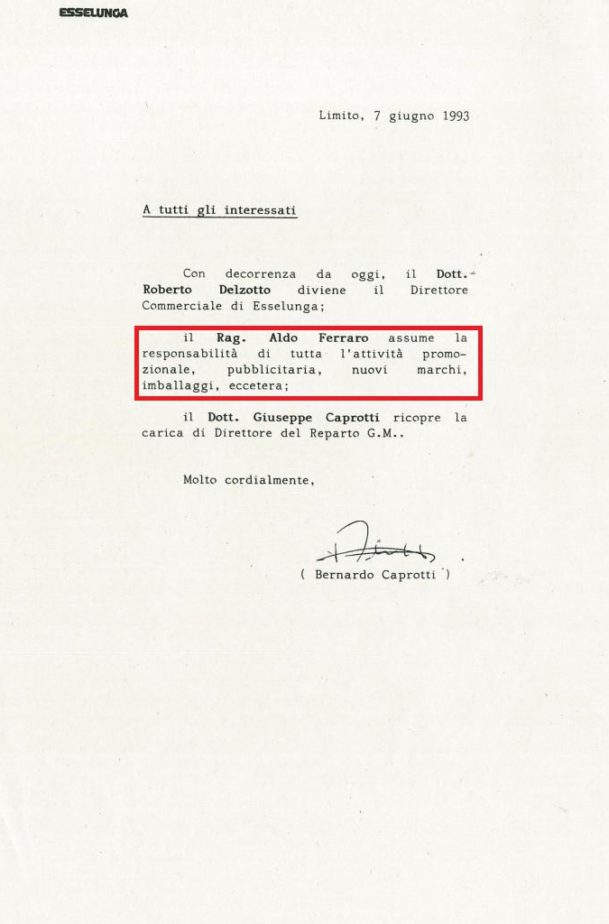
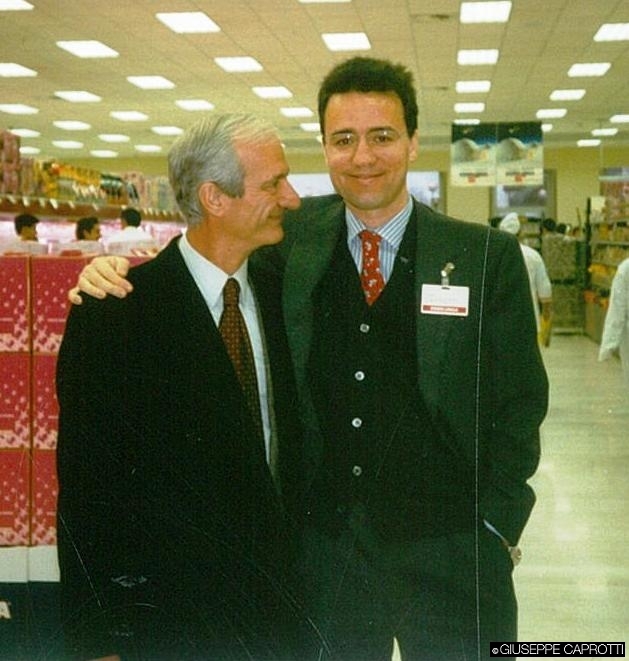
Until then, Marketing had been managed by accountant Aldo Ferraro and theSpace Allocations Office, operationally headed by Dr Fausto Tarditi and “directed” by yours truly:
In 2003, Marco Testa proposed a promotional campaign that would give us brilliant insights into 2012:
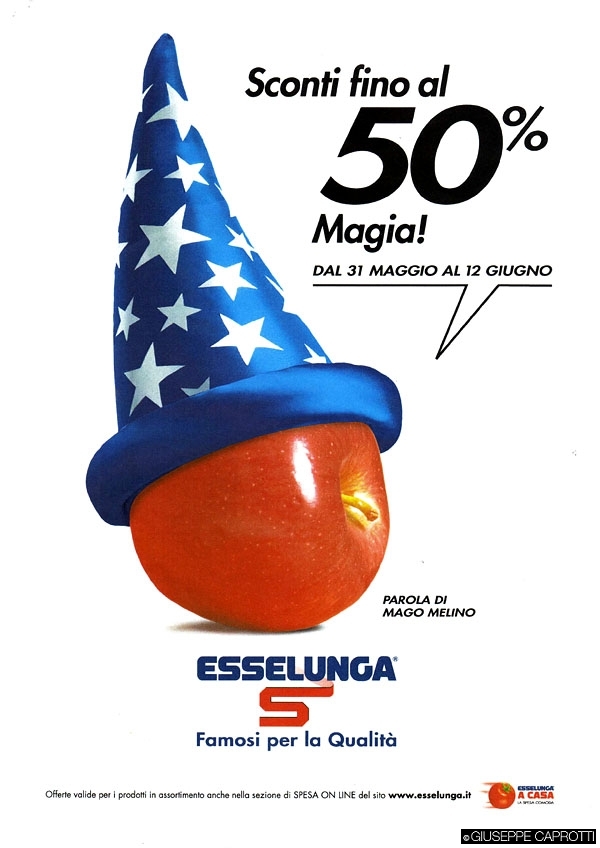
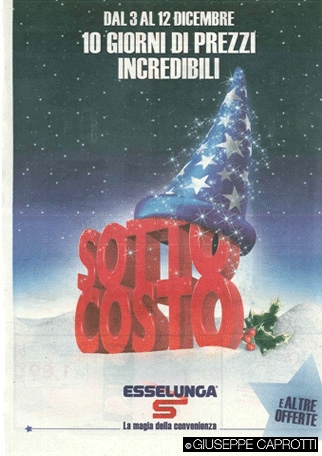
These advertisements were also created in 2003 by the Armando Testa agency and were used after I left Esselunga:
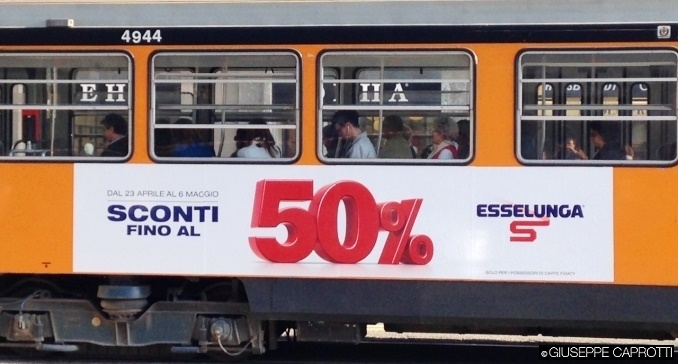
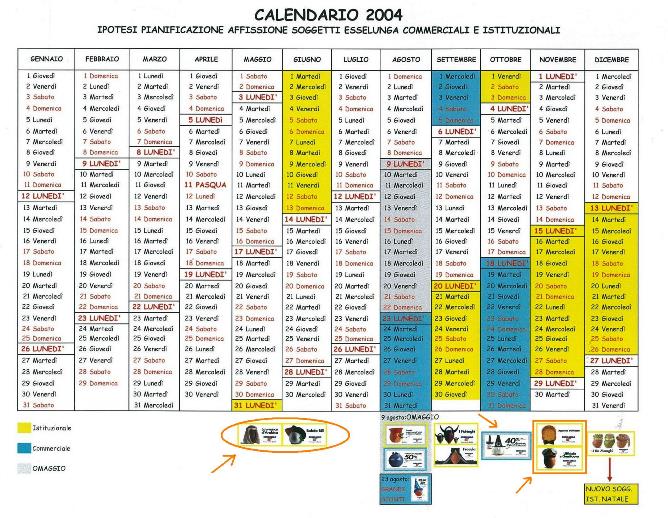
The second campaign will be used until 2004, as can be seen from this page of the Marketing Plan.
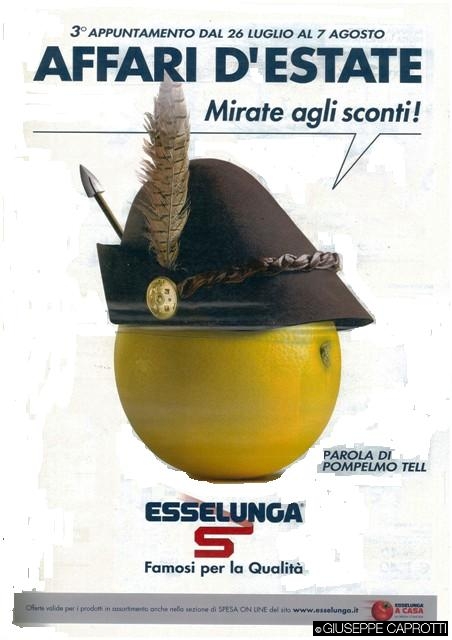
Below is a nice cover of a 2004 flyer featuring Grapefruit Tell:
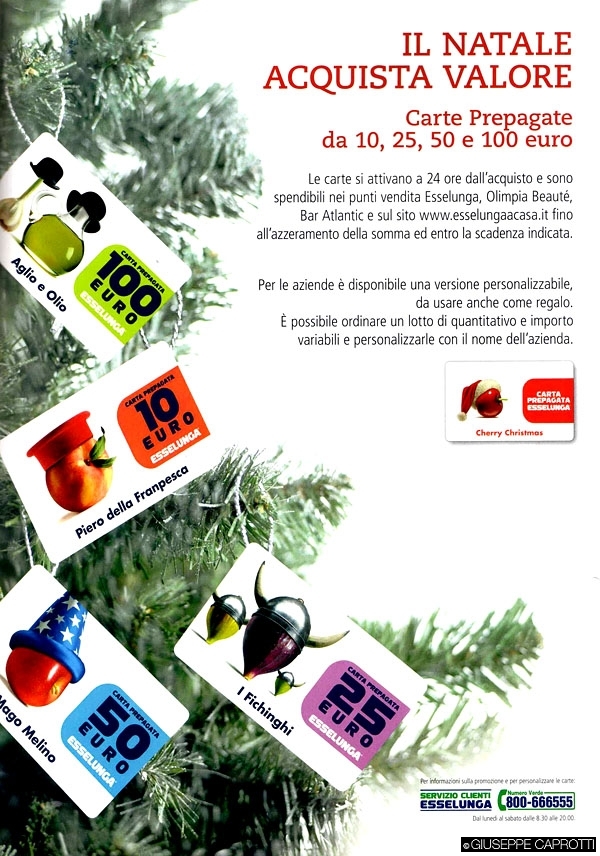
In 2011 , the campaign was used for at least two commercial initiatives:

Regarding the most recent (2013) imitations of our campaigns,
Read : ” Pret à Manger ‘s advertisements look a lot like Armando Testa’s.”
Regarding Fidaty read about it: “The Origins of Fidaty”,
For space management read
‘From supermarkets to superstores 1’
“From supermarkets to superstores 2
“From supermarkets to superstores 3”
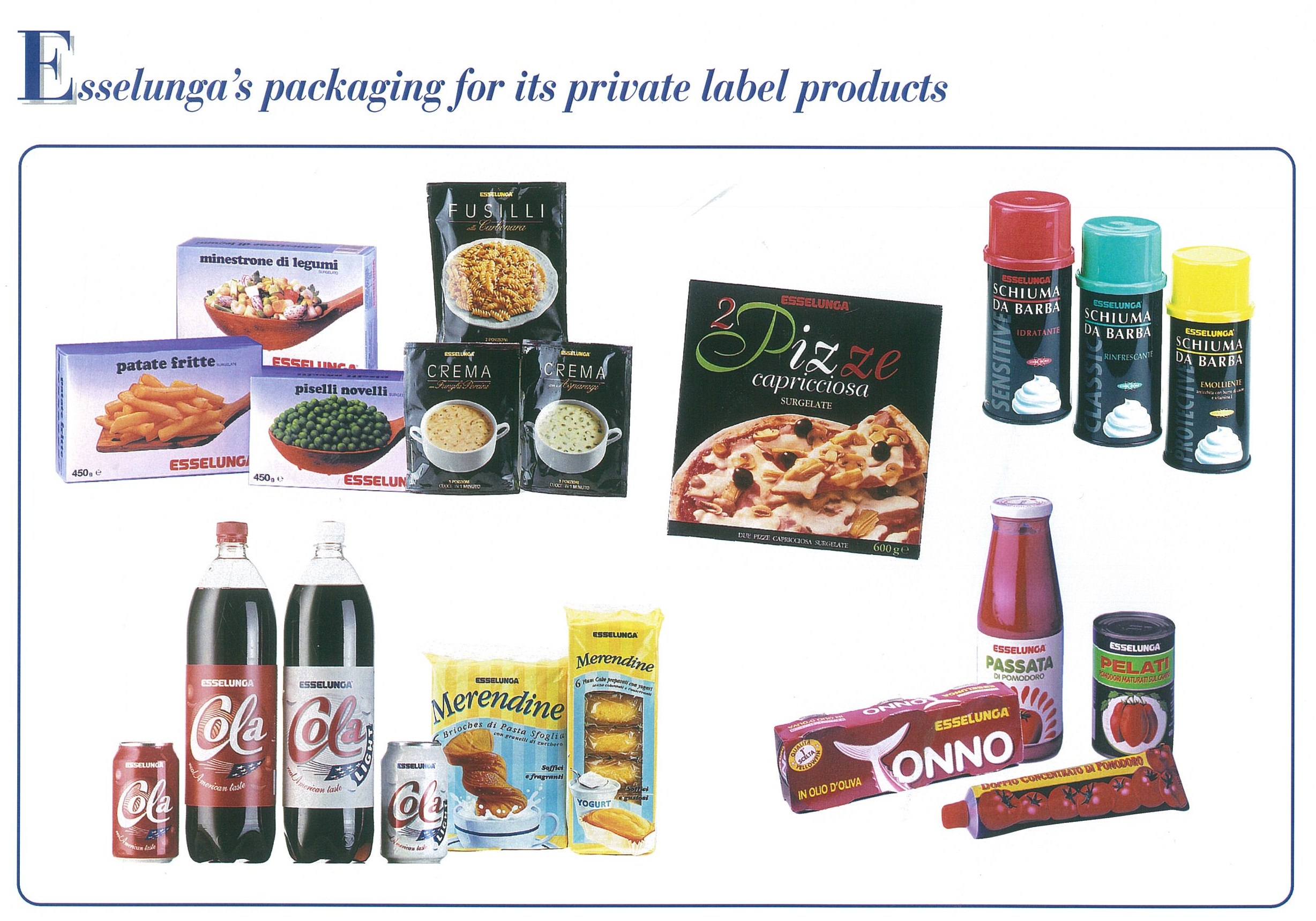
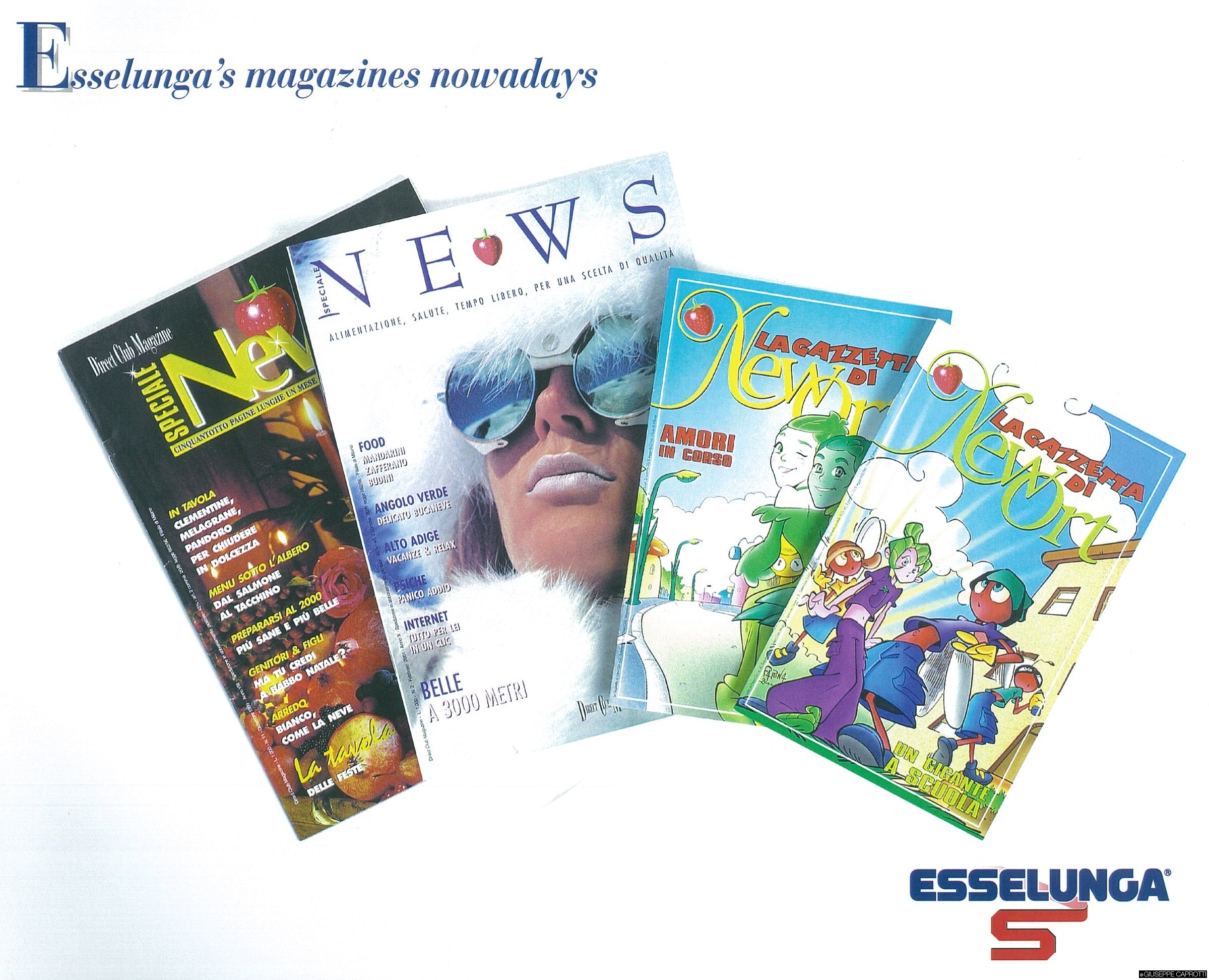
Below are two pictures of some of the most visible aspects managed and developed by Marketing:
1) private label productpackaging
2) the magazine dedicated to Fidaty holders
Note that the articles in the Fidaty catalogue at cost were worth €80.9 million in 2003 (source: Esselunga Marketing Plan 2004). Fidaty helped sell products on the shelves but also sold many products not in the assortment through the catalogue.