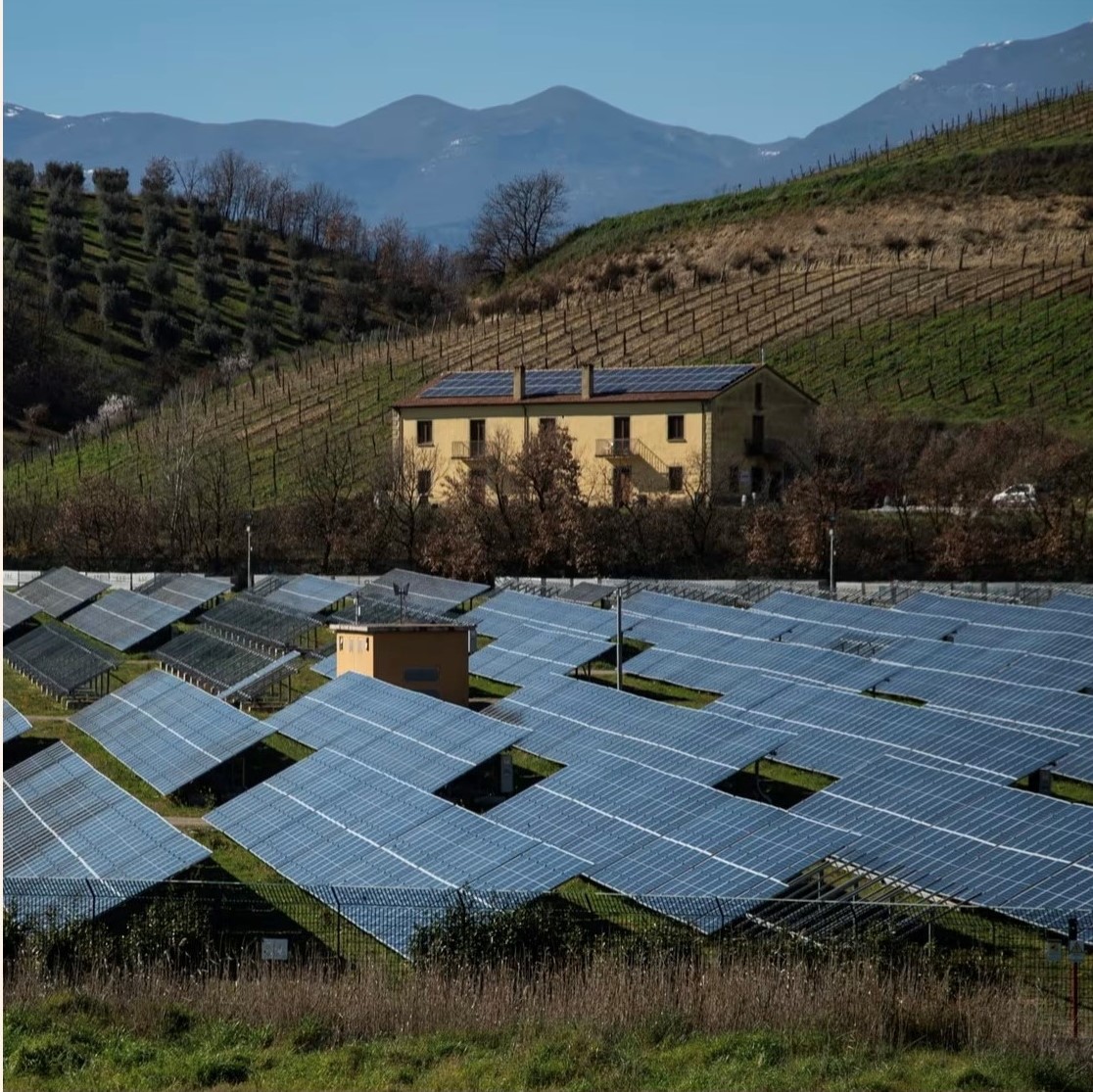
This change is happening at an unprecedented pace: in the next five years, the availability of renewable energy will increase more than in the last two decades.
Solar energy, in particular, is growing rapidly with a significant reduction in costs.
In 2000, one watt of solar power cost $4.88, but by 2019 the cost had dropped to just 38 cents.
Not only is the energy cheaper, but it is also more widely distributed, potentially locatable by specific devices to the benefit of entire communities’.
Mustafa Suleyman in ‘The wave to come’, Garzanti 2024
I would add that if Amazon is the world’s largest purchaser of renewable energy, it is probably driven by economic advantages due to the ecological transition, but it may also be able to see the future better than others.

Photovoltaics is considered to be the cheapest source of electricity in the renewables scene (interesting explanation and also perspectives )
Useful, though biased, is this press release from Elettricità Futura (Confindustria) which, among others, states “To reach the target signed by Italy at the G7 to triple renewables (install new 140 GW) would require less than 1% of agricultural land, again avoiding valuable agricultural areas.”
The DL Agricoltura, issued a few days before the European elections, warmly welcomed by Coldiretti (some say that the association is behind the law) and voted in July, blocked the development of new projects and projects in a preliminary state (those authorised/authorised were saved), classifying almost all agricultural land as ‘unsuitable areas’ for installation and creating internal stomach aches within the government itself.
All under the pretext of protecting agricultural land and saving it from speculation. Unfortunately, in reality, the agricultural land actually exploited in Italy is a fraction of the total agricultural land and more and more land is being abandoned (according to istat, 125,000 hectares of agricultural land are abandoned every year)
What does the government do in the end?
After blocking all ground-mounted development on agricultural land, the government ‘calls itself out’ and gives power to the regions
https://www.confindustriafirenze.it/pubblicato-in-g-u-il-decreto-aree-idonee-per-fer/
https://www.rinnovabili.it/energia/eolico/decreto-aree-idonee-rinnovabili-in-vigore/
It is a pity that regions frequently already act like crazy splinters.
Sardinia, for example – which produces 70 per cent of its energy from gas and coal! – has just introduced an 18-month moratorium for all renewables
Lazio did so two years ago https://www.affaritaliani.it/roma/fotovoltaico-il-lazio-dice-no-la-moratoria-zingaretti-congela-i-pannelli-781528.html.
And the situation in this sector exemplifies the chaos that will be created with the application of differentiated autonomy.
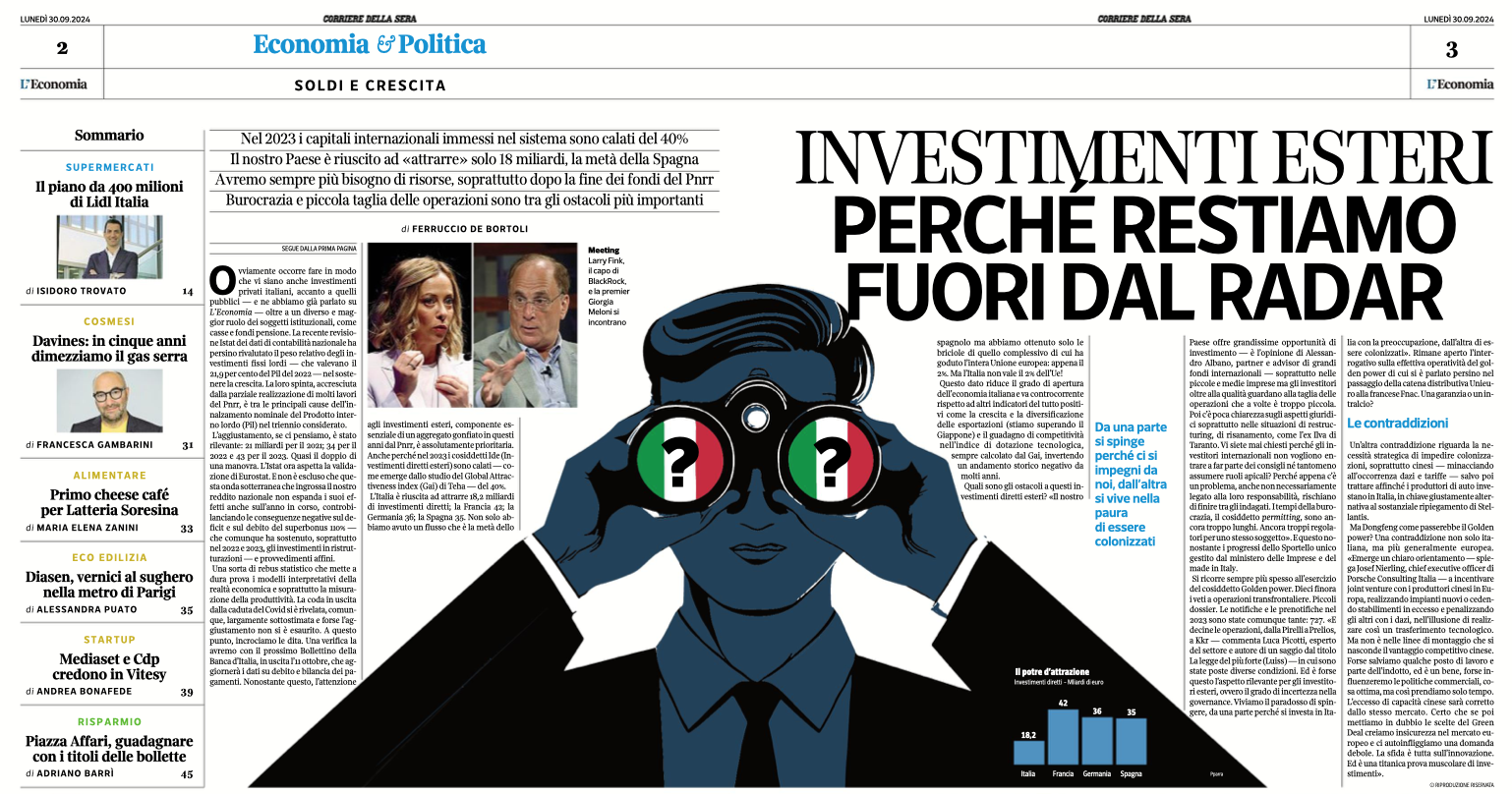
Finally, it must be said that the cost of energy in Italy is among the most expensive in Europe; to give an example, Italian users spend 50% more than the average price of energy supplied in Spain.
This government’s approach, with regulations that have nothing to do with better yields on agricultural land, sows uncertainty among those who have invested or want to invest in Italy. As it did with cultivated meat. Very often, instead, it deals with backyard quarrels, with purely personal issues. The only option that would bring more food security, namely food labelling, has been scrapped.
Obviously no one has thought about Italy’s competitiveness.
N.B.: ” Renewables are winning the energy battle”
Much will also depend on the new political orientation of the United States: