There is a long list of closely trusted people with whom the families of yesteryear surrounded themselves and filled their homes, people who called their employers by name (‘scior Bernardo’, ‘sciora Bettina’, ‘scior Peppin’), knew more about their lives sometimes than themselves, and were always there at every important family event, with pride and sometimes even emotion.
There were the two gardeners, Raffaele (an exquisite man, a relative of his told me about him recently during a visit to the park of the villa in Albiate), and after him Ambrogio , known as ‘Ambrœusghe piàsen i nus’ (Ambrogio loves walnuts) because he was greedy for walnuts – and snails – from the garden, which he collected and gave to the family in a ratio of 1 to 10 (I have direct testimony of this, in the sense that one day I ‘caught’ him with a vase full of snails…).
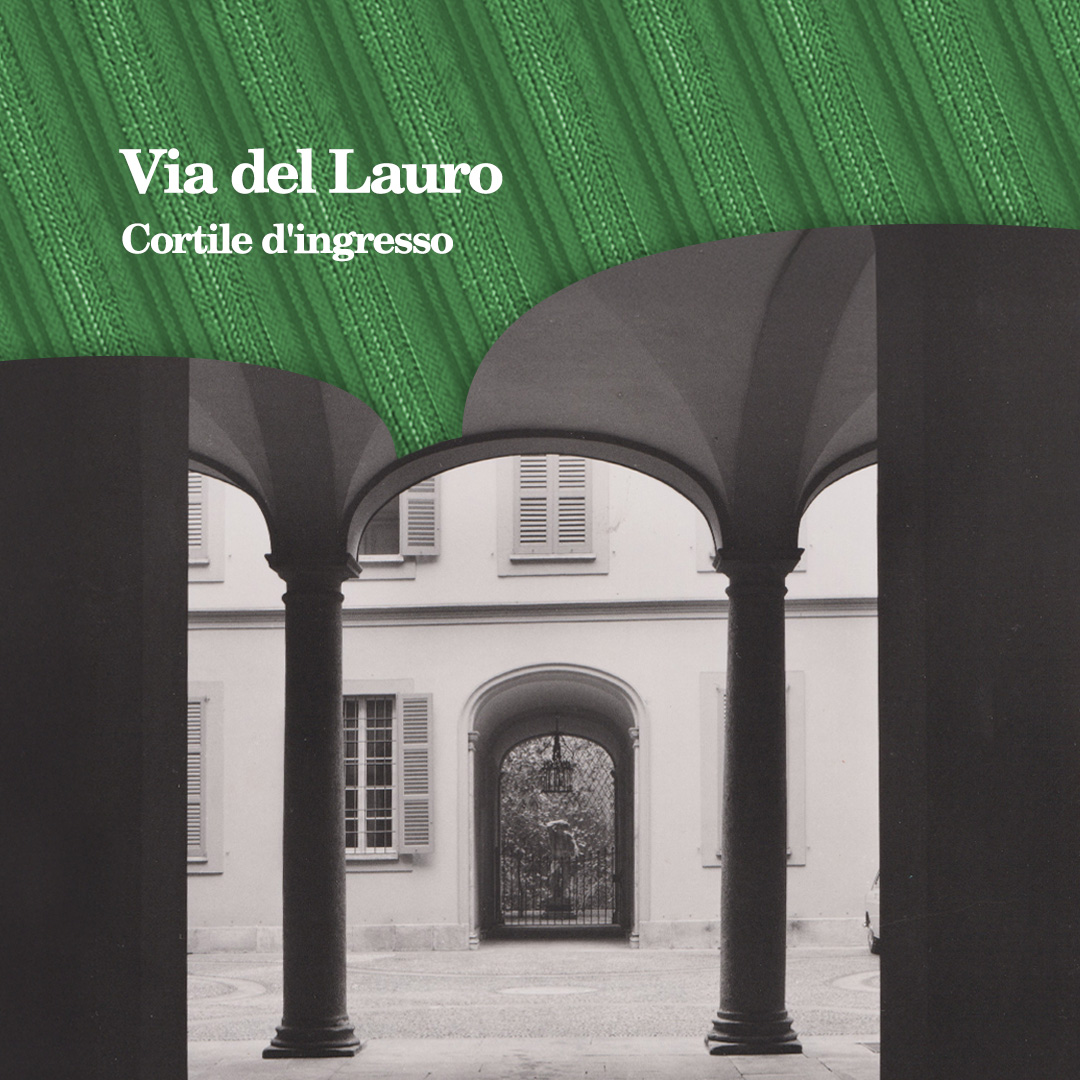
There wasthe housekeeper, whom I only ever saw in Milan, in Via del Lauro: ‘Among the many substitute figures for our parents are the white Lucia and Rosa the redhead. Lucia is a true housekeeper, a family person. She is an outspoken daughter of white Brianza, very religious A figure from another era.[She was hired by her great-grandfather Nardo, ed.] She started working at Manifattura Caprotti as a child and remembers that in the mornings she would walk to the factory from Rancate, a village about 20 minutes away, in her wooden clogs [her granddaughter, Luisella, would also work for Manifattura, Ed. Lucia loves us, she is our mother, grandmother, aunt, she plays rubamazzetto with me, she takes care of us when we get sick. I also remember Rosa with great affection , a very good cook. She comes from the Emilian Apennines, a completely different origin. She arrived in Milan in the 1950s and stayed with us for a long time. (…) Rosa, however, brings with her the secularism of red Emilia. She often quarrels with Lucia. I can hear them shouting in the kitchen when Lucia (…) Dad is at work. To act as peacemaker, when the tension rises too high, Francesco, the butler, an exquisite person, intervenes . He, too, is a victim of Bernardo’s manias, who makes him close and reopen the windows continuously, depending on the time of day and the smells.(…) Rosa is very good, sometimes preparing recipes at Bernardo’s request, who has a penchant for French cuisine brought by his grandmother [his mother Marianne Maire, Alsatian, ed.] (…). We often try Esselunga food products, or Rosa cooks traditional Emilian dishes. Our father gets furious if the soufflé doesn’t puff up properly, or if she uses a recipe from the ‘Silver Spoon’, a banned manual in the house, who knows why. Bernardo’s screams often cause Rosa to burst into tears, who is eventually forced to leave. But this is not the end of the story: as a good communist she thinks well, out of spite, to occupy the flat she has received on loan from Bernardo. (…)’ (Caprotti, ‘The Bones’, pp. 91-92). Not only that: by now ahead in the progress of female emancipation, she wants to take her driving licence, and fails seven times. She finally succeeds; and I remember that, in the car, she called everyone a “testa de lègn”.
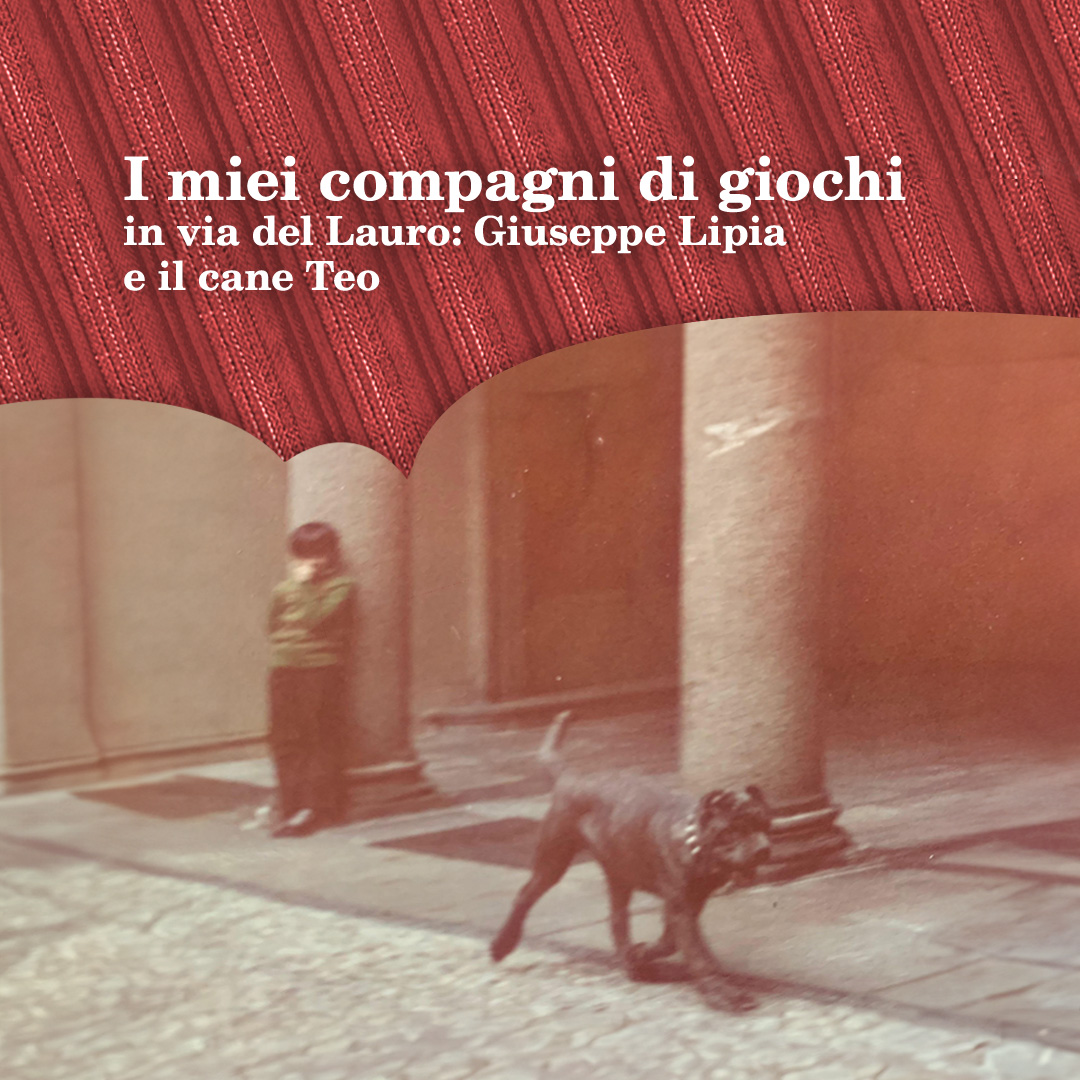
In Milan, as in all houses in those days, there is a porter’s lodge and the caretakers, the Lipia family, have a son my age whose name is Giuseppe like mine, and we used to play in the courtyard and up the stairs, occasionally breaking something, like all children; we still talk to each other, and with him, who has become a taxi driver, we conceived and carried forward with the Guido Venosta Foundation the ‘Taxi solidale’ initiative , created during the Covid-19 emergency to transport the neediest people free of charge for visits, shopping or other needs. On various occasions, the ‘Solidarity Taxi’ experience has been repeated, to a lesser but significant extent, to bring gifts to children hospitalised in Milan’s paediatric hospitals and their carers, or to take them to the Cornelle Park.
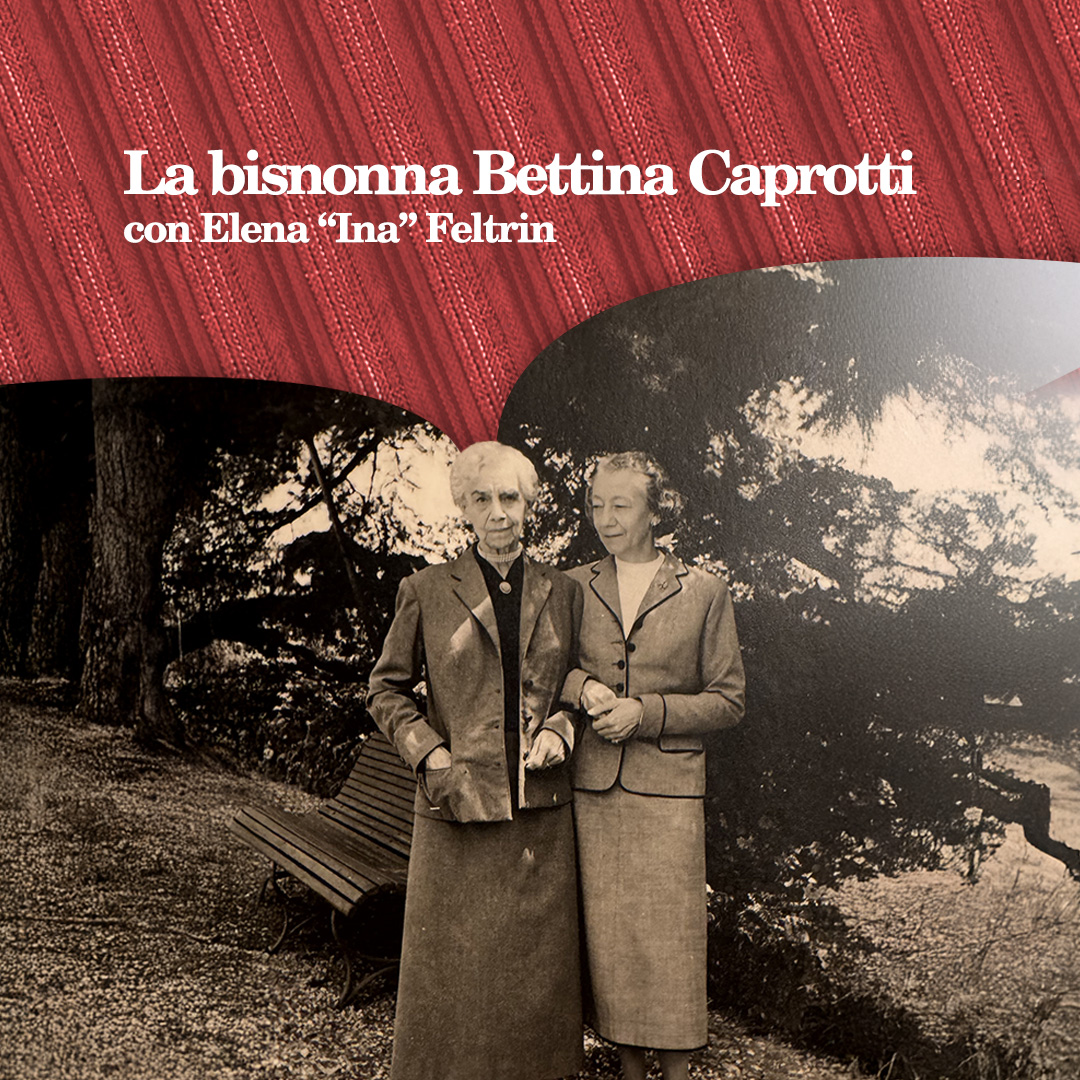
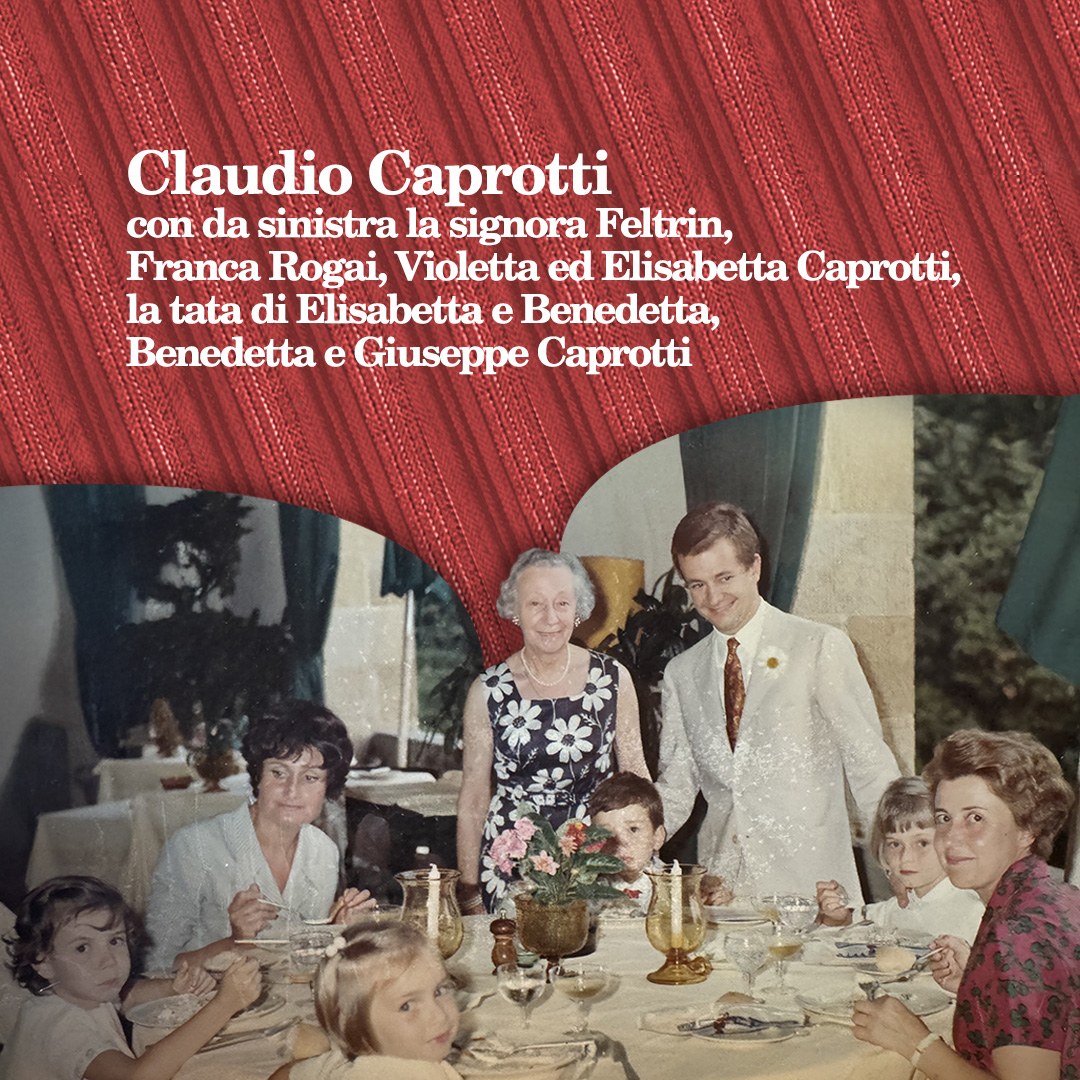
There was also Elena Feltrin, known as ‘Ina’, great-grandmother Bettina’s lady-in-waiting and, when needed, ‘miss’ of the children of the house, from grandmother Marianne’s children, my father Bernardo and uncles Guido and Claudio, to us children of the first two, whom she accompanied to the seaside when the season began. They were once widespread, the ladies-in-waiting, quite distinct from the domestic servants, personal assistants who provided daily support, confidence and companionship, as can be seen in the beautiful photograph of her great-grandmother and Ina, and also, a generation later, with her former child Claudio on his wedding day, near the table with our other nannies and us, the ‘new’ children who had been the bridesmaids at the ceremony.
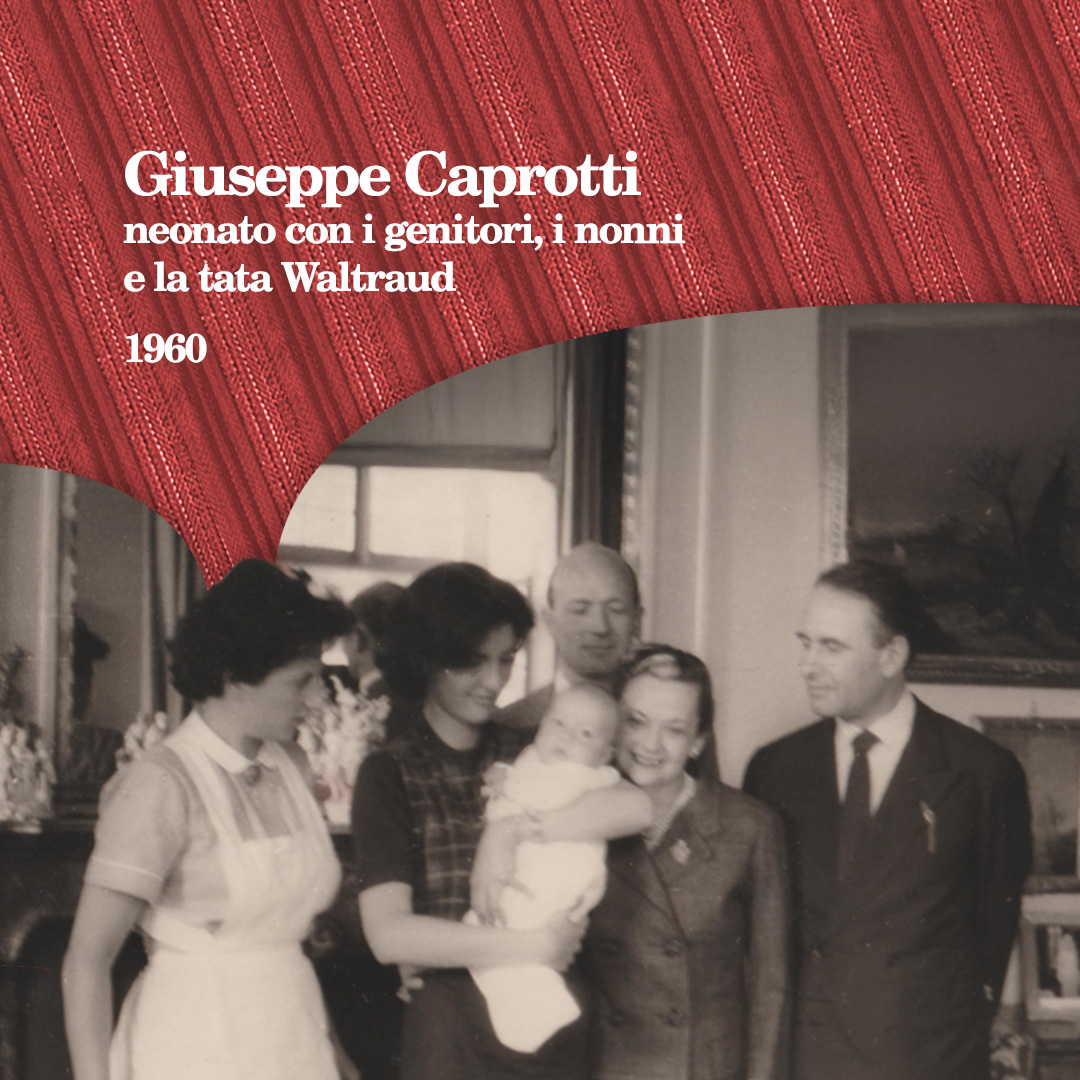
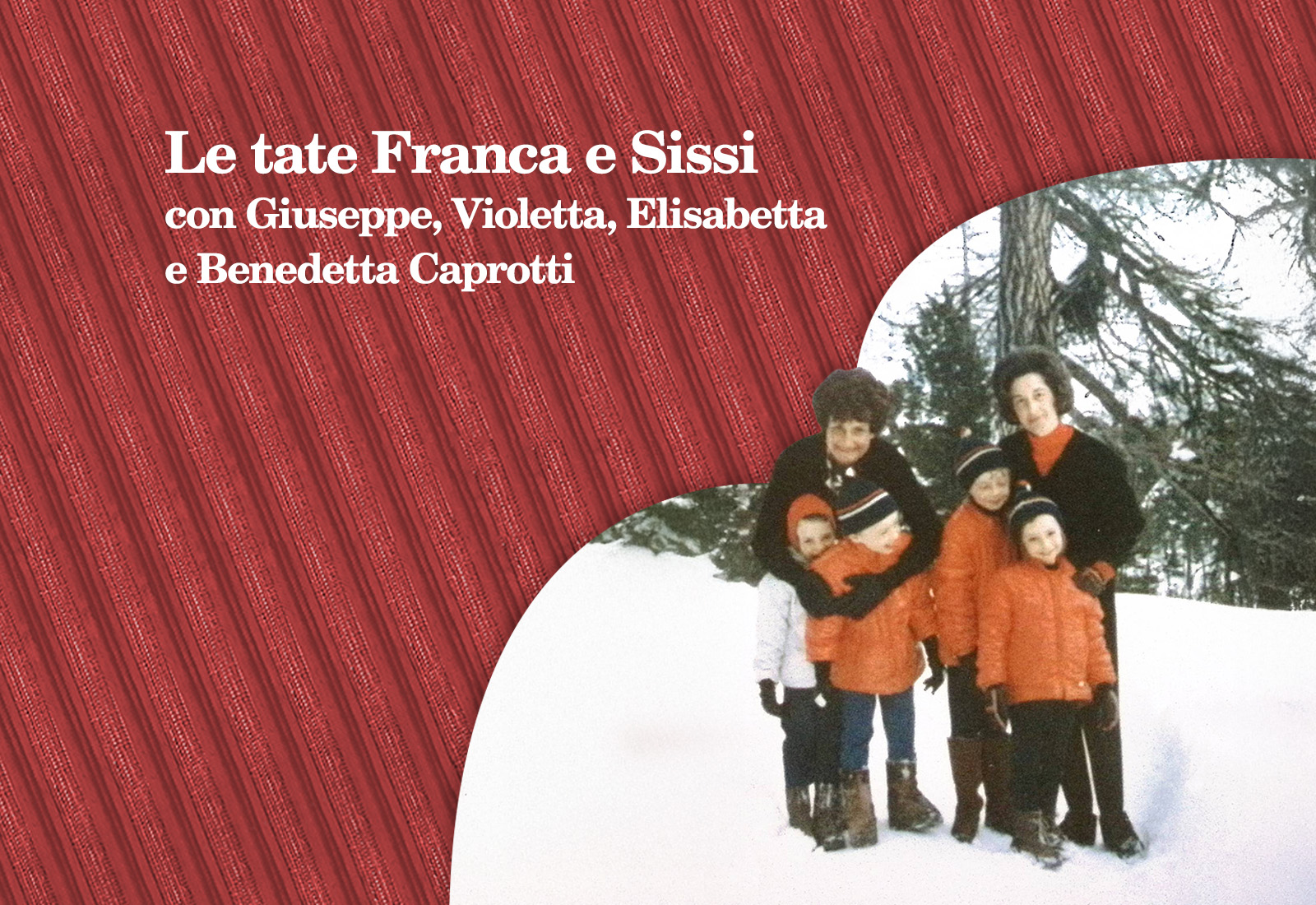
Last but certainly not least, the children’s nannies, ubiquitous figures: ‘My mum Giorgina is there until I’m three, then our care is entirely entrusted to the so-called ‘young ladies’, of whom I have good memories. I love many of them very much (…). I like the German Waltraud (…). At home we call her ‘Schwester’ and you can even recognise her in my christening photos. When we go on holiday to the Bursinel castle on Lake Geneva, she does gymnastics in the garden wearing a bikini in front of us children, who admire her curiously. I adore the French Geneviève who is in love with Bernardo – he does not reciprocate – and the lamb of her region, Normandy. Unfortunately, Dad gets angry with her very often and I clutch her to me in her apron, to shield her and defend her from those screams I don’t understand.” (Ibid., p. 77). Others would pass, like Franca Rogai, a true Tuscan, who appears with me and my sister Violetta in a photo in the snow with her cousins and their nanny Sissi.
Of each person who looked after us or our homes, memories remained, engraved as part of our growing up.
Sources:
Albiate (MB), Villa San Valerio, Caprotti Archives, ‘Manifattura Caprotti Archives; Ibid., Photographic Archives.
Florence, Claudio Caprotti Archives, Photographic Archives.
Bibliography:
G. CAPROTTI, “Le Ossa dei Caprotti. Una storia italiana’, Milan 2024/3.
ID., “Le Ossa dei Caprotti”. The Caprotti family: Violetta, Giuseppe, Benedetta and Elisabetta with their nannies Franca and Sissi, St. Moritz, 1960s. Cues from the book.
ID., Le Ossa dei Caprotti. The Caprotti marriages: Claudio and Paola Albera. Cues from the book.
ID., Giuseppe Caprotti – FGV and the Covid: the ‘Taxi Solidale’ project.