Drafted 30 November 2022, updated 2 October 2024
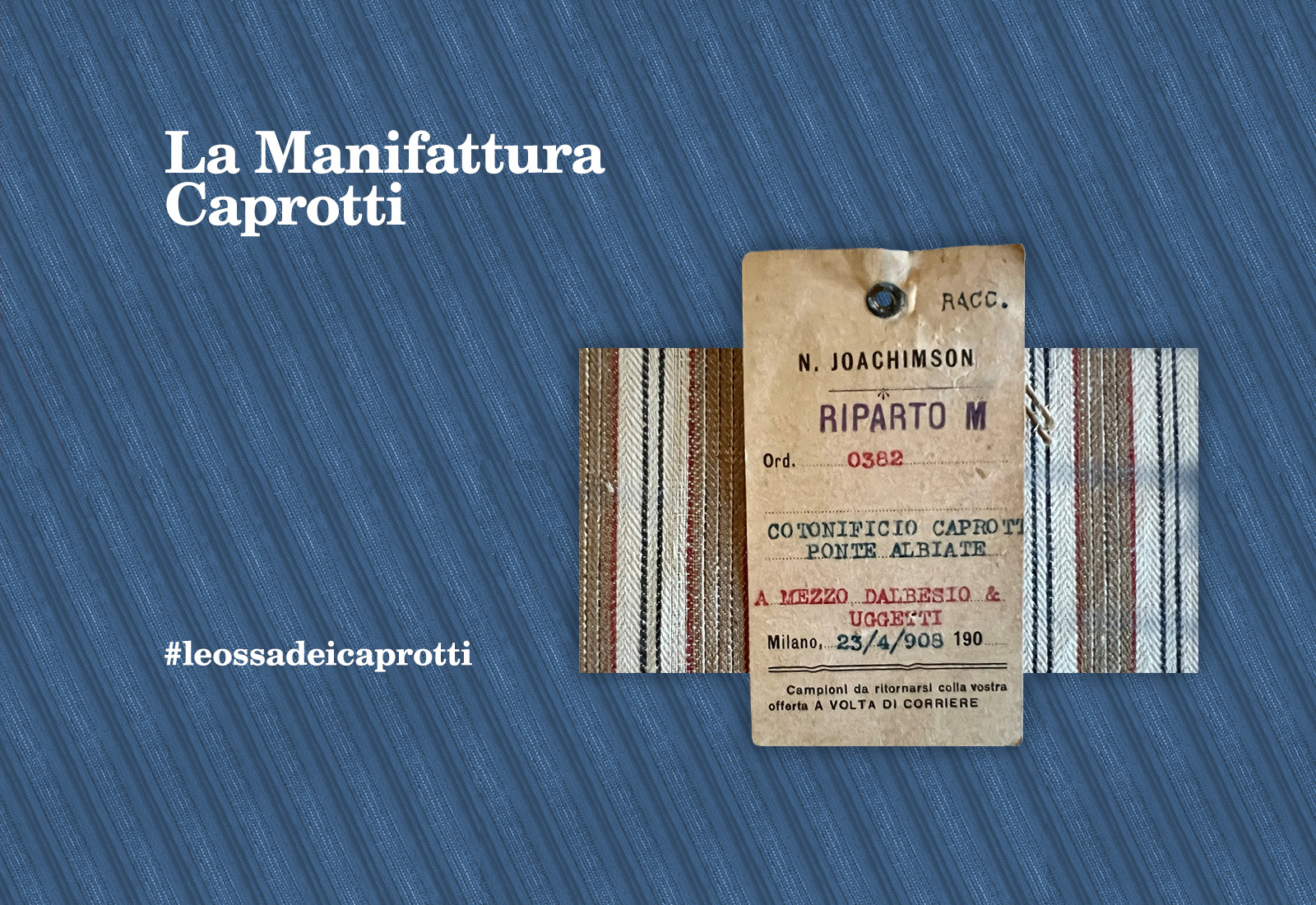
Above a fabric from the cotton mill in 1908 . This sample was used in the background design of the cover of the book Le Ossa dei Caprotti.
The background was a shelf: the family textile company changed its name several times: from ‘ditta Bernardo Caprotti di Giuseppe’ to Società anonima Cotonificio Caprotti, later to become Manifattura Caprotti.
The original title, edited by Eleonora Sàita, was : Letters from customers with requests for supplies
The company archives contain numerous letters from customers of the Caprotti company, with which they requested supplies of fabrics, enclosing samples. These were mostly cotton fabrics for linings (e.g. for mattresses) and for clothes for a medium to low-end clientele who preferred bright colours, especially in the case of female customers.
The companies could request supplies of fabric previously ordered from the Albiatese company, or send samples of fabrics commonly used in the area, asking if the company was able to execute the designs and offer competitive prices.
The Caprottis, very adept at ‘feeling the pulse’ of the market, paid great attention to the variety of requests and prices charged and to the specific tastes of each locality, which before Unity were much more diverse and accentuated than we might imagine today. The fragmentation of the national market, in fact, had created profound regional peculiarities, and it took some time, after the disappearance of internal borders and the consequent possibility of free access and exchange between all the markets of the Peninsula, for a standardised taste to form throughout the young Italian nation.
These letters were displayed in a small exhibition in Albiate in 2007.
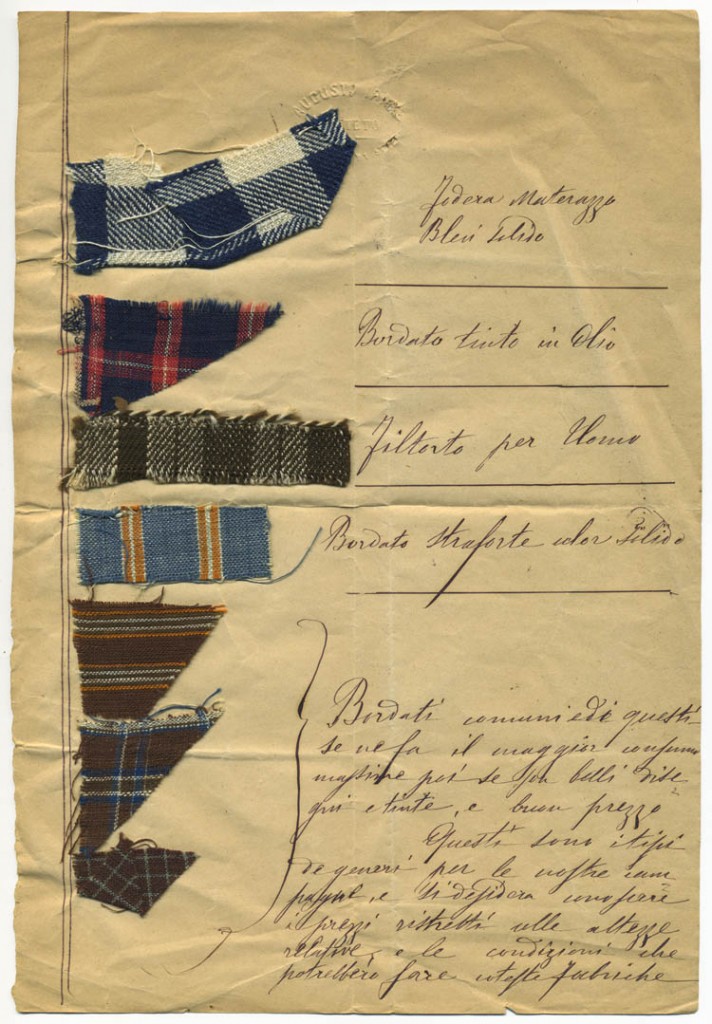
undated [but 1840], Orvieto
Letter from the firm Augusto Irace
- 280×190
Albiate, Villa San Valerio, Caprotti Archive, envelope 1, file 9
The letter from the Irace company is an illustrative example of how requests to Caprotti were formulated:
Foderazzo bleu solid/Bordato materazzo bleu solid/Oil-dyed lining/ Man’s warp/Strong solid-coloured border/common edgings, and of these the greatest consumption is made, especially if they are beautiful designs and colours, and good prices./These are the types of goods for our countryside, and we would like to know the prices for the relative heights, and the conditions that these factories could make.
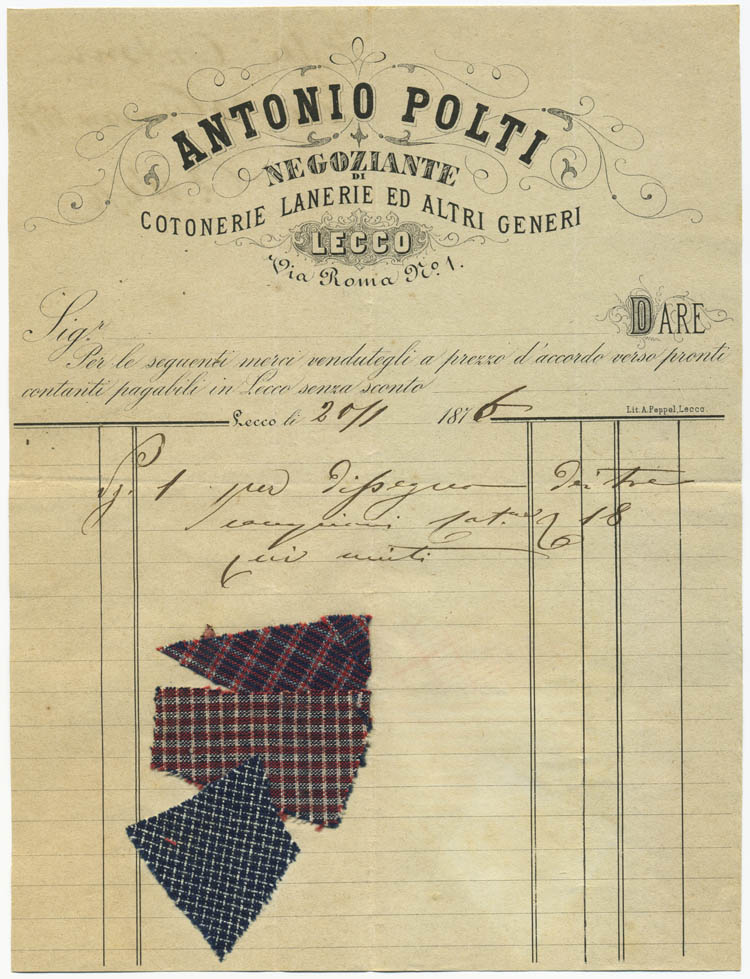
1876 January 20, Lecco
Letter from the firm Antonio Polti
- 140×280
Albiate, Villa San Valerio, Caprotti Archive, envelope 63, file 2
This is a real receipt, pre-printed in the rich and elegant graphics used at the time, in which Caprotti was paid the fee due for the drawing made of the three fabric samples enclosed.
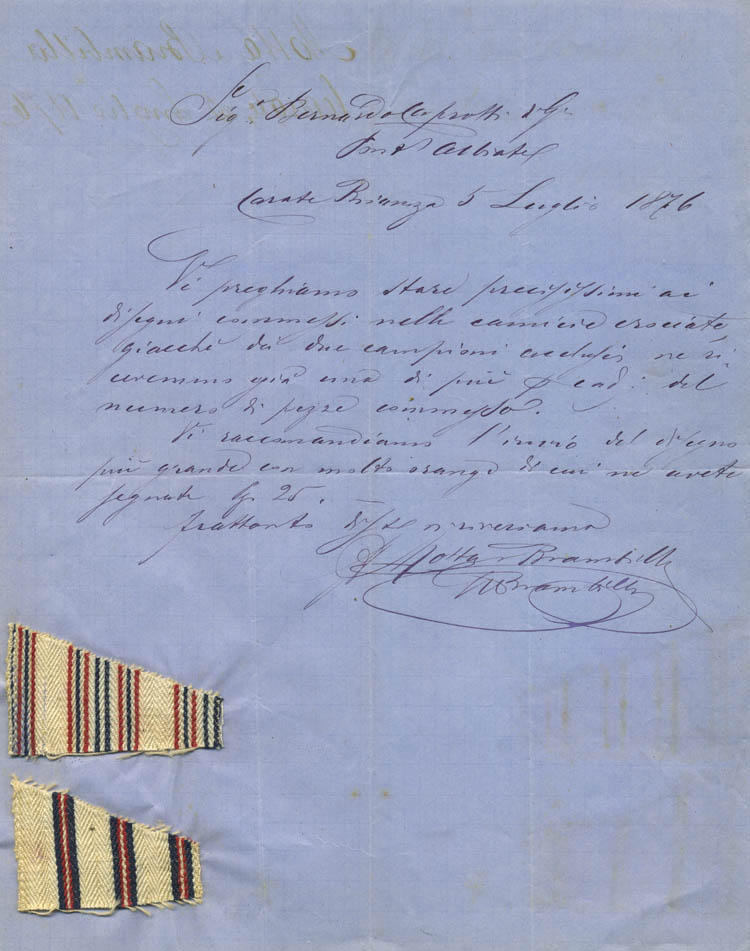
1876 July 8, Carate Brianza
Letter from the firm Motta & Brambilla
- 210×270
Albiate, Villa San Valerio, Caprotti Archive, envelope 63, file 2
The text of the letter specifies to Caprotti to remain very precise with the designs committed to the cross shirts, because of the two enclosed samples they had already received one piece more than the number commissioned. It is then recommended to send the pieces relating to the larger design with much orange.
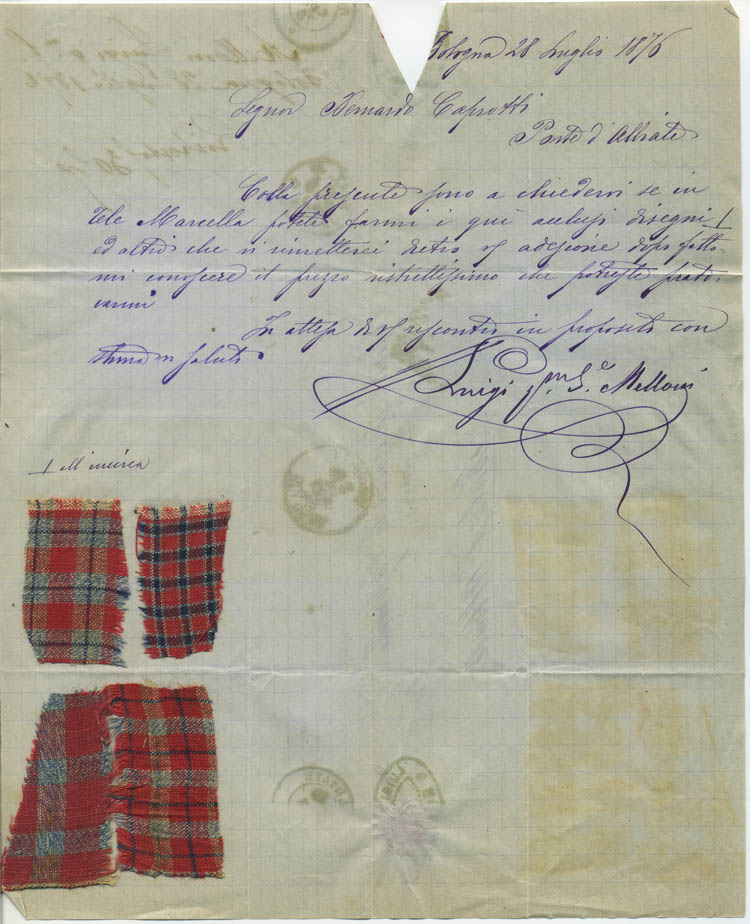
1876 July 28, Bologna
Letter from the firm Melloni Luigi fu Giuseppe
- 220×265
Albiate, Villa San Valerio, Caprotti Archive, envelope 63, file 2
Luigi Melloni asked the Caprotti company if they could execute for him in Marcella canvas the drawings that appear on the enclosed samples, and others that they would send later after receiving a positive reply from the Albiatese company, at the same time asking what a very low price (i.e. what discount) could be given.