
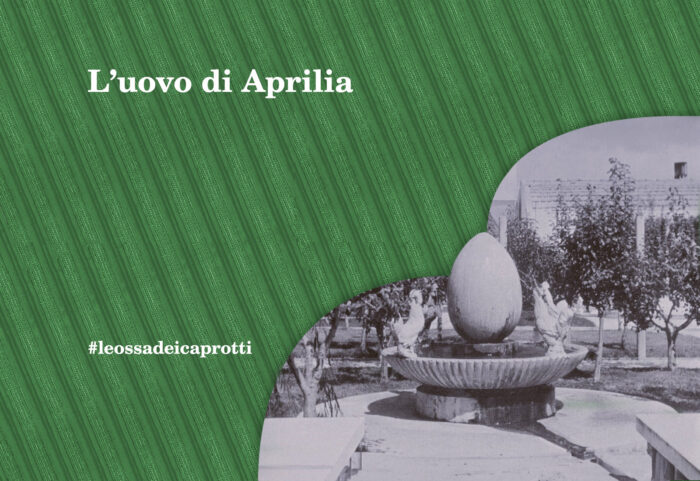
The Caprotti family and the Esselunga supermarkets: the Aprilia egg, 1950s
Nelson Rockefeller did not only ownEsselunga in Italy. He also owned a company, in Aprilia, that produced eggs.... In 1961, when by then all four of the planned Milanese shops had been opened, the balance sheet figures for the previous year - $200,000 net revenue - showed that not only the idea, but his way of realising it had been successful. Efficient logistics had been created, from the central warehouse to the purchase of large quantities of goods at favourable prices, but also a production chain of its own: IBEC took over a large poultry farm in Aprilia, the 'Chicken City', and turned it into a laying hen farm with an egg processing plant.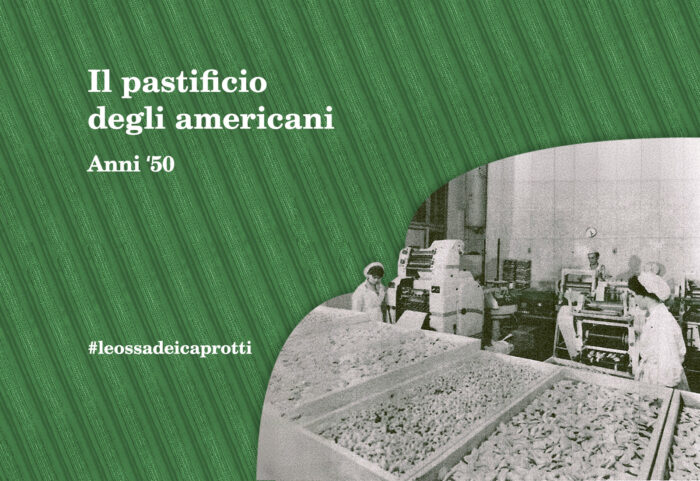
The Caprotti family and the Esselunga supermarkets: the Americans’ pasta factory, c. 1950s.
With regard to the supply of certain fresh products, the problem was the lack of adequately prepared and controlled goods. This is why Esselunga decided to start producing on its own as early as 1959, setting up a bakery, an ice-cream parlour that sold its products even in winter, a coffee roasting plant, a cold cuts warehouse, a poultry farm to supply fresh eggs, but above all a large pasta factory for ravioli, tortellini and gnocchi, the success of which even excited the Americans, who were able to sell one of their favourite products, pasta, to Italians at excellent quality and 50% savings.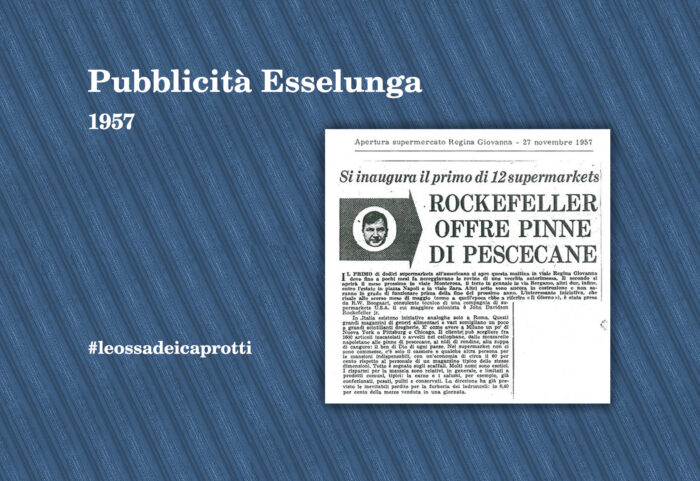
The Caprotti family and supermarkets: the first Esselunga advertisements, 1957
In the context of the 'cold war' that divided the two great continental blocs of the United States (with their part of Europe) and the Soviet Union (with the other part of Europe), supermarket advertising was designed not only to lure customers with abundant goods, unknown delicacies and competitive prices, but also to emphasise, with slogans such as Shopping is equal for all, that private enterprise can also bring benefits to all levels of the social classes (and not only the public, notably communist).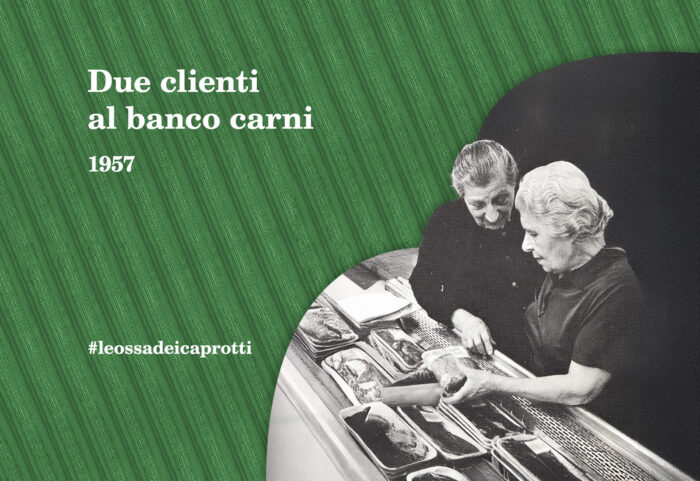
The Caprotti family and Esselunga: the first customers, 1957
The opening of the first supermarket was a remarkable success both in terms of public interest and in terms of prices, which were generally well below the average level by a good 15 to 20% depending on the products. Which all went generally well, except for self-service meat, which was initially a flop. It was only after many months of effort that the supermarket managed to persuade the Italian housewife to adapt to the do-it-yourself approach in this field as well.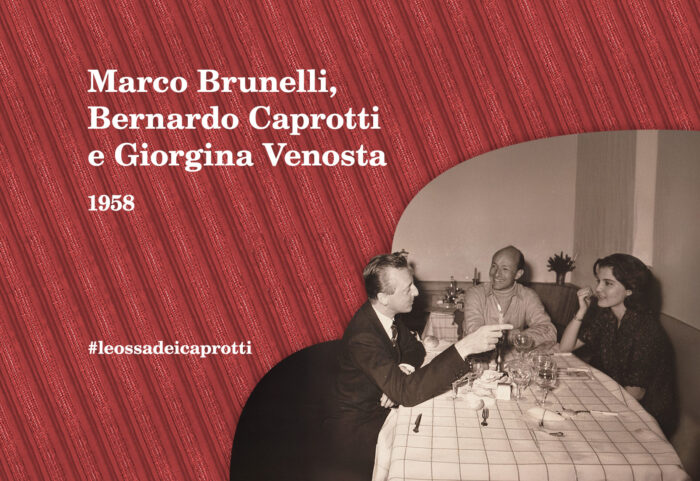
The Caprotti family and the supermarkets: Marco Brunelli, Bernardo Caprotti and Giorgina Venosta at the “Cervo d’Oro” in Cortina, February 1958
From the very beginning, Marco Brunelli struggled to get along with Bernardo Caprotti. The first disagreements began to manifest themselves blatantly in early 1960. In May, Brunelli and my uncle Guido founded a chain of supermarkets together with the aim of focusing on Rome, the city that IBEC's men had discarded...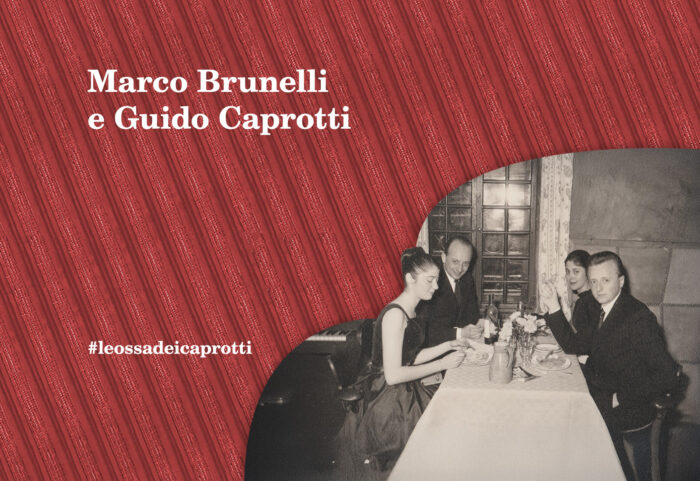
The Caprotti family and the supermarkets: Guido Caprotti with Marco Brunelli and two friends, 1950s
Marco Brunelli, a close friend of Guido Caprotti's since high school, and a member of one of Milan's most prominent families, was the first to come into contact with the American IBEC and its plan to open a series of supermarkets in Italy, and he also brought Guido and Bernardo into the negotiations. This dispels, at least in part, the story always told in the family that, thanks to a fortunate conversation overheard at the Grand Hotel in St. Moritz, the Caprotti family had entered as protagonists in the negotiations together with Brunelli. The latter later became the first president of Supermarkets Italiani, later Esselunga.
The Caprotti family: LEGEND
The line between reality and narrative is sometimes thin, almost imperceptible. But there comes a time when reconstruction is necessary: the Hotel Palace toilet in St. Moritz, overheard conversations, the birth of Esselunga. The story, the real one, is another.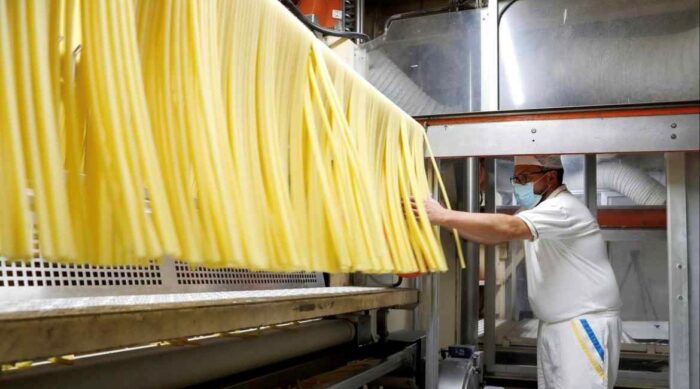
The price of wheat falls by 30% but the price of pasta soars by 18%: how is this possible?
Is someone speculating on prices in Europe? It seems so, but not on pasta
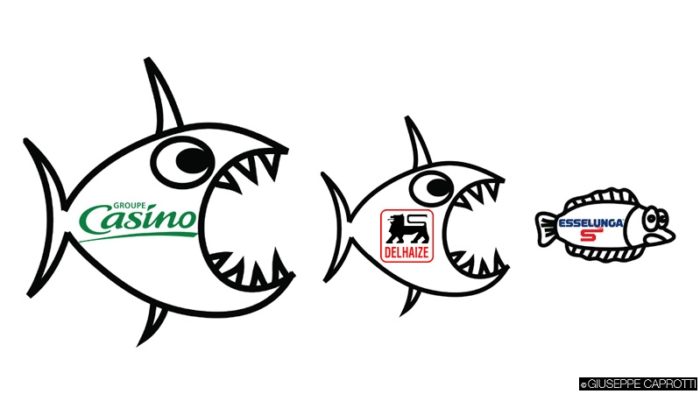
Big fish eat medium-sized fish, which eat small fish
Casino and Delhaize are attempting to acquire Esselunga. An old story, which began in 1998, has resurfaced in the wake of Casino’s collapse in 2023
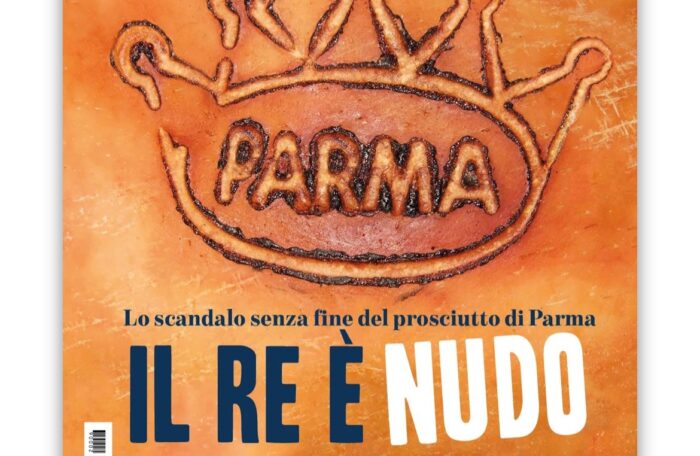
The stark reality: the never-ending Parma ham scandal
the Repressione Fradi (Fraud repression) found that 25% of the pigs entering the PDO chain in 2020 did not have the characteristics to receive the prestigious label.

The birth of marketing at Esselunga and two Armando Testa advertising campaigns
In 1994, under my impetus, the Esselunga marketing department took shape and I became its first director. Marketing was structured to manage the following areas: promotions – including the whole Fidaty world – the call centre, press office, market research, supermarket space, advertising
