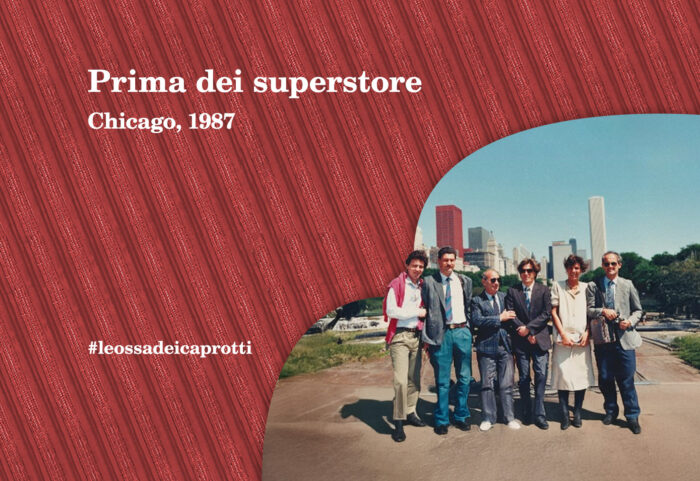
Chicago 1987, before superstores
Charles Fitzmorris, Esselunga's IT service provider, convinces my father to let me go to America to gain experience. He puts me in touch with the family of one of his clients, Dominick Di Matteo, who has a chain of supermarkets in Chicago. During my two-year stay, during which I worked my way up through the ranks internally, starting as a general worker, I learned the basics, and then in Milan I was able to put to good use what would become the great change, the quantum leap that would make Esselunga's fortune.
Two mismatches in the Caprotti story: Januaria Piromallo, Marchioness of the Dukes etc., and Maria Cristina Busi Ferruzzi, ‘Princess of Coca-Cola
The story of Maria Busi Ferruzzi is reported in the book ‘Le Ossa dei Caprotti’ because it exemplifies how a supplier can become a servant. On Januaria Piromallo, Marchioness Capece Piscinelli di Montebello of the Dukes of Capracotta, on the other hand, I have drawn a pious veil
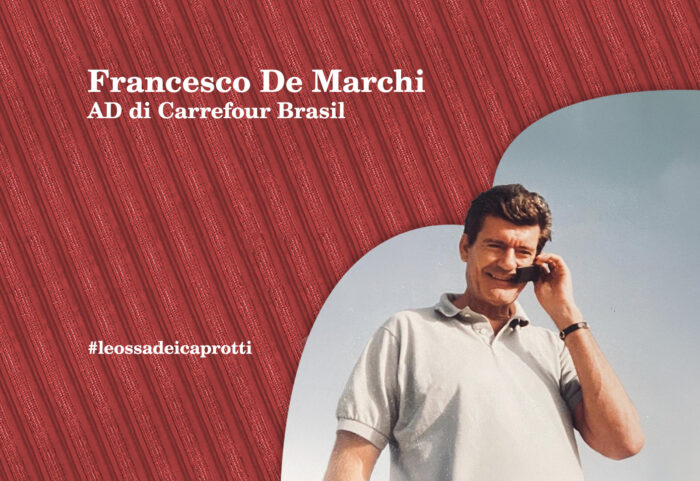
São Paulo, Brazil, Giuseppe Caprotti’s work baptism, 1979
After high school I follow my best friend, who is Brazilian, to São Paulo. My father did not appreciate the decision, but he supported it; I found my first job, a worker in the branch of the French Carrefour chain, of which a friend of my father's, Francesco De Marchi, was then in charge, and he also took me to visit several Brazilian locations. It is a baptism of fire at work, but it leaves me with the excellent memory of an important experience.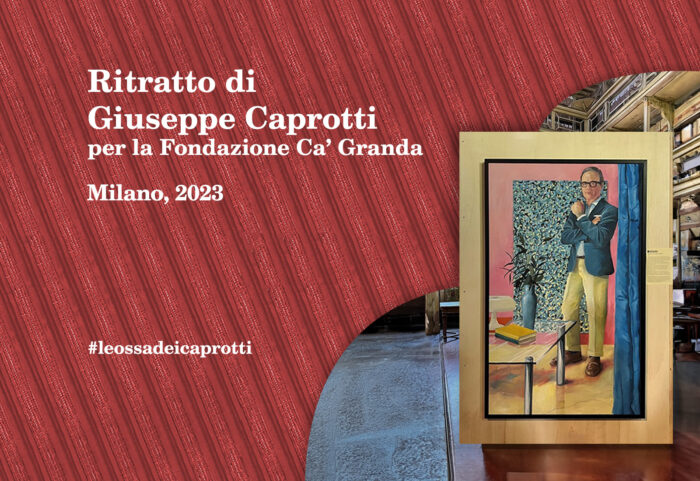
Giuseppe Caprotti portrayed as Benefactor of the Ca’ Granda Foundation, 2023
When my mother Giorgina Venosta passed me the baton of the Guido Venosta Foundation, created in memory of her father and my grandfather, we were in the midst of the Covid-19 pandemic. As President, I then tried to intervene as much as possible with concrete aid to cope with the emergency; among these was the donation of 12 intensive care beds at the Policlinico di Milano. And the Foundation that runs it, in keeping with a centuries-old tradition that began in 1459, has paid tribute to this charity by dedicating a portrait to me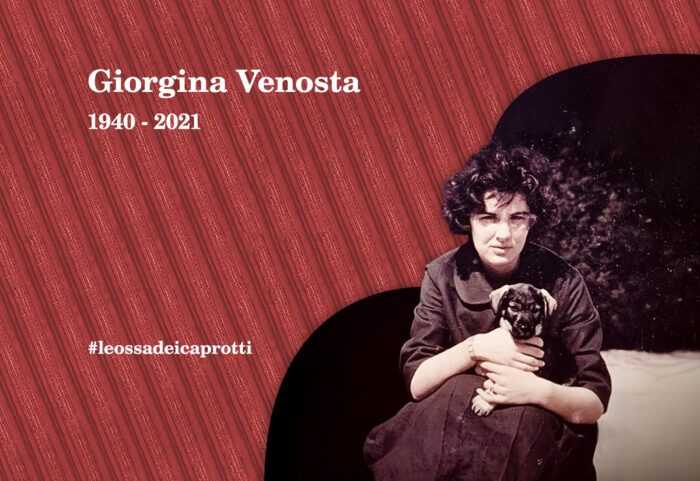
The Caprotti family and the animals: Giorgina Venosta on her honeymoon, 1958
Love for animals, and dogs in particular, has always been a constant in our family. Mum always had a little dog in her arms as soon as she could, as in this photograph, part of a series taken by my father Bernardo, which shows her on her honeymoon in France (they were married in November 1958) with a puppy on her lap. Because of this love of hers, one of the projects of the Guido Venosta Foundation, which I chair, supported the Fondazione Progetto Arca Onlus, which was able to buy a farmhouse in Baggio to turn it into a reception centre for homeless people with dogs, usually rejected by other institutions.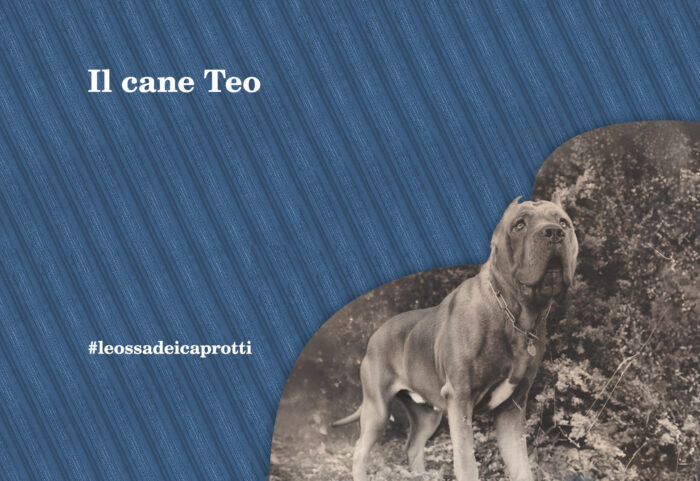
The Caprotti family and animals: Teo, 1970s
They do good, animals, they save from many things. This is why one of the projects of the Guido Venosta Foundation, named after my maternal grandfather and which I chair, financed the Fondazione Progetto Arca onlus, which was able to purchase a 500 square metre farmstead in the Baggio district of Milan to start up 'Cascina Vita Nova - Giorgina Venosta', to be inaugurated in 2021, an important reception project for homeless people with dogs, usually rejected by other institutions and never abandoned by their 'humans'.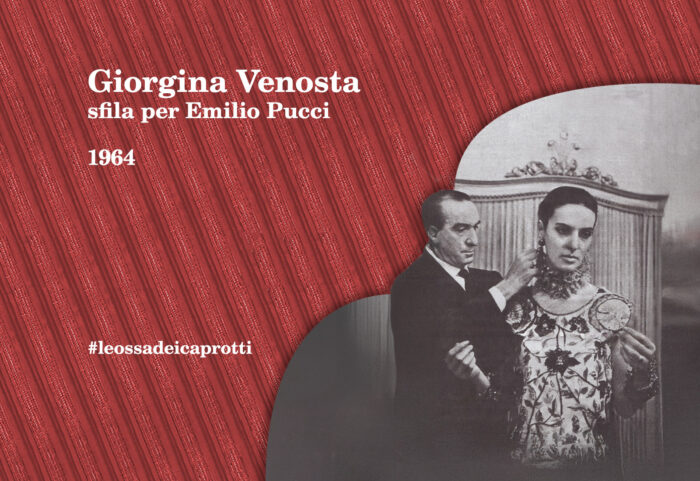
Giorgina Venosta catwalks for Emilio Pucci
"Giorgina has no money, and must live. Beautiful and with an elegant figure, she could not fail to be noticed: and an old, faded newspaper page still from 1964 shows her, full page spread, as a mannequin (this was how catwalk models were defined at the time, with an eloquent Frenchness). She is wearing a rich and resplendent dress, and the person who finishes 'adorning' her is Marquis Emilio Pucci, one of the founders of 'made in Italy' fashion and an absolute genius of creativity, who certainly did not choose his models at random'.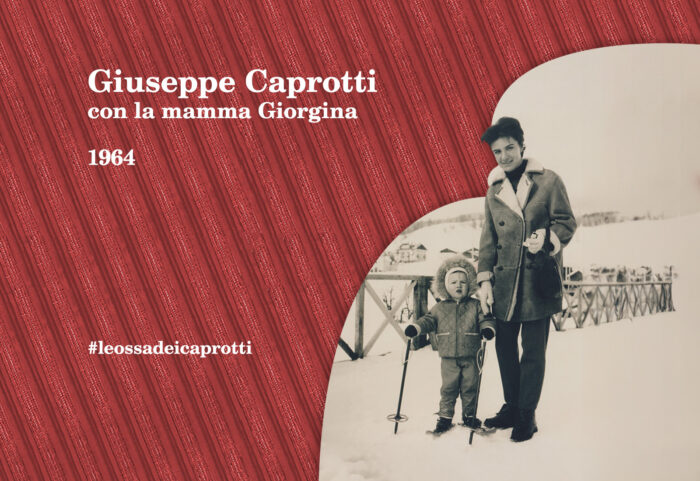
The Caprotti family: Giorgina Venosta with little Giuseppe in St. Moritz, 1964
The beauty of the mountains and the snow, as well as our passion for skiing (they used to put snowshoes in our hands as soon as we could walk on our own), were the stage for unforgettable family moments, like this shot with my mother Giorgina in St. Moritz in 1964. It was there, at the home of her father, Grandpa Guido, that we children were able to see her most often after the separation from our father.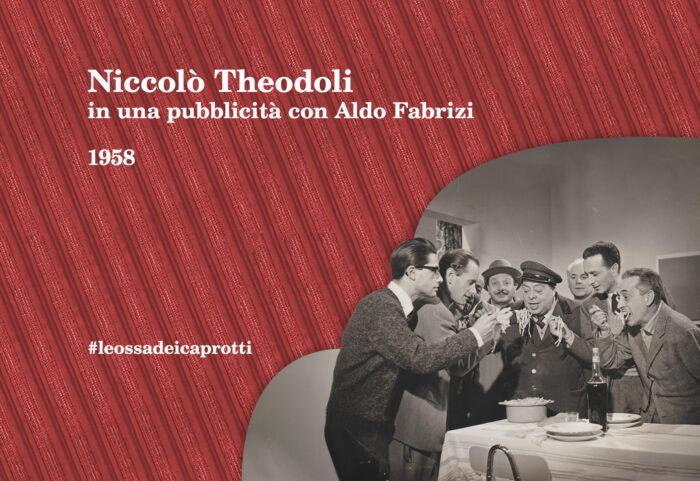
The Caprotti family and the cinema: Niccolò Theodoli with Aldo Fabrizi, 1958
Niccolò Theodoli, grandmother Luisa's second husband, was a film and television producer. In fact, like many, he combined the production of films, even successful ones (he won a David di Donatello for Racconti romani in 1955), with the production of sketches for television.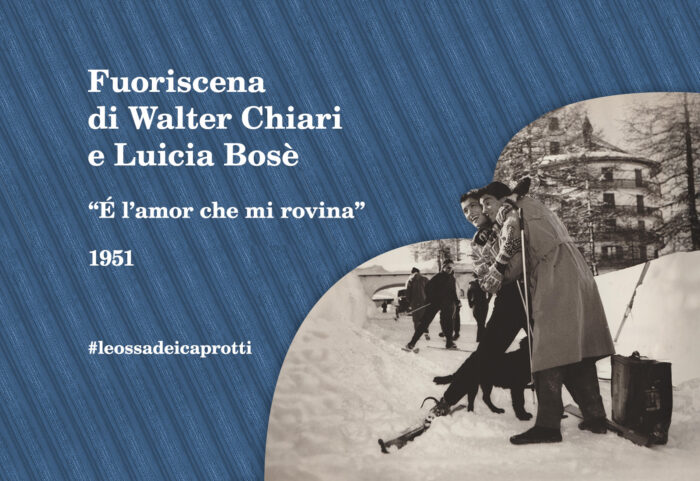
The Caprotti family and cinema: off-scene of Walter Chiari and Lucia Bosè at Sestriere, 1951
It is L'amor che mi rovina (1951), produced by Niccolò Theodoli, grandmother Luisa's second husband, was a good box-office success and all in all positive reviews, if not for the story, generally considered insulting, for the excellent direction and acting.