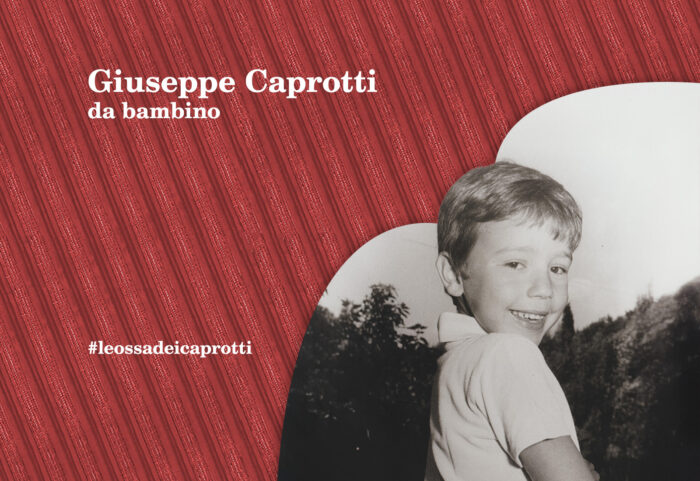
The Caprotti family: Giuseppe as a child, c. 1966.
With our father, we also experience beautiful and carefree moments. With him we listen to music, we talk, we laugh, we joke, we watch some television, we even go on holidays and trips together. But around the age of 10 something already starts to go wrong. I look a lot like my cheating mother, I also have a good relationship with her, and Dad doesn't get that. I also miss physical affection so much: never a hug or a caress from him.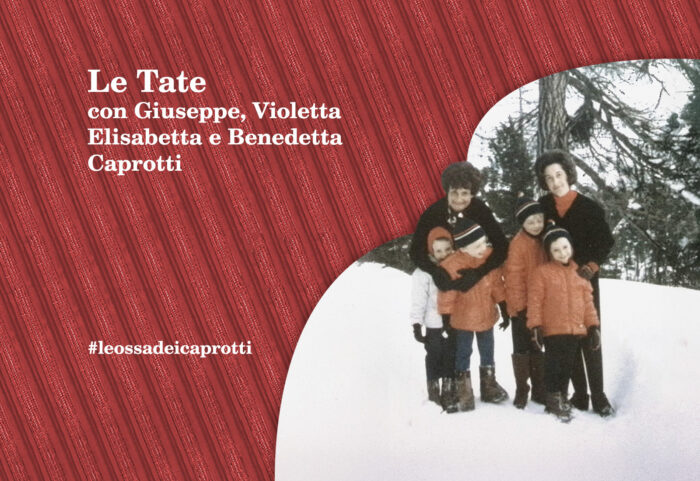
The Caprotti family: Violetta, Giuseppe, Benedetta and Elisabetta with nannies Franca and Sissi, St. Moritz, 1960s
My sister Violetta and I went to the mountains with my mother, accompanied by cousins Benedetta and Elisabetta, Uncle Guido's daughters, and escorted by the eternal 'young ladies'.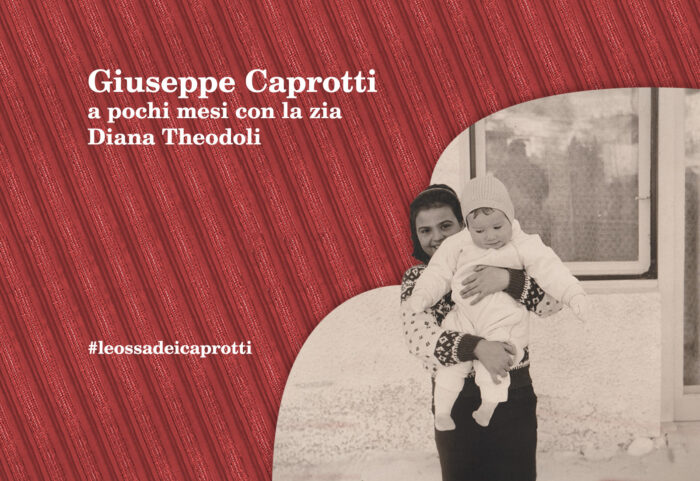
The Caprotti family: Aunt Diana Theodoli and I, in 1961
Aunt Diana, grandmother Luisa's third daughter from her second marriage to Niccolò Theodoli, is about ten years older than me. After her marriage to Marcello Pallini, she moved to Tuscany, where she distinguished herself as an agricultural entrepreneur and public figure to the point of being awarded the title of Cavaliere del Lavoro in 2011.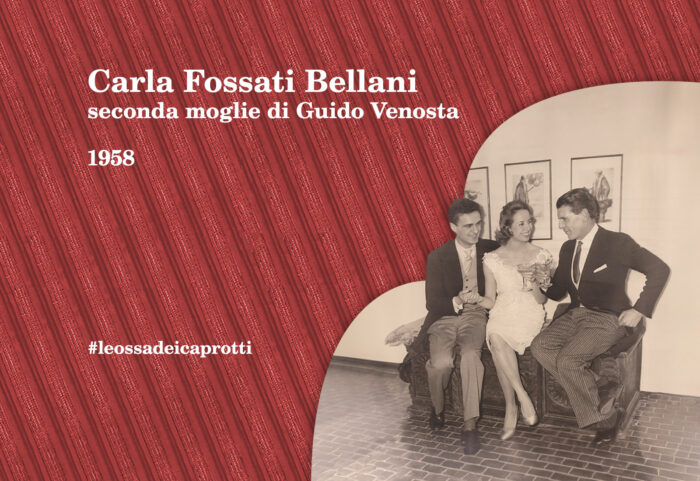
The Caprotti family: Carla Fossati Bellani Venosta, 1958
Carla Fossati Bellani Venosta (1924 - 2019), was my grandfather Guido Venosta's second wife. She was an internationally renowned designer. In 2000 he promoted the establishment of the 'European Foundation Guido Venosta, the man against cancer' (today 'Fondazione Guido Venosta'), whose aim was and is, 'to honour Guido Venosta's memory and borrow his experience, to promote and contribute to raising public education towards the highest cultural ideals and solidarity'.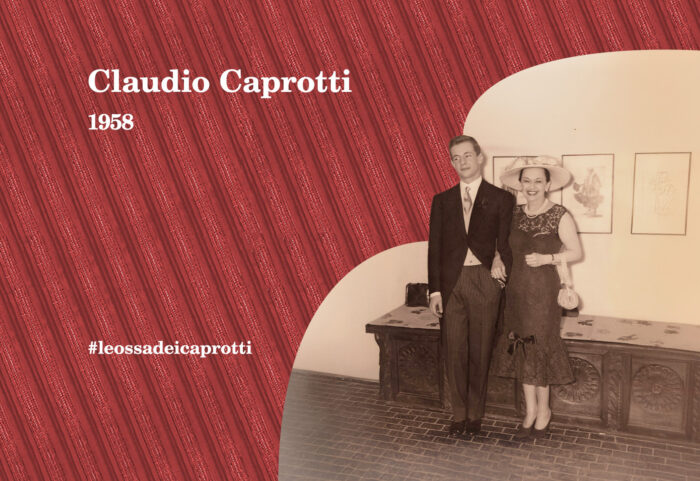
The Caprotti family: Bernardo Caprotti and Giorgina’s wedding, November 1958, Uncle Claudio and Grandmother Marianne
"Grandma has a weakness: she is madly in love with her third son, my uncle Claudio. Some friends told me that Claudio was allowed to have breakfast and lunch in bed when he was in Albiate. Bernardo suffered from this unique relationship and I am convinced that jealousy between the two brothers was one of the causes of the quarrels that shook our family.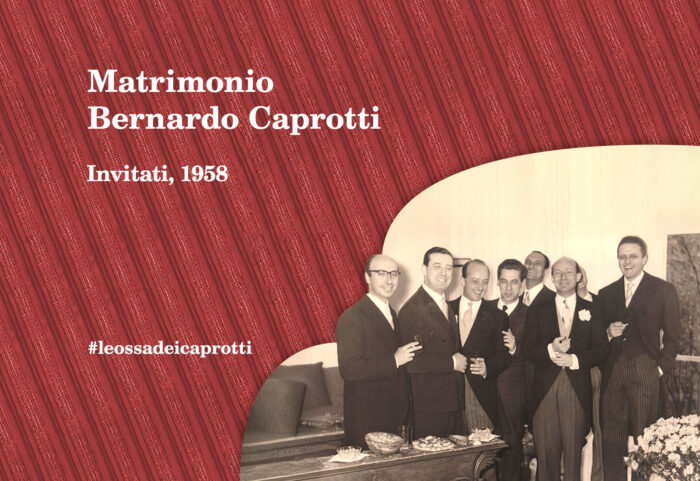
The Caprotti family: Bernardo and Giorgina’s wedding, November 1958, Guido and Bernardo’s friends
The picture shows the groom (second from the right), Virginio Rivolta (first on the right), himself a textile entrepreneur for generations as one of the heirs of Rivolta Carmignani of Milan, and Guido Caprotti, Bernardo Caprotti's brother (third from the left).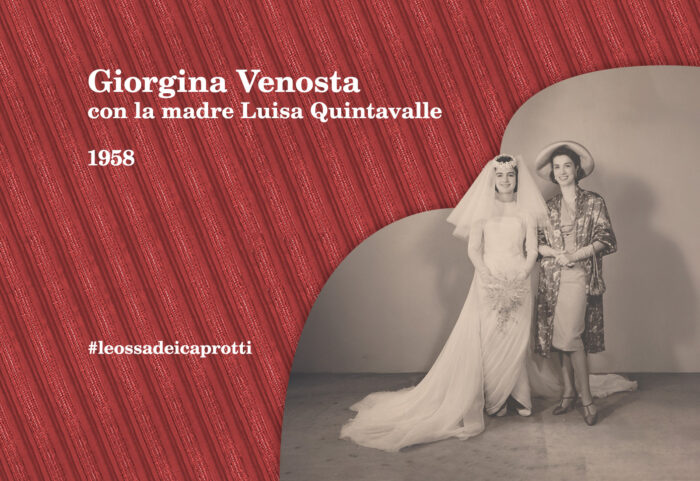
The Caprotti family: Bernardo Caprotti and Giorgina’s wedding, November 1958. Grandmother Luisa with her mother
My mother is a little younger than Guido Caprotti, the second of the three brothers, and with her mother and brother she spends the summer in Forte dei Marmi, where the Caprotti family also spends their holidays. At Forte Giorgina meets Bernardo, who is twice her age but is intelligent, charming, with a wry and ready wit. She just wants to run away from home, and the idea of joining a family as apparently united as Bernardo's attracts her; he has decided that the time has come to settle down, and a young bride from Milan's upper industrial bourgeoisie suits him perfectly.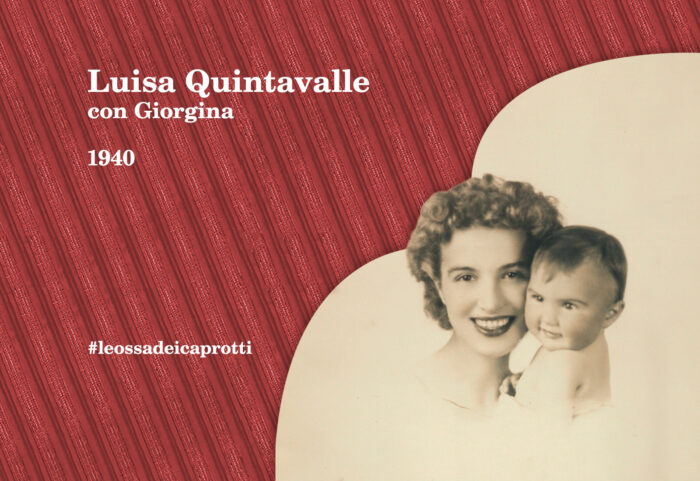
The Caprotti family: my grandmother Luisa holding my mother, 1940
Grandmother Luisa Quintavalle in the first photographic portrait with her eldest daughter Giorgina, born at the end of May.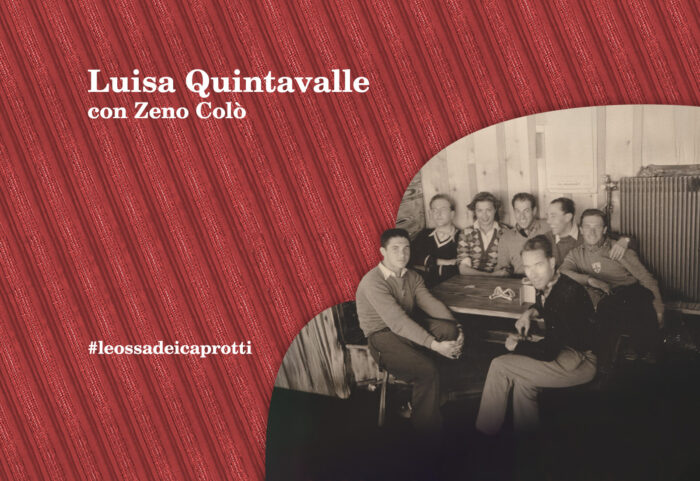
The Caprotti family and sport: maternal grandmother Luisa Quintavalle with Zeno Colò, March 1945
My grandmother Luisa loved skiing, and she was also very good at it. In a photo preserved among family heirlooms, she is pictured in a Swiss alpine restaurant with a group of skiers including, to her right in the picture, the great champion Zeno Colò.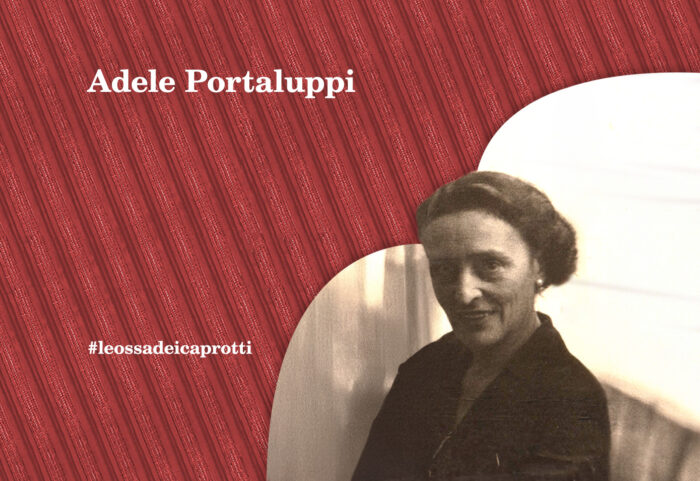
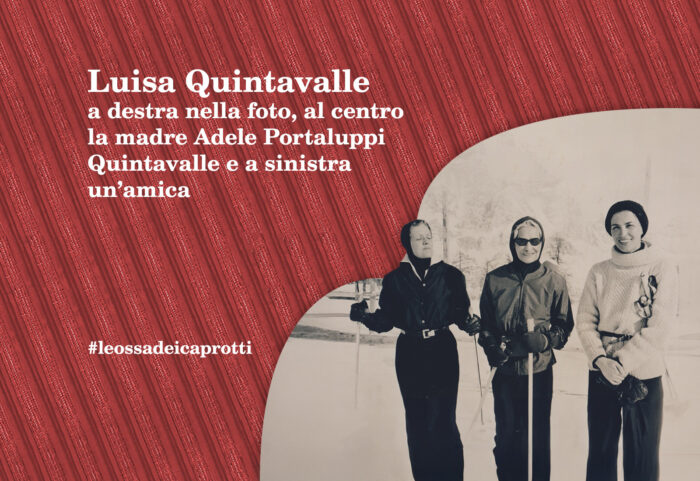
The Caprotti family’s ancestors: my maternal great-grandmother Adele Portaluppi Quintavalle, grandmother Luisa’s mother, 1942
Adele was the sister of Piero Portaluppi, a well-known Milanese architect, and belonged to the Milanese upper middle class. In the photo she is in the centre between her daughter Luisa Quintavalle, holding her own daughter Giorgina Venosta, and a third woman identifiable as Luisa Gadda Portaluppi, Adele and Piero's mother, Milan, April 1942.