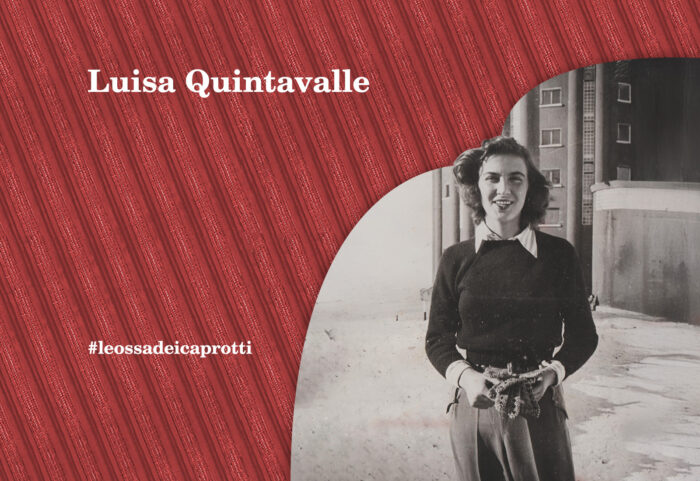
The Caprotti family’s ancestors: maternal grandmother Luisa Quintavalle at Sestriere, January 1939
I had a special relationship with my grandmother Luisa. We used to meet at her place and the only gift I remember from her was Dante Alighieri's Divine Comedy. She had given it to me to fill in the gaps at the Swiss school I attended but, above all, she had given me something much more precious: the afternoons we had spent together, during which she had committed herself to explaining such a difficult text to me.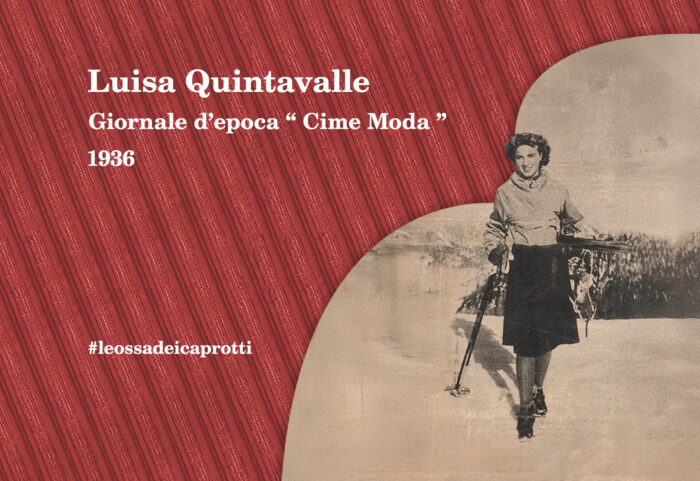
My grandmother Luisa Quintavalle from a period newspaper clipping, ‘Cime Moda’, Cervinia, winter 1936
Grandmother Luisa was not only an excellent sportswoman, but also a protagonist of Milanese fashion. Here she is portrayed in a mountain outfit, of which the archive preserves proof photos. She was a person of undoubted culture, a translator from French and English for the most important Italian publishing houses, as well as an author herself.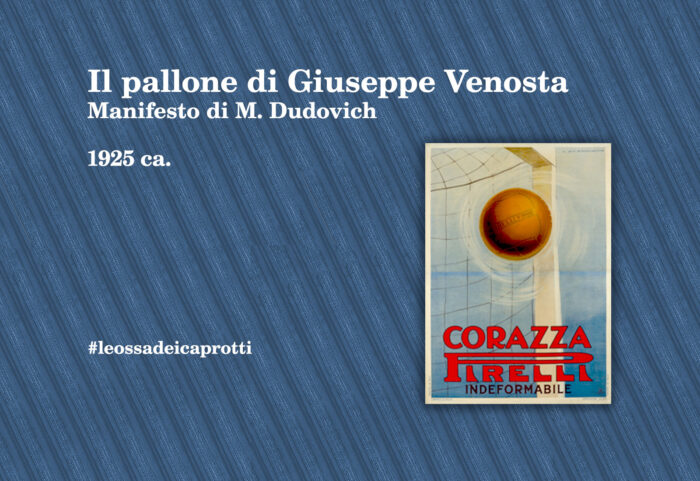
The Caprotti family’s ancestors: the ball of my maternal great-grandfather Giuseppe Venosta
My grandfather Guido Venosta worked for a long time at Pirelli, where his father Giuseppe was General Manager and inventor of the first modern football, the 'Corazza Pirelli' with a rubber core that would replace the leather balls used until then. The advertisements for the new ball, which was light and durable, were also designed by the famous Marcello Dudovich, who is considered one of the founders of 20th century advertising posters and one of the greatest Italian designers and poster artists. Poster by M. Dudovich, Corazza Pirelli, Museo Nazionale Collezione Salce, Direzione regionale Musei Veneto, published by concession of the Ministry of Culture.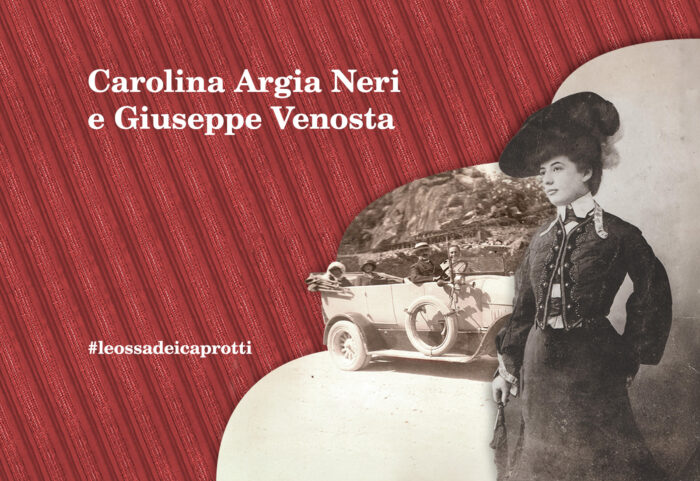
The Caprotti family’s ancestors: maternal great-grandparents, Giuseppe Venosta and Argia Neri Venosta, grandfather Guido’s parents
Giuseppe Venosta (1880 - 1939) was an engineer who worked all his life at Pirelli until his death from cancer, a disease that was incurable at the time, of which his wife Argia was also a victim, some ten years after him. His son Guido, my grandfather, many years later became very involved in the fight against the disease that had killed his father and, a decade later, his mother as well.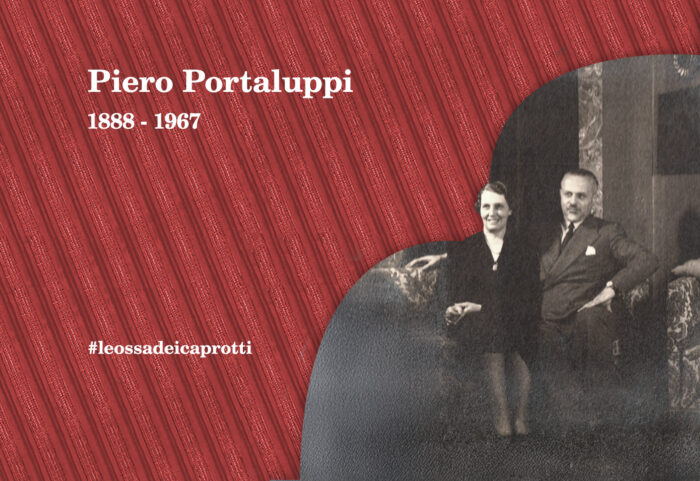
The Caprotti family’s ancestors: Piero Portaluppi, great-grandmother Adele’s brother, 1938
His great-grandmother Adele was the sister of architect Piero Portaluppi, who designed many important buildings in Milan such as Villa Necchi Campiglio, the Civic Planetarium in the gardens of Porta Venezia, and the Arengario building. In the photograph Piero Portaluppi is with his wife Lia in 1938.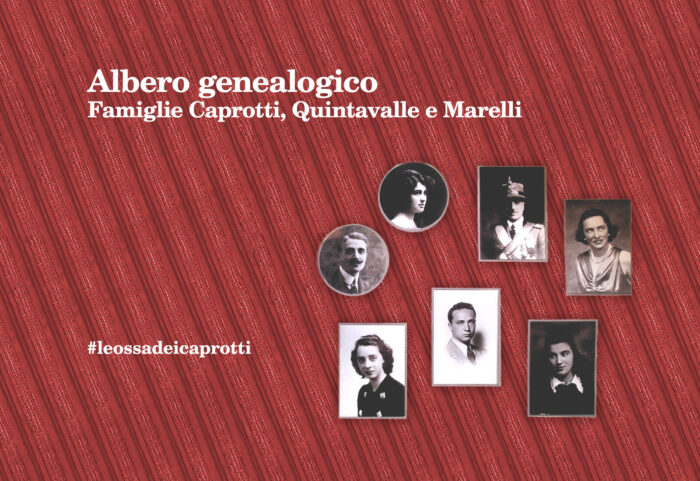
The Caprotti family and their roots: the maternal family tree
Smiling in the image, in a single picture created for their 25th wedding anniversary, are my great-grandfather Umberto Quintavalle at the time of their wedding and in uniform, his wife Adele Portaluppi, also in the dual role of young bride and current wife and mother, their twin daughters Ida and Luisa (my grandmother), and their son Ferruccio, known as 'Illo'.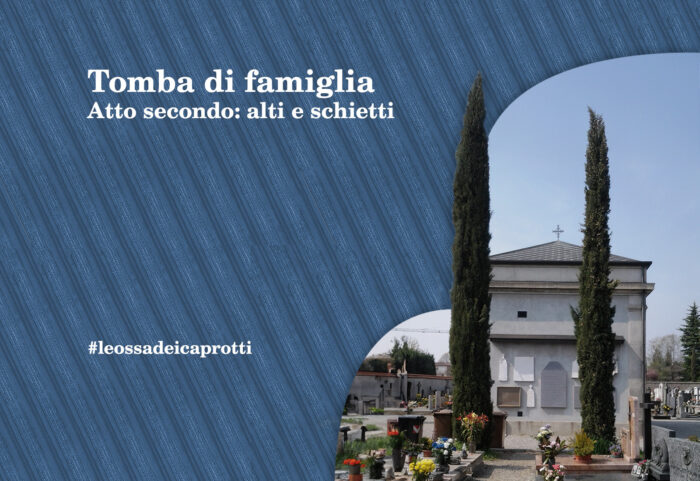
The Caprotti family and their bones: ‘Family Tomb, Act II: High and straightforward’, 2009
In 2009, Manifattura Caprotti in Albiate closed. Although the factory has not belonged to The Caprotti family for a few years now, it is only natural that the mayor Filippo Viganò should turn to Bernardo to try to limit the heavy social impact that this closure will have on the town. Bernardo replied with a long letter, in which he briefly (but not unkindly) dismissed the Manifattura issue, to dwell on the much more serious problem of the cypress trees in Albiate's cemetery, which thoughtless gardeners are badly pruning, preventing them from growing 'tall and straight' as they should.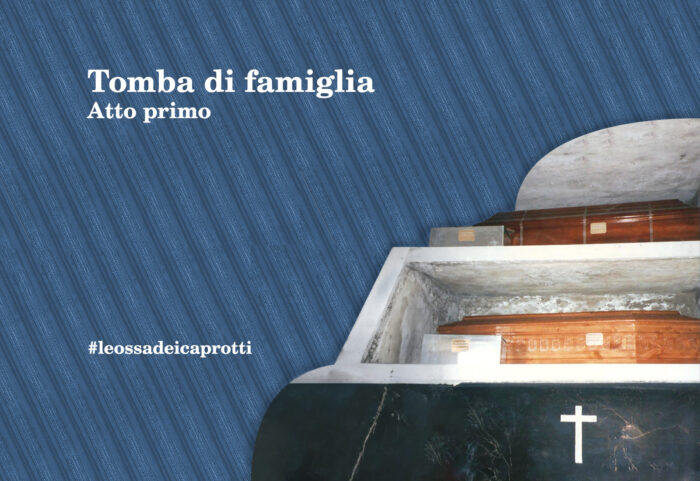
Le Ossa dei Caprotti: the family tomb, act 1, 1997
In 1997, Dad and the brothers had not spoken for who knows how many years. A few days before Christmas, Bernardo kicks off what in time will turn into a veritable torment. In the Albiate cemetery, the family chapel is in need of urgent restoration because major water infiltrations are compromising both the structure and the coffins stored there. What is striking in the way Bernardo relates the events to Guido and Claudio is the meticulousness of the descriptions. He relates every detail with precision, not sparing them photographs of the battered and possibly open coffins, including that of their father Peppino.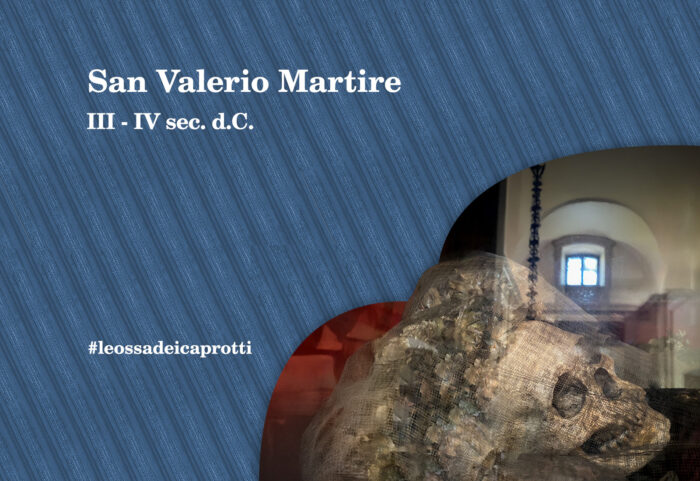
Le Ossa dei Caprotti: San Valerio martyr, 3rd-4th century AD.
Why the title 'Le Ossa dei Caprotti'?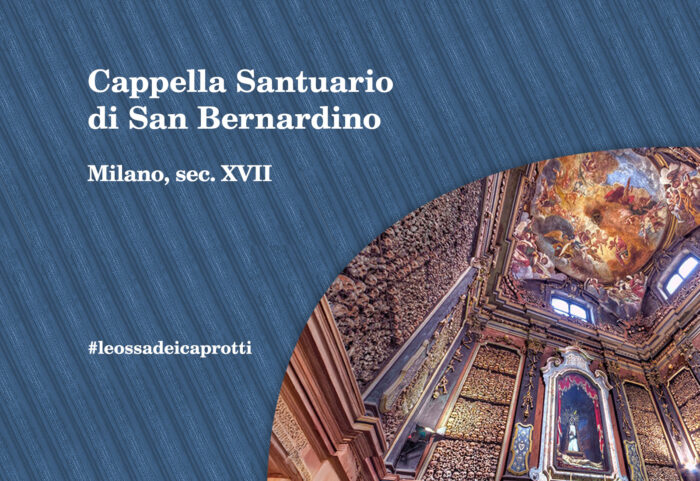
The Caprotti family and their bones: Milan, Chapel Sanctuary of San Bernardo Caprotti alle Ossa, 17th cent
When, as children, we get to spend some free time with our father, one of our favourite destinations is the 17th-century Oratory of San Bernardo alle Ossa, whose interior is decorated with hundreds of bones and skulls exhumed from the cemetery of the nearby Ospedale del Brolo arranged in niches, on the cornice, adorning the pillars, and decorating the doors. And this detail, which to the eyes and imagination of us children is rather macabre, impresses us greatly. Bones and cemeteries will be almost an obsession in Bernardo's life.