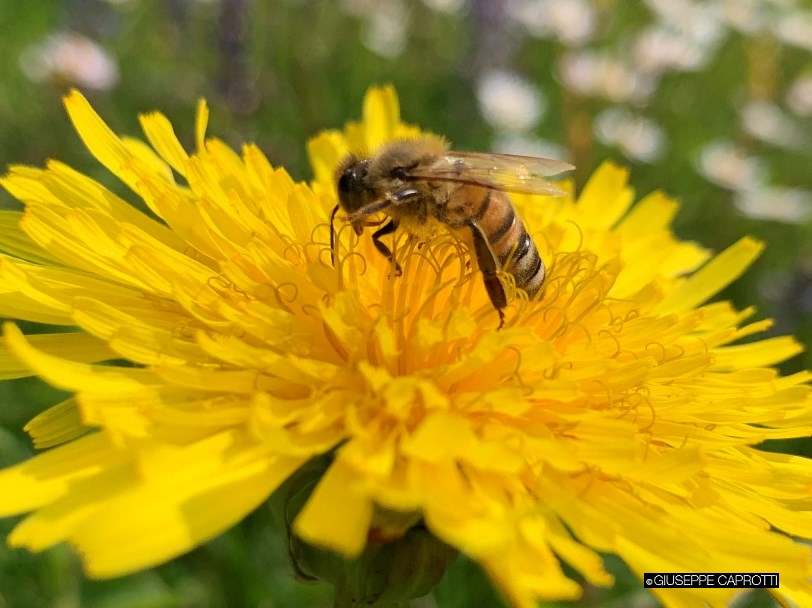
Above: a bee in Albiate (MB).
A study carried out in the USbetween 1992 and 2016 shows that the toxic impact of pesticides on bees and other pollinating insects has doubled over the last ten years, despite a reduction in the quantities of chemicals used in the fields. Modern pesticides are less toxic to humans, mammals and birds because they are sprayed in smaller quantities. This development is certainly noteworthy, but there is a problem concerning pollinating insects and aquatic invertebrates, as the new chemical compounds (mainly pyrethroids and neonicotinoids) are even more toxic to them.
The harm associatedwith this increased toxicity outweighs the benefits gained from the reduced volume of pesticides used. These are the conclusions ofthe study‘Applied pesticide toxicity shifts towards plants and invertebrates, even in GM’, published in the journal*Science*. “Compounds that are particularly toxic to vertebrates have been replaced by compounds with lower toxicity to vertebrates, and this is indeed a success,” Ralf Schulz of the University of Koblenz and Landau in Germany, who coordinated the research,told TheGuardian. “But at the same time, pesticides have become more specific (mostly pyrethroids and neonicotinoids) and therefore, unfortunately, also more toxic to non-target organisms, such as pollinators and aquatic invertebrates.”
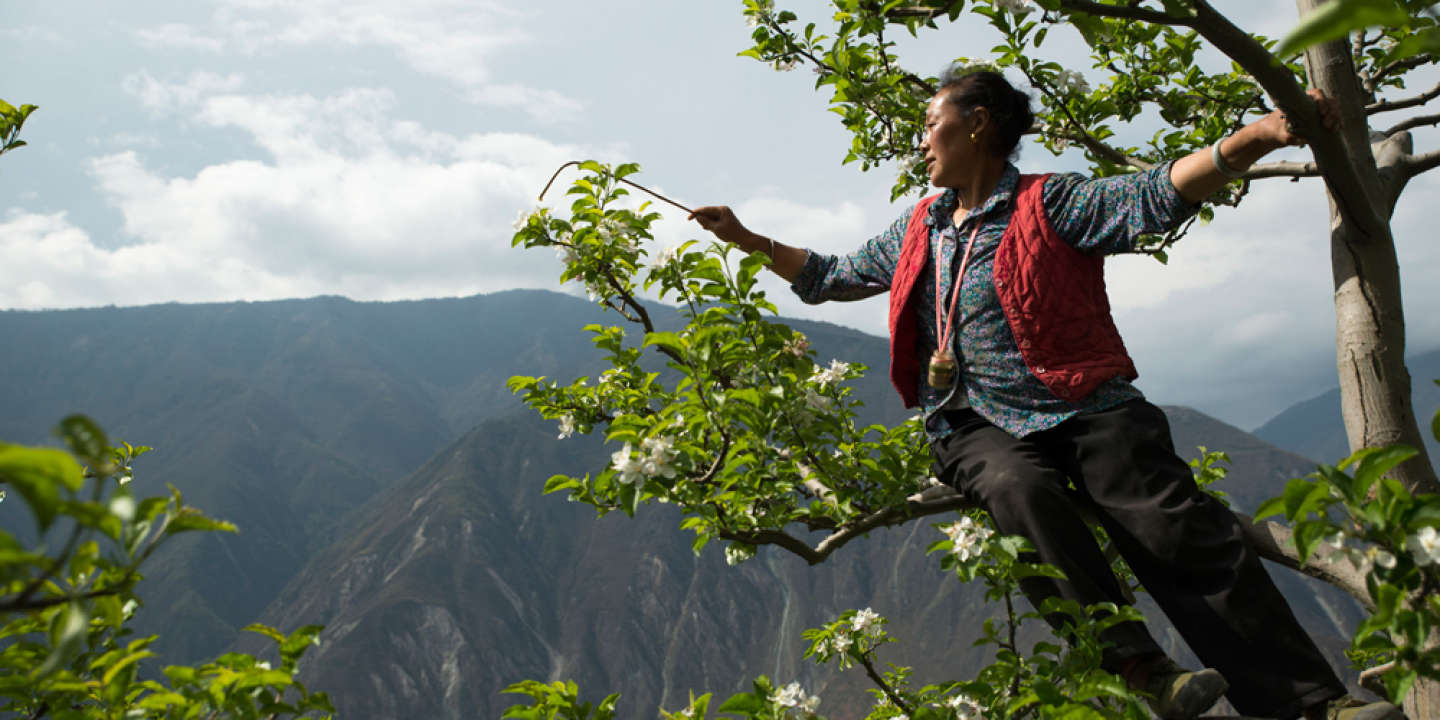
It is, however, likely that we too, in the West, will end up pollinating by hand , as has been the case in China for years (photo below)
See also Repubblica (2014) on this subject.
N.B.: A farmer told me that pyrethroids “aren’t a problem”.
Quite apart from the fact that this is contradicted by the article above , there are still the neonicotinoids, which apparently kill bees and drive them mad.
And then there’s climate change
It hasn’t rained in Albiate for months: the reduced rainfall has halved the number of blooms, meaning fewer bees and fewer insects. And therefore less food for birds and for humans. It is a ‘circle of life’ that is shrinking.
Mind you, this isn’t the case in Lombardy, but more than half of Italy’s regions are in a ‘water emergency’ or have had to take ‘extraordinary measures to tackle the drought’
Unfortunately, I agree with this statement by the United Nations Secretary-General, António Guterres: Climate change, Guterres: “We are on the brink of the abyss”
Or: Exposure to herbicides and an increased risk of skin melanoma, 85%
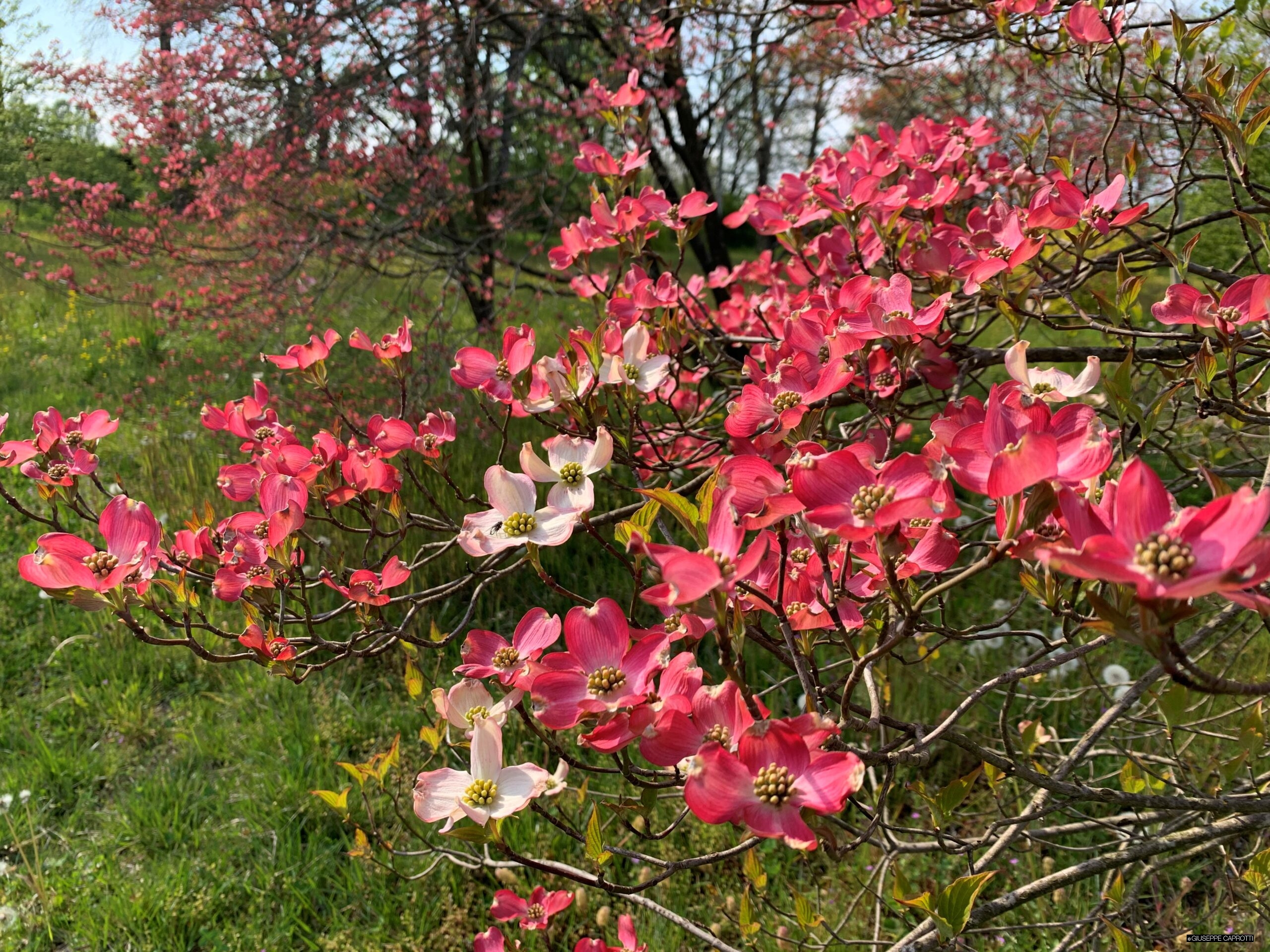
Below: the cornel trees that produced half of last year’s flowers.
Written on 22 April and updated on 21 May 2021