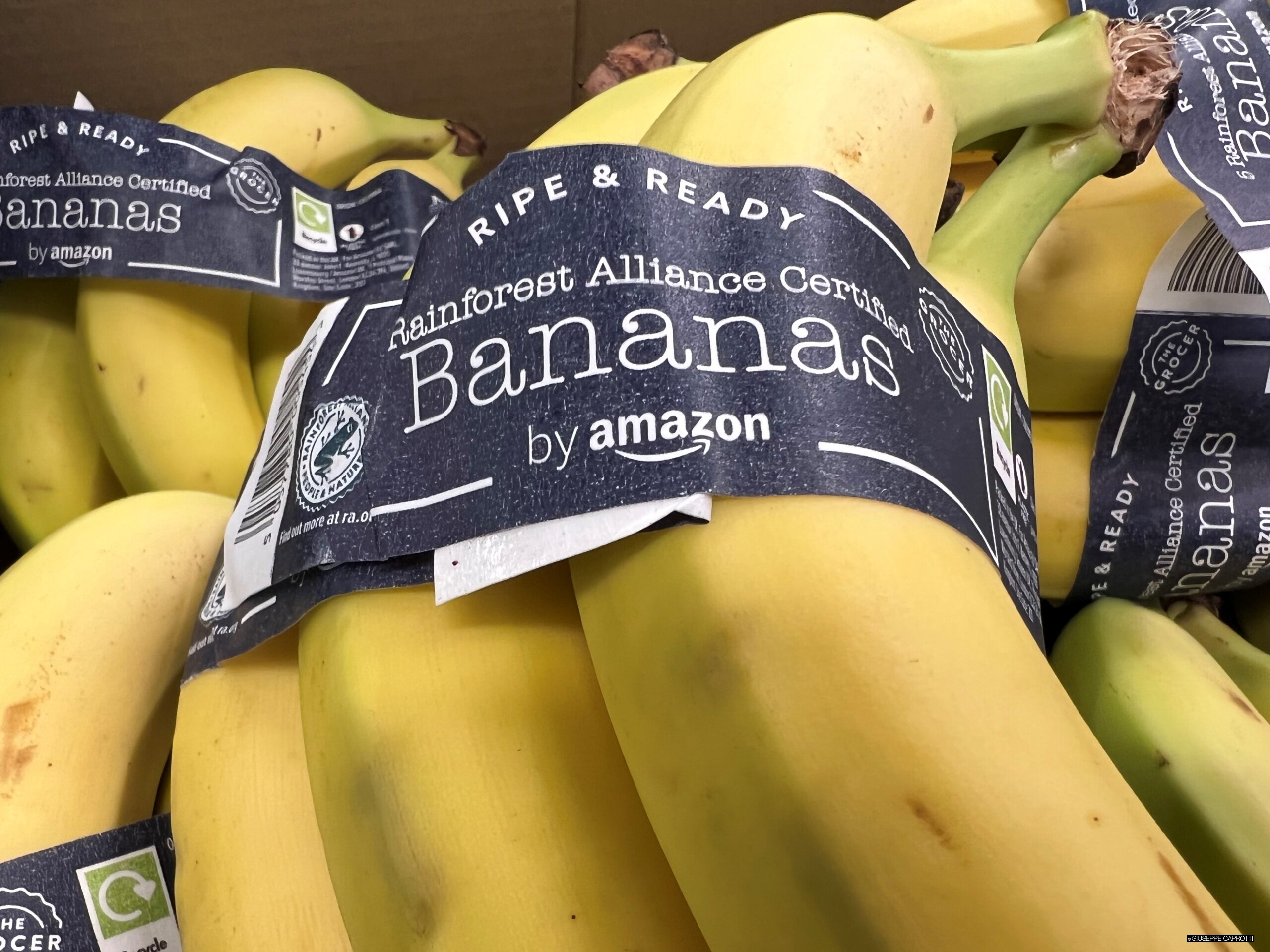
First draft: 16 December 2014. Updated 7 December 2025. Above Amazon Fresh’s private-label bananas, photographed in London in 2022
To better understand the events I am talking about read The History of the Banana Wars and When Europe Went to War over Bananas (1993-2009).
From being a luxury fruit in the 1800s, the banana has become the least expensive and best-selling fruit .
In Esselunga, bananas were among the 10 best-selling items.
From 2001 to 2014, the quantities of bananas sold worldwide rose by 27.8%, from 11.9 million tonnes to 16.5 million tonnes.
Americans eat more bananas than oranges and apples combined (source: The Economist, 1 March 2014).
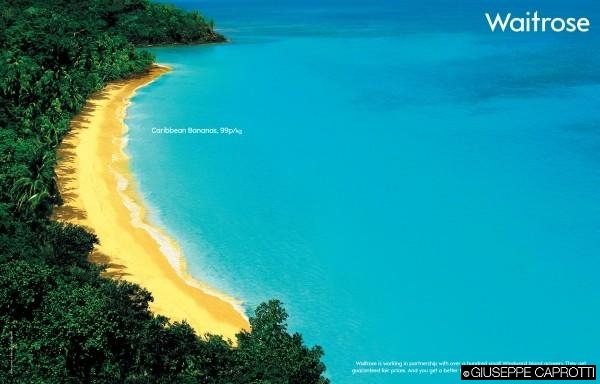
Supermarkets promote their sale with expensive advertising campaigns, like the one below by Waitrose (UK)
Their consumption is growing because they are cheap, nutritious and easy to eat: they do not have to be peeled or prepared, like apples, for example…
From the late 1800s to the mid-1930s, their cultivation and trade were at the centre of long wars in Central America – see The Banana Wars – in which the United Fruit Company, which took the name Chiquita Brands Internationalin 1984, played a leading role.
During much of its history, United Fruit’s biggest rival was the Standard Fruit Company, now the Dole Food Company.

Followed by American Del Monte and Irish Fyffes
I mentioned this in the article Chiquita- Fyffes : challenges and questions for the new banana giant.
But back to the 1990s:
Chiquita in 1998 finds itself at the centre of a controversy in which it is accused, by the newspaper – the Cincinnati Enquirer – city where it is headquartered, of mistreating its workers and heavily polluting the land where bananas are grown…
Controversy
Cincinnati Enquirer charges
Chiquita Center in Downtown Cincinnati, Ohio
On May 3, 1998, The Cincinnati Enquirer published an eighteen-page section, ‘Chiquita Secrets Revealed’ by investigative reporters Michael Gallagher and Cameron McWhirter. The section accused the company of mistreating workers on its Central American plantations, polluting the environment, allowing cocaine to be brought to Borneo on its ships, bribing foreign officials, evading foreign nations’ laws on land ownership, forcibly preventing its workers from unionizing, and a host of other misdeeds.[9] Chiquita denied all the allegations, and sued after it was revealed that Gallagher had repeatedly hacked into Chiquita’s voice-mail system. (No evidence ever indicated that McWhirter was aware of Gallagher’s crime or a participant.) A special prosecutor was appointed to investigate, because the elected prosecutor at the time had ties to Carl Lindner, Jr.
source: Wikipedia
Chiquita seems to have come out on top from a legal point of view…
On June 28, 1998, the Enquirer retracted the entire series of stories and published a front-page apology saying it had “become convinced that [the published] accusations and conclusions are untrue and created a false and misleading impression of Chiquita’s business practices.”[10]….
source: Wikipedia
…and, also under the impetus of the fair trade movement(see the Altroconsumo page below )…
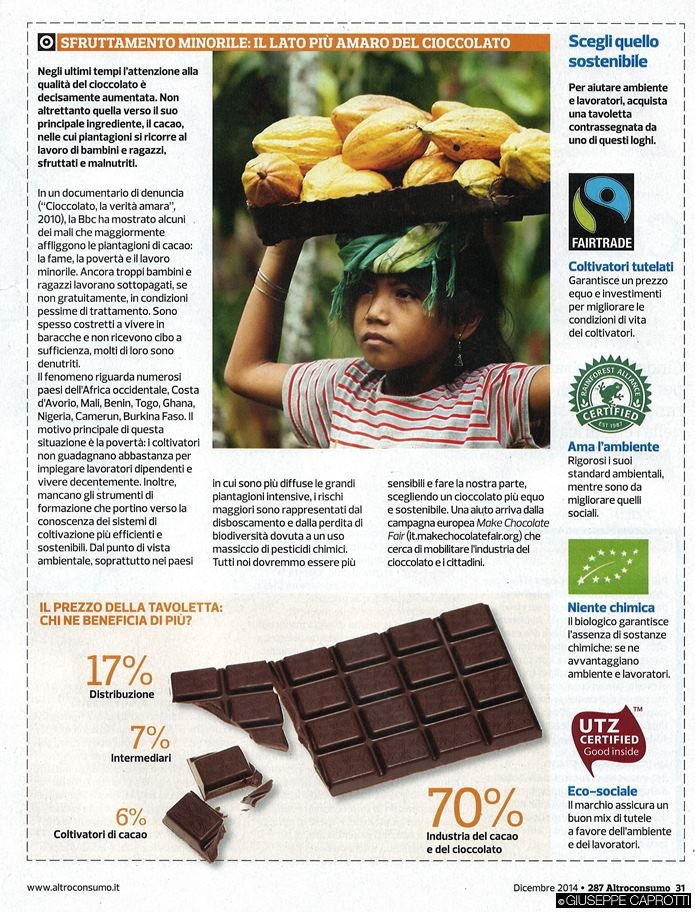
“…In 1998, a coalition of social activist groups, led by the European Banana Action Network (EUROBAN), targeted the banana industry in general and Chiquita in particular, aiming to create a new climate of corporate social responsibility. Their strategy was to encourage small farming of bananas rather than large scale monoculture, and to push for subsidies and other government relief to level the field for small producers. The fair trade movement, which sought to influence consumers to purchase the products of smallholders, also joined in the action….”
the fair trade mark on bananas
,
“...Chiquita responded to the activism with changes in corporate management and new patterns of global competition, according to J. Gary Taylor and Patricia Scharlin. Chiquita partnered with the Rainforest Alliance, an environmental group dedicated to preserving the rainforest, and made major reforms in the way they plant and protect their bananas. The changes focused on the use of pesticides but also affected corporate culture.
source: Wikipedia
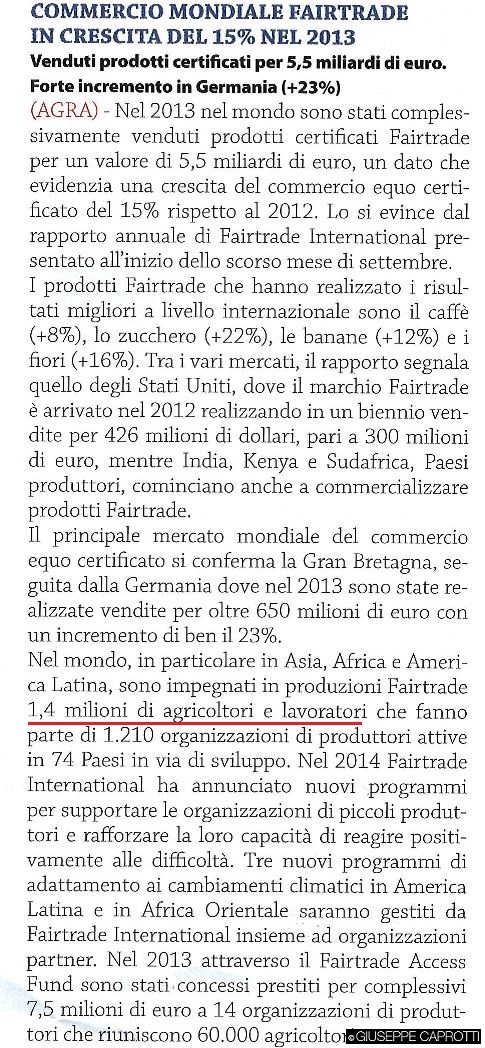
In 2013 the various Fairtrade movements employed 1.4 million people in Asia, Africa and South America
“…In 2001, Wal-Mart named Chiquita as the “Environmental Supplier of the Year…”[6]
source: Wikipedia
in 2001, Walmart named Chiquita as the “Environmental Supplier of the Year”
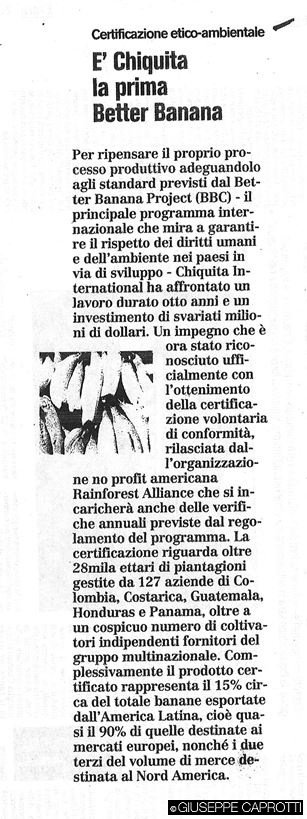
article from Al Food and Grocery of February 2001
Chiquita ‘s period of difficulty coincides with Esselunga‘s search for alternatives to the Chiquita- Dole- Del Monte monopoly that at the time held 63% of the world banana market
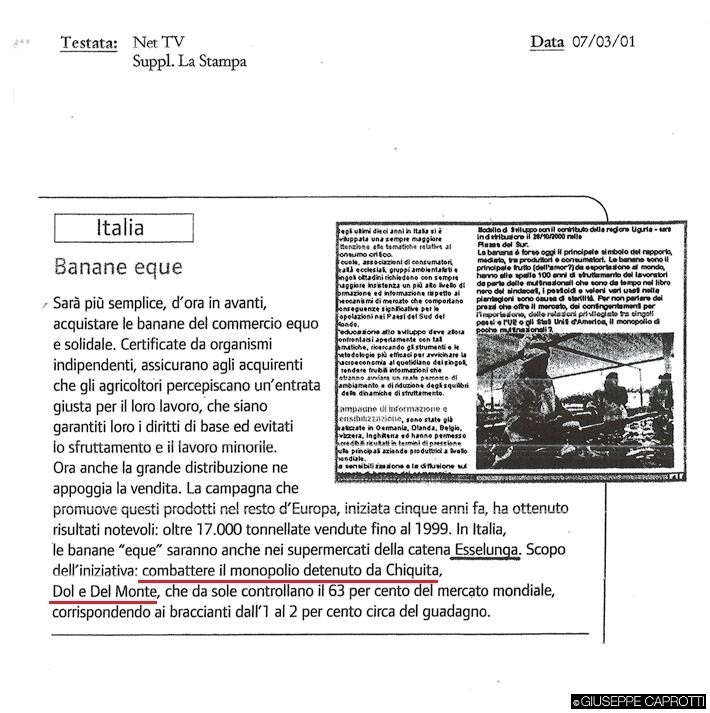
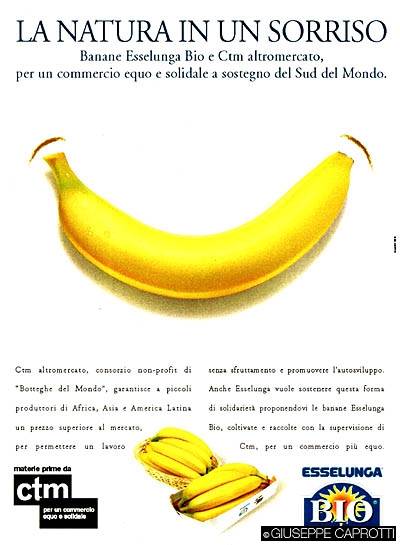
From this situation, the Naturama banana and the Ctm Altromercato Organic banana – an organisation linked to the fairtrade movement – will be born , which will stand alone on the shelves, in Esselunga, in the years 1999 – 2004 (the Naturama first and the Esselunga organic from 2001 onwards)
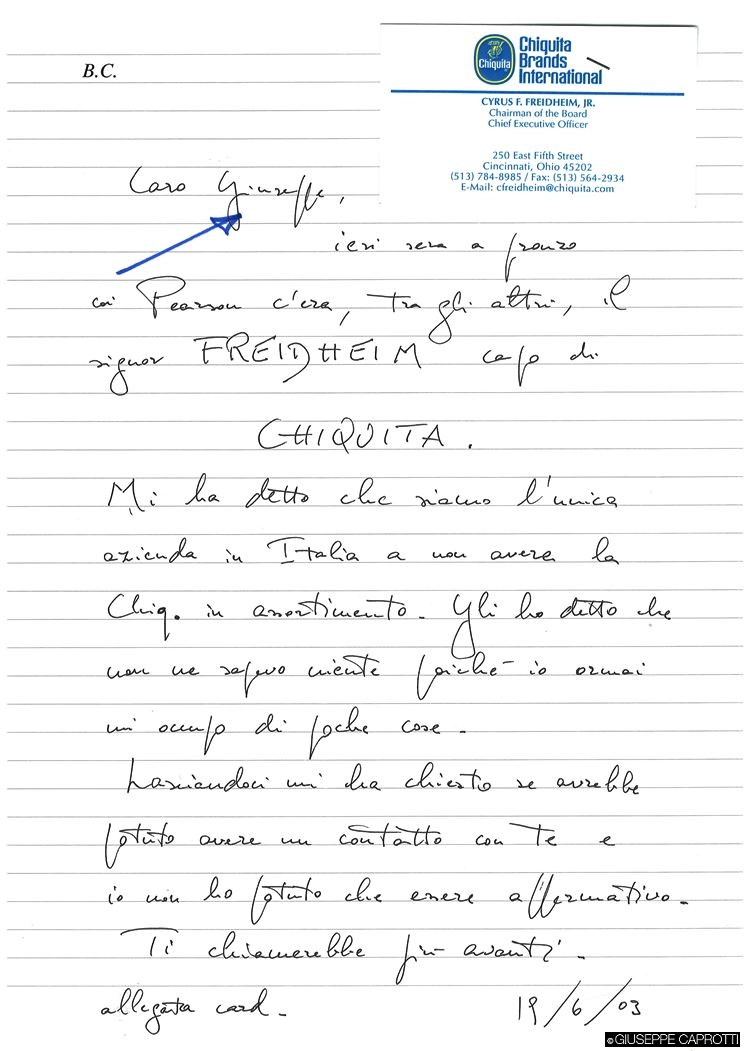
despite strong pressure from Chiquita, of which you will find evidence below.
Indeed, in June 2003, Bernardo Caprotti wrote to Giuseppe:
“… Mr Freidheim, head of Chiquita, told me that we are the only company in Italy that does not have Chiquita in its assortment….
he would call you later…”
Other companies, besides Chiquita and Dole, are trying to ‘enter or re-enter the game’, without success…
It can be concluded that, following Esselunga’s example, private labels were born in Italy after that time, such as, for example, Conad bananas, or Amazon Fresh, on the cover
at the same time, alternative, fair trade brands sprang up all over Europe, not only in the banana sector.
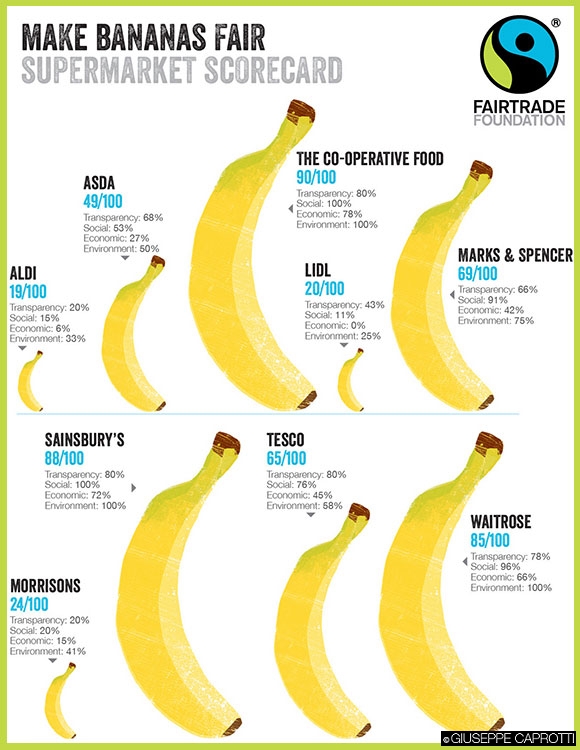
Below: fair trade bananas from chains operating in the UK
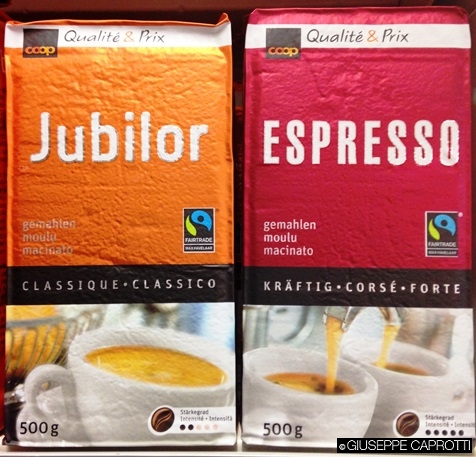
and Coop Switzerland‘s fair trade coffee packs
Please note :
- Chiquita was allegedly complicit in war crimes in Colombia. The 36 million euro judgment
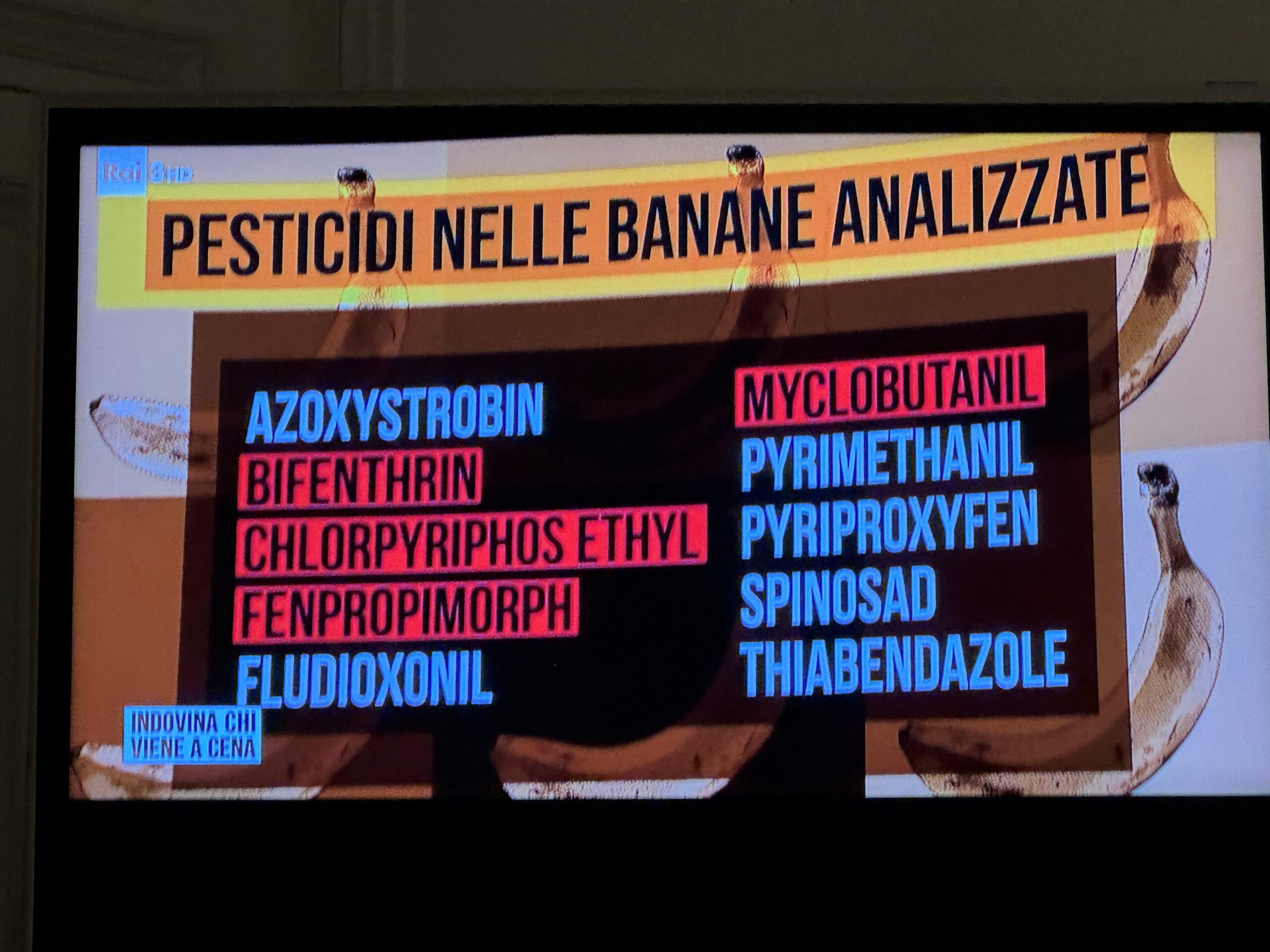
- But above all, on 6 December 2025, watching RAI 3 (image below), I got confirmation of what I already knew 25 years ago: bananas and the farmers who grow them are sprayed with pesticides. Structures close to the plantations, such as schools or churches, are not at a safe distance from the fields and workers handle the plants and fruit without complying with any safety regulations.
- This happened then and continues to happen today.
- Esselunga Bio Ctm Altromercato bananas have therefore, over time, proved to be an excellent choice for marketing but also for the health of consumers and growers. As well as for the incomes of the campesinos, mainly Ecuadorians.
Some of the pesticides mentioned by ‘Indovina chi viene a cena’ (Rai3) have also been found in organic bananas and are banned in the EU but enter it because there are no reciprocity clauses between South America and Europe. This problem could be changed by a proper implementation of the Mercosur treaty.