In the 19th century, the employment of prisoners in work activities was always considered an indispensable re-educational experience and a moralising obligation, as well as a way of reimbursing the expenses incurred by the state (also because the ‘gratification’ given to prisoners for their work was very little, and commensurate with their legal position), and to provide the prisoner with the means for his future reintegration into civil society and the world of work.
Even if, in general, it is more a matter of theory than of practice (there are many inmates who are inactive, and the opinion that prison labour is still robustly widespread, even at the legislative level, as part of the sentence as expiation of guilt and not as a means of redemption from it, with all that this entails), there are several examples where the more ‘modern’ concept was applied.
When, in the early post-unification years, the Caprotti family built their first large factory in the true sense of the term, eventually ending up with a 1,400 square metre weaving hall in addition to other premises, they were initially not quite clear on what to put in it(a curious parallel to a situation that, almost a century later, my father Bernardo would experience in front of the Esselunga superstores, a situation that I resolved!).
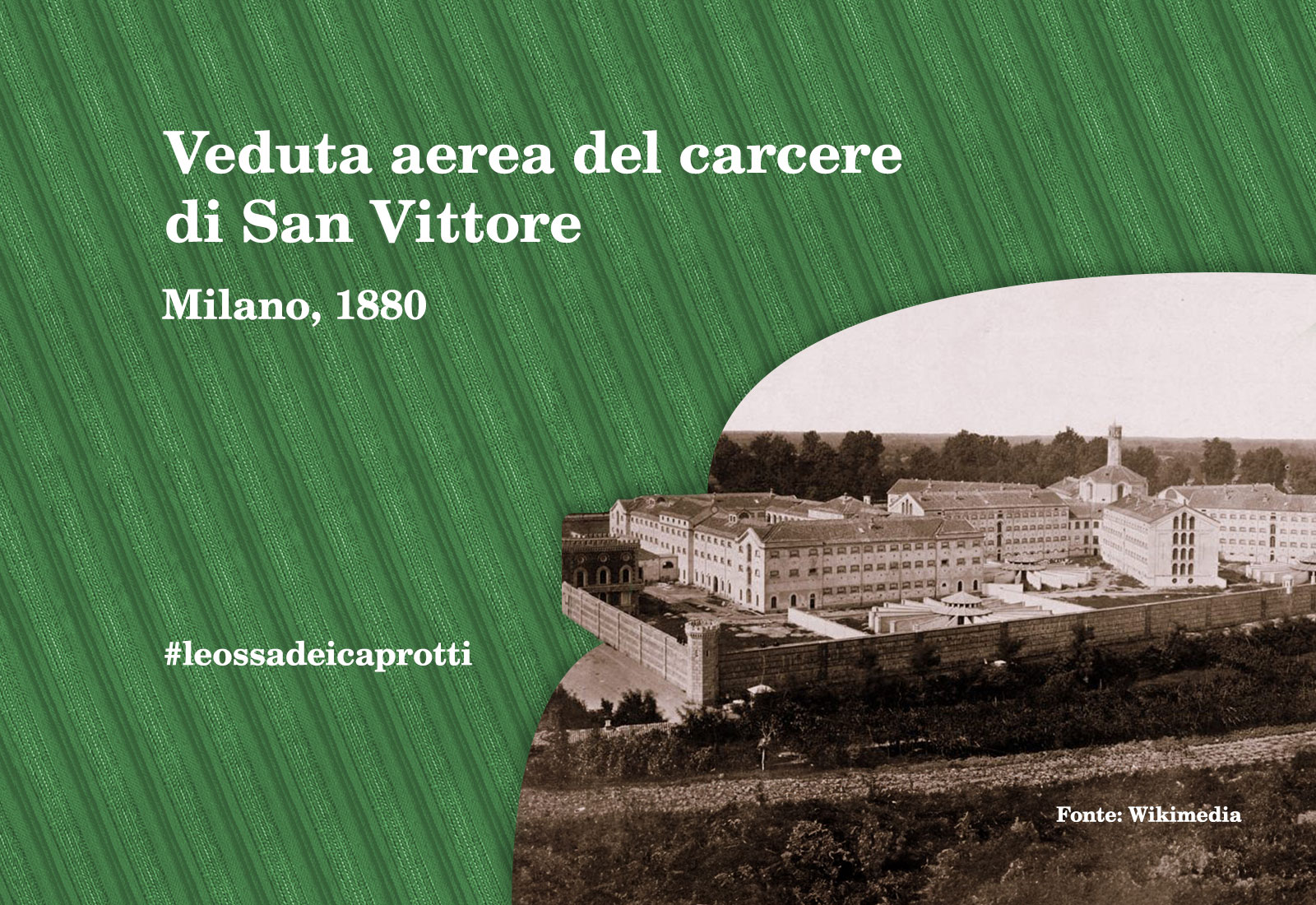
They were probably thinking of a sort of ‘centralised manufacture’, i.e. the looms, instead of being scattered around the countryside among the various peasant families, were brought together in one place, especially as far as the production of the most valuable cloths was concerned, and to this end they purchased various machines from various manufacturers, including the Milanese prison of San Vittore whose director, Eugenio Cicognani, was personally passionate about and invented a newly designed regulator loom, built by the inmates (ROMANO, I Caprotti, pp. 22 and 70 ff.).
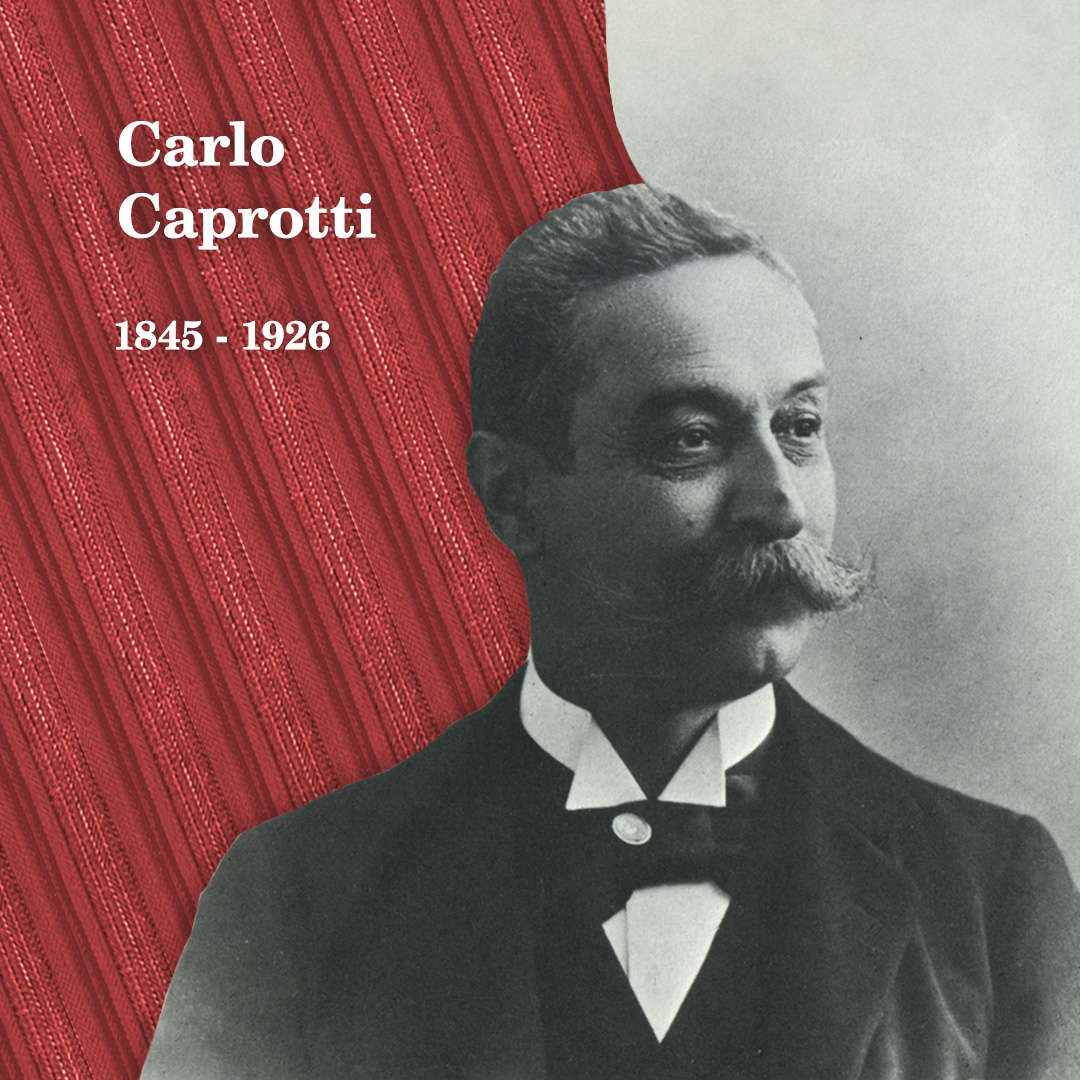
Carlo Caprotti used prison labour several times. Cicognani, for example, wrote to him in January 1868 ‘that he had half-finished 200 regulators waiting for their final baptism: and the baptism consists of a modification that should make them so light that the weaver does not even notice that they are attached to the bar of his loom. (…).
The experiment must have gone well, since a few months later, on 25 March, he informed Caprotti that he had reached an agreement with Leopoldo Henrim of Sestri Levante, one of the first suppliers of the new factory in the mechanisation phase, for the finishing of another 100 regulators to ensure the perfect functioning of the machine he had ordered.
Follow Le Ossa dei Caprotti
on Instagram
on Facebook
on YouTube
on LinkedIn
on X
Sources:
Albiate, Villa San Valerio, San Valerio Archives, Manifattura Caprotti Archive
Bibliography:
R. ROMANO, I Caprotti. L’avventura economica e umana di una dinastia industriale della Brianza, Milan 20082 .
R. GIULIANELLI, Chi non lavora non mangia. Le manifatture nelle carceri italiane fra Otto e Novecento, in Ministero della Giustizia, “Rassegna penitenziaria e criminologica”, no. 3/2008, pp. 83-106.
G. CAPROTTI, Le Ossa dei Caprotti. Una storia italiana, Milano, 2023