Written on 19 June, updated on 11 July 2026
Above: a screenshot of Amazon selling Barilla pasta
And Cristina Lazzati, speaking on the issue of scale in retail, adds : “If we look at retail, the issue of scale becomes even more apparent. The Italian retail sectorhas built solid models, rooted in local areas and capable of enhancing supply chains, but it remains a national retail system.
This is not so much a limitation of Italian retail as a reflection of a Europe that still struggles to produce truly pan-European operators. Whilst supply chains are indeed increasingly integrated, the commercial landscape remains fragmented. This reduces the ability to fully capitalise on production quality, even in international markets.”
In future, the company plans to expand international shipping to further markets”.
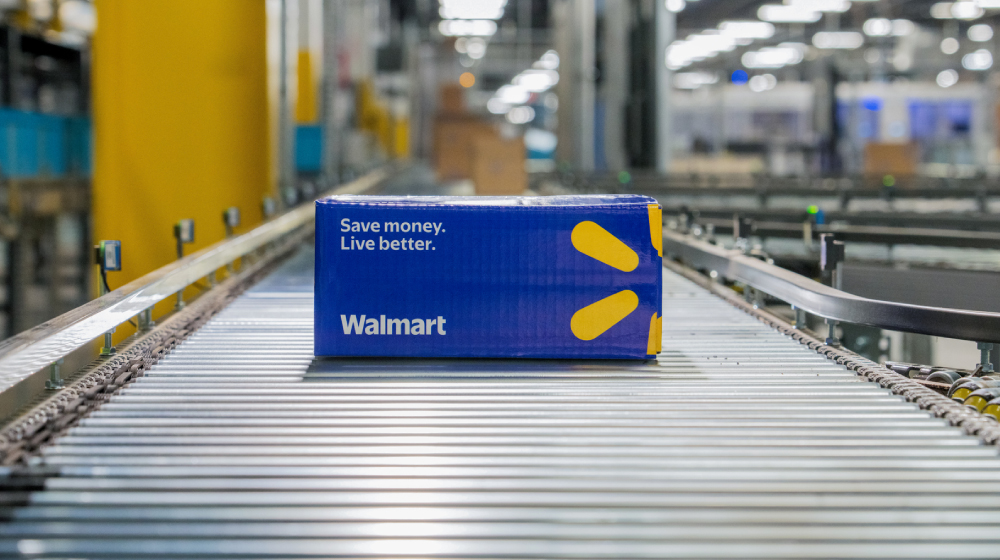
hidden between the lines is this piece of news: “Kaufland also recorded a positive performance, with revenue rising by 4.3% to 36.7 billion euros. The retailer has consolidated its presence in Germany and Eastern European markets, whilst continuing to expand its online marketplace, which is now operational in seven European countries, including Italy and France”..
It is certainly worth noting that the European retail sector is weak compared to the major Chinese e-commerce giants: compared to Shein – which, for example, had a turnover of $38 billion in 2024 – only Zara (€39.9 billion turnover in 2025) is managing to hold its own in the clothing sector.
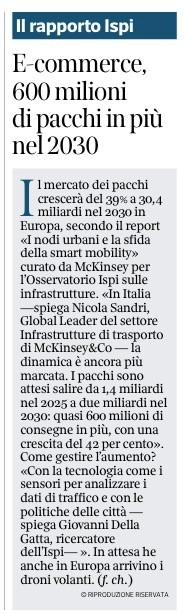
But the real threat to Europe, which is inundated with parcels of Chinese goods, appears to be Temu.
Here’s what one supplier has to say on LinkedIn
“We’ve been Amazon vendors for 14 years, but in March we decided to ride the Temu wave in Italy, and since 1 July we’ve been on (almost) all European marketplaces.
It’s making a big impact; at the moment, it’s the only platform capable of competing with Amazon. And, above all, the service is impressive.
We have two WhatsApp groups: one with five Temu staff who sort out our issues within a few hours, and one with the category manager who supports us with everything.
For anyone familiar with Amazon’s customer support, it’s a whole different world. For me, the impact has been entirely positive.”
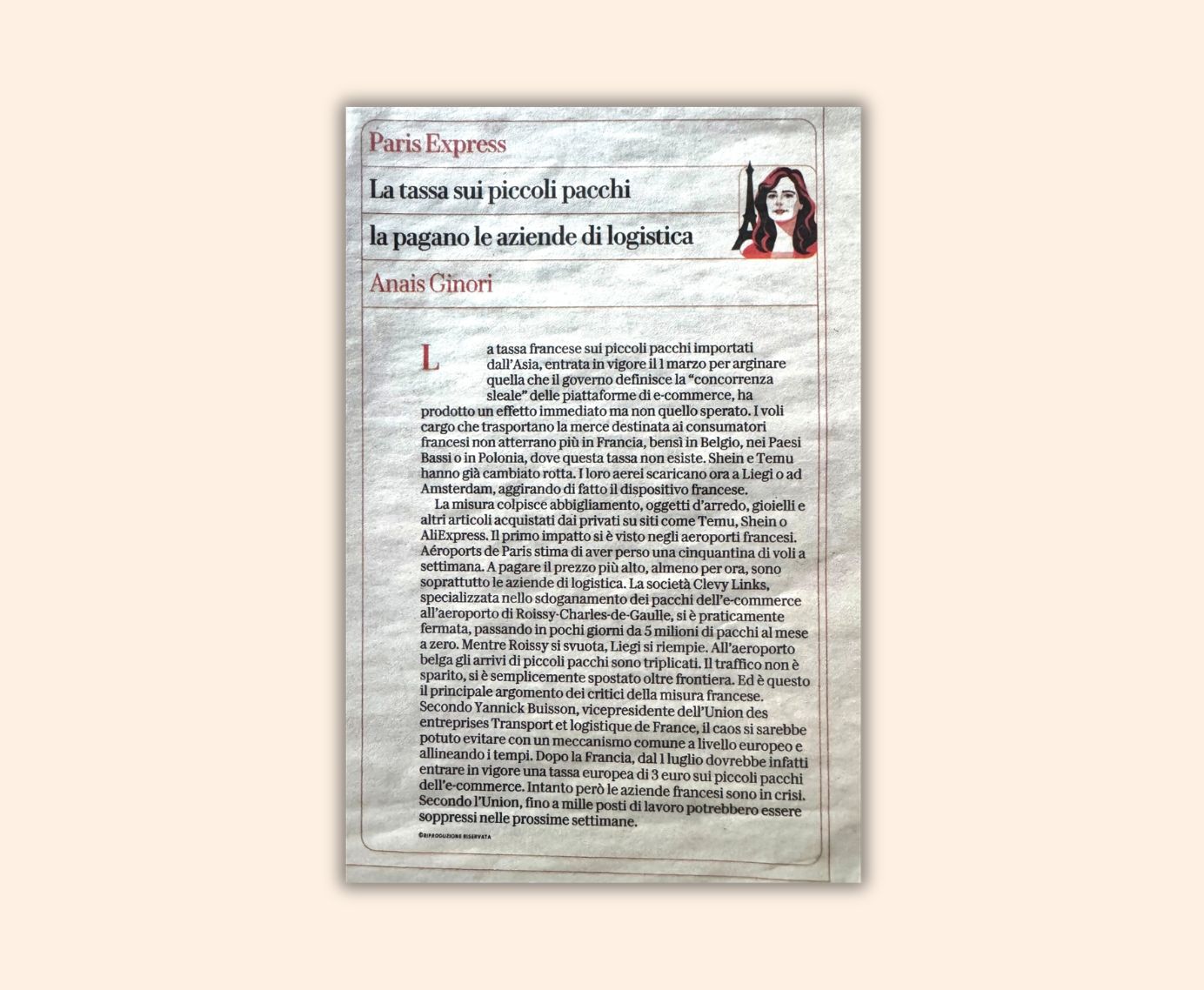
The other issue is the lack of coordination amongst European governments and the confusion across the various countries.
Let us conclude by quoting Cristina Lazzati, mentioned at the beginning:
…“A supply chain within the geopolitical landscape”
What emerged in Bormio suggests that the food sector is shifting its position within the economy. It is no longer merely a significant productive sector; it has now become a component that intersects with security, industrial policy, infrastructure and international trade. For businesses and the distribution sector, this means operating in a more complex environment, where the variables to be managed are increasing and becoming increasingly intertwined. For institutions, it means defining priorities and tools more clearly, avoiding treating the agri-food sector as just another sector, because (and this is increasingly evident) it is not.”
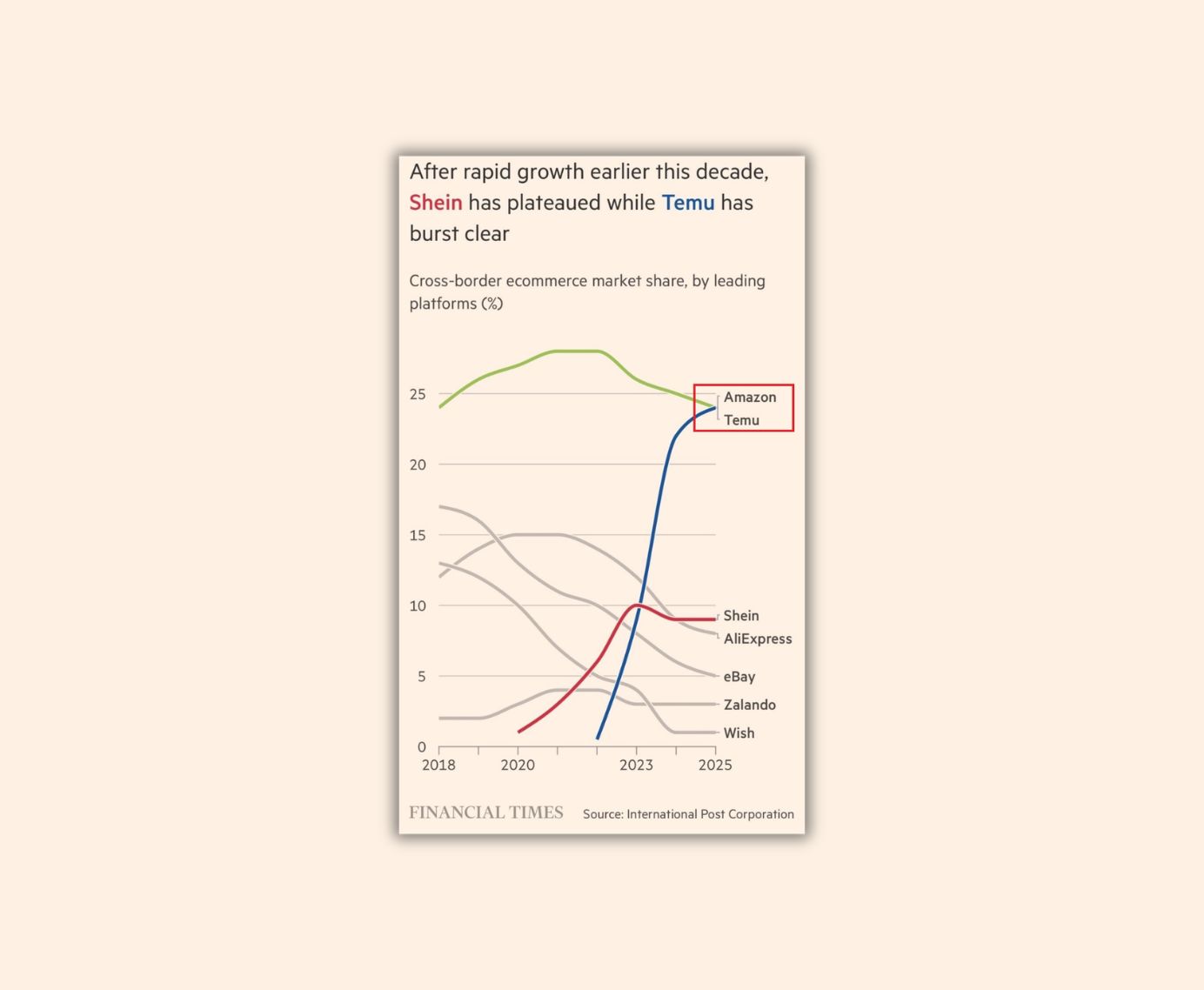
Below is a piece of information that should be of interest to Italian food producers: according to a survey by the International Post Corporation, an association of 26 national postal services, Temu accounted for almost a quarter of the global cross-border e-commerce market last year, on a par with the US giant Amazon.
Shein accounted for 9 per cent.
And so we return to the Barilla sauce on the cover: in the United States, a fifth of food shopping is now done online. What does the Italian large-scale retail sector intend to do? Does it want to grow, or cede ground to the Chinese, Germans and Americans? It cannot come of age in an economy where it does not control the infrastructure. That supply chain runs through platforms governed by giants that are neither Italian nor European.
And on closer inspection, you realise the question has become rhetorical:
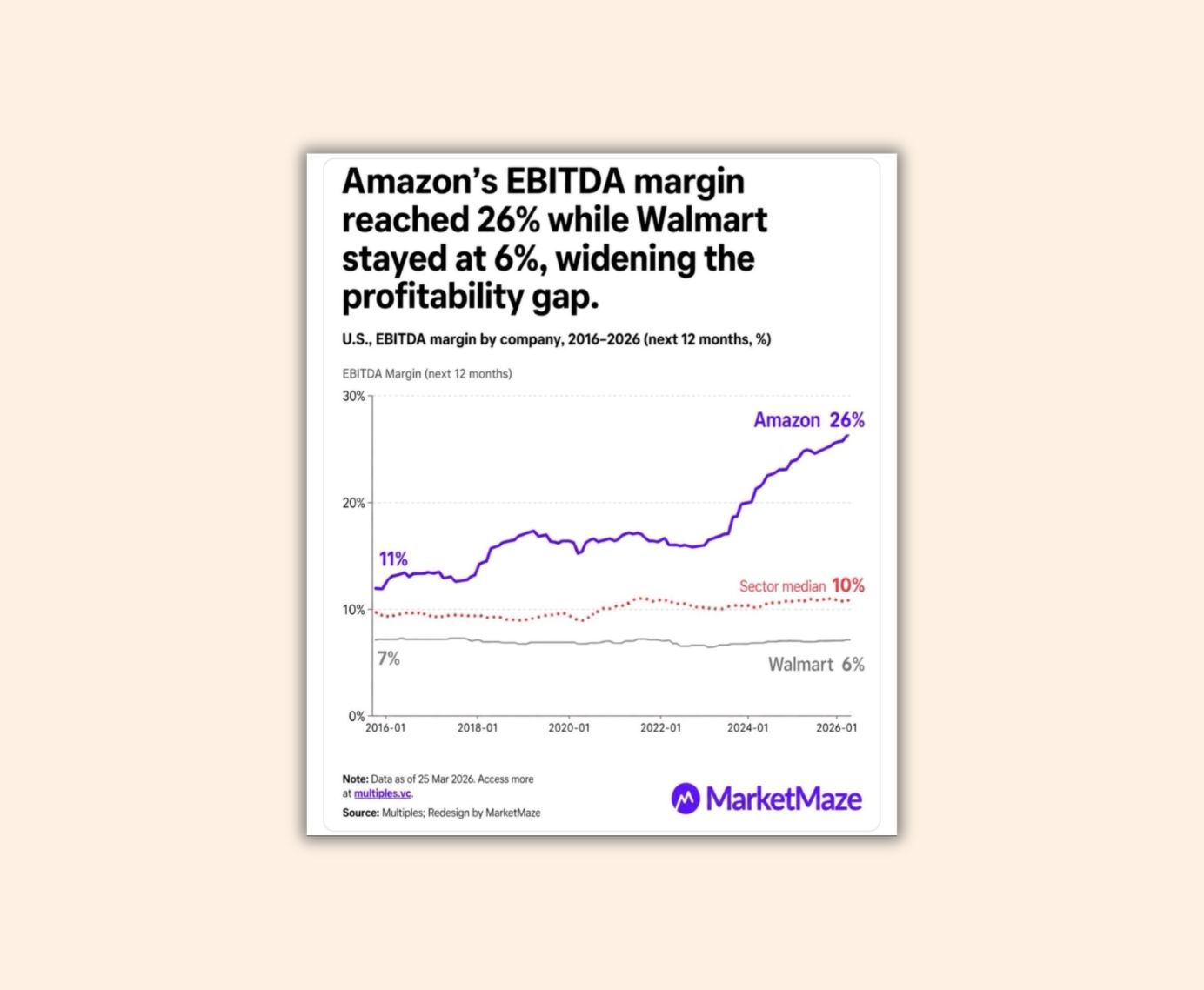
Amazon and Walmart’s EBITDA (MOL) compared: the e-commerce giants – American, but also German and Chinese – have boundless resources because they have diversified their business, not limiting themselves to retail. Instead, they have also focused on advertising, subscriptions, AI, cloud computing, logistics and data centres.
Mario Sassi sums up my thoughts perfectly: Amazon is not a retailer. It is an infrastructure. And that difference explains everything (although you can find the latest figures on Lidl here).