Drafted 28 June 2024, updated 15 April 2025
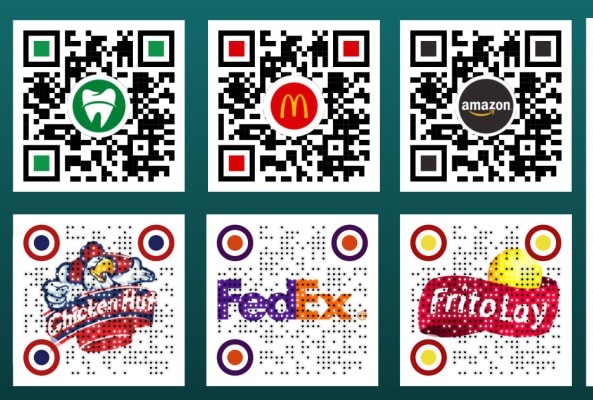
Barcode, 22 multinationals will replace it with the GS1 standard QR code
by Caterina Maconi
The transition, which they would like to see as a forerunner, will take place by the end of 2027. From nutrition information to sustainability information: what’s new in the tool
Next-generation2D codes that can hold a wealth of product information and make it easily accessible via smartphones. Twenty-two FMCG multinationals have signed a joint declaration calling for retailers and manufacturers to adopt GS1 standard QR codes instead of traditional barcodes by December 2027. Unlike the latter, QR codes can link consumers to a wealth of technical details about the reference they are buying, such as instructions for use and recycling, safety claims, nutritional information and certifications. They could then improve traceability and promote efficiency through the supply chain, while enabling scanning at the checkout.
The proposal comes exactly 50 years after 26 June 1974, the day the barcode first passed through the till of a supermarket in Troy, Ohio, on the packet of Wrigley’s juicy fruit-flavoured chewing gum. From Barilla to L’Oréal, from Mondelez to Nestlé, from 7-Eleven to Carrefour, and then Lidl, Metro, Migros up to Alibaba.com, the companies committed to the QR code project – together they have a market value of more than 1.5 trillion dollars and operate in 160 countries – will have to evaluate technology and internal processes to exploit the potential of the new codes, add more detailed product information, even in a phased manner to allow for planned changes. A coordinated effort between manufacturers and retailers will also be needed: manufacturers will have to start implementing the GS1 standard QR codes on their product packaging, while retailers will have to ensure that checkout scanners in their shops are equipped to read them.
In Italy, there are more than 350,000 consumer packaged goods with GS1 barcodes, which are passed 32.4 billion times a year at checkouts in supermarkets, hypermarkets and self-service outlets for a total of 2.7 billion receipts issued. By moving to a new standard, stakeholders hope to encourage more informed and smarter choices, being able to overcome – to give information – the limitation of space available on product packaging, improving the consumer experience by linking it to additional information on the web, such as video tutorials, usage tips, recipes. It would, they say, be a vehicle to better communicate sustainability, i.e. the origin of a product, its components, carbon footprint and information on recycling or reuse of packaging. And to give regulatory information, advice on allergies and expiry dates, allowing expired food to be rejected at the checkout and those close to expiry to be sold at reduced prices, thus reducing food waste.
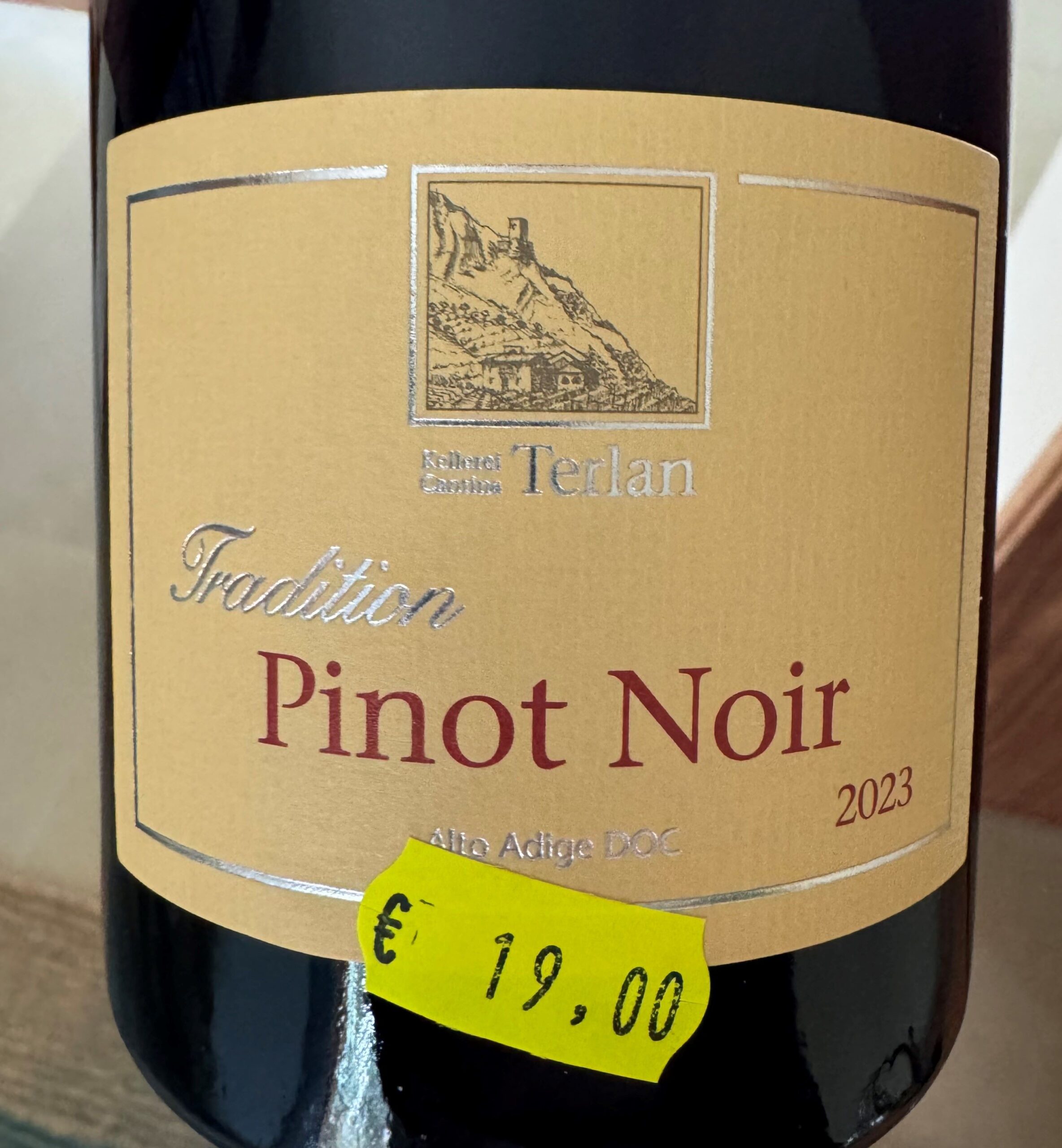
There is a part of the country that is still before the bar code, this bottle, which I bought recently in Tuscany, is priced as I did at Carrefour, in 1979, well before I joined Esselunga.
If European standards were to be adopted, its adoption could make it possible to by-pass most food labelling issues.
Italy definitely needs a technological push to close the gap created in recent years vis-à-vis the United States but especially China.
And there are those who point out that smart labels would also exist.
Below is China ‘s decision on food labelling.
China introduces new rules for food safety and product labelling
China has introduced 50 new national food safety standards and nine amendments, strengthening transparency and consumer protection. Among the main changes are clearer labelling rules: expiry dates will now have to be expressed in an intuitive format, such as ‘Best before: 31 December 2025’, avoiding complicated calculations.
In addition, a digital labelling system has been introduced which, by means of QR codes, provides access to additional product information, improving accessibility also for the elderly. Labels will have to prominently indicate the presence of eight main allergens, such as milk, eggs and peanuts.
Also important is the extension of the nutrition requirement to the new ‘1 6’ format, which includes saturated fat and total sugars. Labels will also have to warn of the risks of excessive salt, sugar and fat, especially for children and adolescents. Finally, terms such as ‘no additives’, which are considered misleading, will be banned.
On the adoption of the QR code in Italy, for wine read here.