Drafted 6 April 2024, updated 20 February 2025 . Above: 2022 cover
In third place, again according to Gfk, would be Coop, while in fourth place would be Gruppo VéGé…
the Managing Director of Selex Maniele Tasca, interviewed in recent days by Alimentando, had stated on this subject:
“More than being a leader, we are interested in facing 2024 in the best possible way. And unfortunately the forecasts for the current year are not positive, so we are focused first of all on how to cope with the critical issues of the period‘.
The market share of these consortia is important, but Maniele Tasca is right: the weight of the brands counts for big brand contracts and private labels. And the market share of discounters has risen from 18.9% in 2019 to 23% in 2023(Source).
The biggest challenge is not to be first or second in terms of retail market share, but to contain the discounters and defend margins in the face of a less than brilliant economic situation.
The discounters in recent years have been more adept at providing adequate responses to consumer pockets emptied by inflation and have been more profitable and have seen their volumes resume growth (2.4% in 2024).
In the traditional large-scale retail sector, on the other hand, while the sales of the large-scale retail chains increased by 20.4% between 2019 and 2022, with an average annual rate of 6.4%, the ebit margin (an indicator of core business and profitability in relation to turnover) in the last year considered fell to 1.9% from 2.2% in 2021, after peaking in 2020 (2.6%).
Concerning the ” Coop galaxy”: the Coop system’s shareholder loans show a further decrease from 8 billion in 2019 to 7.7 billion in 2022(Source).
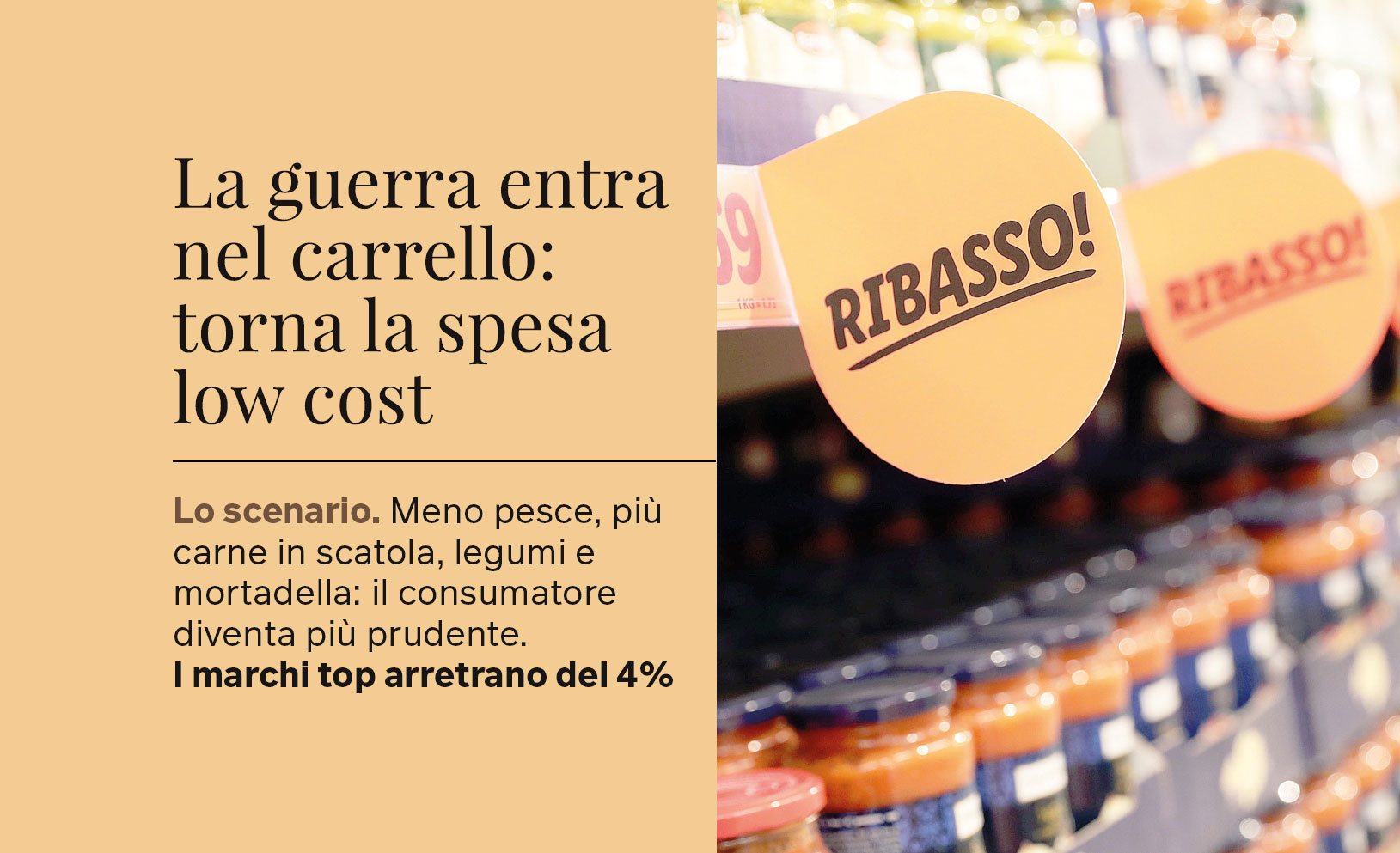
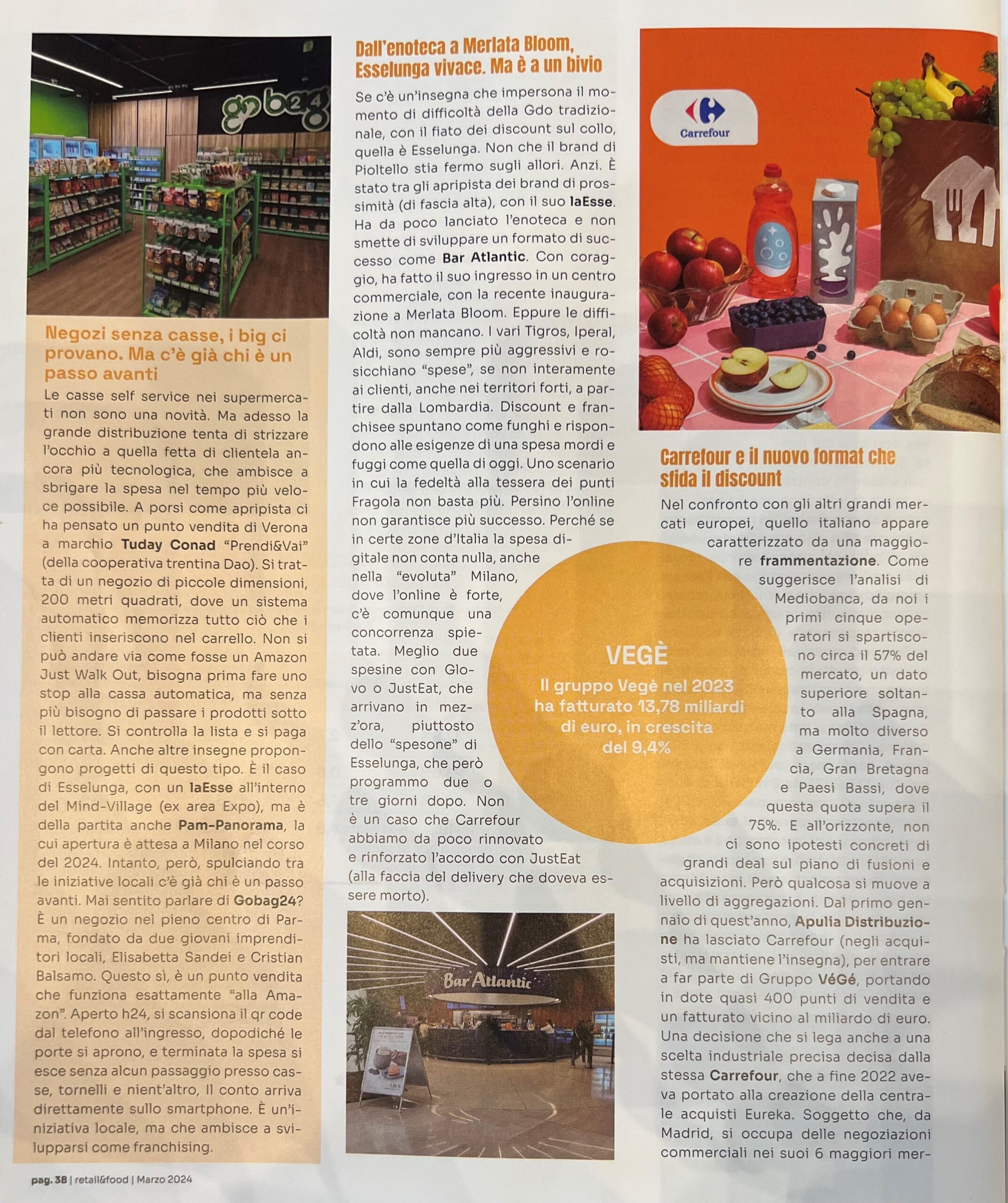
In reality, the situation is even more complex and is well described in ‘In the shopping trolley the battle is over price. Retail chains in the doldrums’, which, for now, can only be found in the print edition of Retail & Food of March 2024. Below you will find an excerpt.
I had already written about it in part in : Aldi takes over Bennet in Viale Monza in Milan: what does it mean?
But Adriano Lovera of Retail & Food completes the picture :
“The various Tigros, Iperal, Aldi, are becoming more and more aggressive and nibbling away at ‘expenses’ if not entirely from customers, even in strong territories, starting with Lombardy.
Discount stores and franchisees are popping up like mushrooms and responding to the needs of today’s hit-and-run shopping . A scenario in which the strawberry card [Fidaty] is no longer enough. even online no longer guarantees success.
Because if in certain areas of Italy digital shopping counts for nothing, even in the ‘evolved’ Milan, where online is strong, there is still ruthless competition. better two spesesine with Glovo and JustEat, which arrive in half an hour, rather than the Esselunga ‘spesone’, which I schedule two days later.
It is no coincidence that Carrefour has recently renewed and strengthened its agreement with JustEat (so much for delivery being dead)…’.
Obviously this is not a simple picture, where volumes have been falling for the past three years and where, in the large-scale retail sector, only private labels are growing, with a 31.5% share of the sales of the various brands (discount stores excluded), but where medium-sized companies, more agile and flexible, seem to be able to excel (and GDOWeek seems to confirm this opinion of ours).
So much for first or second place in the consortia ranking!
Read also ‘Conad and Selex in comparison (2024)’, where I conclude that comparing them makes no sense.
The comparison is fine for conferences and LinkedIN posts, but then there is the reality of the companies, which are not national, but small and local.