Love for homes also changes
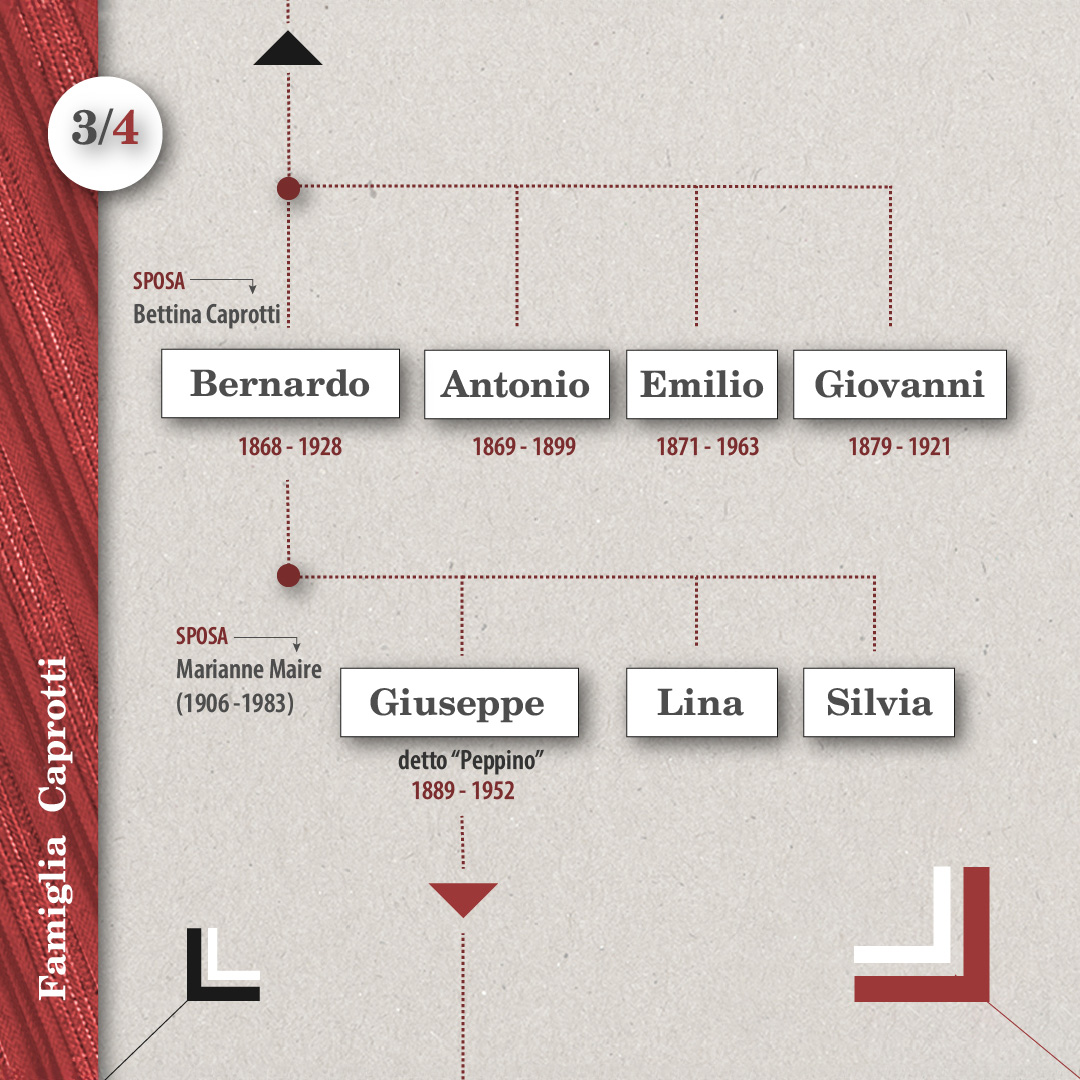
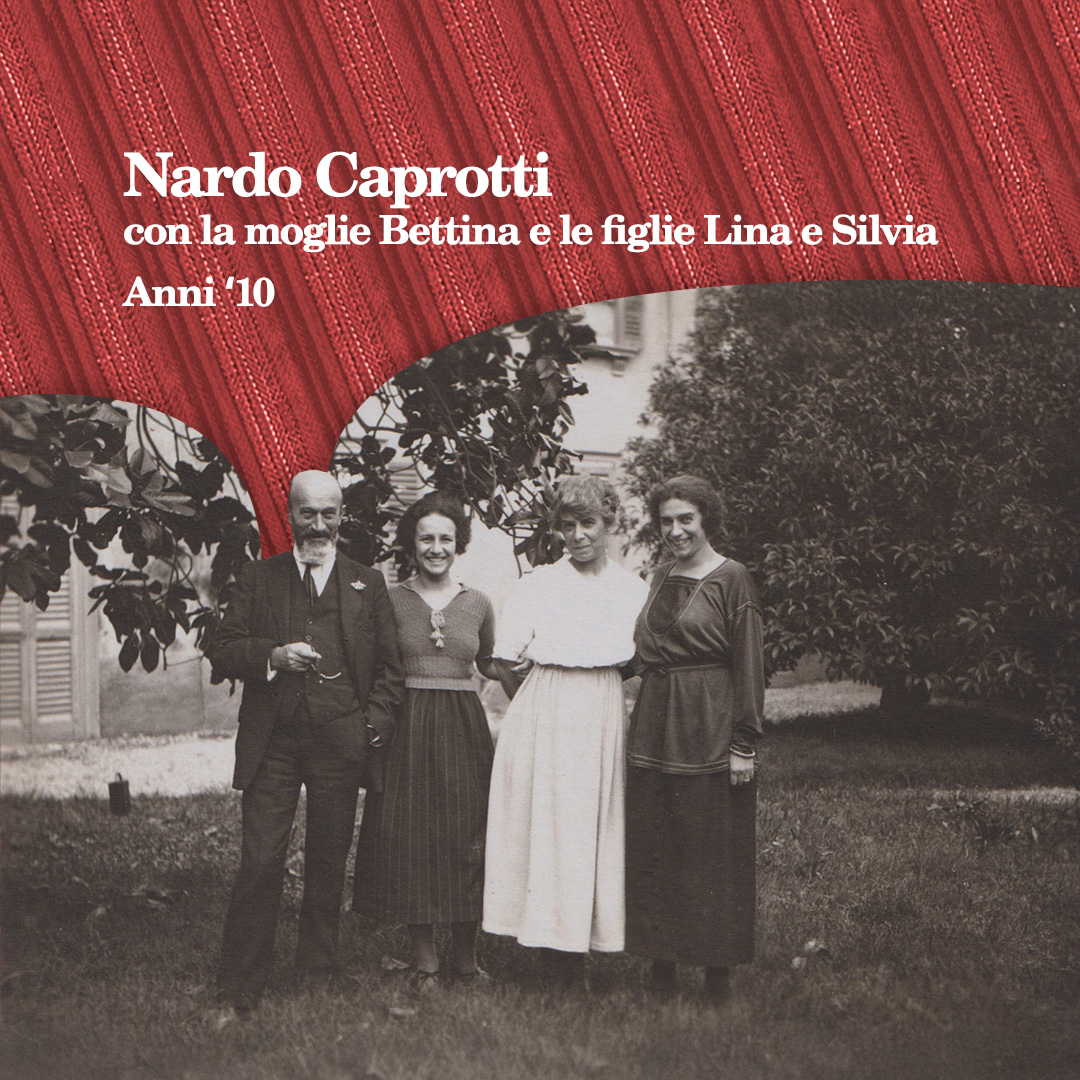
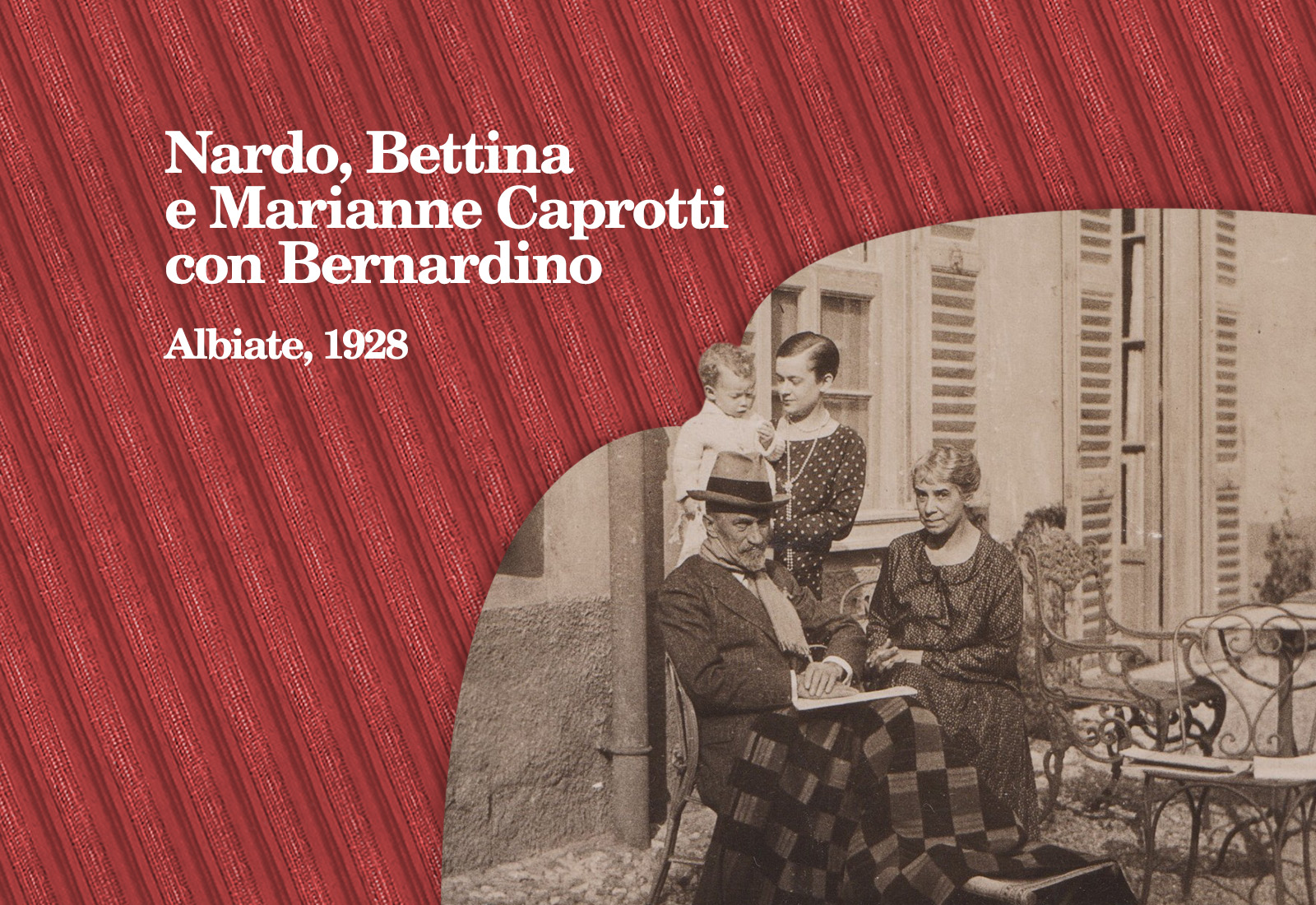
Houses have always been a living, breathing organism, especially if lived in continuously and felt as authentic ‘domus’, an extension of the family identity; they grow and change, just as their inhabitants grow and change. The family photographs show the many changes: the young magnolia tree that can be seen beside great-grandfather Nardo and his family is now a large and splendid plant that offers flowers and perfumes; the space in front of the entrance has remained the same, except that there are benches instead of the small iron tables where great-grandfather Nardo sits with his wife Bettina and his very young daughter-in-law, grandmother Marianne, who holds her first-born son Bernardino [as he was called by his friends, and also by my mother, my father Bernardo ]. In that house, which was and is a beloved home, much of the family history passed, and continues to do so.
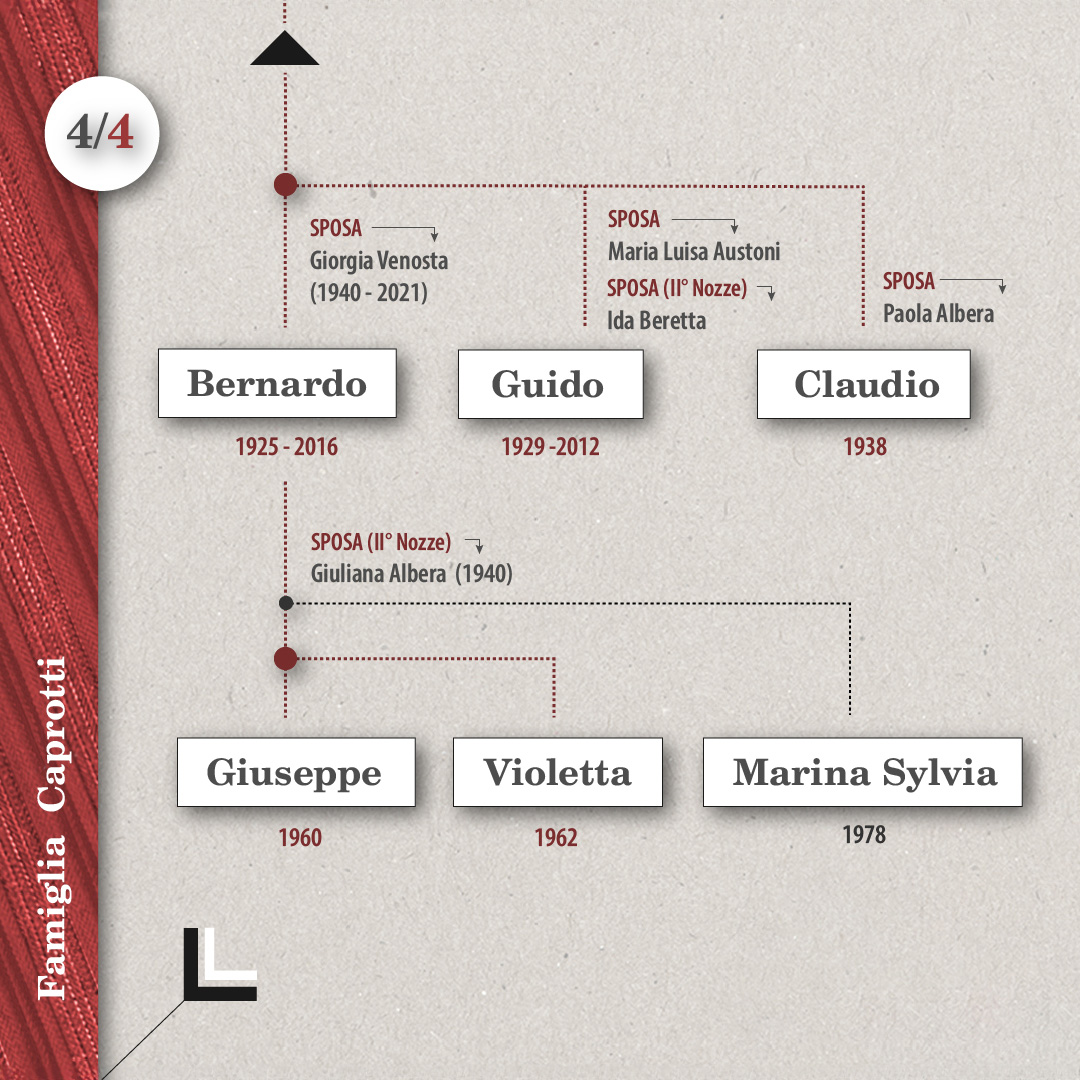
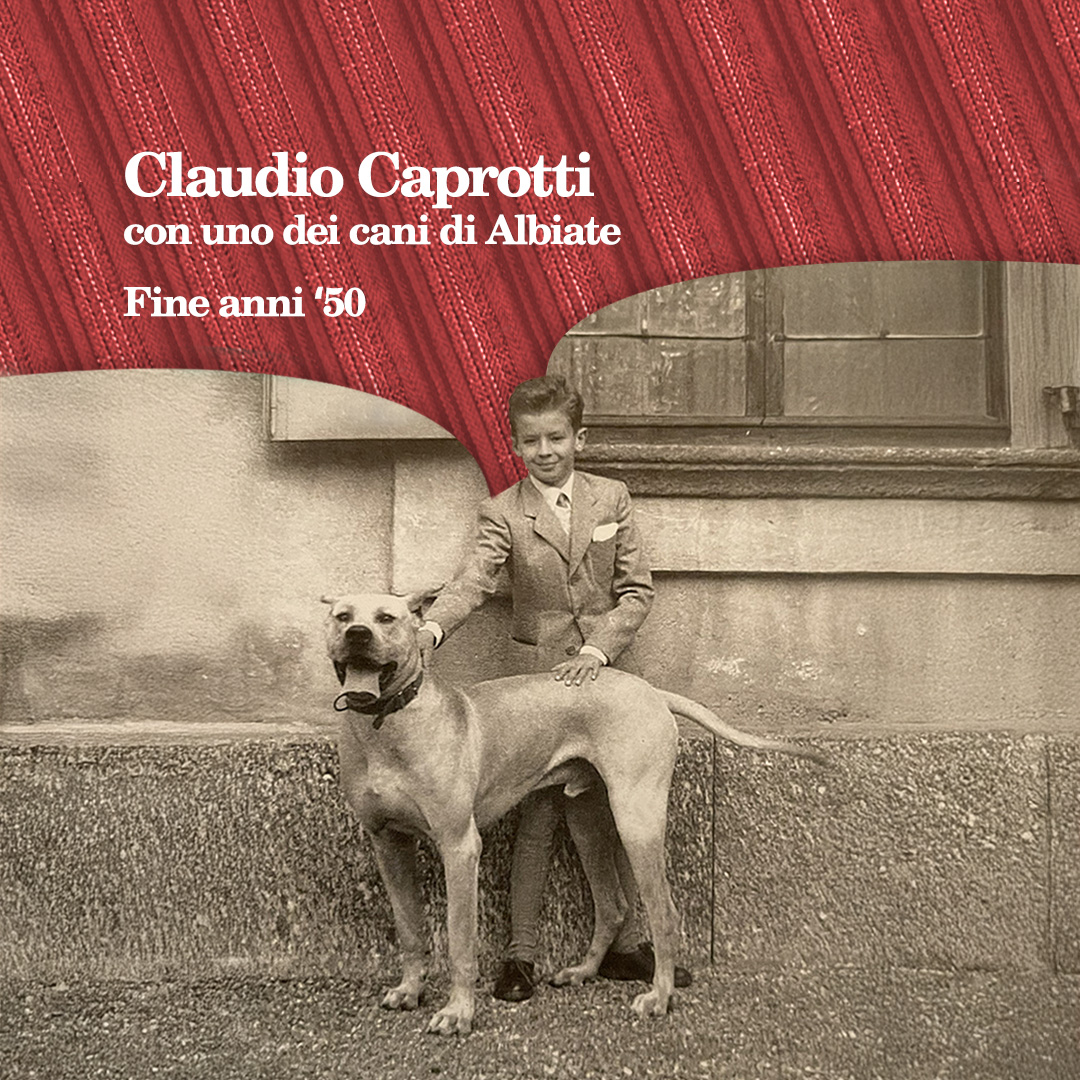
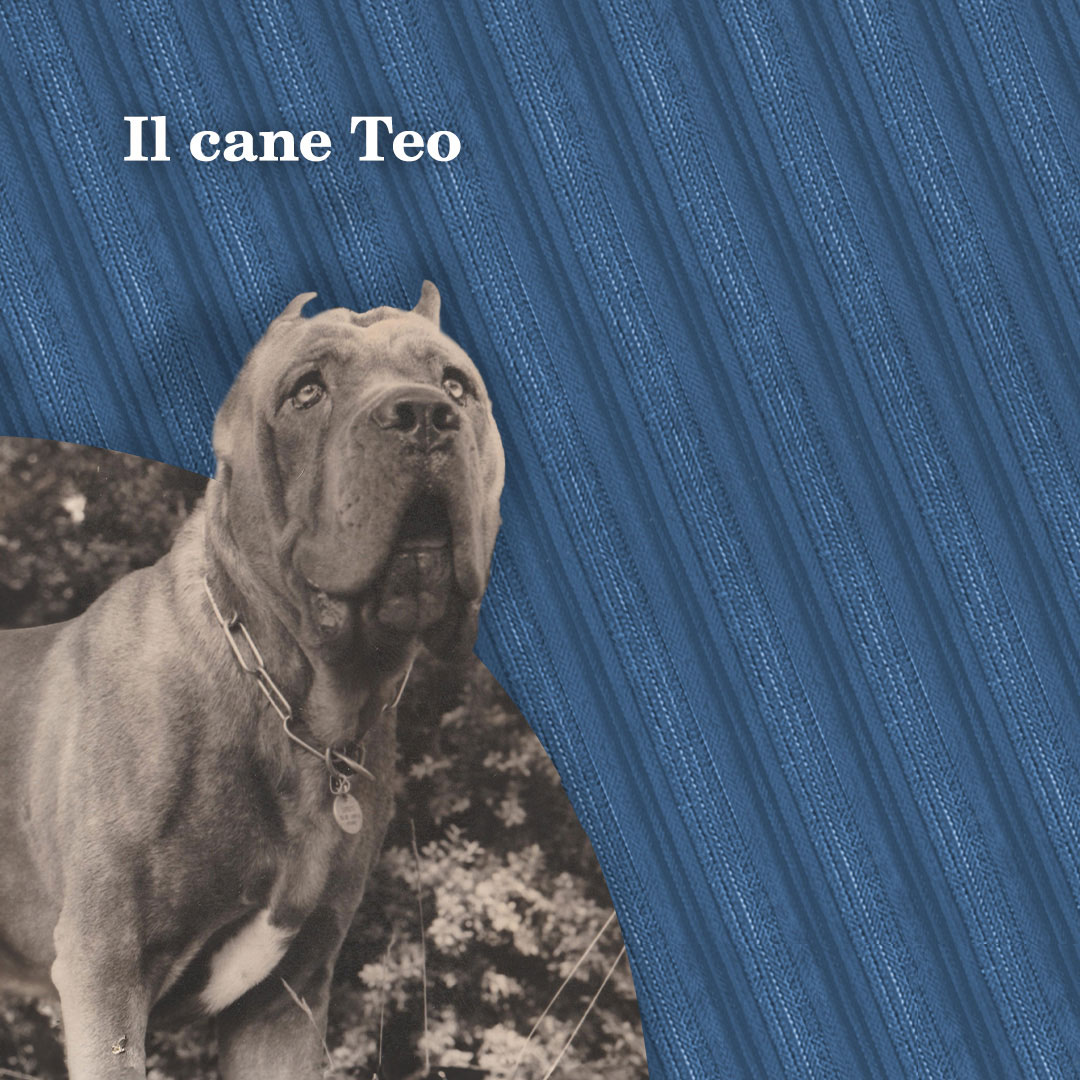
There arethe animals, the farm animals and the hunting dogs – all hunters in the family, right down to my father Bernardo and Uncle Guido -, sometimes as big as the one that young Uncle Claudio poses for the photo not without a certain hesitancy; we lived there, with the animals, they were an integral part of everyone’s life. I lived with the family’s Great Danes; the dog Teo, in Via del Lauro, was named after one of them.
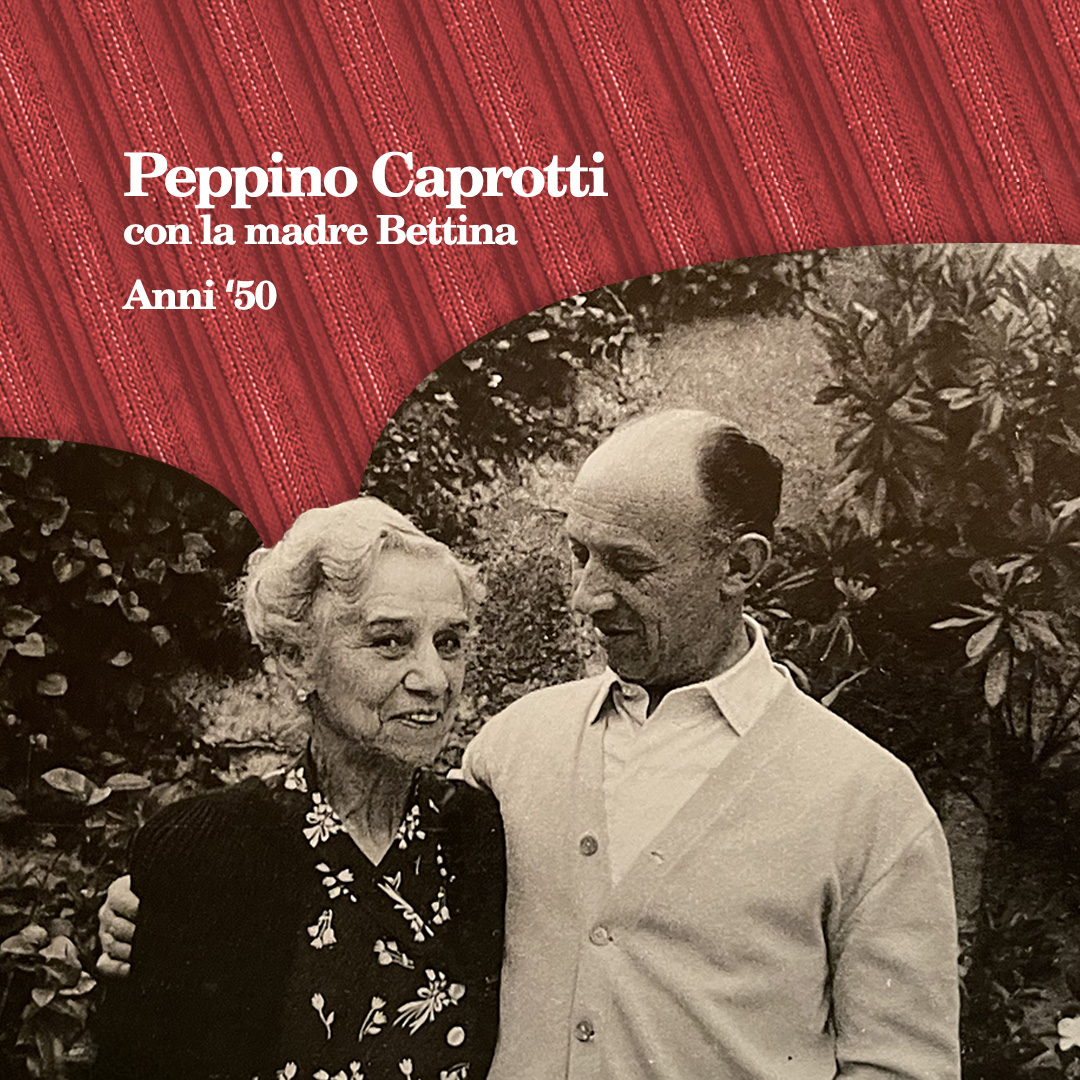
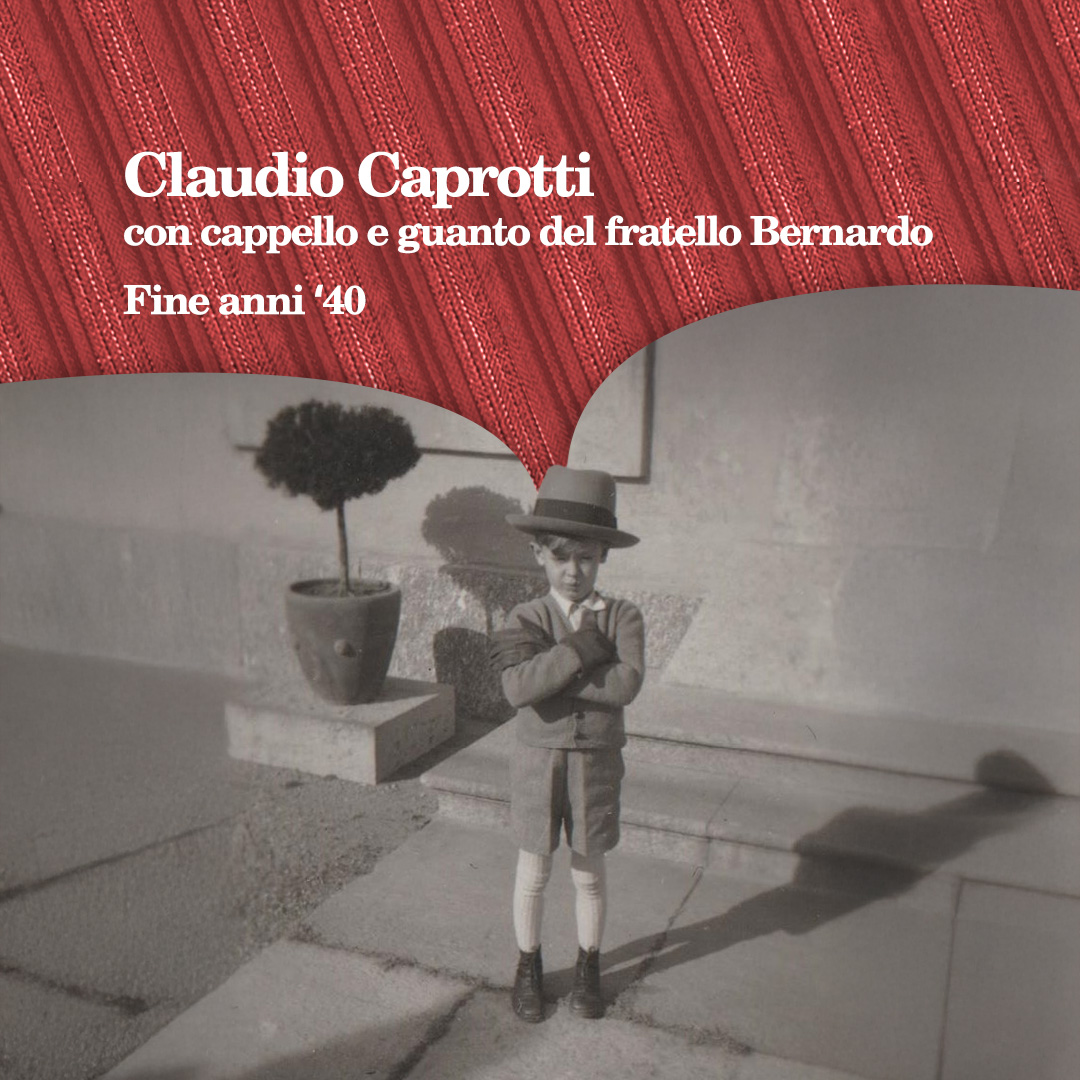
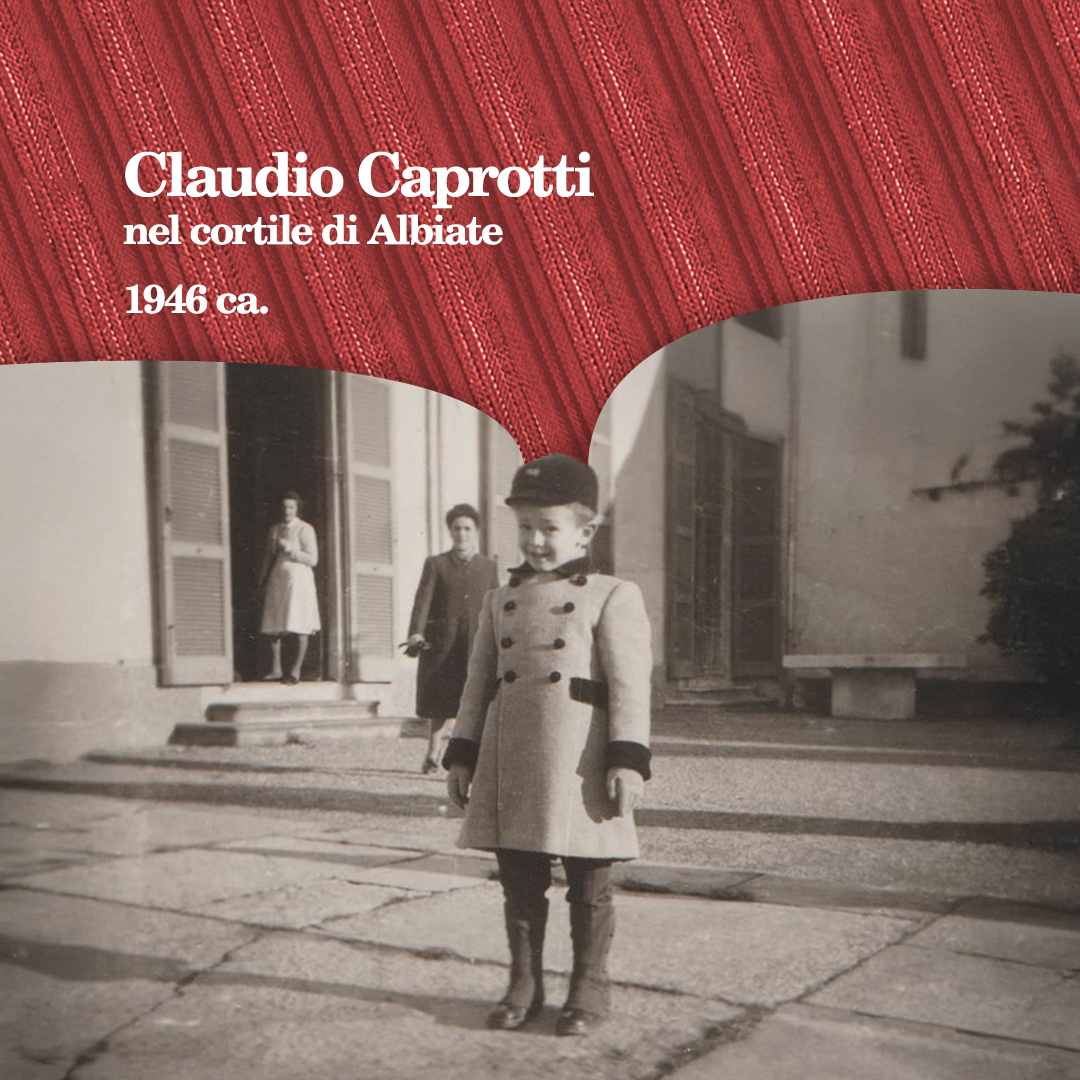
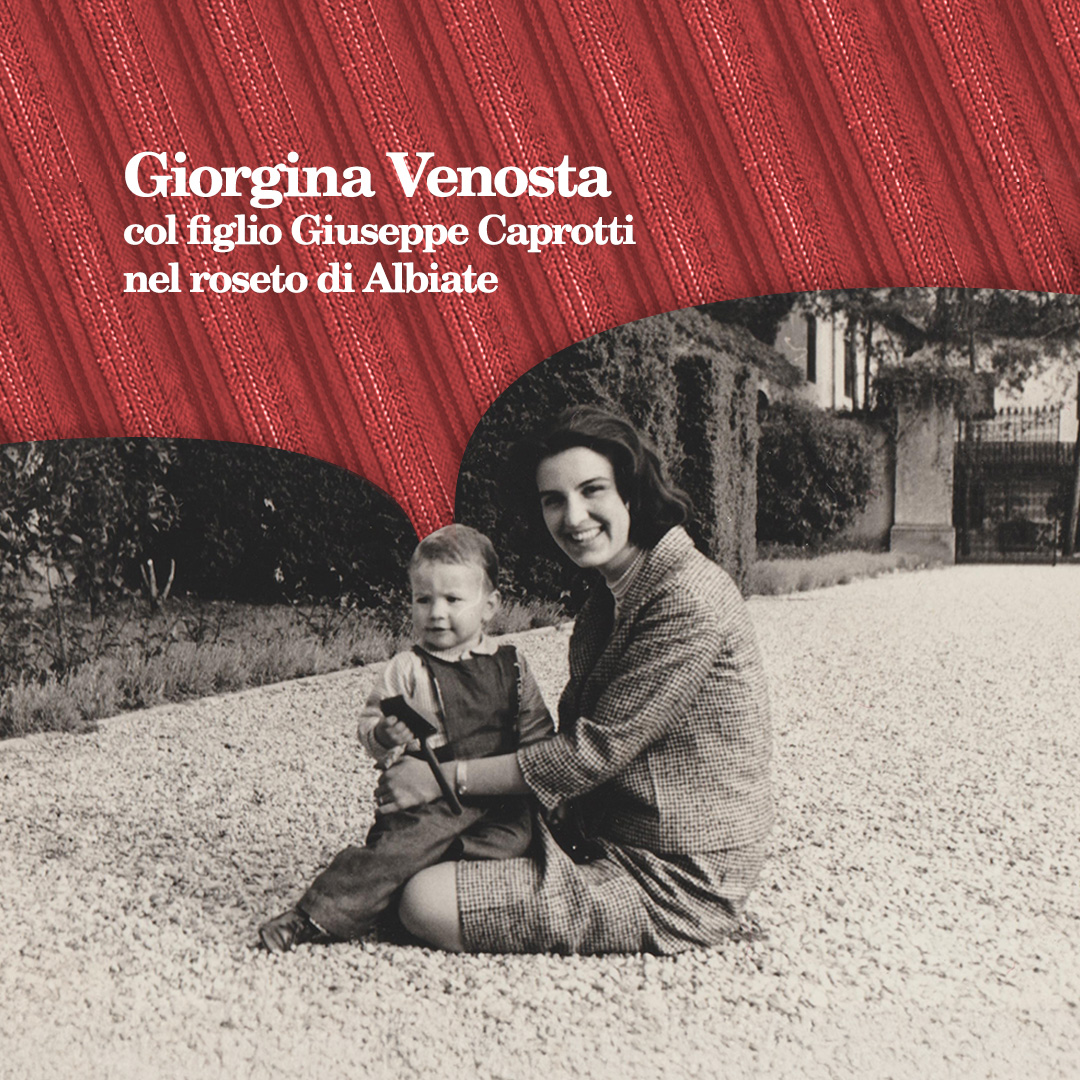
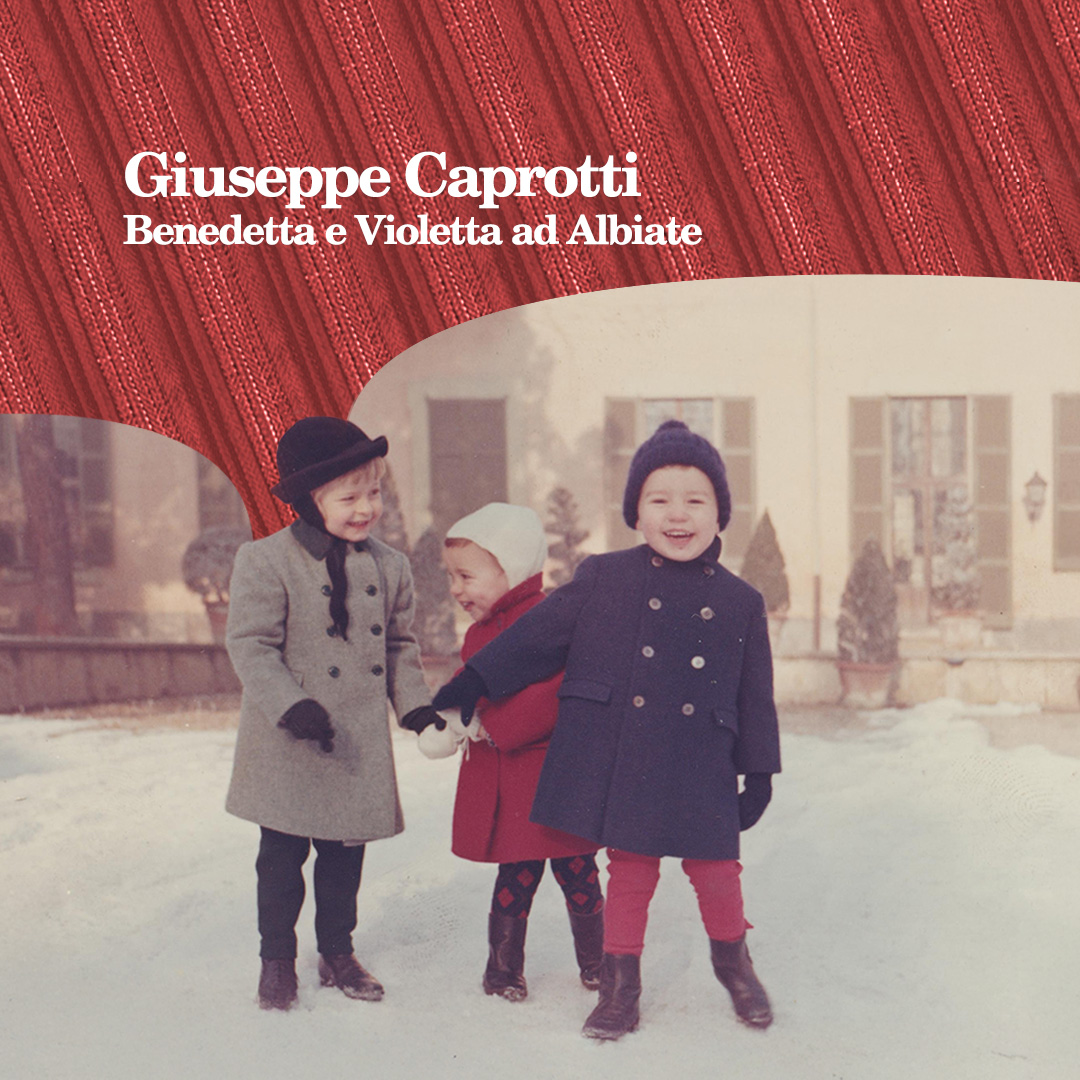
There are the affections, many photos in the park and in the courtyards with parents, grandparents, nannies and family members hugging each other or following the children’s games with affectionate attention, grandfather Peppino holding his now elderly mother, great-grandmother Bettina, little Uncle Claudio who ‘gets serious’ with the hat and gloves of his now over-twenty-year-old first-born brother, wonderful memories like that of the beautiful, young mother Giorgina holding me tightly crouched on the gravel of the rose garden, or the winter padded rides with Uncle Guido’s cousins.
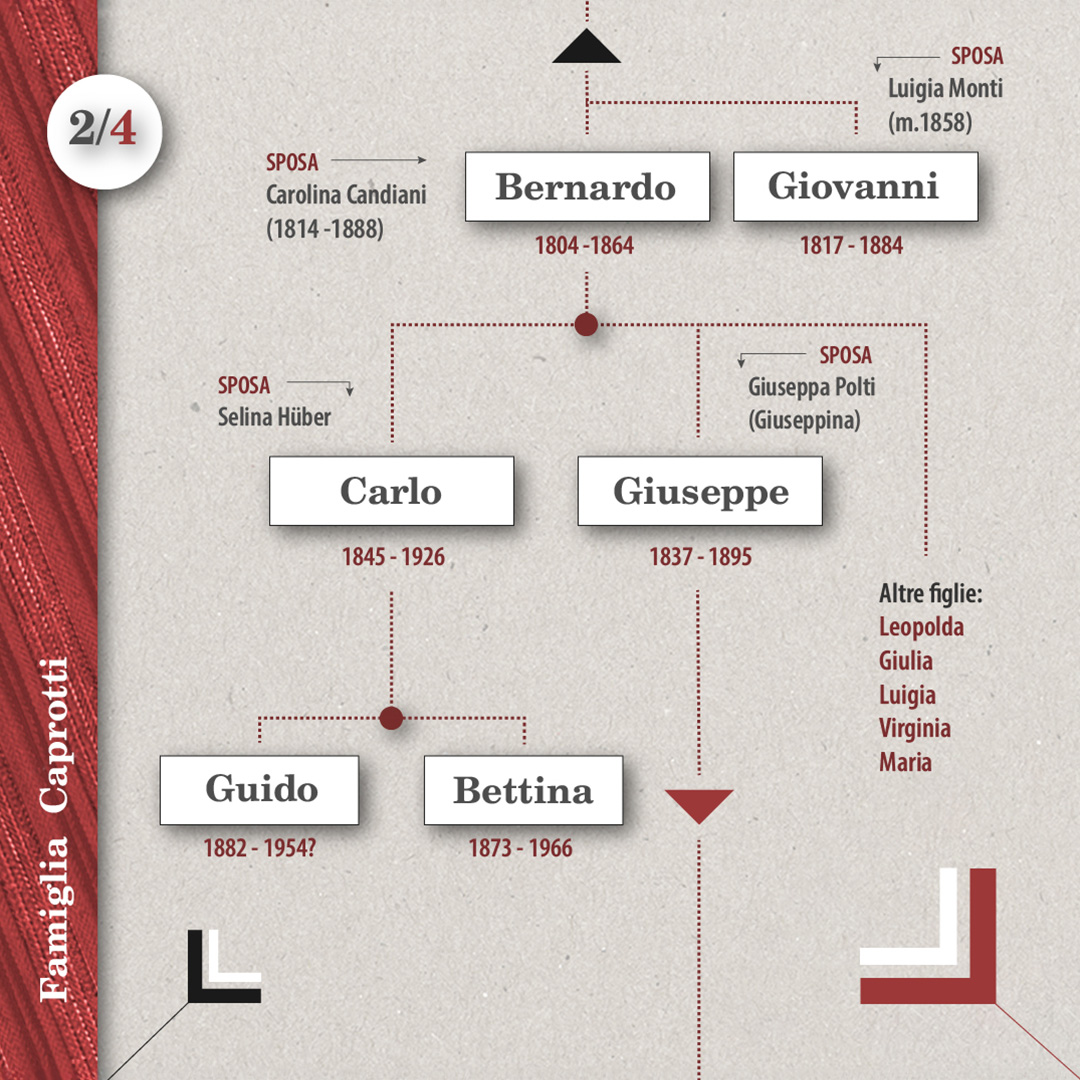
Times also change. The first Bernardo (1804- 1864), the mid-19th century founder of the textile factory [ not to be confused with Nardo, my great-grandfather. He is the one who supported Garibaldi ] which made the Caprotti fortune for over a hundred years, wrote in the first half of the century to an unknown gentleman, the father of a young girl whom his son Beppo Cap rotti was determined to marry, opposing the marriage project not only because of the boy’s young age, but also and perhaps above all because the girl was a citizen, ‘and perhaps does not know country life except for the time she spends there as a holiday, but that is quite different from the life of those who live there constantly (…). Add that here there is no company, no society, no entertainment, no distractions, and the only occupation is the care of one’s own affairs, the only distraction is the family, and that the long winter evenings can be unbearable for those who are not used to them (…)’. It can be said that almost all the Caprottis took their ancestor’s words literally, having business as their ‘only occupation’, but the evolution of the times and a fixed point in Milan – rented flats first, the house in Viale Tunisia first and then in Via del Lauro -, as well as the advent of more powerful and capillary transport and then of the telephone and television have changed the prospects of socialisation a great deal, helping the ancestral home to be continuously lived in.
Getting around the villa and its surroundings: ancient and modern means of transport
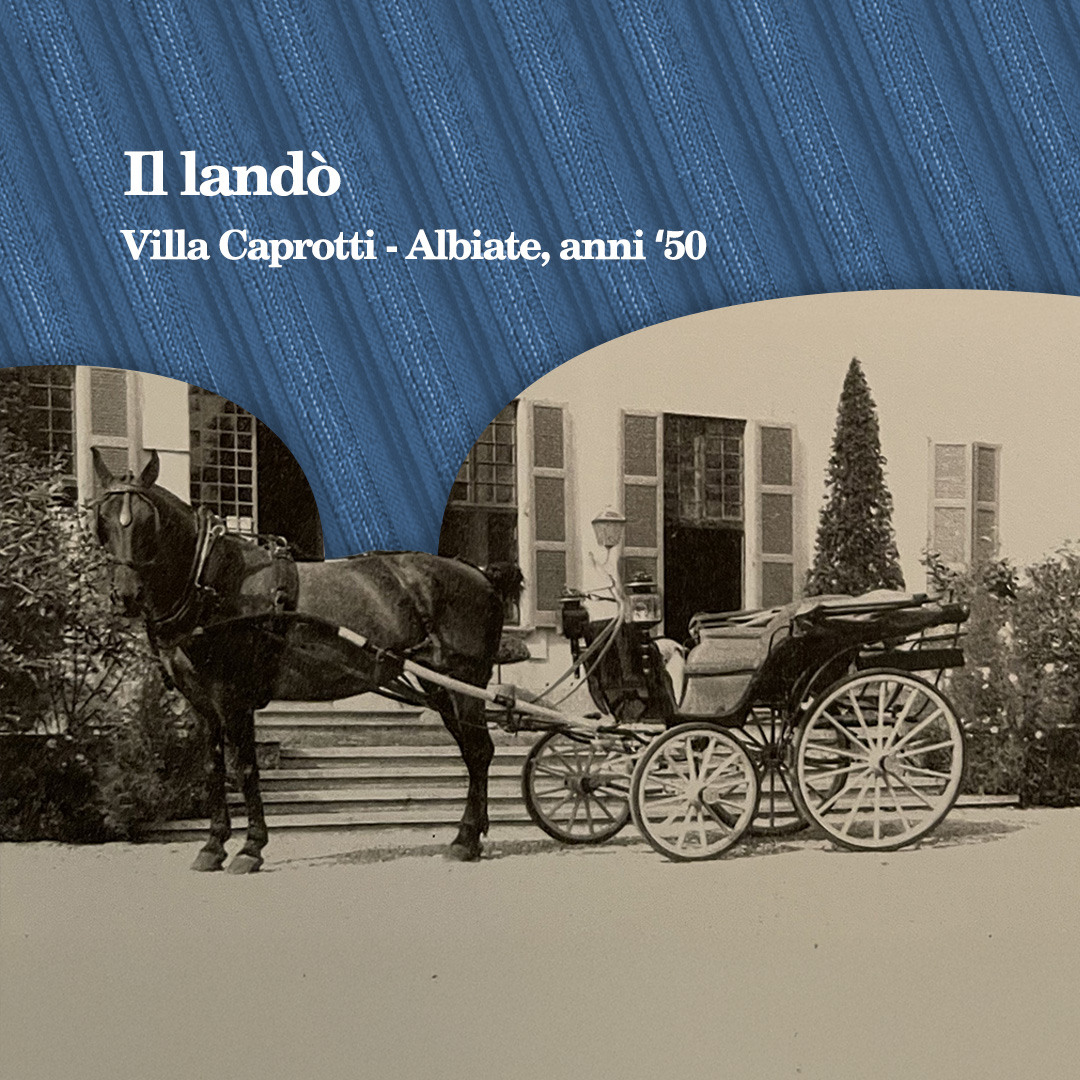
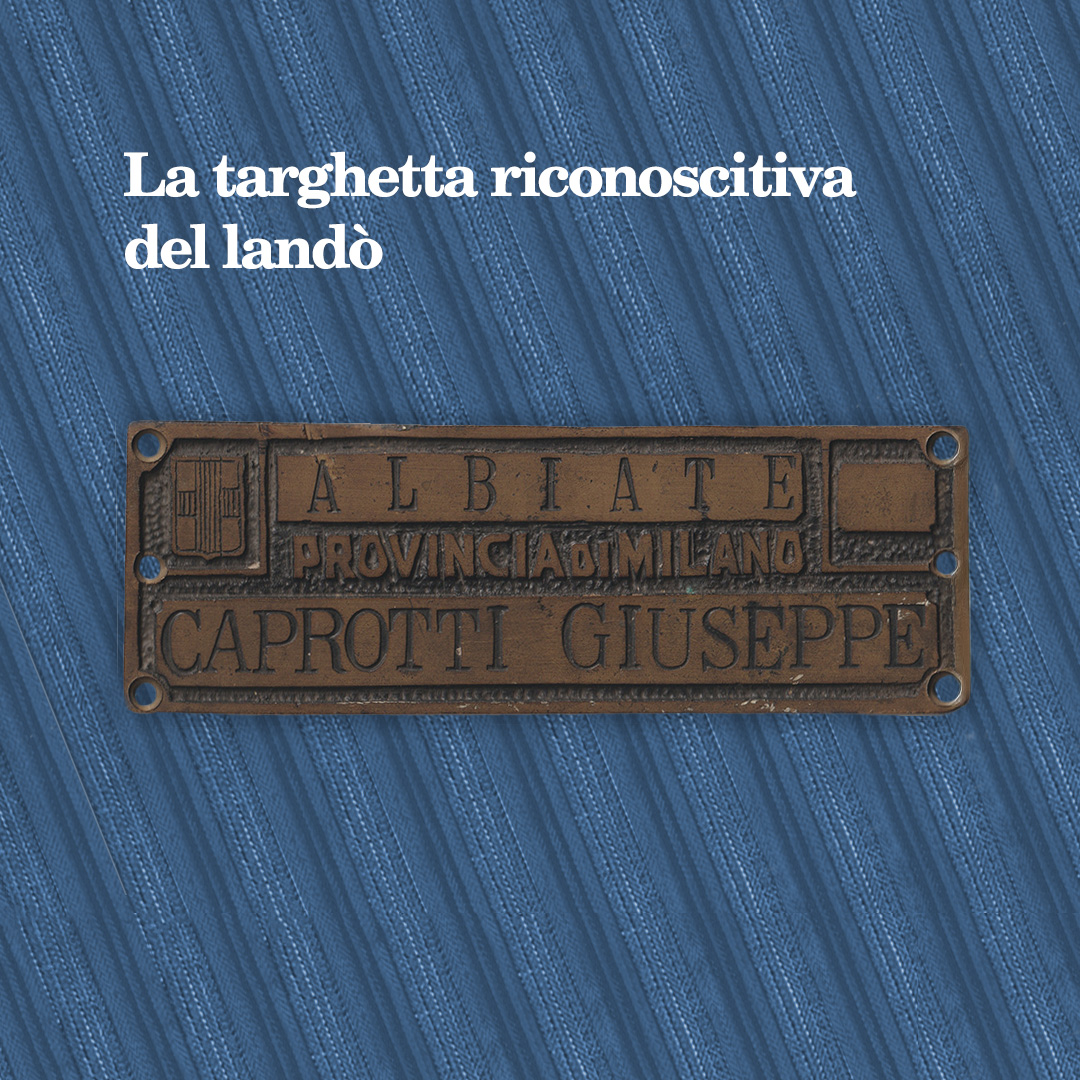
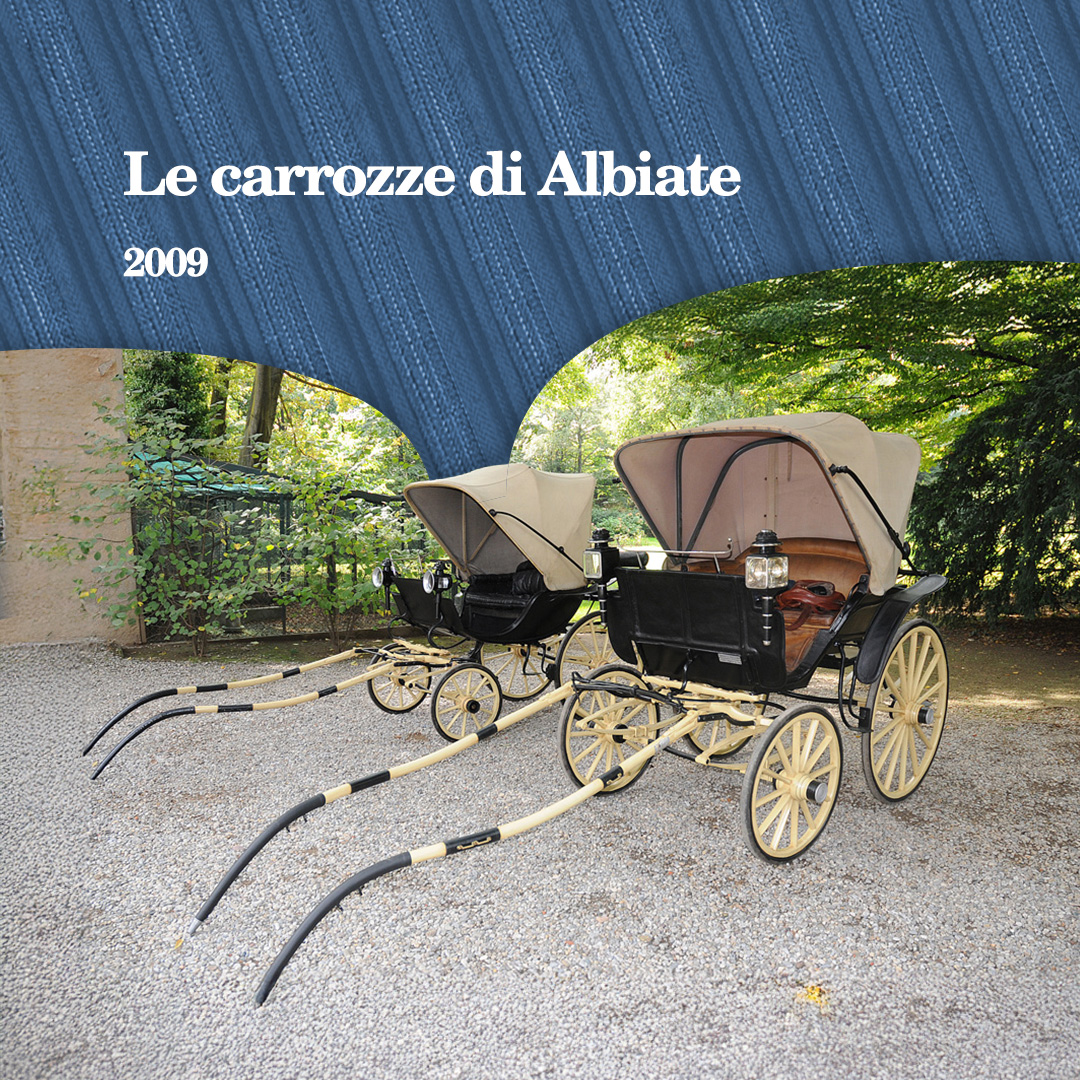
Cars soon entered the Caprotti family’s life, from the earliest still with tyres that were not dyed black, but the old landò remained in vogue, the practical and light carriage used in daily life, one of the two that Sofia Polti Candiani, great-grandfather Nardo’s aunt, suggested he buy in 1920 because she, by then very old, no longer needed it. The black-and-white photograph shows him polished up, with the bellows down, and between the shafts a beautiful saurian with a shortened tail so that it would not get caught when he trotted. The colour photo, on the other hand, shows the two carriages that his great-grandfather bought, still carefully preserved in the villa’s park, also part of a respected history.
Sources:
Albiate (MB), Villa San Valerio, Caprotti Archives, ‘Manifattura Caprotti Archives’, undated draft letter [but c. 1830] from Bernardo Caprotti to an anonymous person, b. 152; Ibid., Letter from Giov{anni] Rolandi to Bernardo Caprotti about the sale of his aunt Sofia Polti Candiani’s carriages, Lezza, 22 January 1920, b. 179; Ibid., Photographic Archives.
Florence, Claudio Caprotti Archives, Photographic Archives.
Bibliography:
G. CAPROTTI, “Le Ossa dei Caprotti. Una storia italiana’, Milan, 2024/3.
ID., “Le Ossa dei Caprotti”. The Caprotti family and their centre: the Villa San Valerio in Albiate. Cues from the book.
ID., ‘Le Ossa dei Caprotti’. The Caprotti and the animals: Teo, 1970s. Cues from the book.
E. SÀITA et al., Breve storia di Villa San Valerio e della cappella attigua, ad Albiate.