“Human resources are fundamental in shaping the company and absolutely crucial to my strategy, which aims to make Esselunga a true brand, with unique loyalty-enhancing qualities in the products and services offered. With my experience in the United States, I realised from the time I was doing my first experiments in Florence that the change would have very important effects on the workers and their involvement in the various processes. Revolutionizing display tools, advertisements, promotions, warehouse management and transport would also require changes in staff training. Fidaty will require the creation of a call centre, because a million phone calls a year come from customers.
With the enormous development of the non-food part and the emergence of marketing we create hundreds of jobs, to which others will also be added in food purchasing and quality control. Organic food, for example, is a very sensitive sector, where we need specialists, which we will provide. (…).
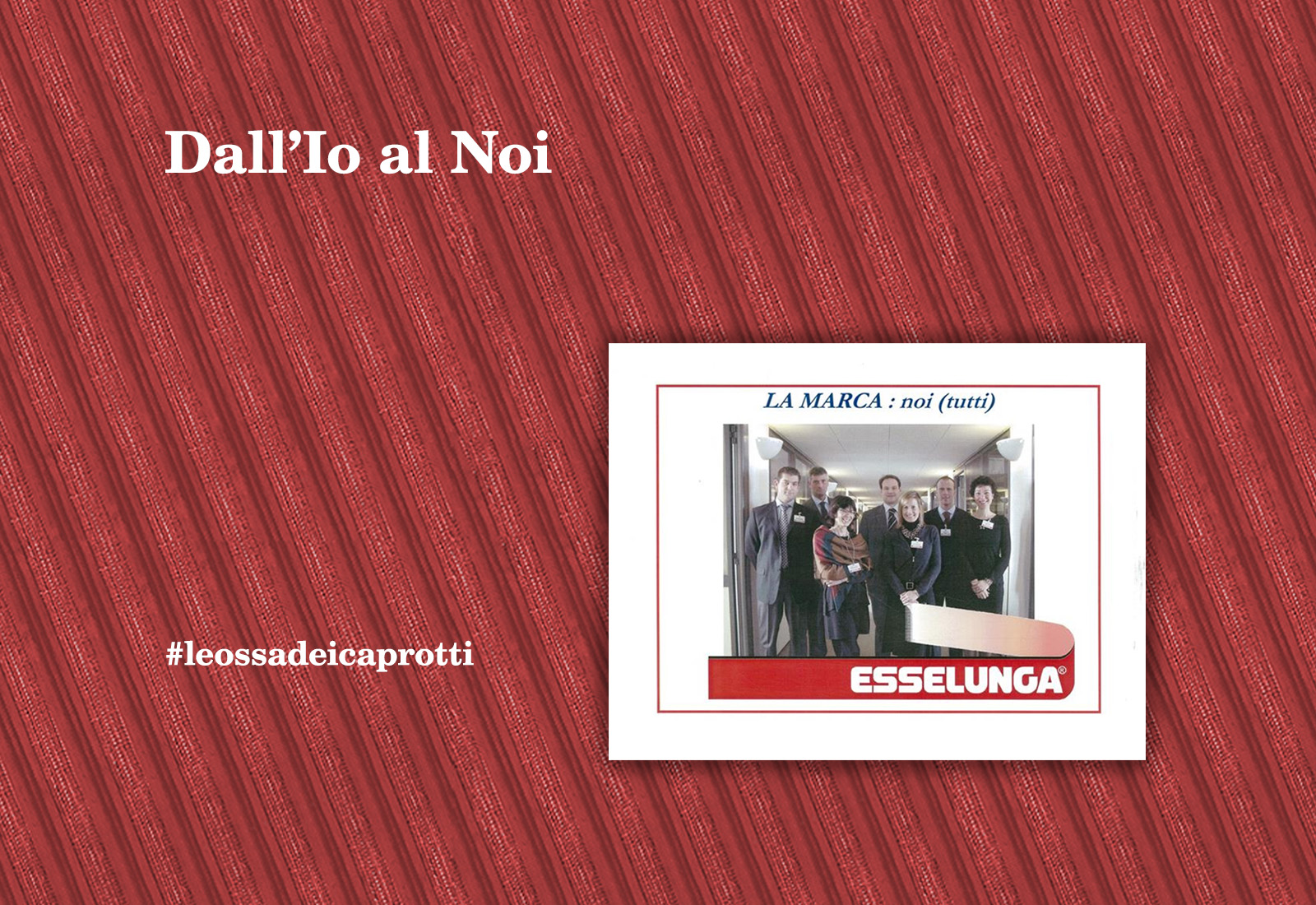
my rule is to move from the I to the we. (…)
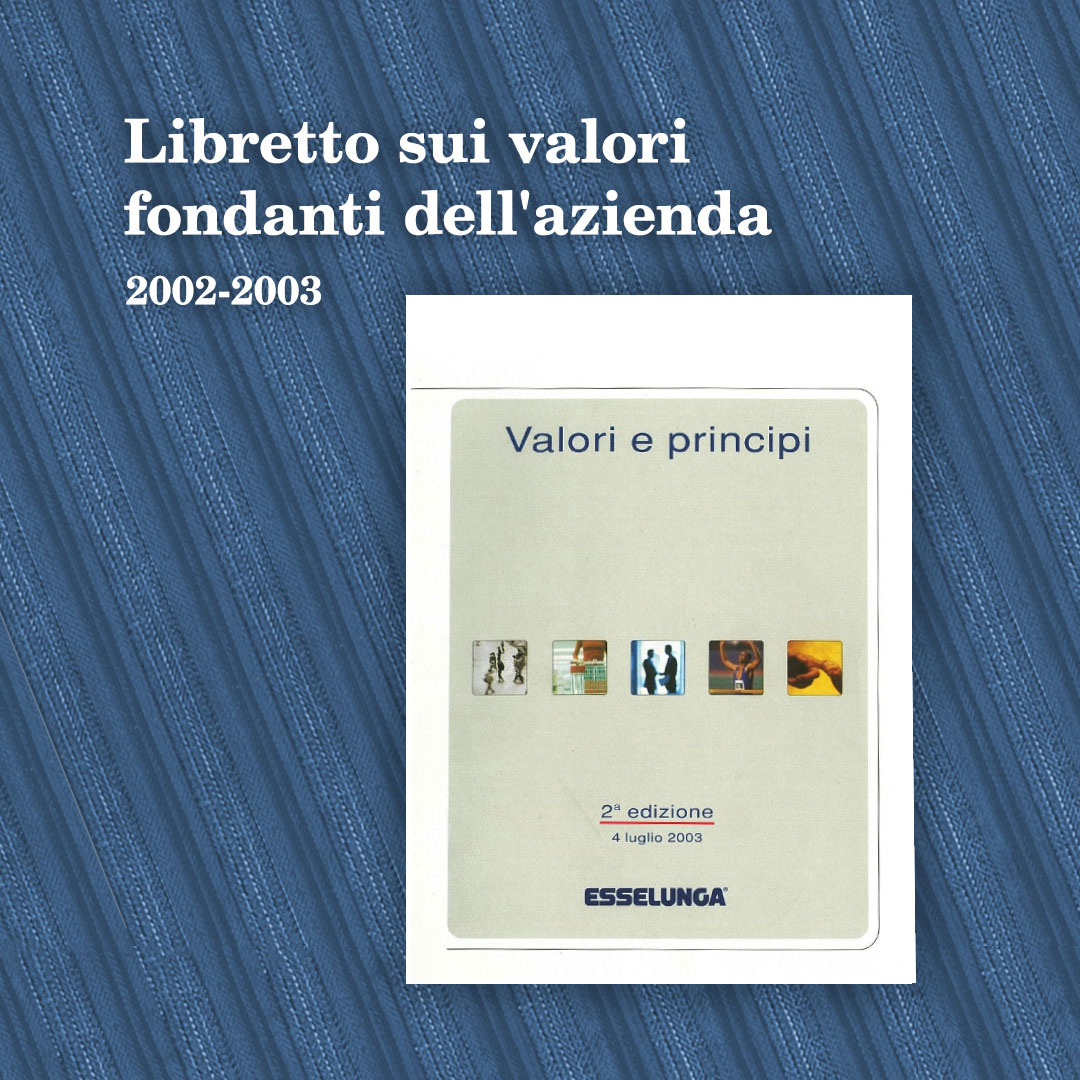
In the early 2000s, we involve all staff, both at headquarters and in the shops, to help us define the company’s values and founding principles. A document was first drafted in 2002 and further improved in 2003. Human resources are defined as ‘the pillar’ on which our success is based and it is stated that teamwork ‘is the basis for achieving results’. (…)
There are several traitsin the document that anticipate those principles of fairness and sustainability that today’s large and small companies must necessarily follow in order not to be penalised harshly by investors, lenders and even customers. It says that Esselunga undertakes to develop organic and ecologically sustainable products, including packaging, to build shops that are integrated in the local area and have a low environmental impact (…), to reduce polluting emissions, to support social projects and contribute to the protection of the artistic heritage. These are not abstract principles but guidelines that determine our behaviour. In 2002, 3500 people were hired, 95 per cent of them on permanent contracts. The salary system adopted is at the highest level in the sector, and support policies are implemented for the weakest, with 50-60 internships per year for the handicapped, aimed at recruitment. Also in 2002, 200,000 hours are dedicated to training, with an investment that represents 1.7 per cent of personnel costs and involves 6,000 employees. We then decided to establish bonuses for all operational departments, when in the previous rigidly hierarchical organisation only supermarket managers were rewarded. (…).
The results we achieve (…) leave their mark.
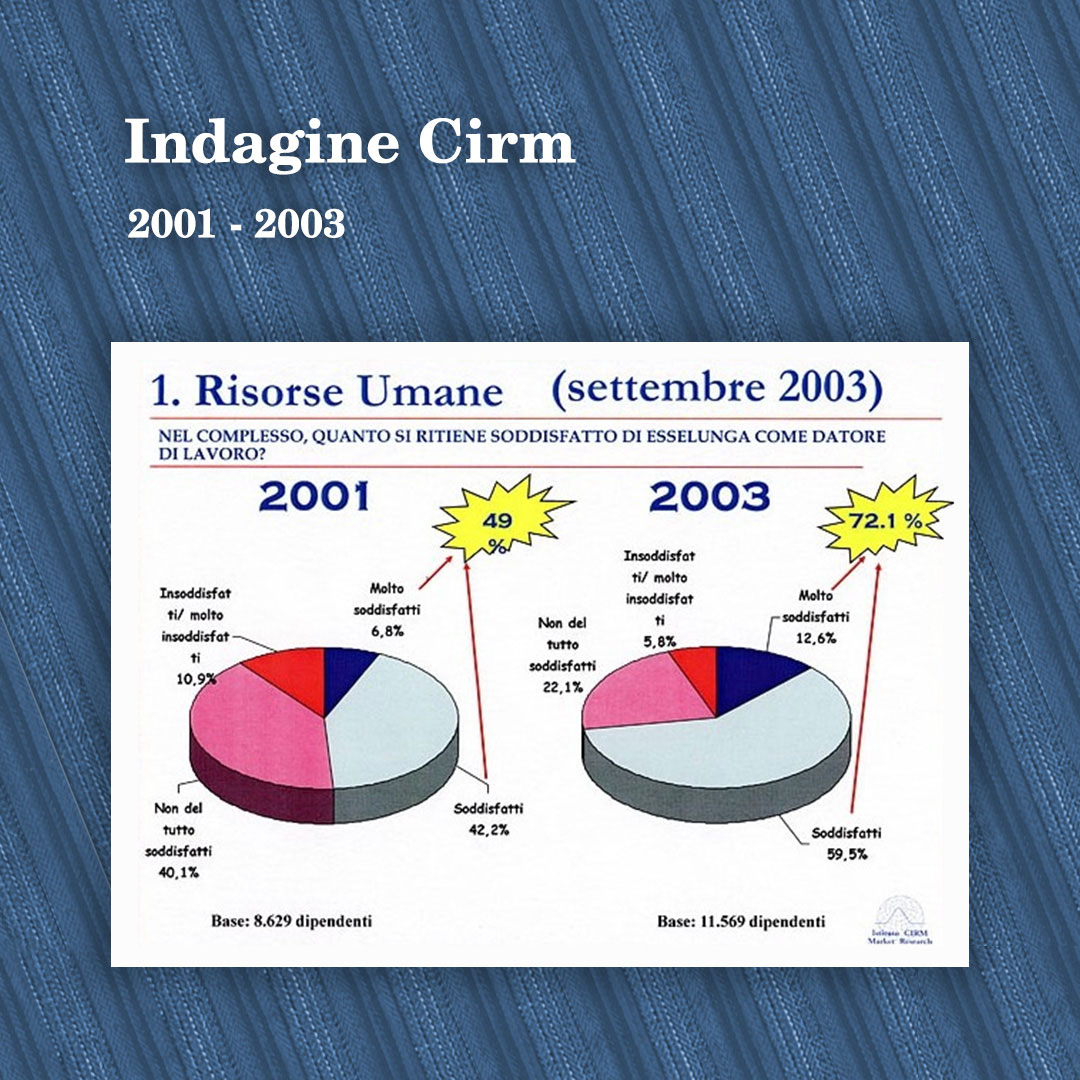
in two years, from 2001 to 2003, the share of those declaring themselves ‘satisfied’ or ‘very satisfied’ rose from 49 per cent to 72.1 per cent.” (pp. 198 – 200).
“The approach we seek to give reflects (…)
a more modern idea of work, which is essential in an organisation with thousands of employees: from the I to the team. Every Wednesday morning, at seven o’clock, we meet with marketing, sales and purchasing to discuss assortments and promotions, simulating the display of goods. There is extreme freedom of speech, so that everyone can express their opinion. If disagreements arise, I intervene. (…)”. (p. 163- 164 and 165).
G. CAPROTTI, Le Ossa dei Caprotti, una storia italiana, Milan, 2024/3