Written on 17 November 2023, updated on 14 April 2024
In 1947, Nelson Rockefeller raised $2 million to set up IBEC.
Founded on the highly optimistic notion that a company could generate substantial profits whilst improving social welfare on a global scale, the organisation achieved its greatest successes from the late 1940s through to the 1960s.
Rockefeller began in agriculture before opening a chain of supermarkets in Venezuela in the 1940s, with the aim of lowering the prices of foodstuffs supplied to the local population.
The same would be true for Italy, where IBEC, in addition to Esselunga, would also operate an egg-production company.
IBEC was also a highly politicised organisation. Rockefeller, in fact, believed that ‘it’s hard to be a Communist with a full belly’ ( Source).
In Italy, it all began at the ‘18th-Century Venice’ exhibition, organised byMarco Brunelliin 1955.
There, the future first chairman ofSupermarkets Italiani (Esselunga)metOSS(later CIA) ColonelJames Angleton.
In 1956,Richard Boogart, the first managing director of the future company, visited Italy and decided to focus on Milan, ruling out Rome.
In 1957,Nelson Rockefeller’s IBECfoundedSupermarkets Italiani (Esselunga), with minority shareholders (Brunelli, Crespiand Caprotti).
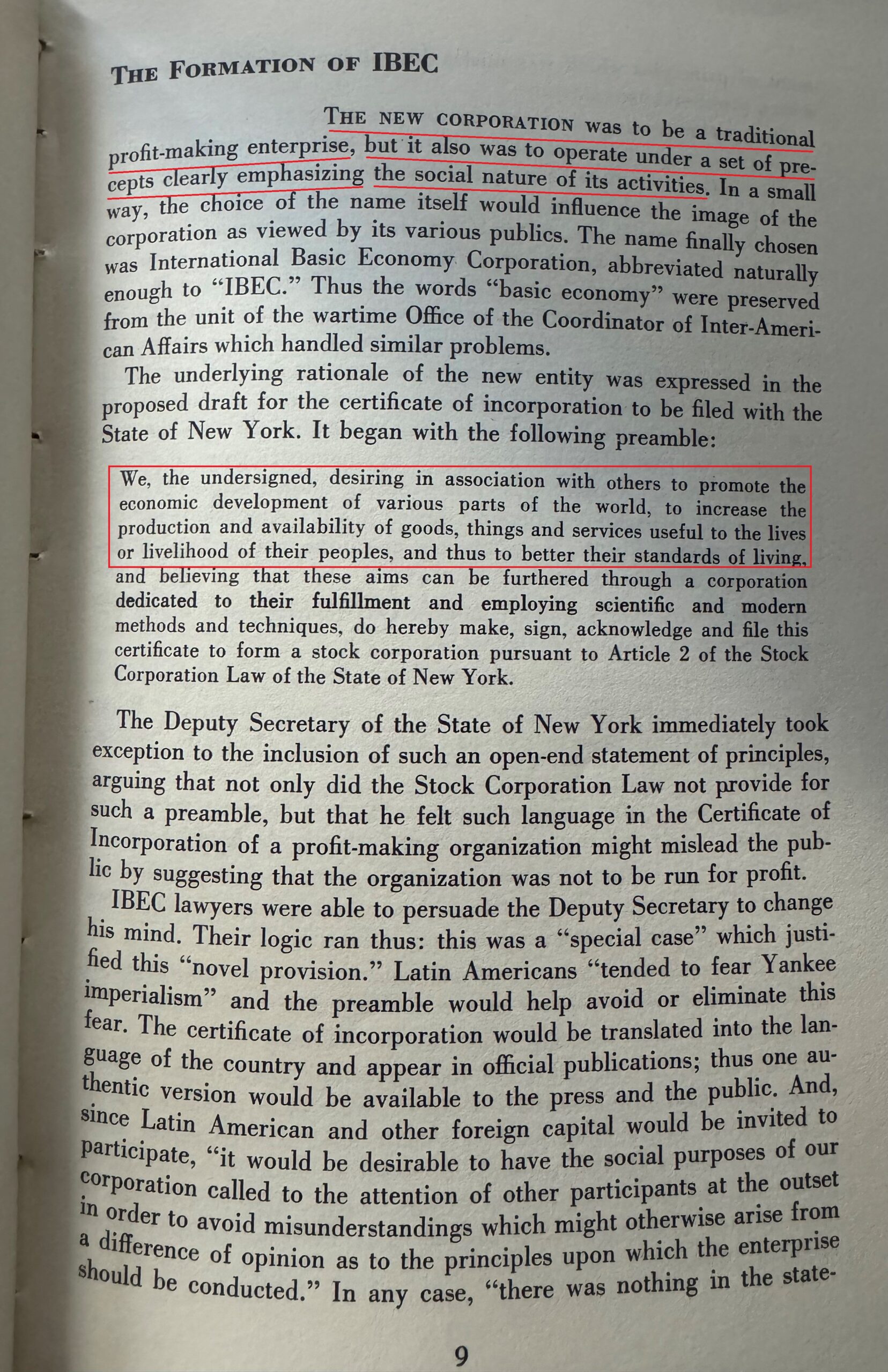
Below: the origins of the IBEC idea, from: *The International Basic Economy Corporation*, by Wayne G. Broehl Jr (one of the unpublished sources for my book, *Le Ossa dei Caprotti*).
Broehl, a manager working for Rockefeller and a professor of economics at Dartmouth College, explains in his book how Nelson Rockefeller’s thinking took shape in Venezuela in 1937.
On his return to the US, he began to speak of the need for private investors to assume greater social responsibility towards developing countries.
To this end, in 1940 he founded the company that was the forerunner of IBEC, the Compania de Fomento Venezolana, S.A.
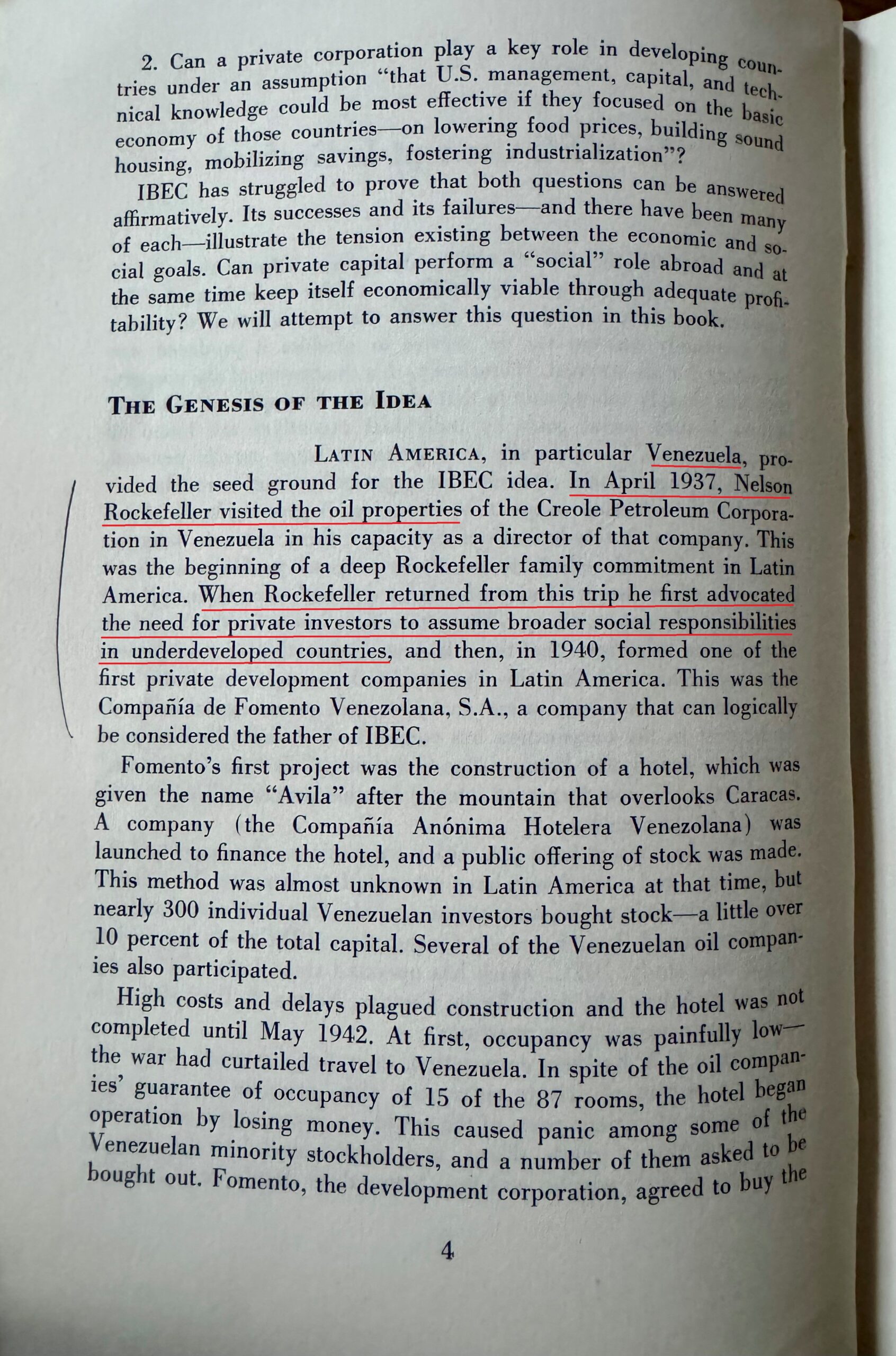
Below: the founding of IBEC, from: *The International Basic Economy Corporation*, by Wayne G. Broehl Jr.
The previously unpublished images of the Esselunga pasta factory andthe egg-producing company in Apriliaare taken from this book.
“The new company was to generate profits, but also operate according to a set of principles that clearly emphasised the social nature of its activities.”
Faced with the evident malnutrition of the local population, Rockefeller decided to found IBEC:
“to increase production and the availability of goods, items and services useful to people’s lives or livelihoods, and thereby to improve their standard of living…”