Written on 6 June 2017, updated on 14 July 2026
On the origins of Esselunga, I recommend reading these articles:
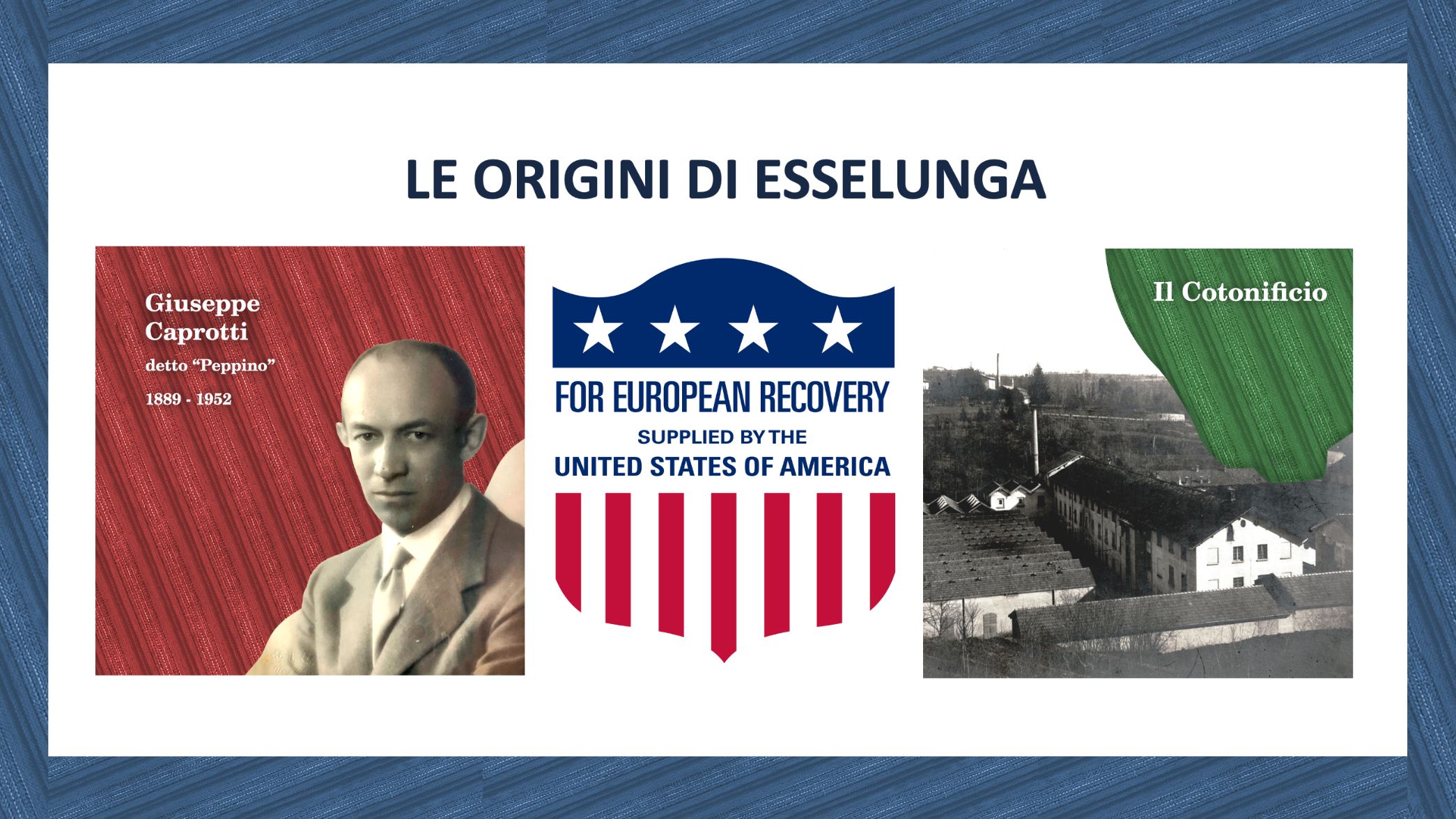
1) The Caprotti family: from textiles – with the Manifattura – to Esselunga
2) Peppino and Marianne Caprotti: the uncles in America and the Marshall Plan (an article following on from my book *Le Ossa dei Caprotti*, published in 2023 by Feltrinelli).
Alessandro Baricco,on*L’Impero irresistibile. La società dei consumi americana alla conquista del mondo* (Einaudi, 2005), by the Italian-American historianVictoria De Grazia, in*Una certa idea di mondo*, 2012 (La Repubblica).
“Perhaps to go to the cinema, but once I was just looking for six wine glasses, and the day before yesterday a rake: you end up in these enormous shopping centres that are worlds unto themselves, encased in insignificant architectural structures, teeming with a mixed crowd, their happiness indecipherable, their despair unreadable. As you know, I detest armchair doomsayers, so I’m even a bit sorry to admit it, but of course, faced with that spectacle, one has an irrepressible urge to think of a disaster. Then you think it through, and things more or less fall into place: but of course, at first, what you end up wondering is when on earth we got distracted and allowed it all to begin. What day it was, exactly.
I’ve read *The Irresistible Empire*, so I know. Not the exact day, but the year, yes. 1957. The year in which a certain Richard W. Boogart began scouring Milan in search of the right spot to set up what was, at the time, a utopian dream and, in time, became the beginning of it all: Europe’s first supermarket. He, Boogart, came from Kansas, worked for Rockefeller, and back home he’d drive about in a Cadillac wearing a cowboy hat. He explored Milan on foot or, when he was lucky, in a Fiat 500. He and his team worked like mad for months, but in the end he managed to open his supermarket. A few years on, it would become the famous Esselunga.
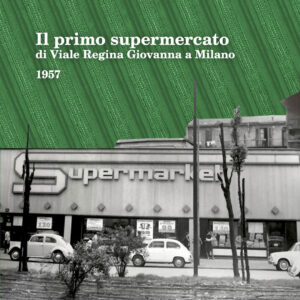
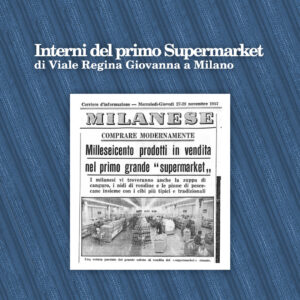
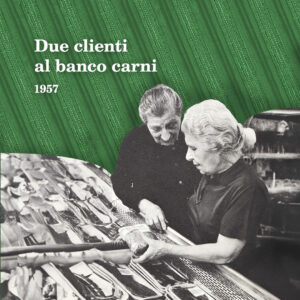
Now, to fully grasp the significance of this event, you need to imagine the impact a supermarket could have had, back then, in a world without supermarkets. Let me explain: in supermarkets, you used to pick your own things. It was such an absurd concept that you had to use an American expression to describe it: self-service. Intheory, it was a step backwards: instead of being served, you had to do it yourself, with no one explaining anything, and you even had to push a trolley – a bit more and they’d have made you do the cleaning too. They didn’t deliver your shopping to your home, they didn’t greet you by name, they didn’t know your preferences. So, on paper, it was a bit of a daft idea. However, the prices were a bit lower, the shelves were full of products, the lighting was well thought out, and the layout of the goods was rather spectacular. The trolley glided smoothly across the clean floor, and for some reason you couldn’t quite put your finger on—though it must have stemmed from some clever advert or even an American film you’d watched one Sunday— you felt rather cool pushing it along, and suddenly so independent in stopping here rather than there, in choosing this instead of that, and perhaps even free (yes, free) – a free citizen able to choose whatever you wanted, and capable of doing so. Going shopping became a sort of fun exercise in modernity, intelligence, independence and democracy.
Reports suggest that the early days were difficult, however, because Italians proved to be poorer and less malleable than expected. But once the trolleys were made smaller and an ice-cream section and a chip shop were added here and there, things began to take off unstoppably. Richard W. Boogart felt he’d made it when, on a wave of enthusiasm, a care home in Florence brought seven blind people to ‘see’ one of his supermarkets. Victory secured. From there, the progress was unstoppable: Europe’s first hypermarket opened in ’63 (a Carrefour in France); a year later, in a little town near Frankfurt, the first shopping centre outside the United States opened its doors. And so we return to me going to buy six glasses of wine, to that sense of disaster, and so on and so forth.
One might ask: did nobody foresee the risks involved? De Grazia’s book is very enlightening on this point too. When Boogart opened his supermarkets, he found himself up against a lot of opposition. Many were defending their own interests (the local butcher), many were looking to make a profit (a typical Italian trait) and many sensed the ideological implications – namely, the silent advance of the American cultural model…However, no one could come up with any truly convincing arguments against the supermarkets. The communists, who were usually adept at such things, could come up with nothing better than to denounce how, by not offering credit, the supermarkets were discriminating against the poorest – those who paid the grocer when they could: not much to stem the tide of modernity. Thus, the absurd idea of the supermarket proved to be a move to which there were no answers, and in the long run one of the moves that led the United States to win the cultural and economic game they played against us on the chessboard of Europe.
That game is now written in history, and retracing it, as this book does, means understanding how the invention of the Rotary, the washing machine, detergents, the Western, advertising and the ‘3 for the price of 2’ offer were merely white pieces manoeuvred by a sort of invisible player, who nevertheless knew what he was doing, and who would not stop until he had won.
Whether he actually won, well, that’s another story.”
Alessandro Baricco
Among the many articles on this site discussing the American influence on Esselunga’s early days are:
The company that founded Esselunga was established in 1947 by Nelson Rockefeller
Our relationship with FOOD over the last 100 YEARS has changed significantly: how?
The emergence of own-brand products in Italy
Esselunga from 1957 to the early 1990s, as recalled by a grocer’s son
Esselunga, Ferdinando Schiavoni, Indicod and much more yet to come
Over time, the Americans went on to exert a major influence on the computerisation of Esselunga, the creation of Fidaty and the adoption of the format currently favoured by Esselunga: the superstore
As for Italian managers and entrepreneurs, Ferdinando Schiavoni was ‘the Americans’ man’, the right-hand man of the first CEO, Boogart, from 1957 onwards, Claudio Caprotti joined the company in 1961, Paolo De Gennis in 1962 and Bernardo Caprotti in 1965.
With thanks to Caroline Stefani. Below: Grandmother Marianne and Grandfather Peppino Caprotti in the United States: without their contribution, Esselunga would never have been founded.