Three news items that struck me recently :
- 1 “Conad vs Selex: what a challenge!” (GdoNews 12 January 2026). With the odds I don’t know who wins, I’m only interested in the headline.
- 2 It had already done so in the US, but now Amazon isalso launching in the UK Amazon Now, the new ultra-rapid delivery service that promises to deliver thousands of groceries and household goods in around 30 minutes or less
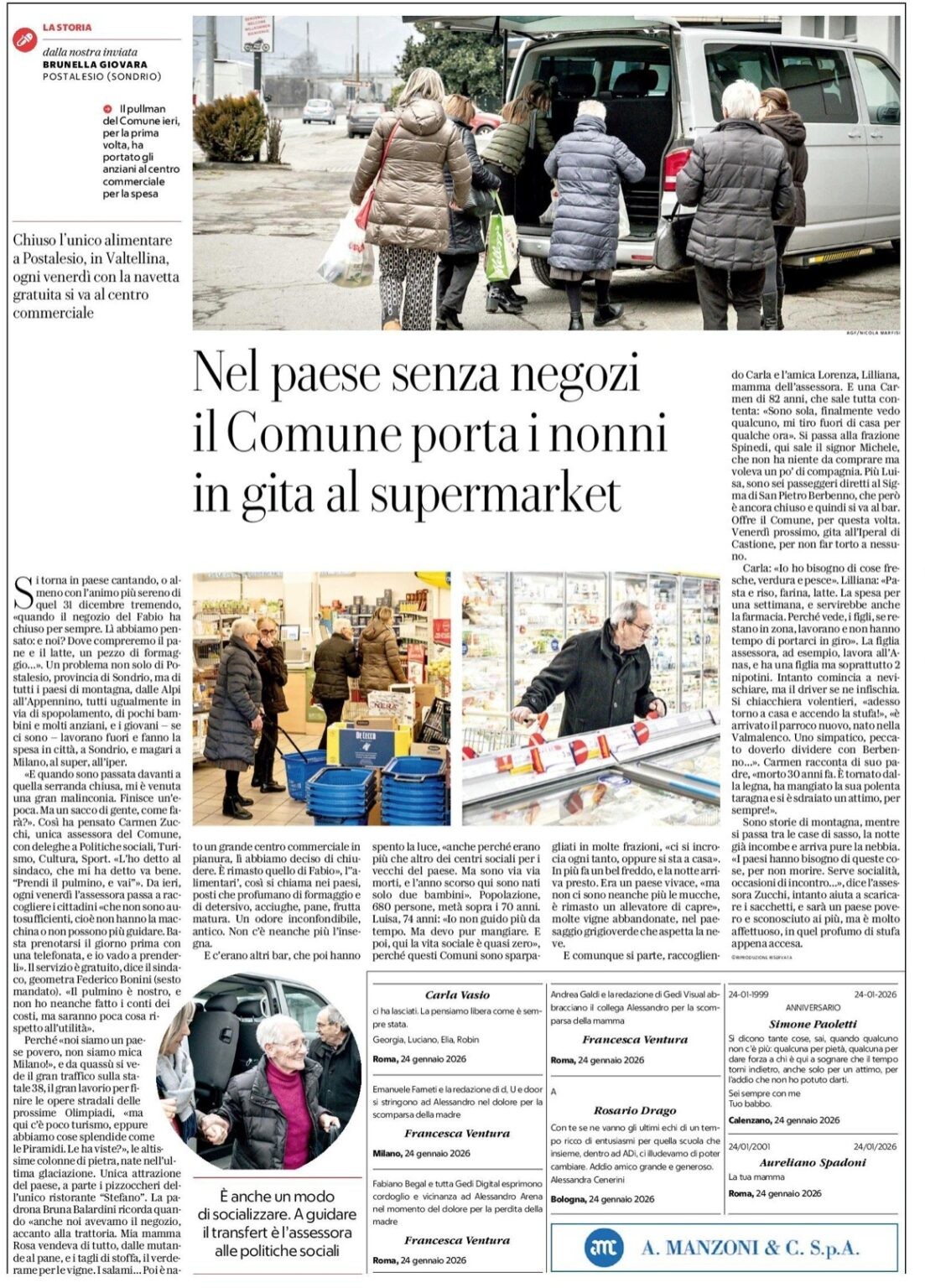
- 3 ‘In the country without shops, the municipality takes grandparents on a trip to the supermarket‘ (Repubblica 24 January 2026).
But let’s focus on Amazon for a moment: The Amazon Now project in the UK kicks off in test phase in some postcodes in Southwark, London, with an extension to other areas planned in the coming months.
Amazon Now is available seven days a week via app and website and offers an assortment covering some 35 categories, including fresh food, drinks, protein snacks, low and no-alcohol products, vitamins and supplements, as well as major personal, household and pet care items.
From a strategic point of view, the initiative strengthens Amazon’s positioning in the quick commerce segment, where speed of delivery is a key differentiating factor, particularly in high-density urban settings.
I would put speed aside and focus on the assortment that is suitable for serving areas that no longer have shops, such as the one described in the Repubblica article below.
Our distributors – such as Selex and Conad – who operate consortia, and therefore are unable, if not for some exceptions, to offer a capillary e-commerce and delivery service for basic food and household products throughout Italy – risk having to leave space and opportunities to Amazon Now over time.
They strut at various conferences or in specialised magazines about their market shares, but perhaps they should focus more on the needs of Italy’s elderly and ill-served customers.
It is no coincidence that when we launched Esselunga at home, more than twenty years ago, it was not only e-commerce but also home delivery.