Compiled 25 May 2024, updated 18 March 2025
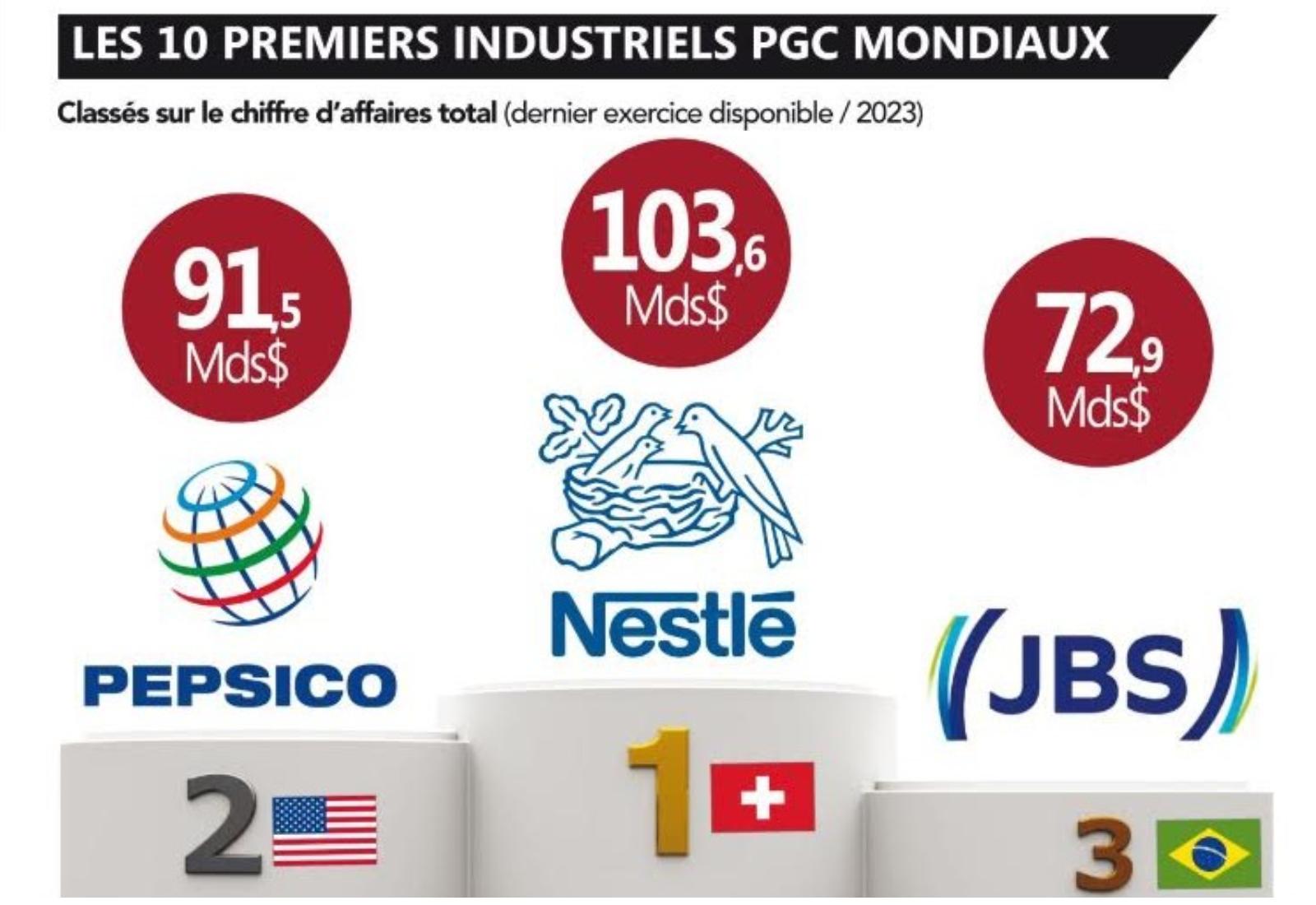
Above : the top three in the top ten 2023 : Nestlé, Pepsico and JBS (meat, which in Italy owns Rigamonti and has a stake in Inalca, Cremonini Group, McDonald’s supplier).
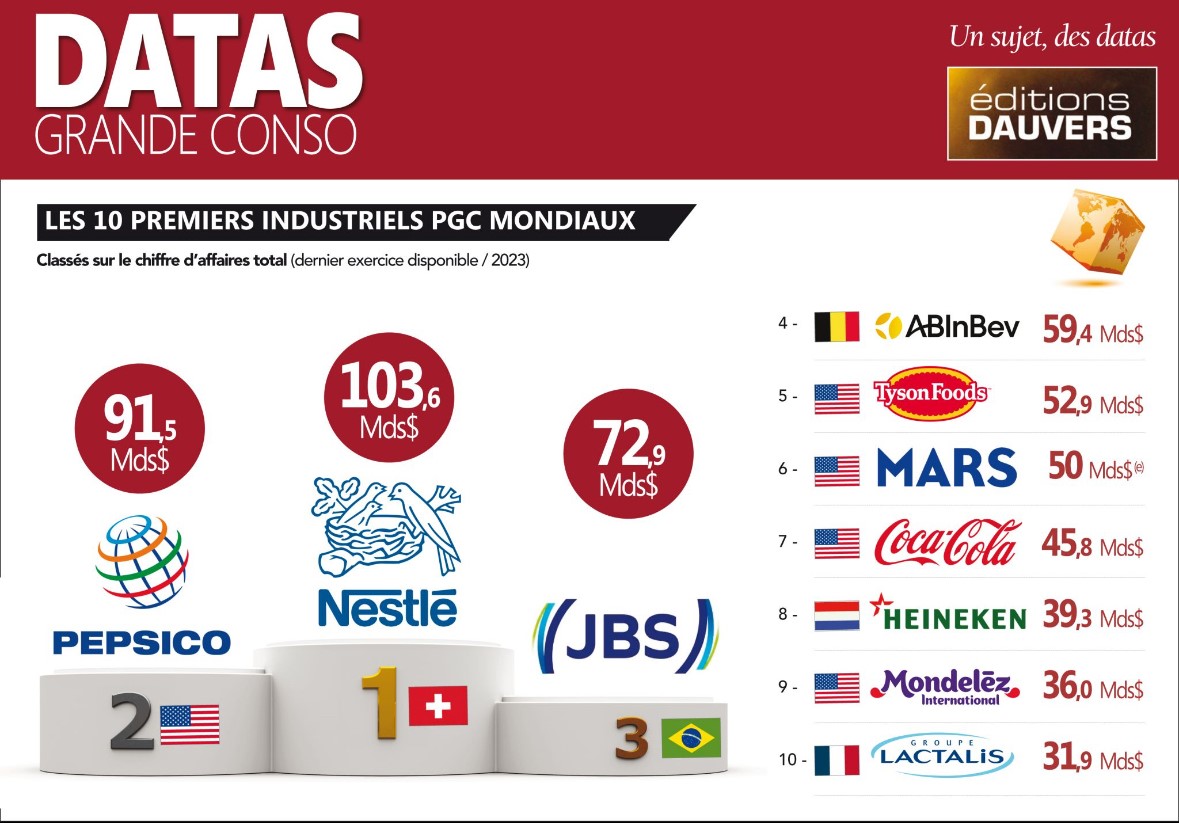
Below is the top ten, compiled by Dauvers editions. In addition to those mentioned above: AbInbev (beer), Tyson Foods (meat), Mars (*) , Coca-Cola, Heineken, Mondelez and Lactalis.
An interesting and important story could be written about each of these groups, but…
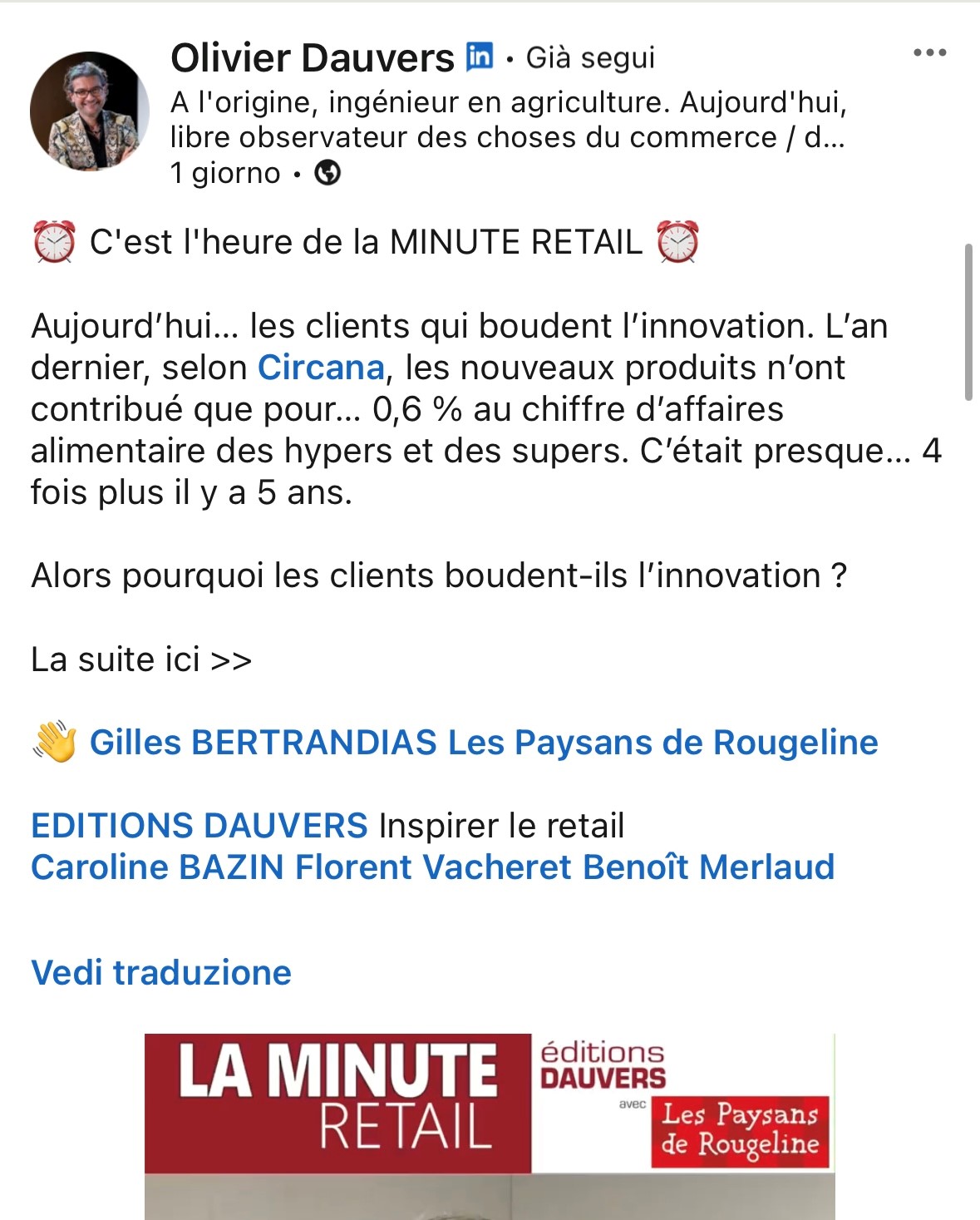
… the real point, in my opinion, Dauvers writes a few days later: brands have very little room for growth.
This is exemplified by the fact that new product launches in France accounted for only 0.6% of FMCG turnover in 2023.
Five years ago it was four times more.
The picture is completed by the USA: General Mills, another FMCG giant, is trying to sell its division that makes yoghurt and is not succeeding: the market is now only going up in value, with inflation, and is saturated with products (“the market has too many choices”).
In France, Circana (formerly IRI Infoscan) estimates that €1.7 billion is missing in FMCG between 2019 and 2023. And this consumption, given inflation and the demographic structure of the country (Italy is worse off than France…), is not expected to return, partly because new players have entered the market (discount food and non-food, such as Action) that have taken space away from distributors but above all from brands, at least in terms of breadth of assortment. And the market is increasingly difficult, even in distribution (read Italy: constant decline in food consumption while the number of large-scale retail outlets is increasing).
One can therefore look at the future of brands with a certain ‘disquiet’, also because some of them are attacked on the health front of the population that eats their products.
Finally, here is the Financial Times commentary on Mars’ attempted takeover of Kellanova:
… Food companies also face long-term concerns. One is that the golden age of snacking may have passed, thanks to the rise of hunger-suppressing weight-loss drugs such as Wegovy and Ozempic [it should be noted that the anti-obesity GLP-1 drugs have contributed to the extraordinary sales growth in the third quarter of Walmart, the world’s largest retailer].
Morgan Stanley predicts that sales of salty snacks and baked goods could fall by up to 3% by 2035, as the temptation to look for another Pop-Tart subsides. Above all, snack manufacturers are under scrutiny for selling unhealthy ultra-processed foods.
Public health officials don’t care if Mars produces cans of Pedigree dog food with 1% fibre and 82% moisture, but human snacks are another matter. Eating too many concoctions high in saturated fat, salt and sugar is dangerous….
Another analyst qualified Mars’ move as ‘a dubious defensive move’.
N.B.: Interesting the stance of Nestlé, which has just given the sack to its CEO and is one of the main suspects of selling unhealthy products – and Danone in the face of all these problems. Note also the nonchalance with which the big brands have managed their product margins in past years.
Read also :
- Nestlé wants to spin off its water division and Unilever wants to sell its ice creams
- Nestlé ‘s water activities under indictment
- ‘Deny, denounce, delay’: the battle over the risk of ultra-processed foods
- Fernando Fernandez appointed as new CEO of Unilever, taking over from Hein Schumacher
- PepsiCo Inc. is acquiring prebiotic soda brand Poppi for $1.95 billion