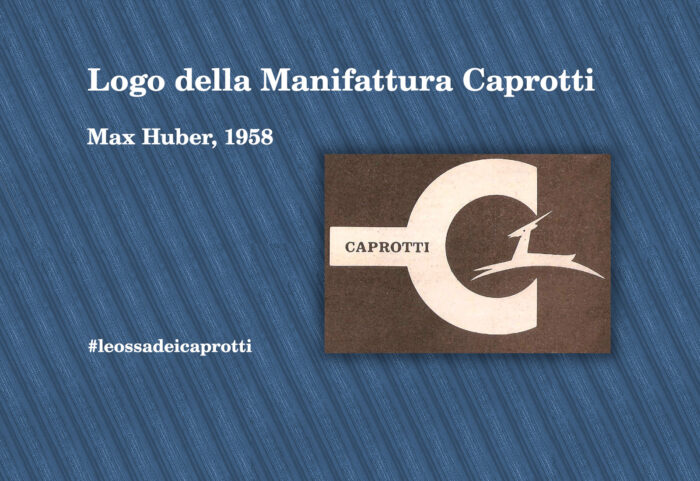
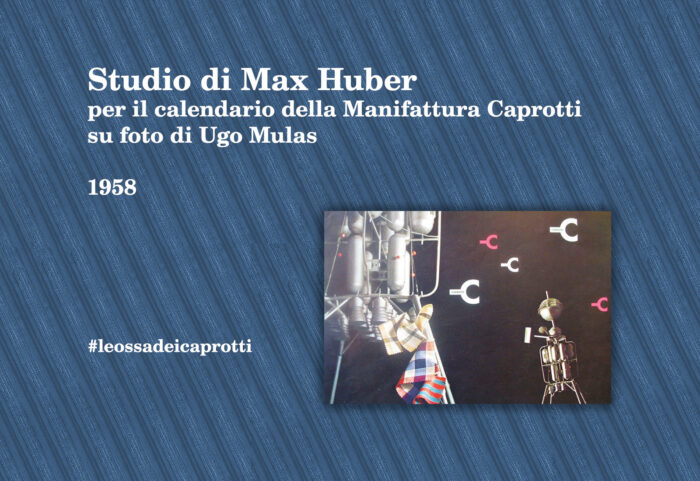
The Caprotti family and fabrics: the Manifattura logo, Max Huber, 1958

In the 1950s, Bernardo Caprotti family asked the great Swiss graphic designer Max Huber, who would later design the logo for Supermarkets then Esselunga, to create a new logo for his cotton mill as well. The concept of the design also started, as for Supermarkets, from the idea of the initial letter – the C – artfully elongated to contain the full name of the company; in another version, the name is moved to the body of the letter, and in the eye of the C jumps the new, stylised, ultra-modern little goat.
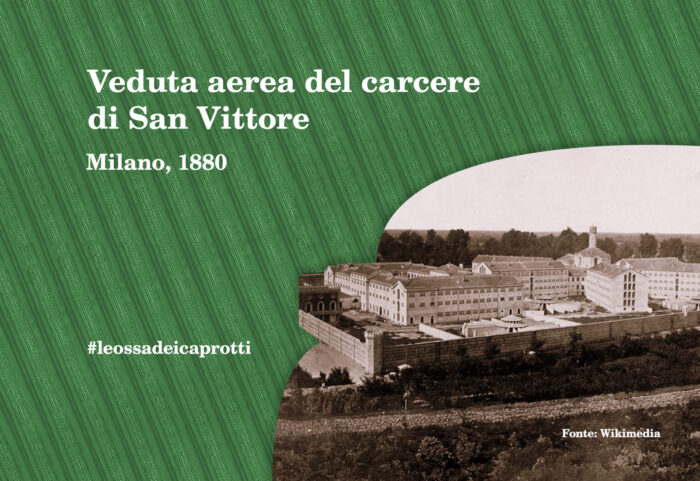
The Caprotti family, innovation and tradition in an Italian factory: workers from San Vittore prison

When, in the early post-unification years, the Caprottis built their first large factory in the true sense of the term, eventually finding themselves with thousands of square metres of space, they were initially not quite clear what to put in it. They probably envisaged a kind of ‘centralised manufacturing’, and to this end they purchased various machines by turning to various manufacturers, including the Milanese prison of San Vittore whose director, Eugenio Cicognani, was personally passionate about and invented a newly developed regulator loom, built by the inmates.

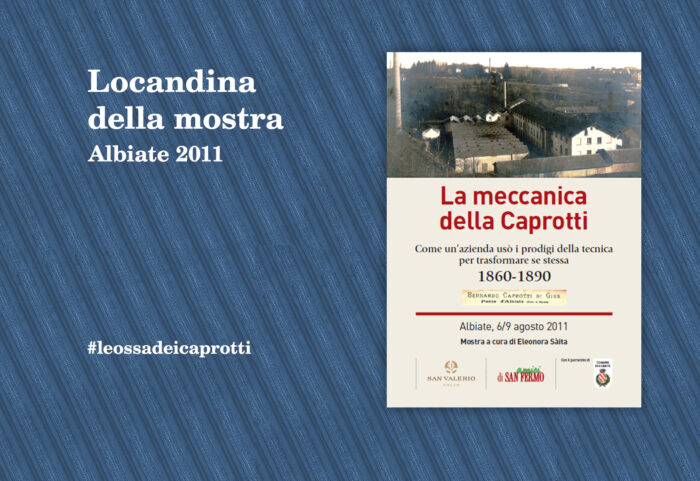
The Caprotti family, innovation and tradition in an Italian textile manufacturer: Alessandro Belgiojoso and the ‘La meccanica della Caprotti’ exhibition

Alessandro Belgiojoso is an internationally renowned photographer, husband of Albertina, daughter of Gianni Albertini D’Urso, in turn daughter of Gianni Albertini, an explorer and my great-uncle. Years ago, in 2008, I approached him to photograph a documentary collection kept in my archive, from which a panel exhibition was to be created in 2011. His uncle Giuseppe Barbiano di Belgiojoso (1924 – 2022) was a friend of my father Bernardo and probably also of my grandfather Peppino

The Caprotti family, innovation and tradition in an Italian manufacture: Albiate and Switzerland

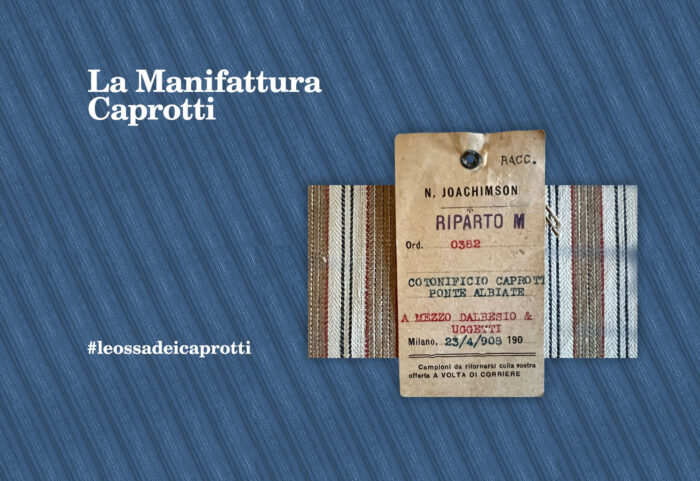
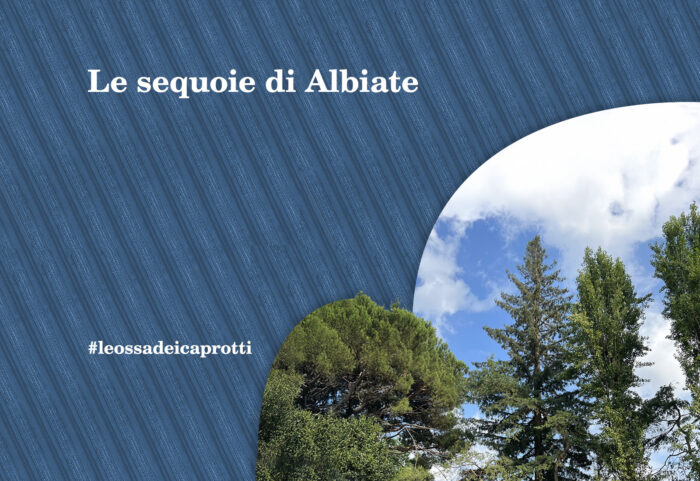
Bernardo Caprotti, an agricultural owner, founded Giuseppe Caprotti’s Bernardo Caprotti cotton weaving company on his land in Ponte Albiate. Caprotti’s company was still based on an almost pre-industrial production system: few simple machines, many warehouses, worker-farmers weaving mainly at home. In 1866 there were about 1500 of them. However, the great industrial revolution that would transform Europe was underway…

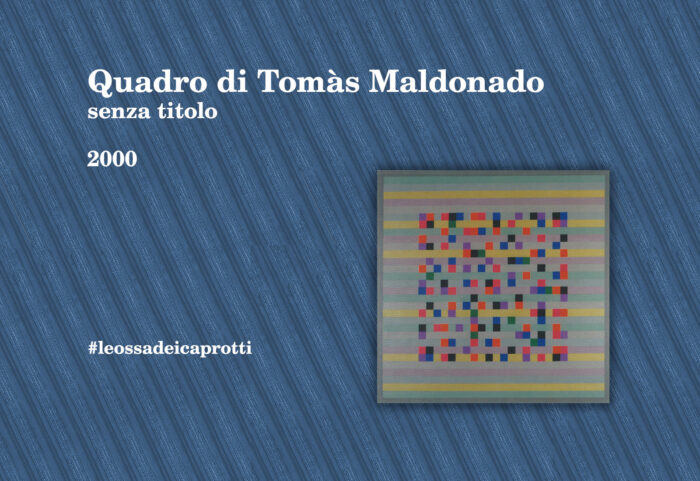
Giorgina Venosta’s friends: Tomás Maldonado, artist and companion of Inge Feltrinelli

Tomás Maldonado (1922-2018), born in Buenos Aires, was a lecturer in Industrial Design in Architecture at the Milan Polytechnic, a chair he established in 1994. When he met Inge Feltrinelli, Giangiacomo’s recently widowed wife, he moved from operational design to a more intellectual role. He lived with Inge for over forty years, dying just over two months after her

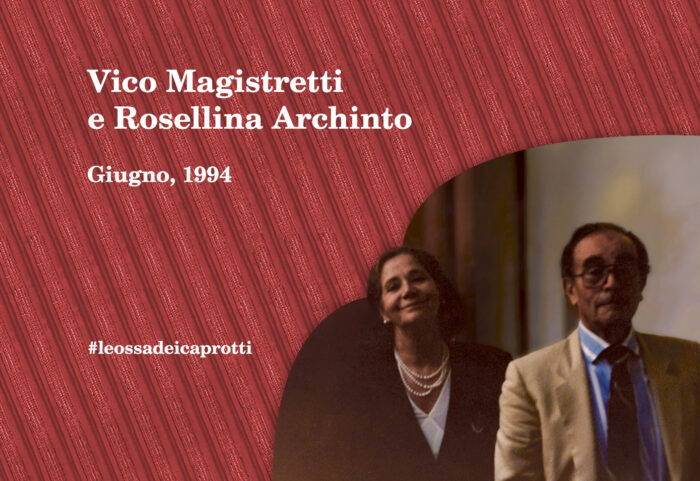
Friends of Bernardo Caprotti and Giorgina Venosta: architect Vico Magistretti and publisher Rosellina Archinto

My father Bernardo wanted Vico Magistretti to design the Esselunga superstore in Pantigliate, which opened in 2001, where two years later the first of the ‘Bar Atlantique’ (now ‘Bar Atlantic’) opened, also designed by Magistretti, who renovated the food outlets that I had strongly desired since the first superstores. The great architect worked for my father, but he was also a close friend of my mother GiorginaOf mutual friends Rosellina Archinto, who animated Milan’s cultural life for decades

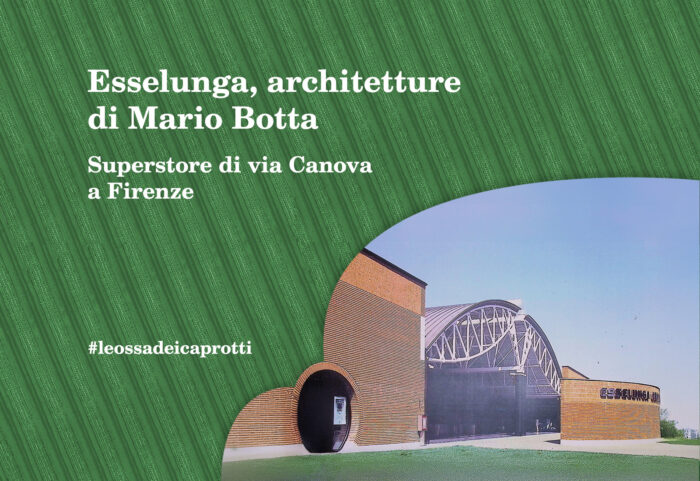
Bernardo Caprotti’s and Giorgina Venosta’s friends: architect Mario Botta

Born in Mendrisio in 1943, he designed the shopping centre in Via Canova, Florence, for Esselunga. Mario Botta was at home in Monate, in the villa of my mother Giorgina and her husband Aldo Bassetti. When my grandmother Luisa Quintavalle died in 2009, she wrote an affectionate condolence card to my mother, with a sketch on the cover for the new Alpine church in Mogno, Switzerland, which was swept away by an avalanche in 1986.