Drafted 3 May, updated 7 July 2025
JBS in 2024 is expected to turnover $77 billion with an Ebitda of $6.5 billion.
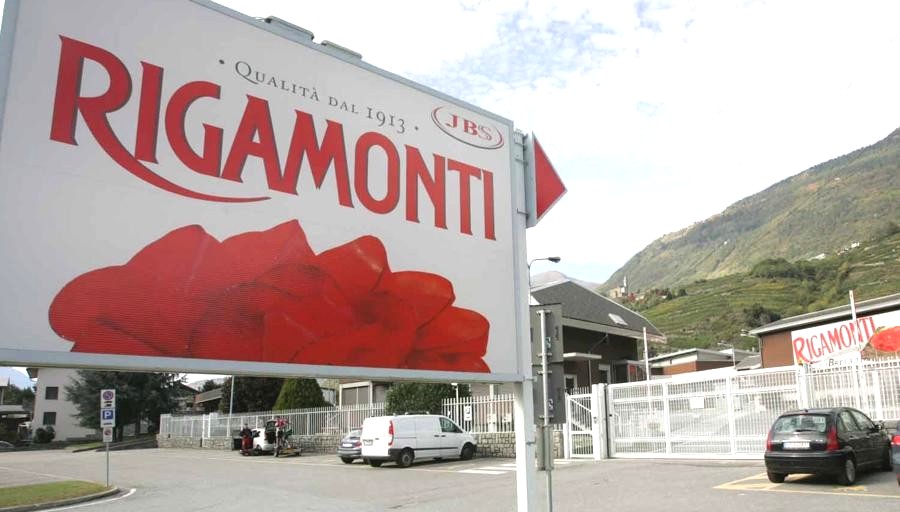
The Brazilian group in Italy owns Rigamonti (bresaola, with a turnover of EUR 256 million).
And not only that: again in Italy, it is investing EUR 24 million in three years, with two CEOs for the Principe and King’s ham brands.It should be noted that JBS was a partner in the Cremonini Group (Inalca) in Italy from 2008 to 2011.
The picture of corruption and deforestation highlighted by an article in Il Gambero Rosso – which I reproduce below – needs to be premised:
- Three quarters of the world’s agricultural land is used to breed animals or to grow grain and other raw materials for the feed industry.
- China is the world’s largest pig breeder while Brazil, with the JBS group, is the world’s largest beef producer
- Among the cattle there is also zebu , which is used to make – for example – bresaola, 5% of which is made from Italian meat (the remaining 95% is made from Brazilian meat).
- In Brazil alone, 175 million hectares are dedicated to livestock farming, an area equal to about the entire agricultural area of the European Union.
- The chaotic affairs of JBS – which also include the sale of rotten meat – began in 2002 .
- Its owners have been in prison for bribing 1800 Brazilian politicians and officials
- JBS has already been convicted of abusing its dominant position in the US in 2022 and has been widely criticised for its contribution to Amazon deforestation (Read also Amazon: record deforestation.
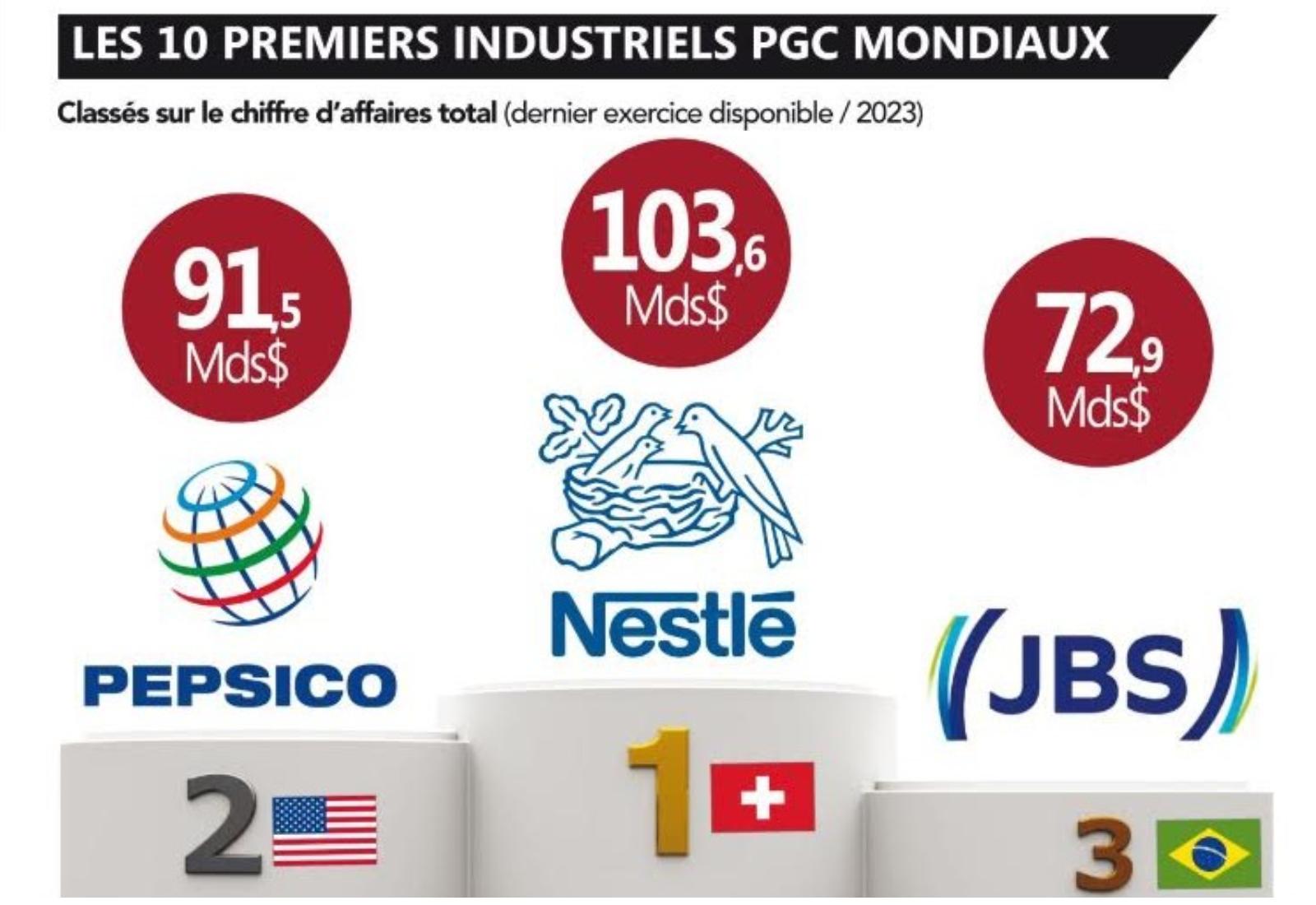
- JBS is among the top 10 large food groups on the planet, with a major influence on Brazilian politics and what happens in the Amazon.
- Between 2000 and 2018, in fact, most of the deforestation in the world occurred in the Amazon and, there, the primary cause of forest destruction is the creation of new pastures.
- Brazil, also due to meat farms, is the fourth largest polluter (CO2 emitter) in the world.
- Emissions from meat could account for up to 20% of global CO2 emissions.
- Brazil has exported hormone-treated steaks to Europe.
In 2023 JBS was the world’s third largest food producer behind Nestlé and Pepsico
From conflicts of interest with the Trump presidency to reports on Amazon deforestation, Jbs seeks to change its image
- 29 April, 2025
The US Securities and Exchange Commission (SEC) has given the green light for the listing on the New York Stock Exchange of Jbs, the world’s largest meat company based in Brazil. A multinational corporation that has tried several times to go the listing route, but has always been slowed down by accusations of corruption and deforestation of theAmazon, the world’s largest rainforest that is crucial for stabilising the Earth’s atmosphere(here a Bloomberg reconstruction). The entry of the JBS into the stock market is almost certain: Donald Trump, soon after taking office for his second term, considerably reduced the autonomy of the SEC by explicitly requesting that the work also be controlled by the President himself. A not insignificant element that allowed the multinational corporation – one of the companies that financed Trump’s own inauguration committee – to go down a downhill path compared to the past. The SEC, therefore, granted a declaration of effectiveness, which means that it has no objection to the giant’s proposal to list itself in the United States. Shareholders will vote on the proposal at a meeting on 23 May.
Trump’s campaign financing
The SEC decision came just days after campaign documents revealed that one of JBS’s subsidiaries, chicken producer Pilgrim’s Pride, had donated $5 million to President Donald Trump’s inauguration campaign, the largest amount ever donated by a single company. Mighty Earth, a global advocacy organisation working to defend the planet, has previously filed five complaints with the SEC challenging JBS’s listing. According to it, the agency’s decision shows that it is ‘no longer the independent SEC that has upheld honest practices in US markets for nearly a century’.
Previous listing attempts
Until recently, the SEC had rejected JBS’s attempts to list on the world’s largest stock exchange, while lawmakers and lobby groups worked to block the company. In the final months of the first Trump administration, the commission and the Department of Justice fined JBS, its parent company, J&F Investimentos, and Joesley and Wesley Batista, the brothers who control most of the company, a total of $280 million after finding that they had bribed some 1,800 Brazilian officials, in part to facilitate JBS’s acquisition of Pilgrim’s Pride. The company applied to the SEC starting in 2009, when its US division filed for its initial public offering. In 2023, the company resubmitted its most recent application, which was followed by several other applications over the past two years.
Environmentalists’ accusations
Environmental groups and government regulators have long accused Jbs of human rights violations, illegal appropriation of indigenous land, exploitation of child labour and sourcing its livestock from illegally logged land in the Amazon rainforest. The Batista brothers were accused by Brazilian authorities of bribing parliamentarians after a government investigation dubbed ‘the biggest corruption investigation in history‘. J&F Investimentos, Jbs’ controlling shareholder, had initially agreed to pay $3.2 billion in fines, but the Brazilian Supreme Court eventually reduced the fine by $2.1 billion in a leniency deal. Researchers have calculated that the company’s greenhouse gas emissions in 2021, mostly related to deforestation and methane, are equivalent to Spain’s total emissions. It is also estimated that its breeding activities have caused the deforestation of 1.7 million hectares.
The company has promised to end illegal deforestation in its supply chains by the end of 2025 and to achieve net zero emissions by 2040.
However, it has also stated that it wants to expand its business, which, according to environmental researchers, is completely incompatible with a business that relies on methane-emitting cattle grazing on deforested land.
And Luciano Capone (Il Foglio) picks up on the Mercosur argument that closely concerns JBS.
The Mercosur agreement was signed at the end of 2024 and Le Monde reported that JBS, the Brazilian meat giant will benefit from the treaty between Europe and Mercosur
The multinational, the world’s leading producer of animal proteins, is expected to take advantage of the EU-Mercosur treaty to increase its presence in the Old Continent, which accounted for 7% of its exports in 2024.
The agreement allows Mercosur countries to export an additional 99,000 tonnes of beef, with a tariff reduced to 7.5%.“JBS produces most of Brazil’s high-end meat, which is the most valued in Europe,” analyses Alessandro Francisco Trinidade de Oliveira, of the Federal Institute of Parana, for whom Brazil “could at least double its meat exports to the European Union. .
And here it is already clear that there is a big difference between what Coldiretti says and “the truth”: the union headed by Ettore Prandini speaks of “zero duties” while Le Monde certifies that it is 7.5%
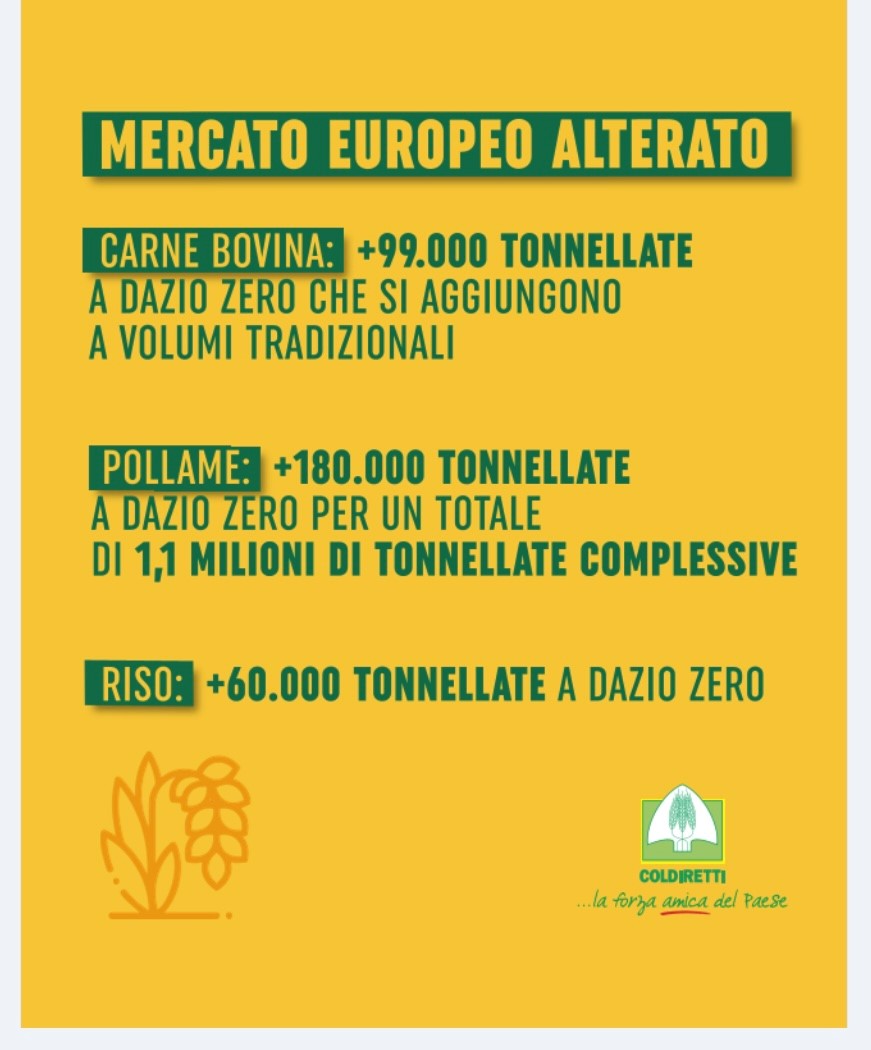
“The fact,” explain sources in the EU executive, “is that: the EU-Mercosur Agreement risks being erected as a totem against which to hurl one’s frustration at problems in the sector [agriculture] that actually have a completely different origin: first and foremost, the low profitability of the land trades compared to the rest of the economy, which push young people away from the sector and penalise the producing companies.
Those who, like Coldiretti , have done little or nothing in recent years to protect the profitability of Italian farmers, are therefore looking for a scapegoat from outside, on which to make propaganda.
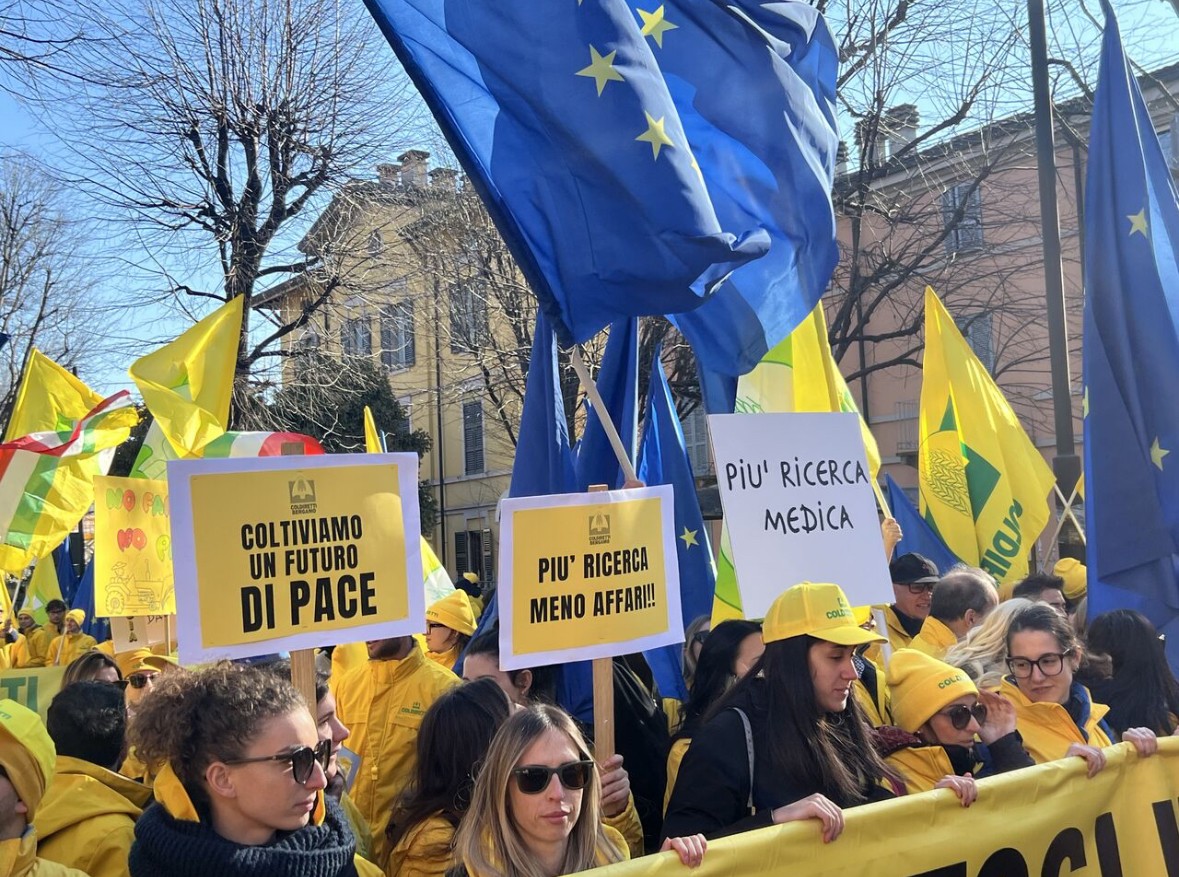
Coldiretti has moved against insects, against ‘synthetic meat’, against Chinese tomatoes, against EFSA (photo below) or even tried, with little success, to create a brand of dried pasta.
In the dossier, the orders following Coldiretti ‘s complaints about Italatte srl (where Ettore Prandini has a slight conflict of interest, being a breeder) stand out , somewhat less so those concerning distribution (supermarkets and discount stores. The only exception: Eataly. see pg 17 and 18).
Returning to JBS,what is surprising in this affair is
- How a single family can influence the fate of an area as boundless and as important to the world as the Amazon.
- How little information and lucidity there is on the subject in Italy.
- Mercosur could become an advantageous agreement if the principle of reciprocity on foodstuffs entering Europe were established, e.g.: in Europe, products must not contain hormones and pesticides? Brazilian producers who want to export to us should apply the European rules in their factories.
Basically on Mercosur – which also concerns the possible importation of JBS meat – it is a matter of informing yourself and dealing with your counterparts as best you can. JBS, which will have ‘boundless’ power with its listing on Wall Street, is to be closely monitored, but South America could be, in the uncertainty of Donald Trump’s duties, an area of opportunity for our companies, notoriously ‘big exporters’.
I also report : Concerns over corruption and deforestation overshadow New York Stock Exchange debut of Brazilian meat giant JBS’s US listing raised ‘deep concerns’ from a bipartisan group of senators. Below : Coldiretti ‘s populist slogans against EFSA (Parma).