Drafted 11 April, updated 22 September 2025
Foreword: What is a marketplace?
Generally a platform where items from third-party suppliers are sold (e.g.: on Amazon’s platform you can buy a DVD from Amazon or a video store).
The marketplace was invented by Alibaba and copied by Amazon.
To be more ‘technical’ and explain better let’s take Amazon: the marketplace is about third party sellers (3P- third party sellers).
There are three levels of partnership between sellers and Amazon.
A first party seller (1P) is a branded manufacturer that sells its products directly to Amazon, which then sells them to the buyer. Such products are labelled ‘Shipped and sold by Amazon.com’.
A second-party (2P) seller is the type of seller that relies on a distributor’s partnership to ship its products. This occurs when a brand sells to a distribution partner and the retailer buys from that partner. Such products are labelled ‘Sold by the brand, shipped by Amazon’.
A third-party seller (3P) uses Amazon as a marketplace to sell directly to buyers.
This is the case, for example, with many small specialised retailers.
Fees vary depending on the sector. Perhaps, with more supply, they could go down.
And now let’s talk about Lidl with an excerpt from GDOWeek (you can find my conclusion at the bottom):
Revolution in e-commerce: Kaufland arrives in Italy and challenges Amazon
Kaufland, the German retail giant belonging to the Schwarz Group (which also controls Lidl), has announced the arrival of its online marketplace in Italy. Starting at the end of the summer, Italian consumers will be able to access Kaufland.it, a platform that will offer millions of products divided into more than 6,400 product categories, ranging from electronics to furniture, from household and kitchen items to sports, fashion and children’s products. With this move, the company aims to enter the Italian e-commerce market with a generalist model capable of competing with the leading global players in the sector.
The project is part of an ambitious international expansion plan that sees Kaufland’s marketplace already operating in Germany, Slovakia, the Czech Republic, Poland and Austria, and which, in addition to Italy, also plans to launch in France by the end of the summer. The latter is the third largest e-commerce market in Europe, confirming the group’s targeted strategy. Kaufland already boasts impressive numbers in Germany, where the marketplace has 32 million monthly visitors and over 45 million products available, making it one of the most popular online sales platforms in the country.
The business model adopted by Kaufland involves collaboration with third-party retailers, who offer their products directly on the platform while maintaining their own brand visibility. Customers receive the goods directly from the seller, but can count on Kaufland’s customer service, which is available in Italian. The system is designed to ensure transparency and ease of use, with clear information about the seller and the conditions of purchase. The accepted payment methods include options that are very popular with digital users, such as PayPal, credit cards and deferred payment formulas.
Central to the project is the Kaufland Global Marketplace platform, developed in-house as an all-in-one solution for sellers. With a single registration, operators can sell in all countries covered by the system, managing catalogues, orders and product data from a single interface. The marketplace also offers advanced tools to help sellers grow, including automatic translation of content, local currency payment management, and multilingual customer service. With this infrastructure, sellers have the potential to reach up to 140 million potential European customers by the end of the summer…
On the other hand, Lidl had already confirmed its leadership with the AI project.
The unbelievable thing is that Lidl confirms the launch of a European marketplace network that does not distribute food to date but could do so in the future because Amazon is testing a marketplace for food products. This move could definitely turn the tables.
And when people ask me at the presentations of my book Le Ossa dei Caprotti, what I would have done in Esselunga if I had stayed there, I always say that I would have developed the markeplace, given that I had developed an online bookstore and was gearing up to also sell drugs online.
Conclusion: the future of our commerce, through e-commerce, is in danger of speaking American, German and Chinese.
This article is in the geopolitical section because e-commerce also has a very important weight in the internal affairs of European politics, as they show:
- the Tik-Tok case in Romania
- the fact that in the first half of this year, Temu attracted an average of 115.7 million Europeans to its platform each month
- The closing of the border between Poland and Belarus ends up affecting EU-China trade
P.S. Kaufland-Lidl opens its marketplace also in Italy and competes with Amazon on non-food.
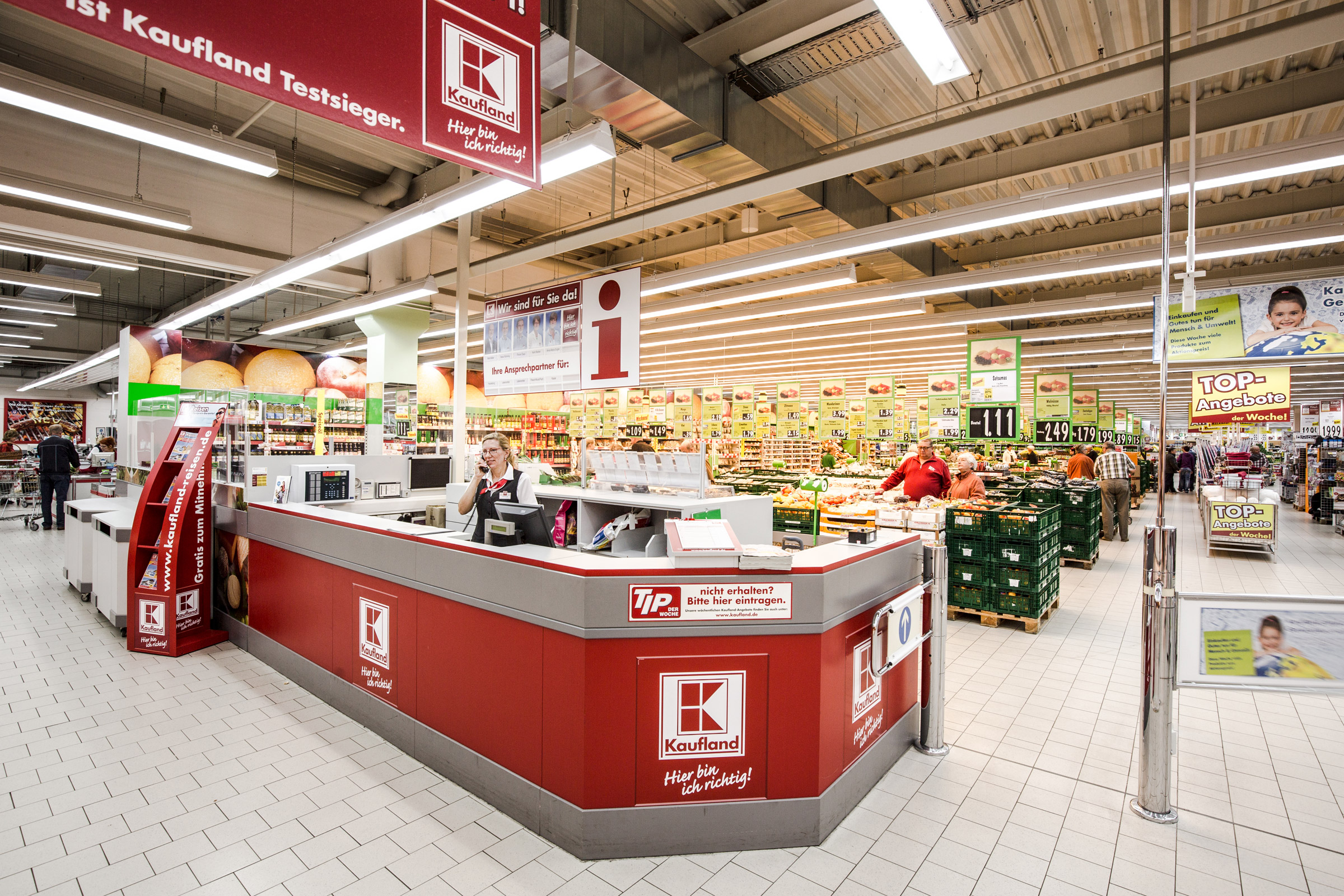
Below : a Kaufland food department