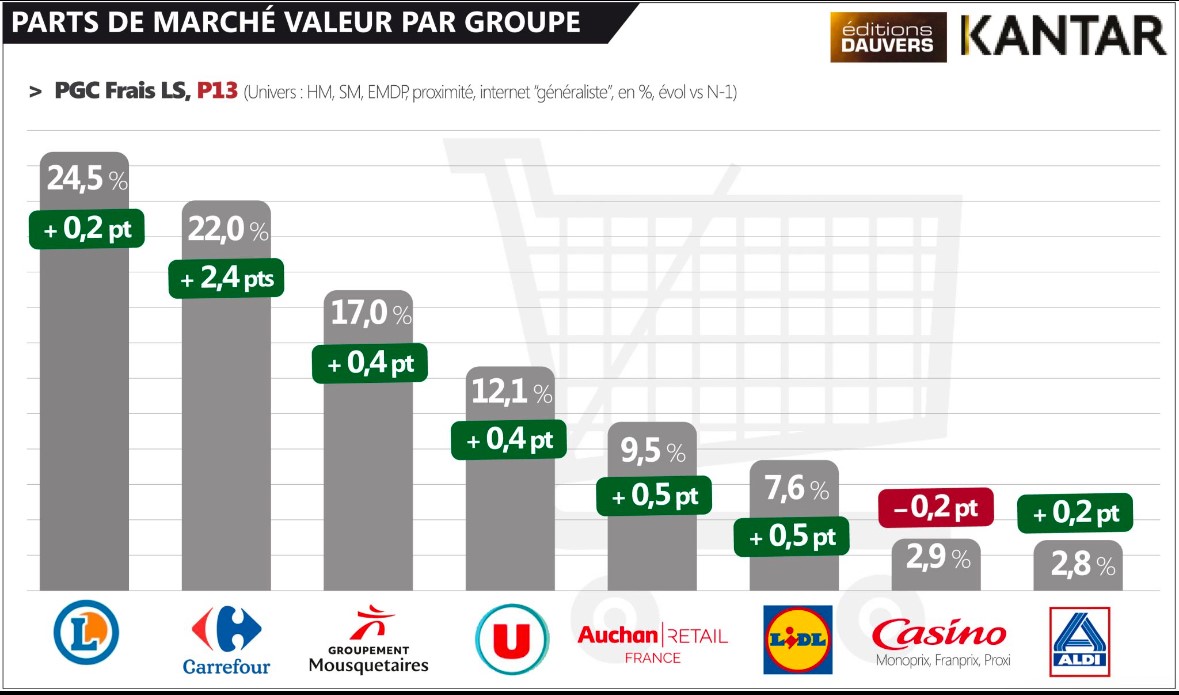
Carrefour can hardly complain as, at the end of 2022, it accounted for 19.6% of the French market, compared to Leclerc‘s 22.8%.
p.s.: growth in market share does not necessarily mean good profitability: Lidl France, with 1,600 supermarkets and 46,000 employees in France, does not disclose its results by country, but according to LSA magazine, it recorded a loss of EUR 157 million at the end of October 2024 (for a turnover of EUR 11.2 billion in 2024) halfway through its fiscal year, which ends on 28 February.
According to Le Monde, ‘the brand has suffered from the inflationary crisis’ and its employees are on strike.
Basically, the French market, for the time being, remains in the hands of four large groups holding 75.6% of the market, among which only Carrefour has a centralised majority management tradition. Leclerc, Les Mousquetaires and Système U are consortia. The company’s growth has been helped by the difficulties of the food discounters and some rival groups (Auchan, Cora and Casino).
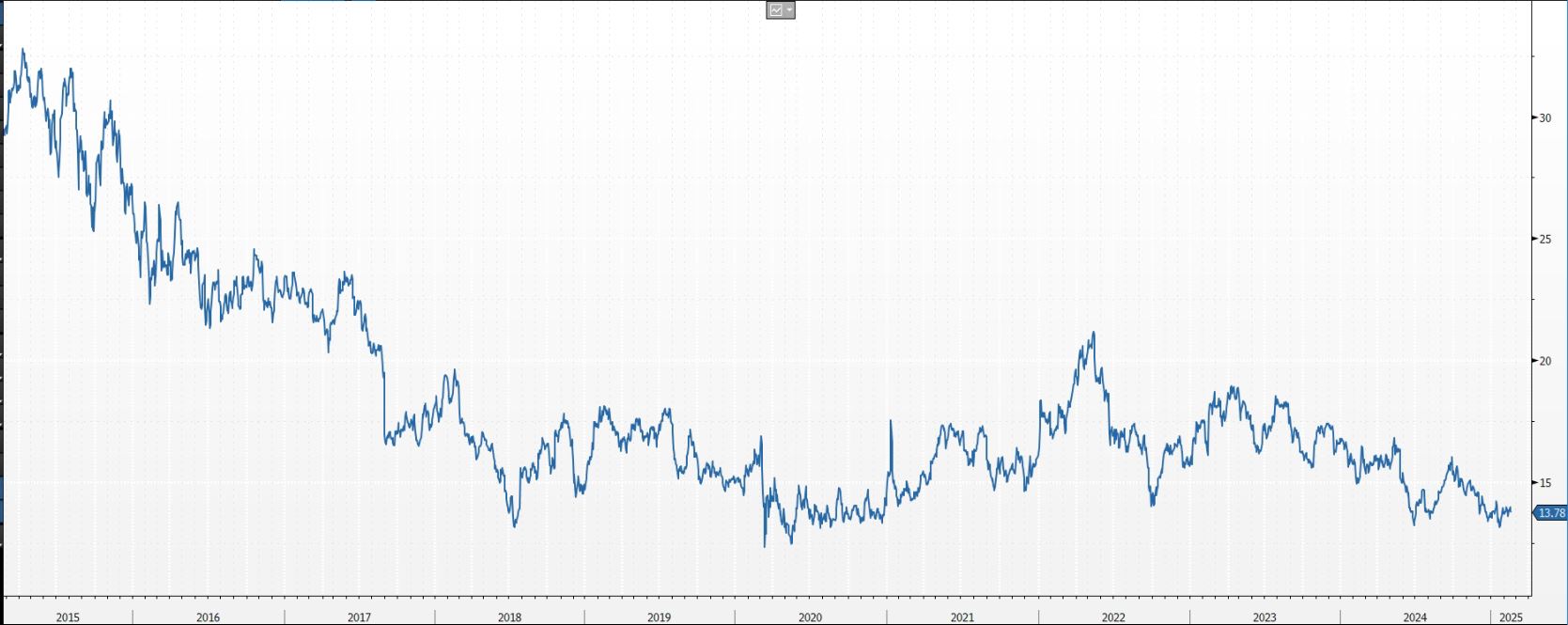
But its share price has not benefited, it is still lower than when Bernard Arnault sold his stake (at the time it was at €16.85, today it is under €14)
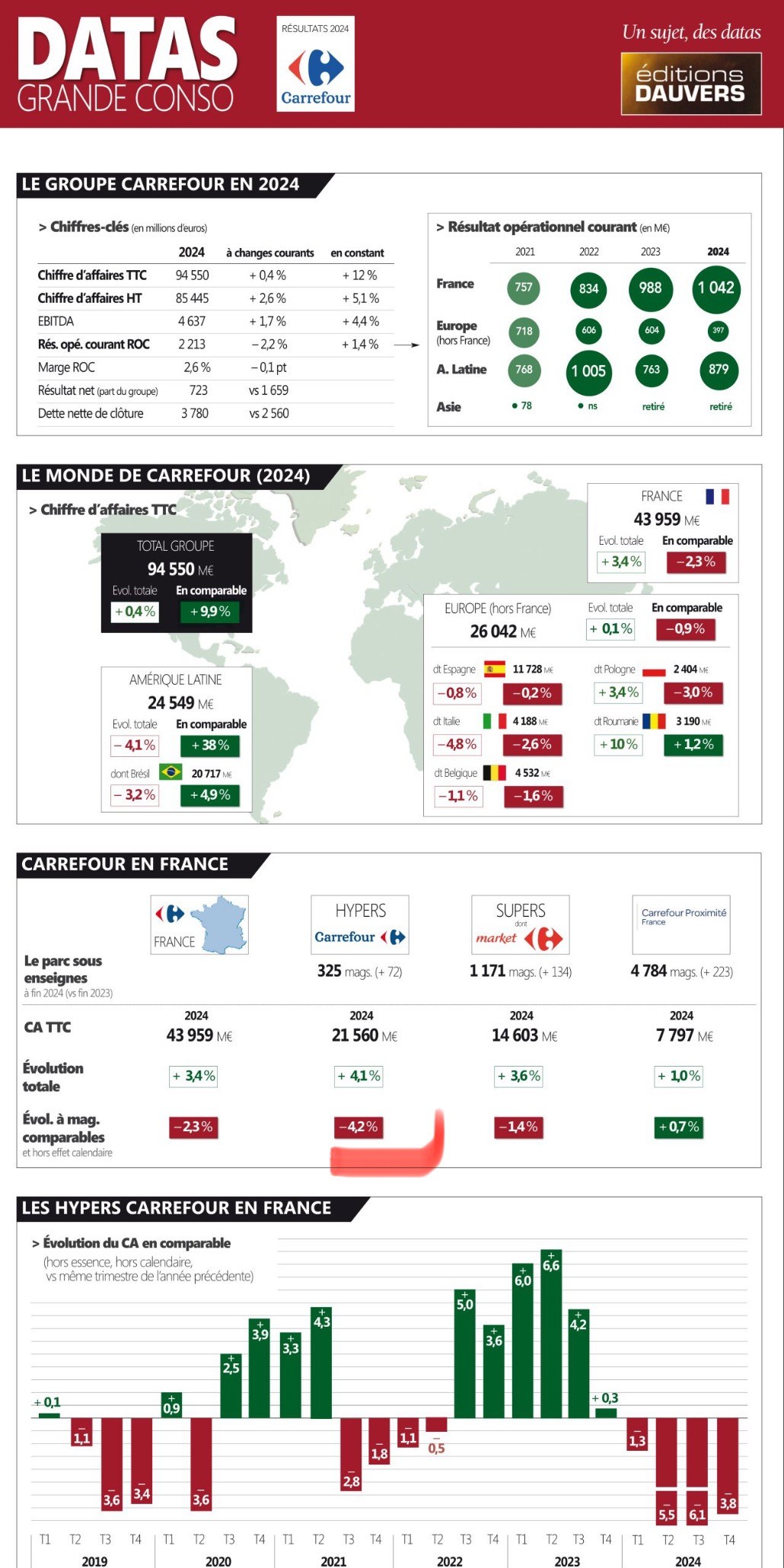
And looking at the 2024 results, one can assume what analysts have also noted: on a like-for-like basis, sales fell throughout Europe – which accounts for 27.5% of the group’s turnover – except in Romania.
In Italy, it continues its slimming down by resorting to franchising (which it also does in France).Although in reality Carrefour is said to have entered into negotiations with Conad, Lidl and Esselunga to sell the entire network (the news is confirmed by Repubblica on 6 July 2025: ‘ The decision is closely linked to the complexity of market conditions in Italy, where the large-scale retail sector is characterised by intense and fragmented competition, against a decreasing purchasing power and constant pressure on margins, determined by energy and logistics costs and rising interest rates’) ). In the country, the French company is reducing its workforce.
South America (which accounts for 25.9% of the group) is doing well.
In France, which accounts for 46% of its turnover, it has strengthened its presence, gaining – as we said – 2.4 market share points and coming ever closer to leader Leclerc.
However, this advance did not help the share price growth on the stock exchange as comparable sales fell.
The net result doubled but it was not enough because its French hypermarkets (- 4.2% in comparable surface area) are still in great crisis.
Will the company be able to make the newly acquired Casino hypermarkets work as well as possible?
What about e-commerce?
It is not known.