Drafted 3 August 2023, updated 22 June 2025
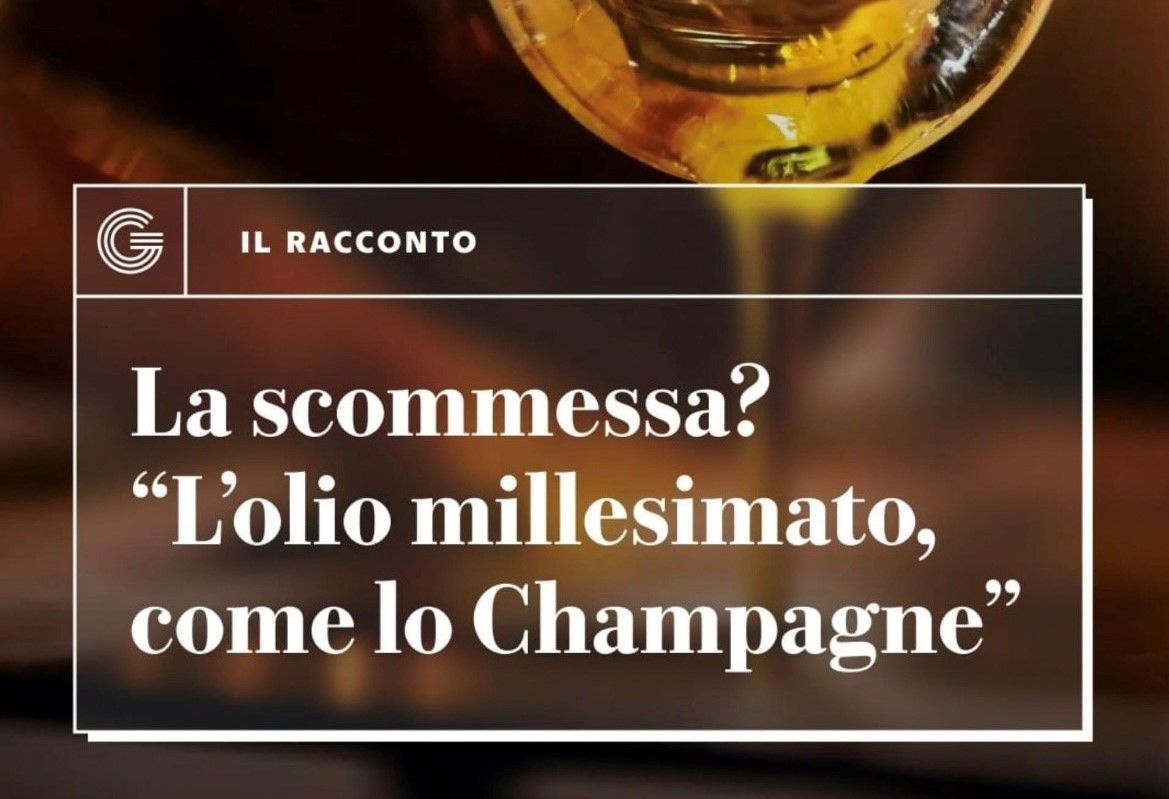
A good friend of mine once told me: but can’t vintage oil be made? No, unlike wine, it is practically impossible to make and in this article we explain why.
Foreword :
- discounting is now a worldwide phenomenon : it ranges from Great Britain to Italy, passing through Poland. This is also true in France and the United States.
- In Italy, we have seen a deterioration in the quality of food.
- We remember, for example, the frozen mozzarella, the prosciuttopoli affair and the listeria scandal, which caused the death of four people.
Extra virgin olive oil should be a symbol of ‘Made in Italy’ excellence. Instead, its production is dominated by Spain, which favours quantity over quality.
And, often, the oil on the table ends up being old, tasteless and even stinky. Since 2023, the situation has not improved: Spain increasingly dominates the market but fraud is the order of the day.
Getting to the heart of the matter :
the title of this article should have been ‘Extra virgin olive oil , fail : Conad, Coop, Esselunga, Eurospin, Lidl and MD‘. In fact, according to Il Salvagente’s new test on extra virgin olive oil on the shelves, no less than 6 labels out of the 11 rejected are private labels of the large-scale retail trade.
But then I said to myself‘GD is certainly responsible for this situation ( you can find, if you needed it, reconfirmation here but also in this article from 2025) but it is certainly not the only one‘.
I remember that one of my arguments in trade discussions with Centromarca (Confindustria) was ‘if you don’t agree with GD’s demands, you can always oppose them’.
The oil industry has its own responsibilities, with the large-scale retail trade: among last year’s rejections there were also many industrial oils.
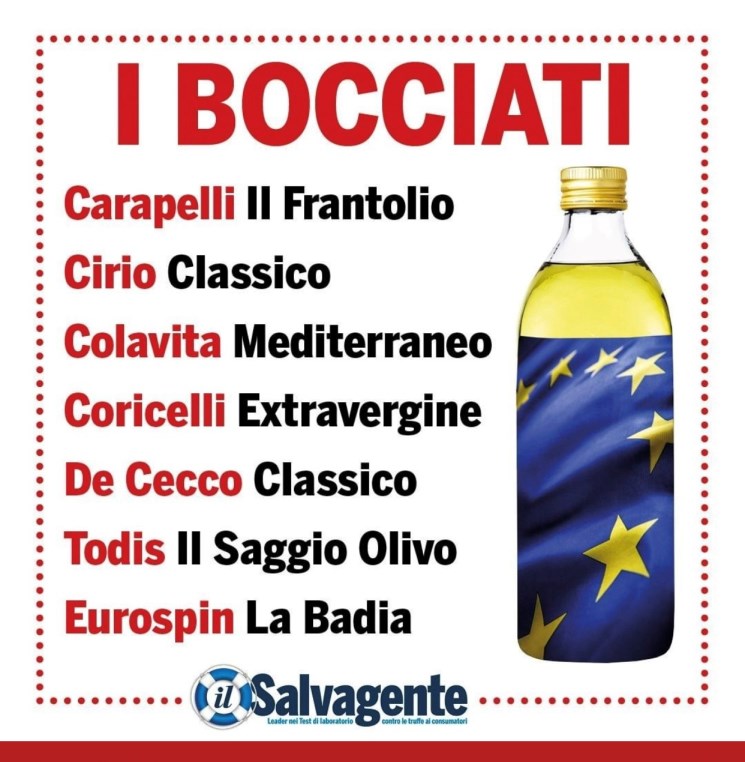
This is the third on-shelf extra virgin oil test since 2015 by Il Salvagente.
In 2015 out of 20 oils on test 9 were downgraded from extra virgin to virgin. In 2021 it was 7 out of 15. In 2023, 11 out of 20 oils were rejected.
Obviously, eating ‘good oil’ is better than consuming fake extra virgin.
The real problem now is that, on average in one out of two cases, those who turn to a supermarket shelf risk buying what they did not want. However, paying 20-30% more for it.
You can find all the considerations here, this is just a summary.
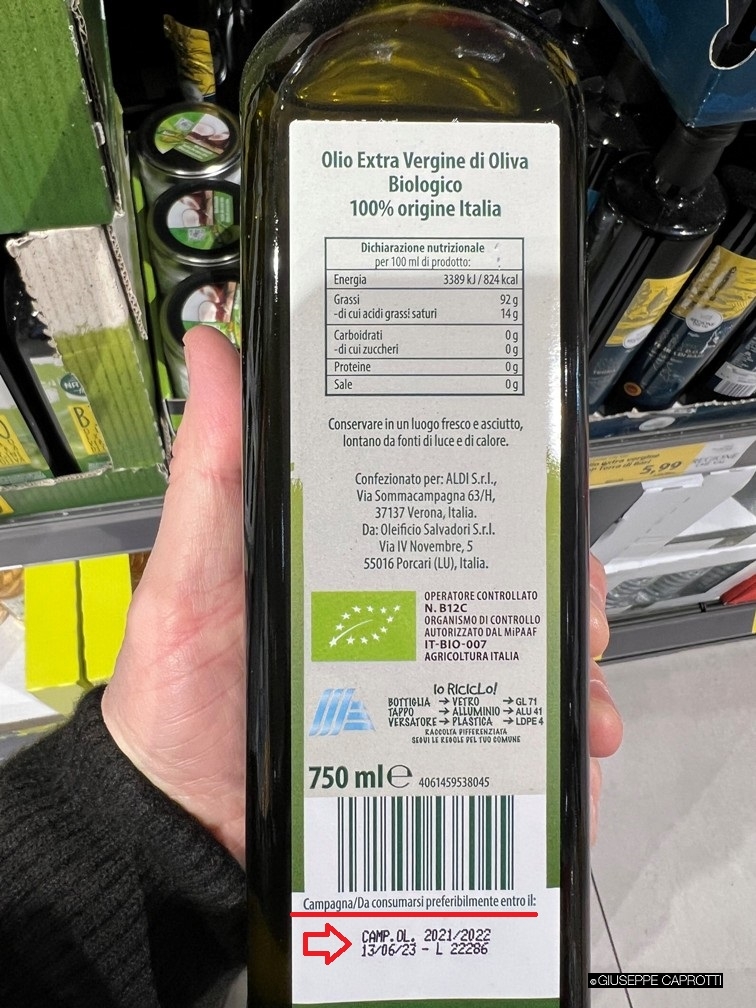
Looking at the label below, you can see that the study exhibited by Alberto Grimelli, however, lacks catering.
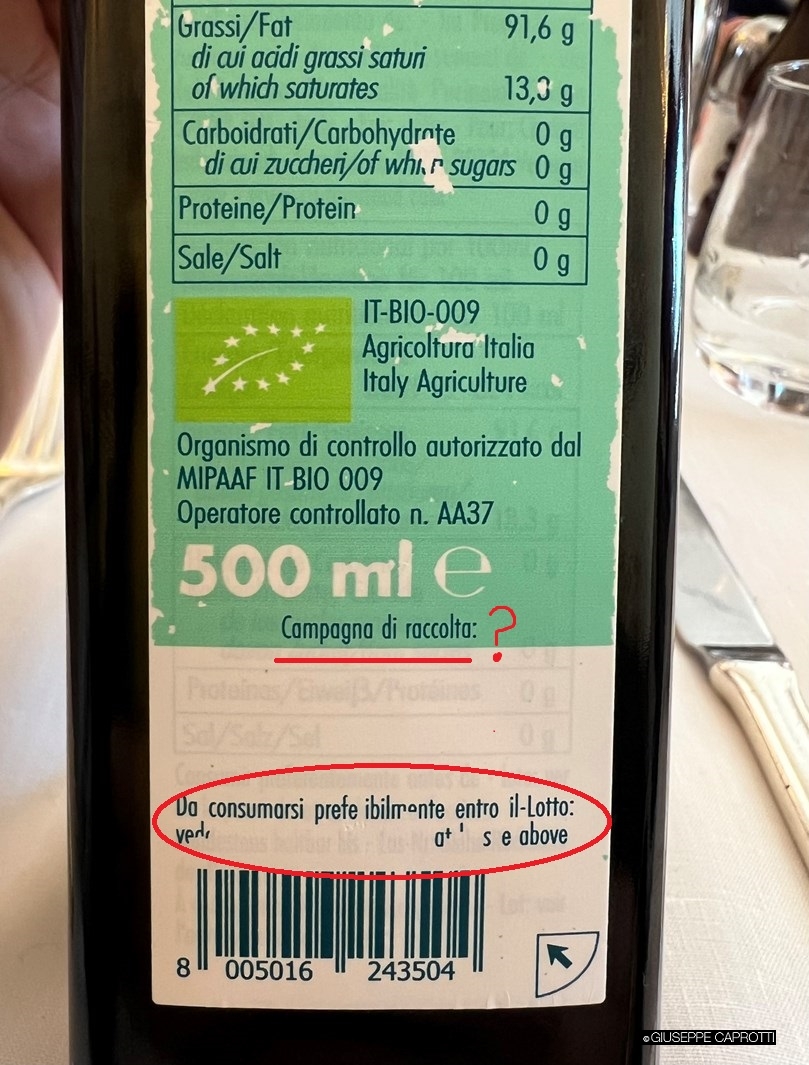
The product was photographed in a famous restaurant in Venice.
The expiry date is also missing.
Below is the correct labelling from the discount chain Aldi.
Pay attention to this when you buy a bottle of oil or season a dish at a restaurant.
But these are remote hypotheses: there are few controls, both in the large-scale retail trade and in catering, and, unlike wine, in oil there is no ‘strong’ and prestigious industry that has focused on quality for decades.
In the case of oil, there are no longer any large Italian companies – selling products made in Italy – that can or want to oppose the demands of distribution. Nor are there any bodies that worthily represent consumers ( Codacons, in this case, for example, seems to be siding with one of the producers).
Oil producers, with the GD, have only focused on volume and have been disadvantaged by a short-sighted agricultural policy.
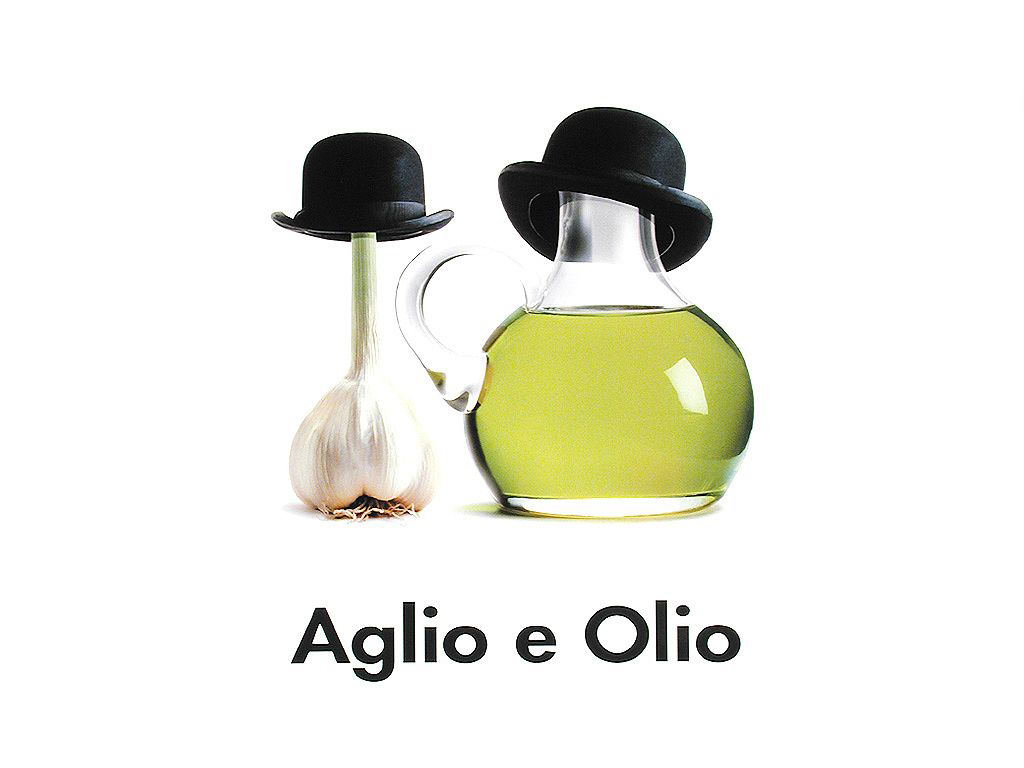
Instead of making nonsensical advertisements on tourism such as, for example, ‘Open to wonder‘, it would be important to make very strong and nice ones on oil, similar to the one below, also byArmando Testa.
And here perhaps, both the Ministry of Tourism and the Ministry ofAgriculture should intervene to try to revive the national olive-growing sector, which is in a very bad shape.
There wouldbe no shortage of space in Puglia, for example: sovereignty, the Italian economy and – in the long term – the health of Italians would be protected .
Better safe than sorry, says someone who joined Esselunga at the time of the methanol wine scandal, in which 19 people officially died.
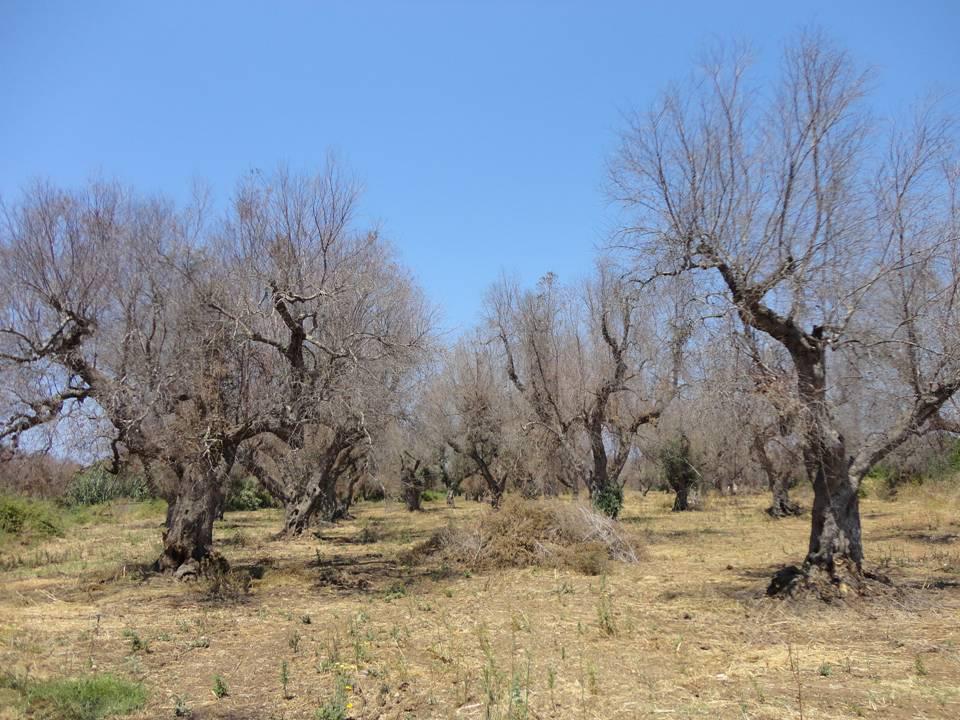
Below: olive trees killed by Xylella, in Puglia.
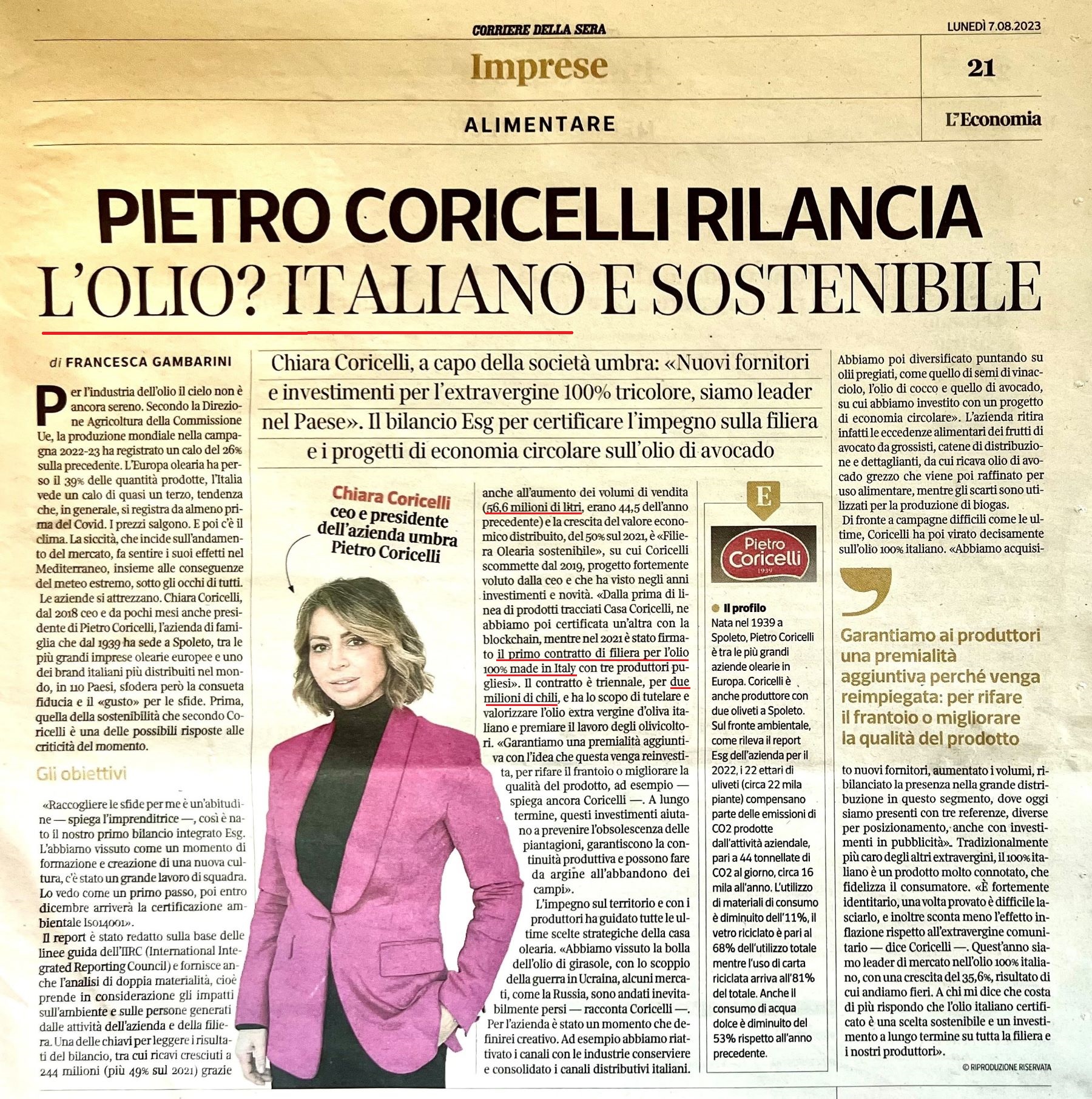
Below: In August 2023, Pietro Coricelli spoke of ‘Italian oil’.
But then, if you read closely, you realise that it is a project, which has only just begun (2019) and weighs very little on his total production.
Confirmation of the total lack of vision of the sector’s entrepreneurs comes from this article: Monini announces: will extra virgin cost less? Not so and in any case it would not be good news (2024).
Italy should, with its now limited production, try to take the top end of the market. Trying to compete on price with the Spanish is absolutely impossible.
P.S.: all the problems of extra virgin oil are confirmed by reading:
- The quality of food gets worse with the cost of living
- Once upon a time there was Italian olive oil.
- Fake extra virgin oil at the supermarket ‘for the average consumer’
- Olive oil is a good yardstick for assessing the static nature of Italian agriculture.
But above all, Italian olive oil is in danger of disappearing : with the 2024-25 marketing year, Italy, with 244 thousand tonnes, has for the first time dropped to fifth place among the world’s leading producers, preceded by Spain (1.3 million tonnes) but also by Turkey (450 thousand), Tunisia (340 thousand) and Greece (250 thousand). A real debacle due to the national drop in production (which has been going on for years) and the simultaneous growth of competitors who are, instead, investing in oil production. The figure is confirmed here : Only 45.9% of the extra virgin olive oil (EVO) in Italy is domestically produced.
The bill defining quality Italian extra virgin olive oil for the first time is interesting .
Better late than never.