

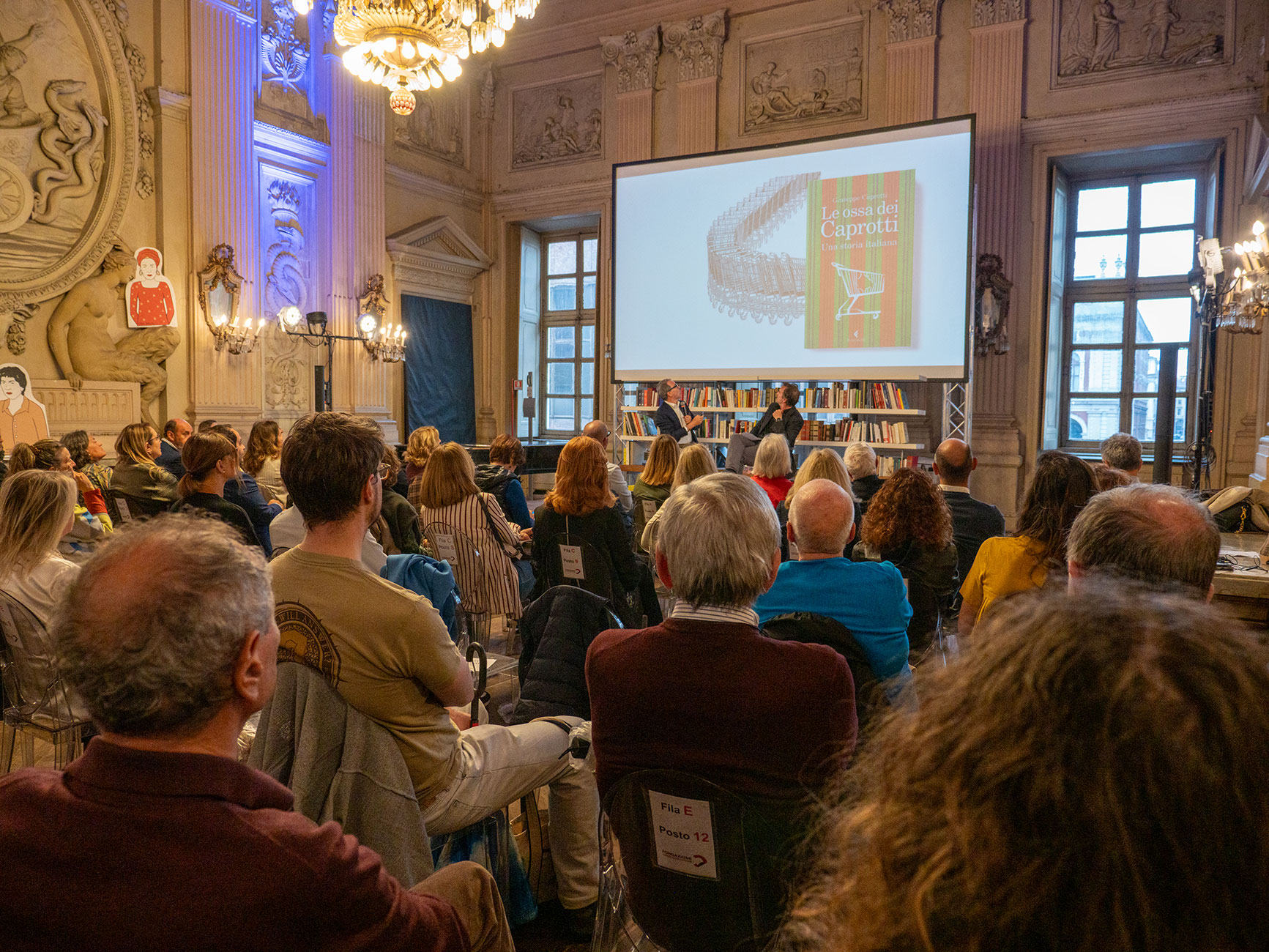
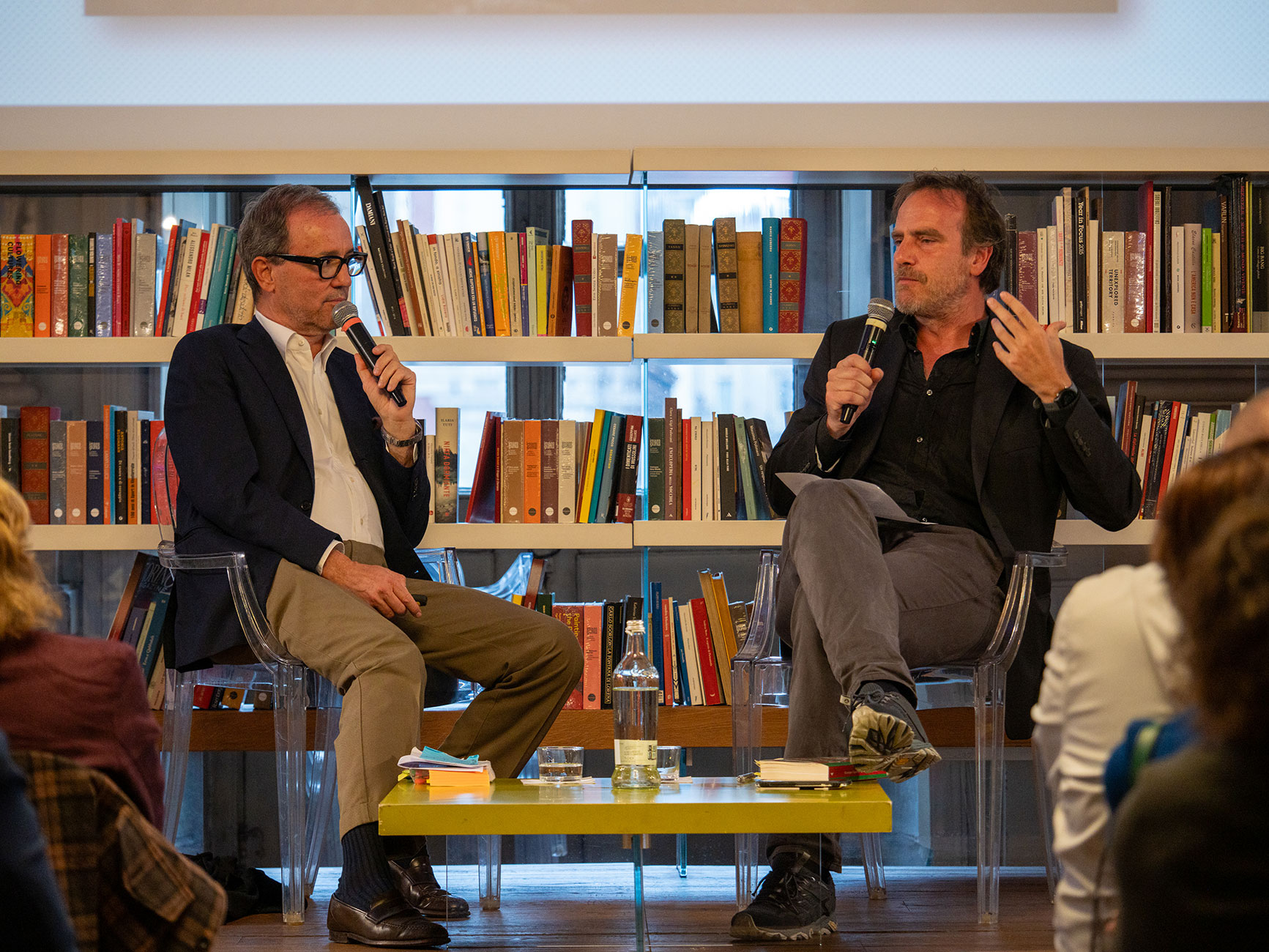
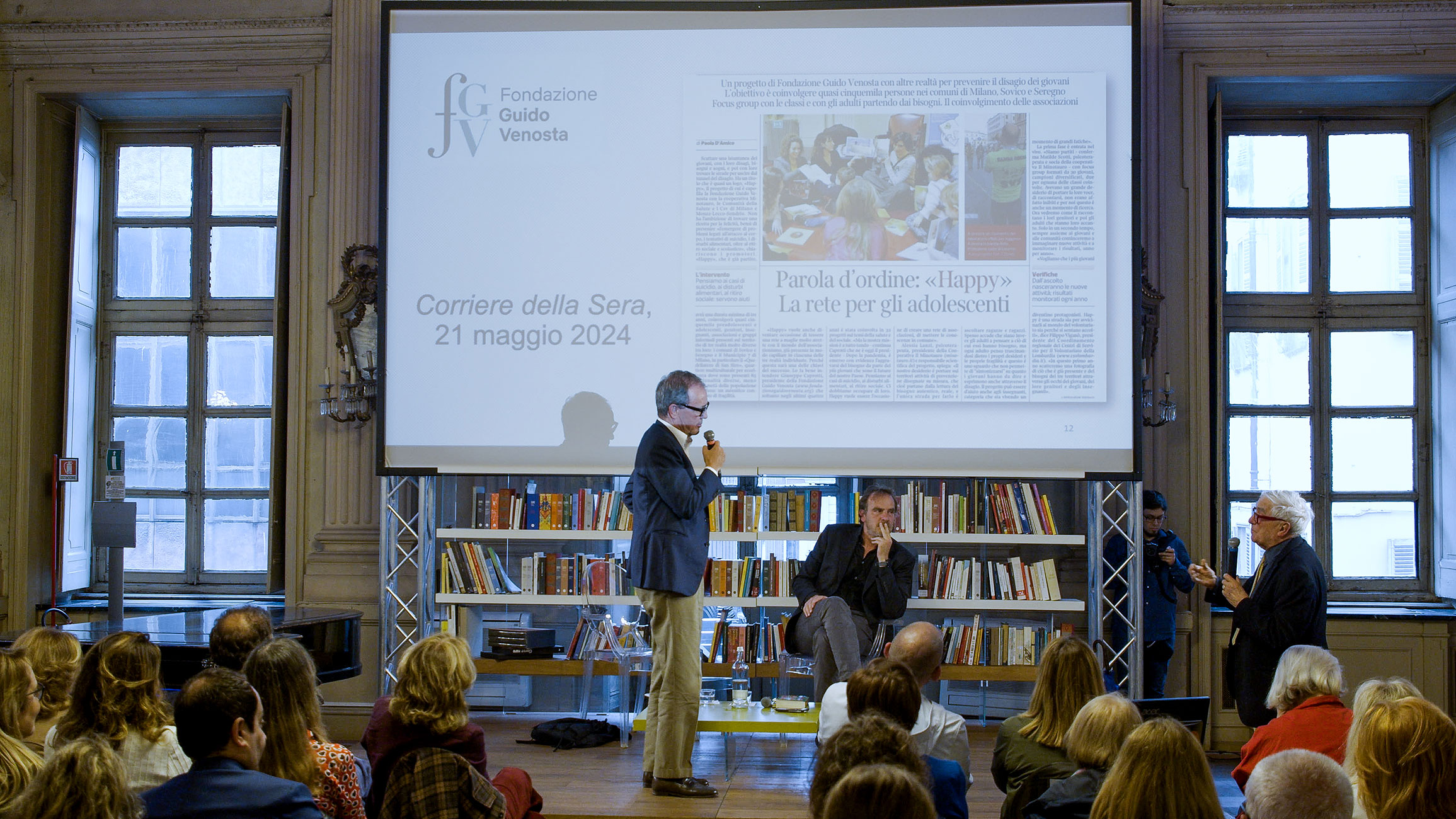
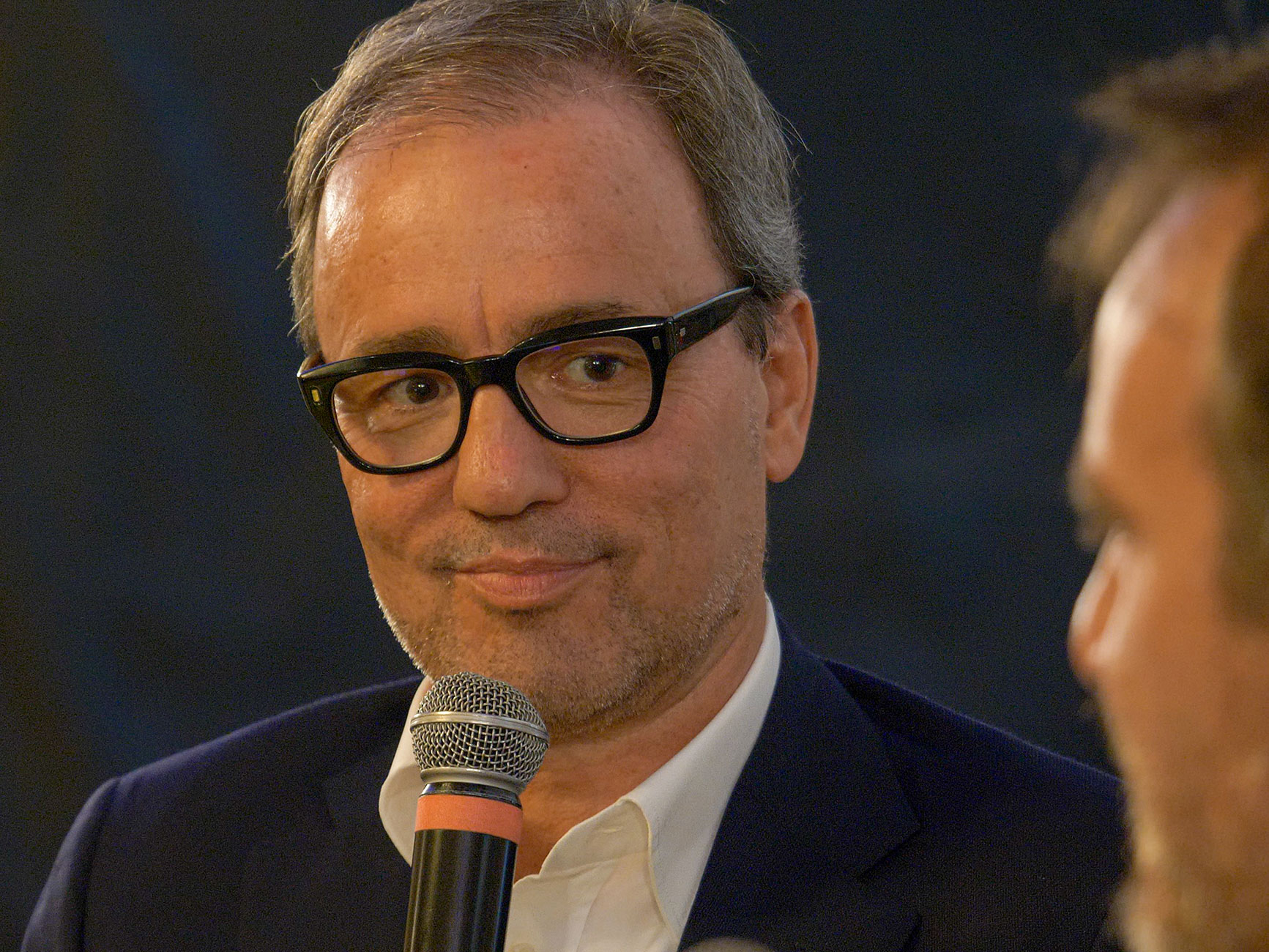
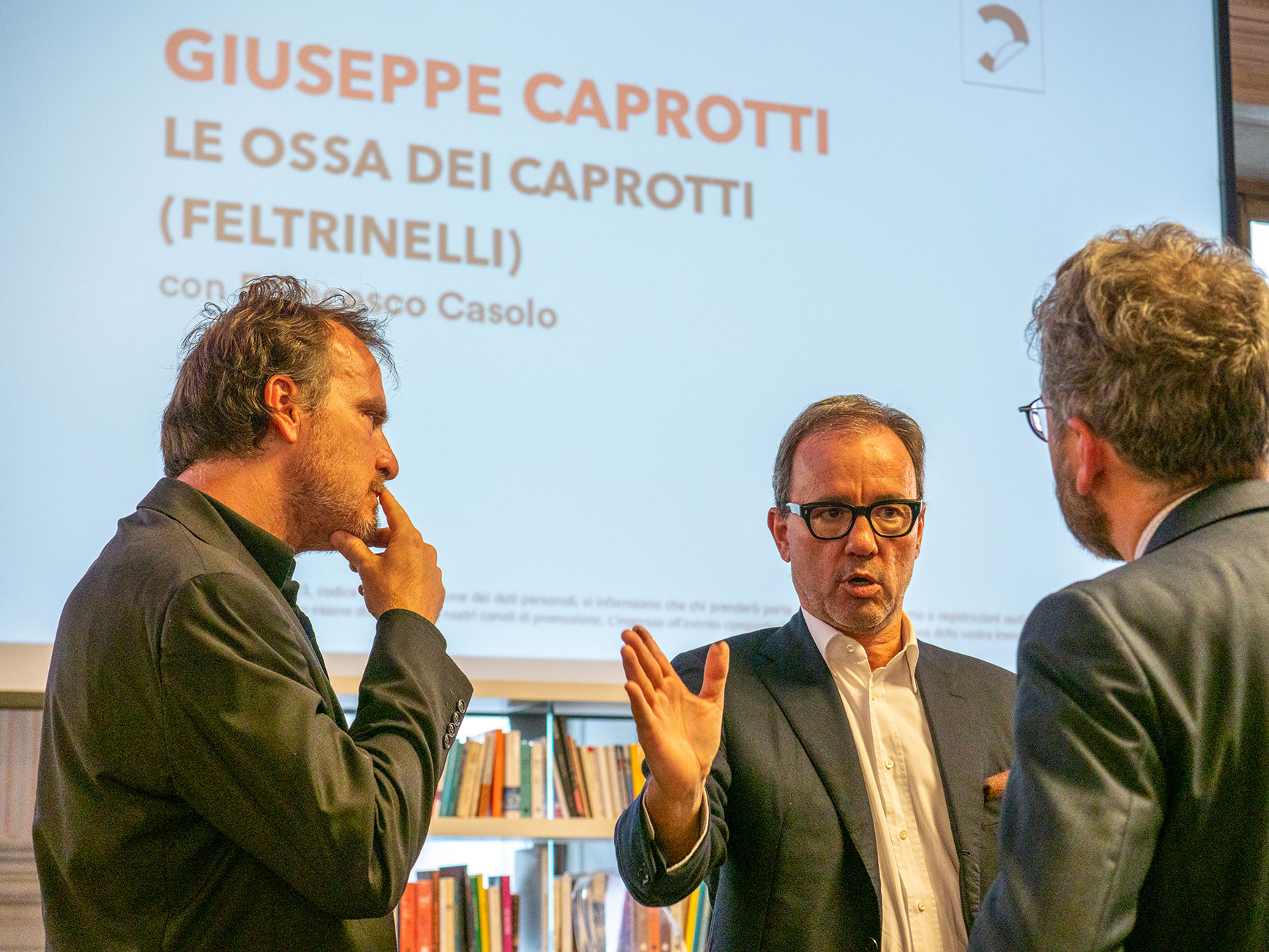
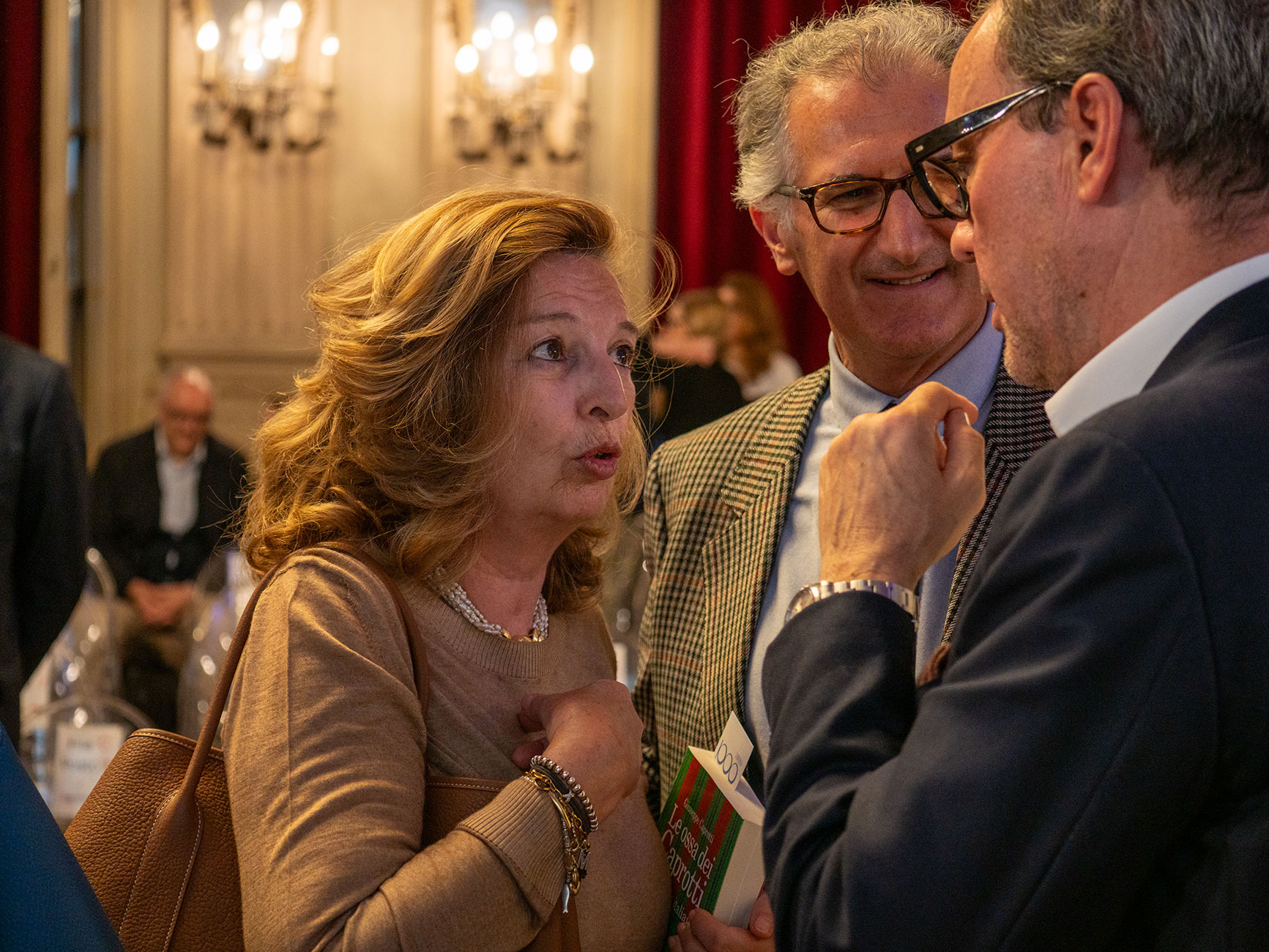
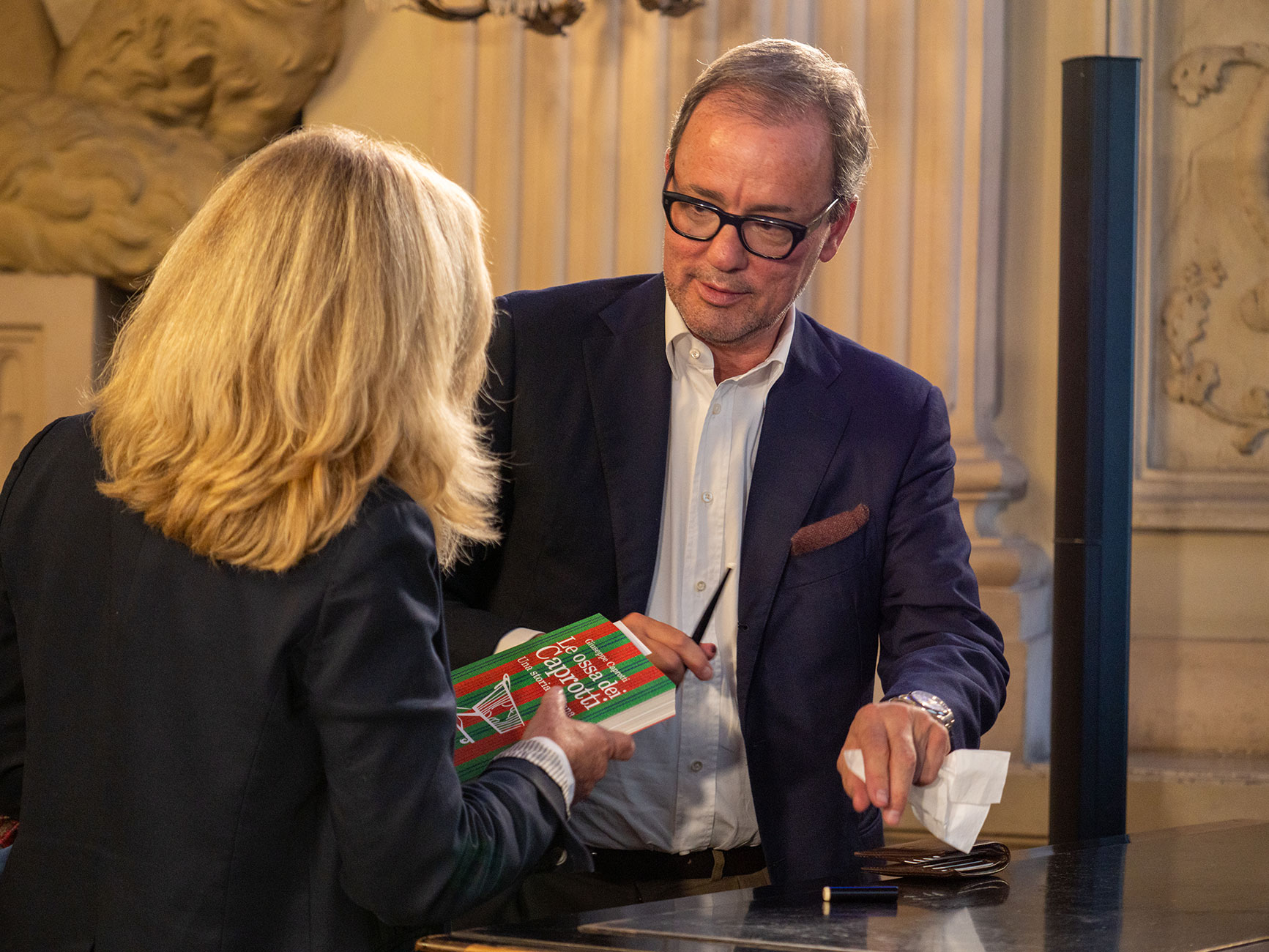
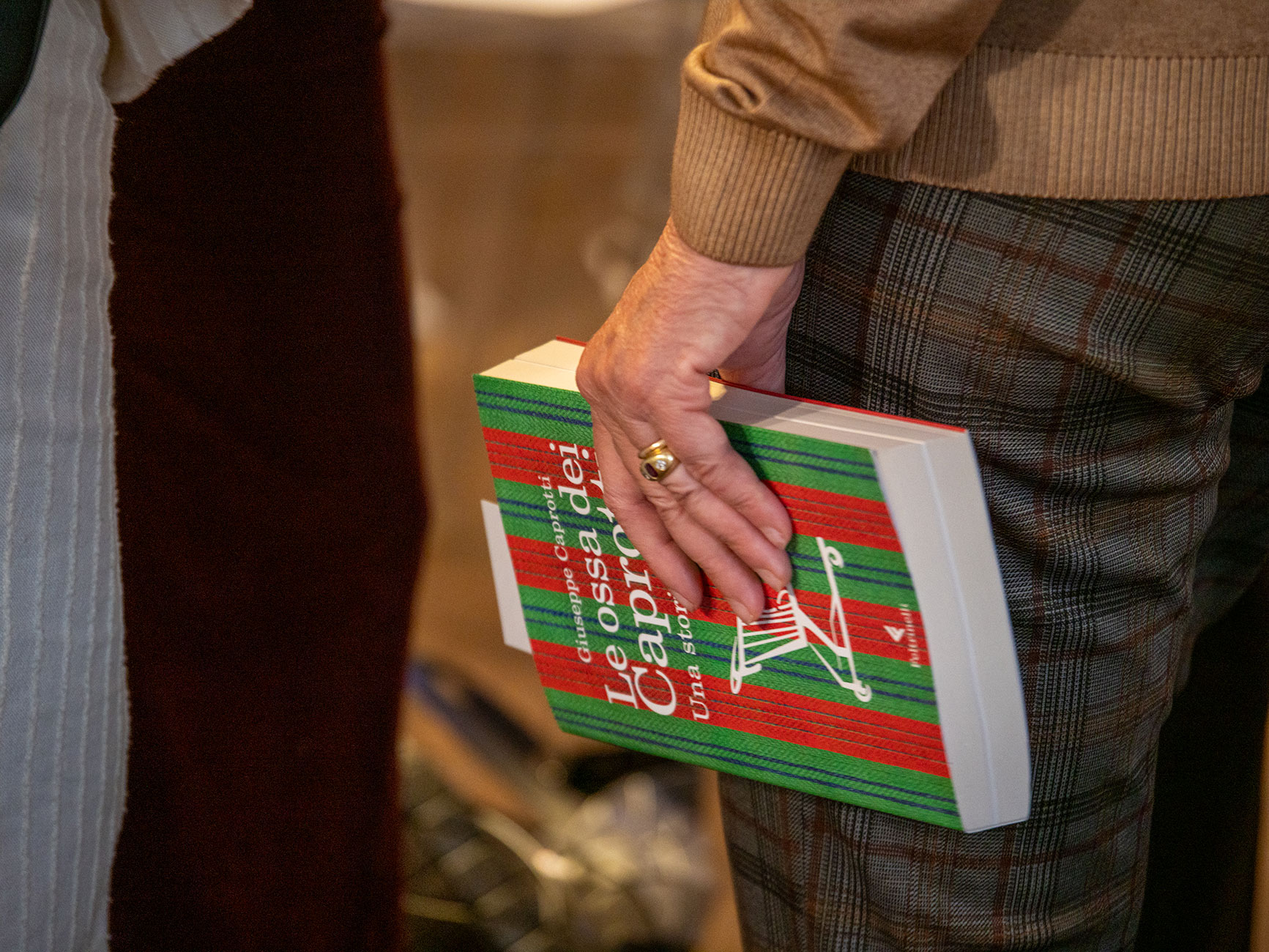
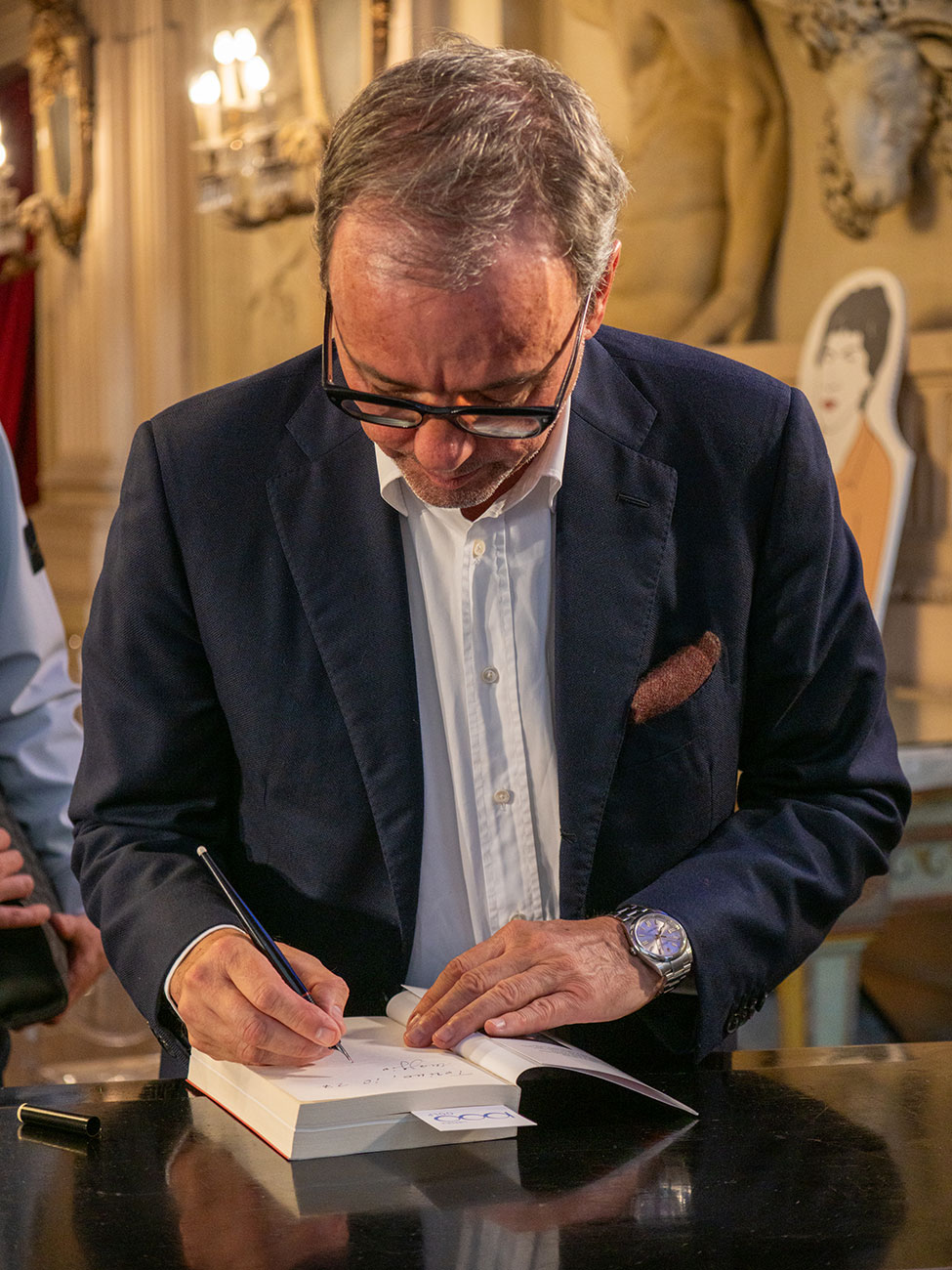
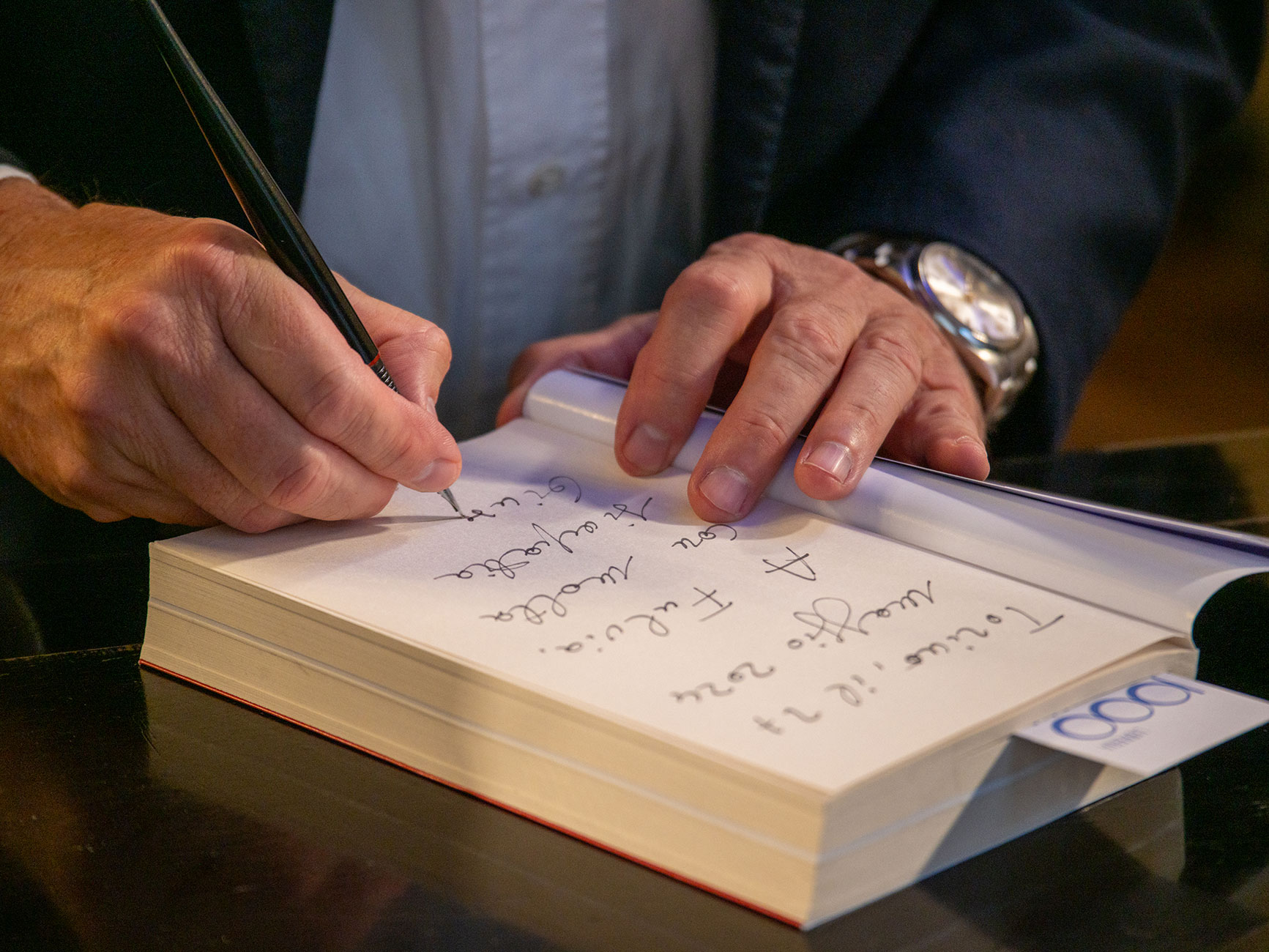
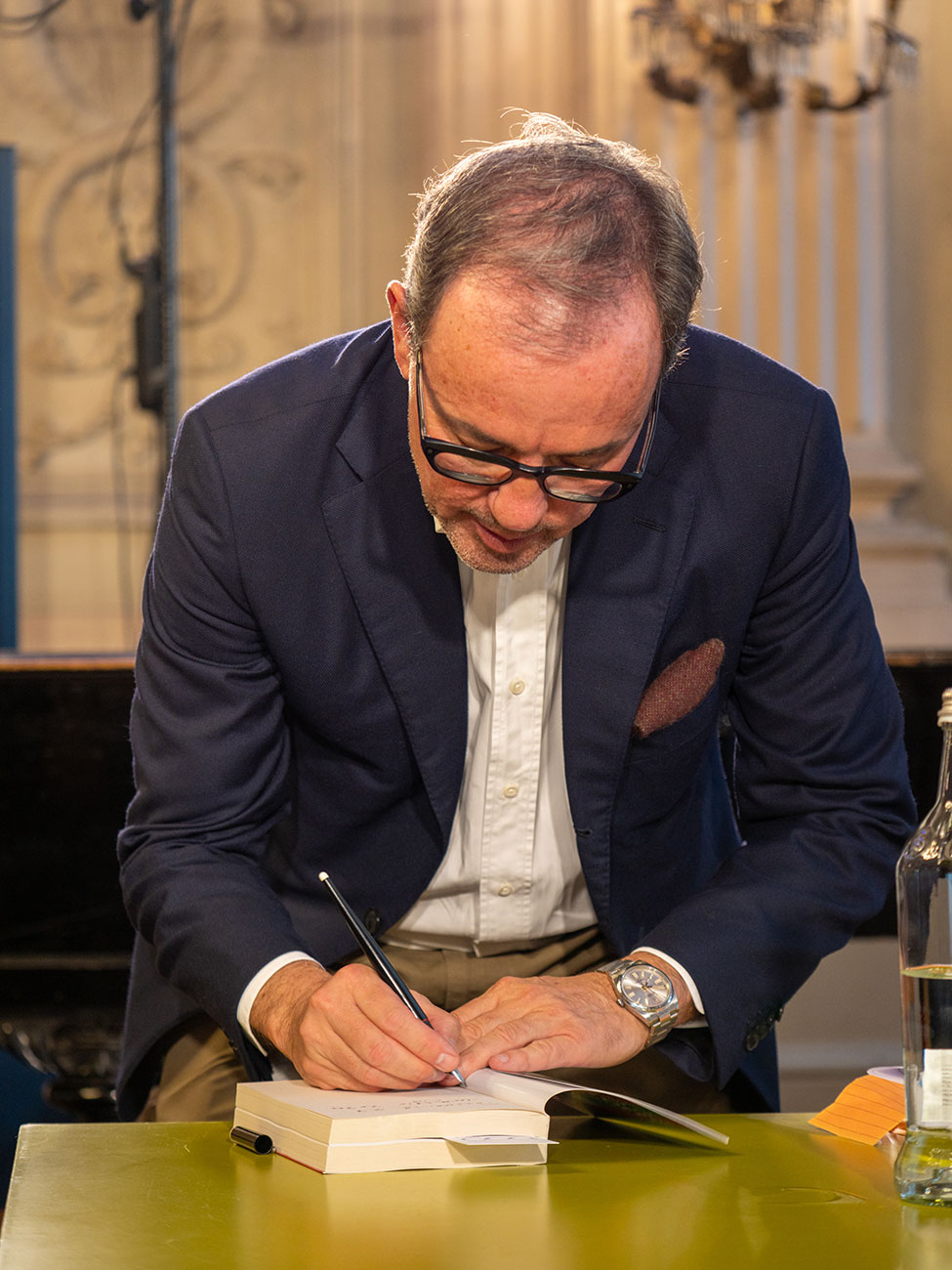
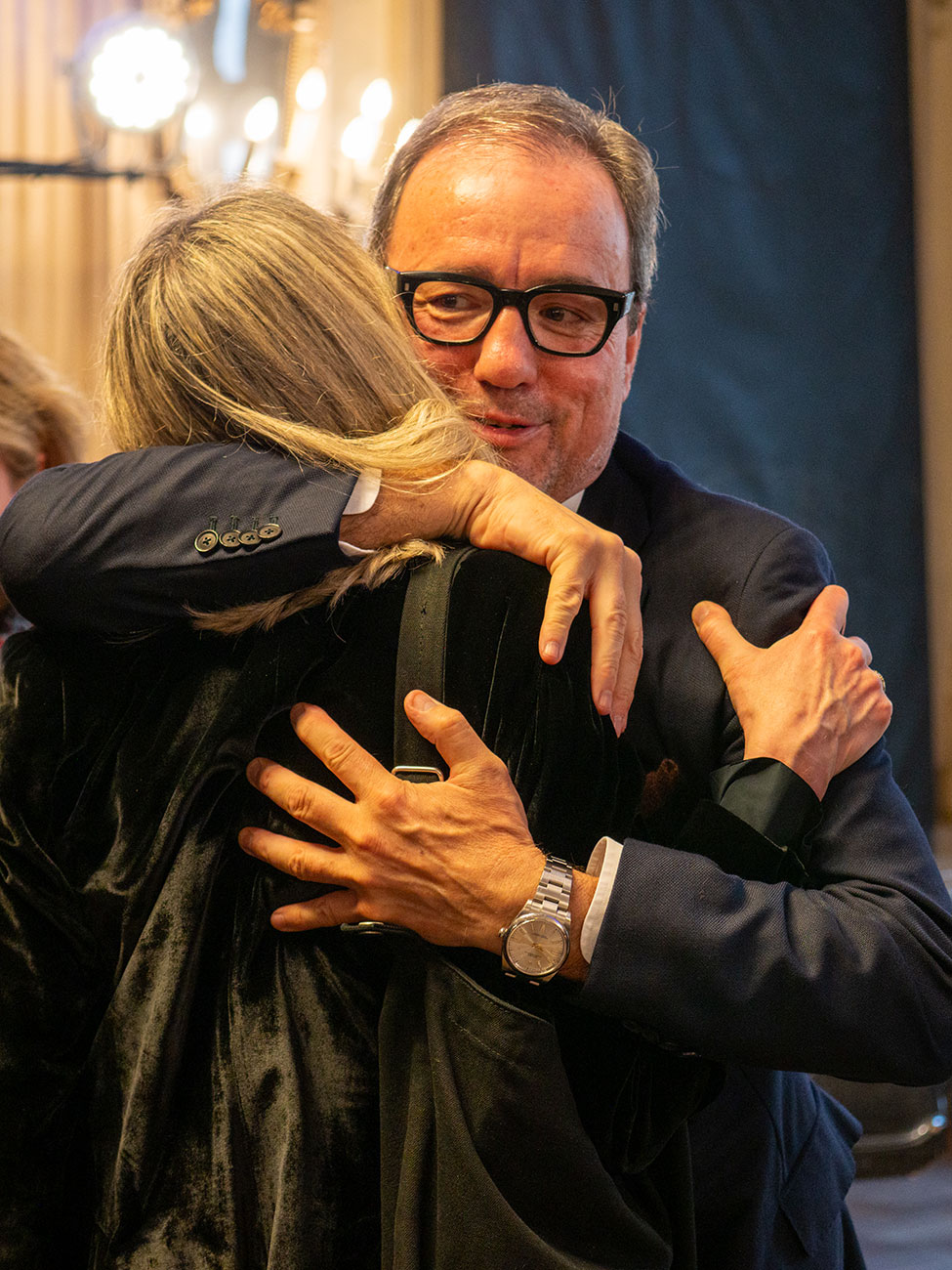
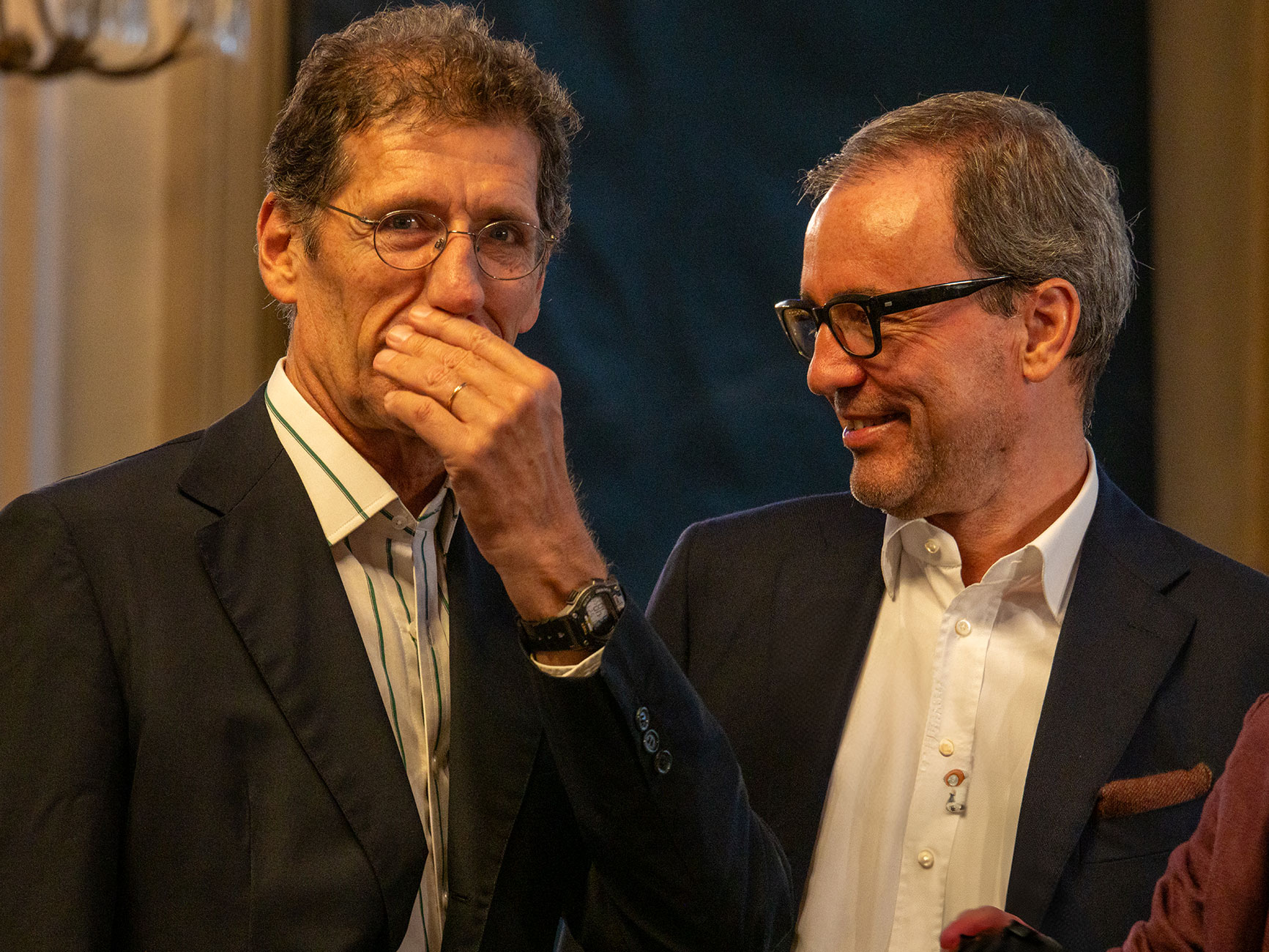
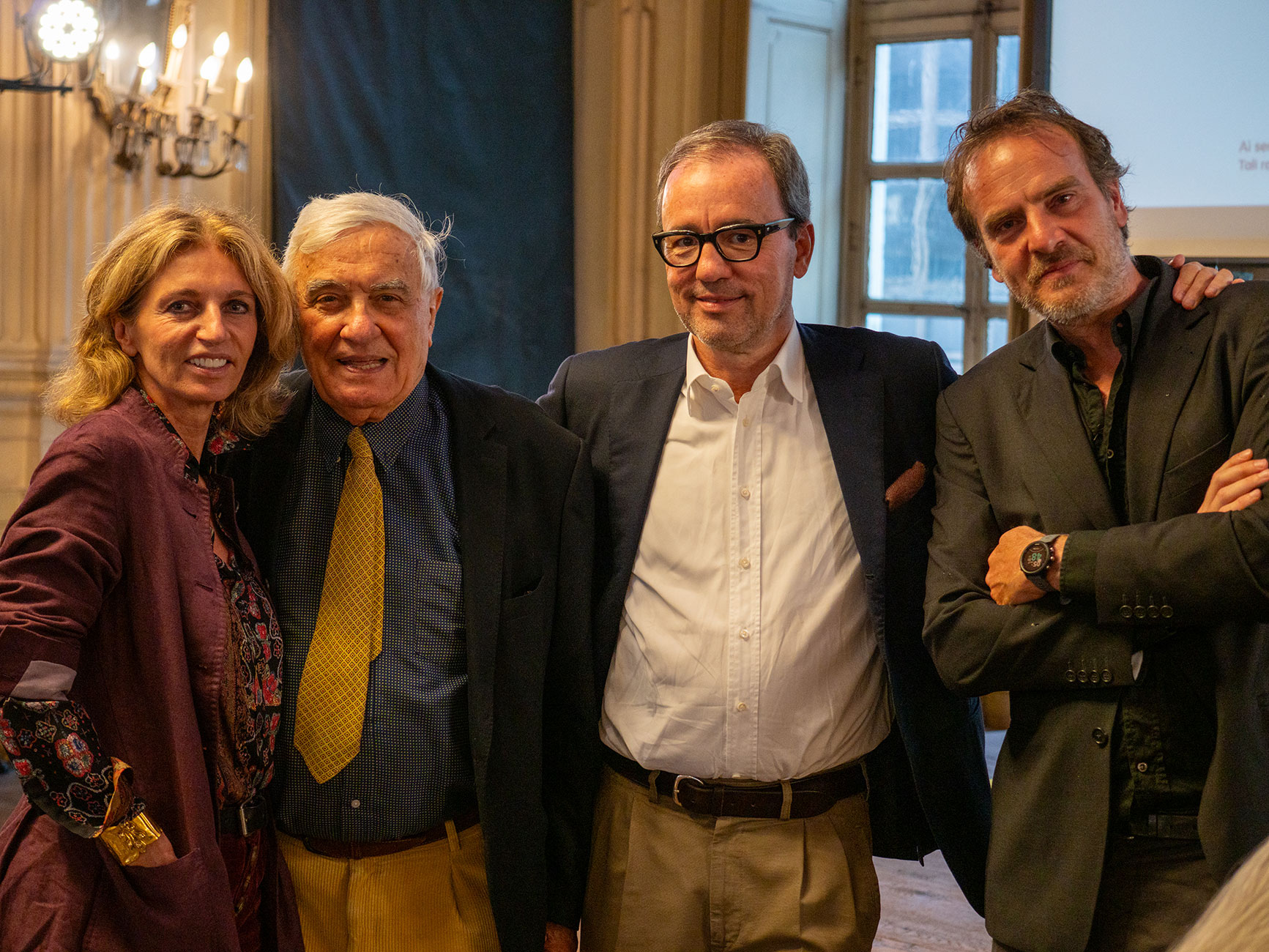
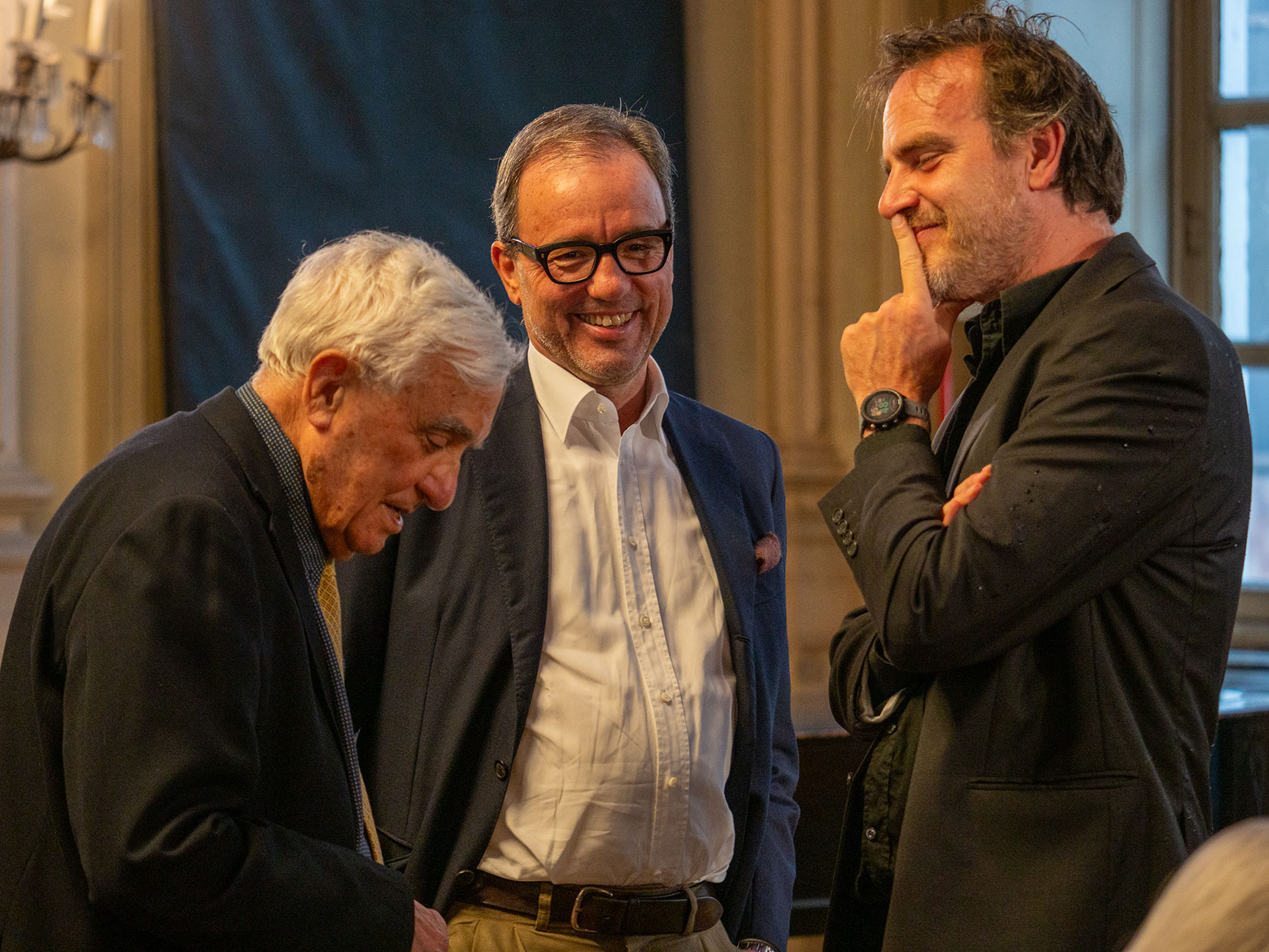
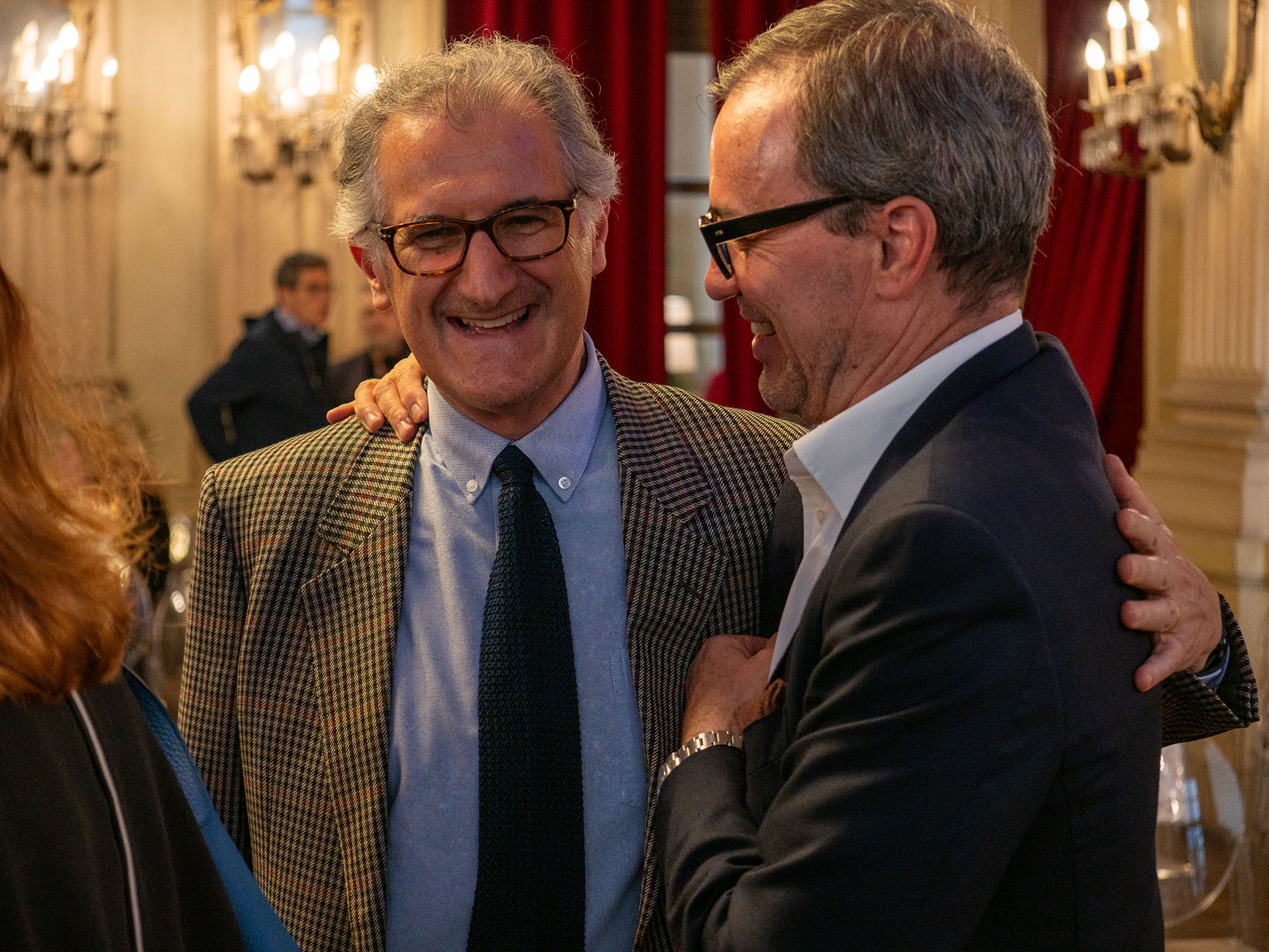
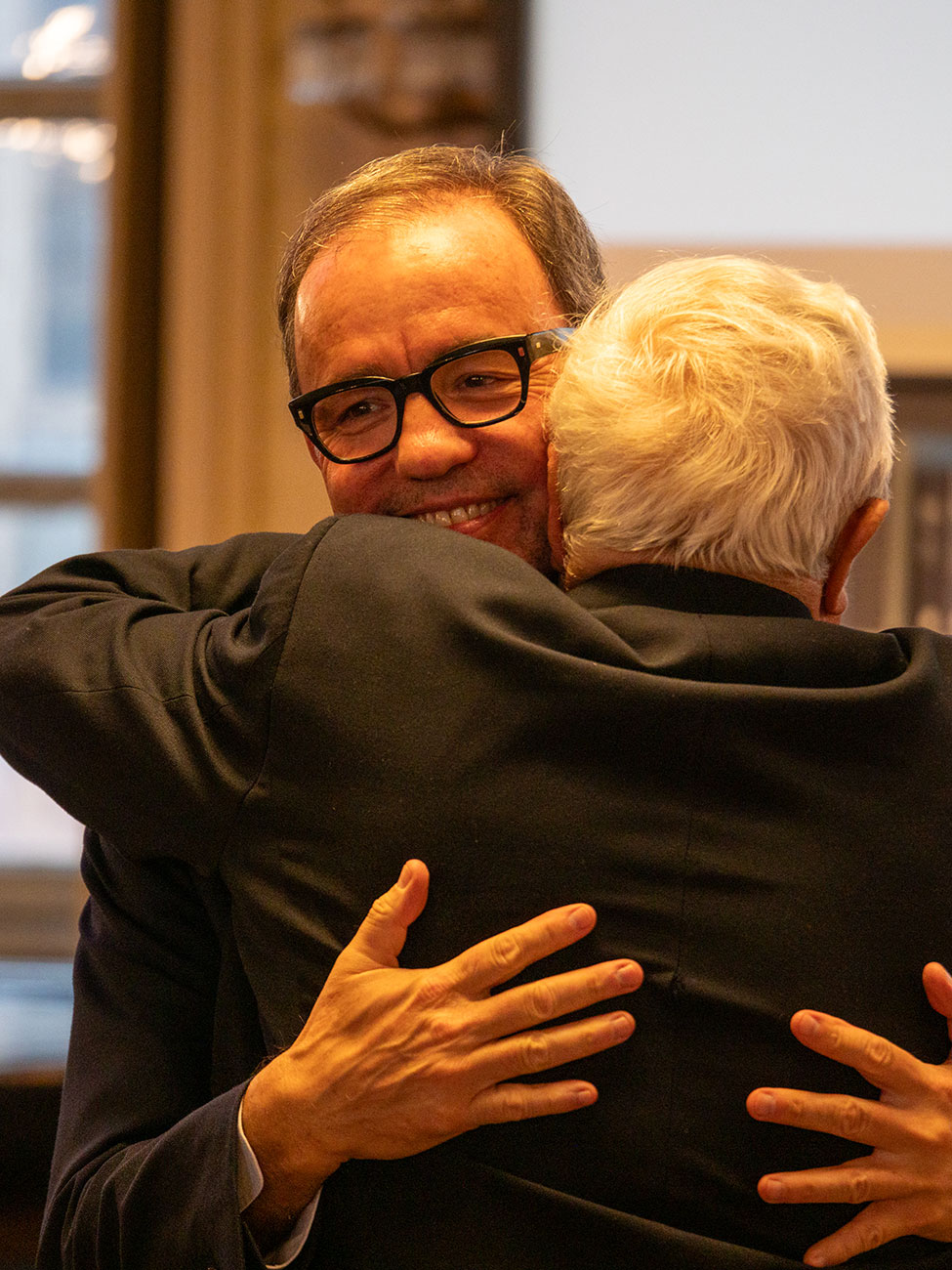
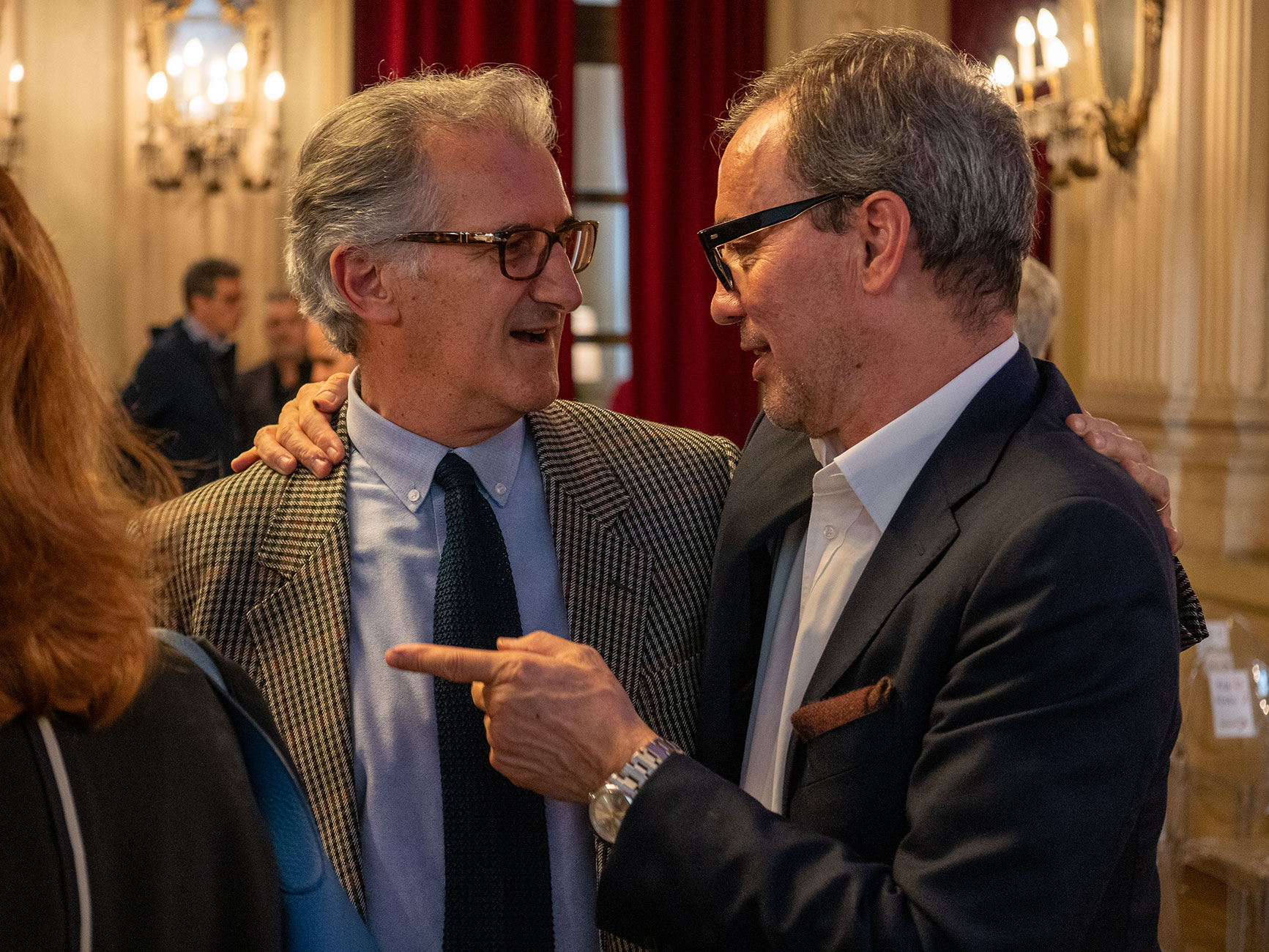
The presentation of the book “Le Ossa dei Caprotti” held on 27 May at the Circolo dei lettori in Turin.
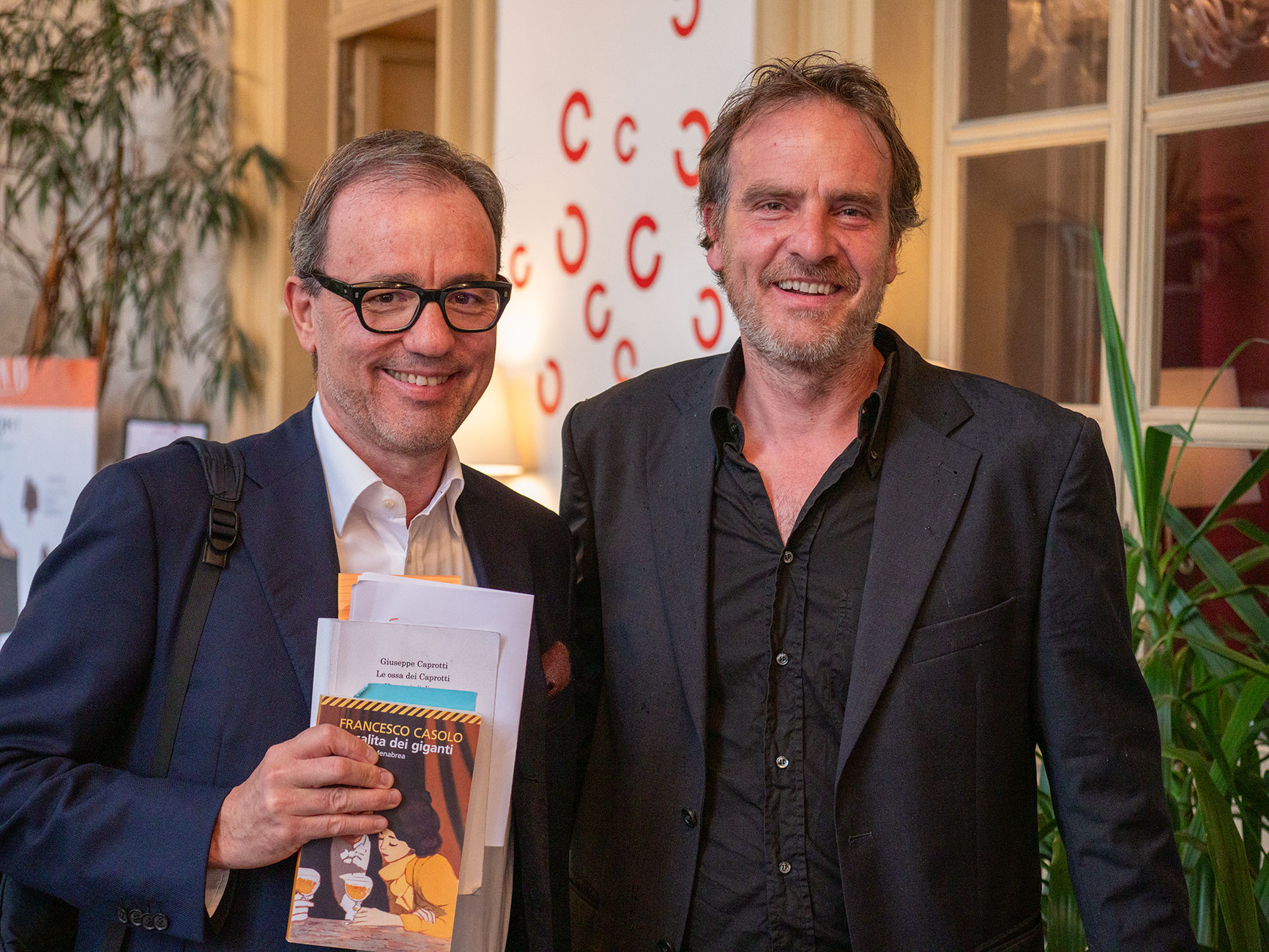
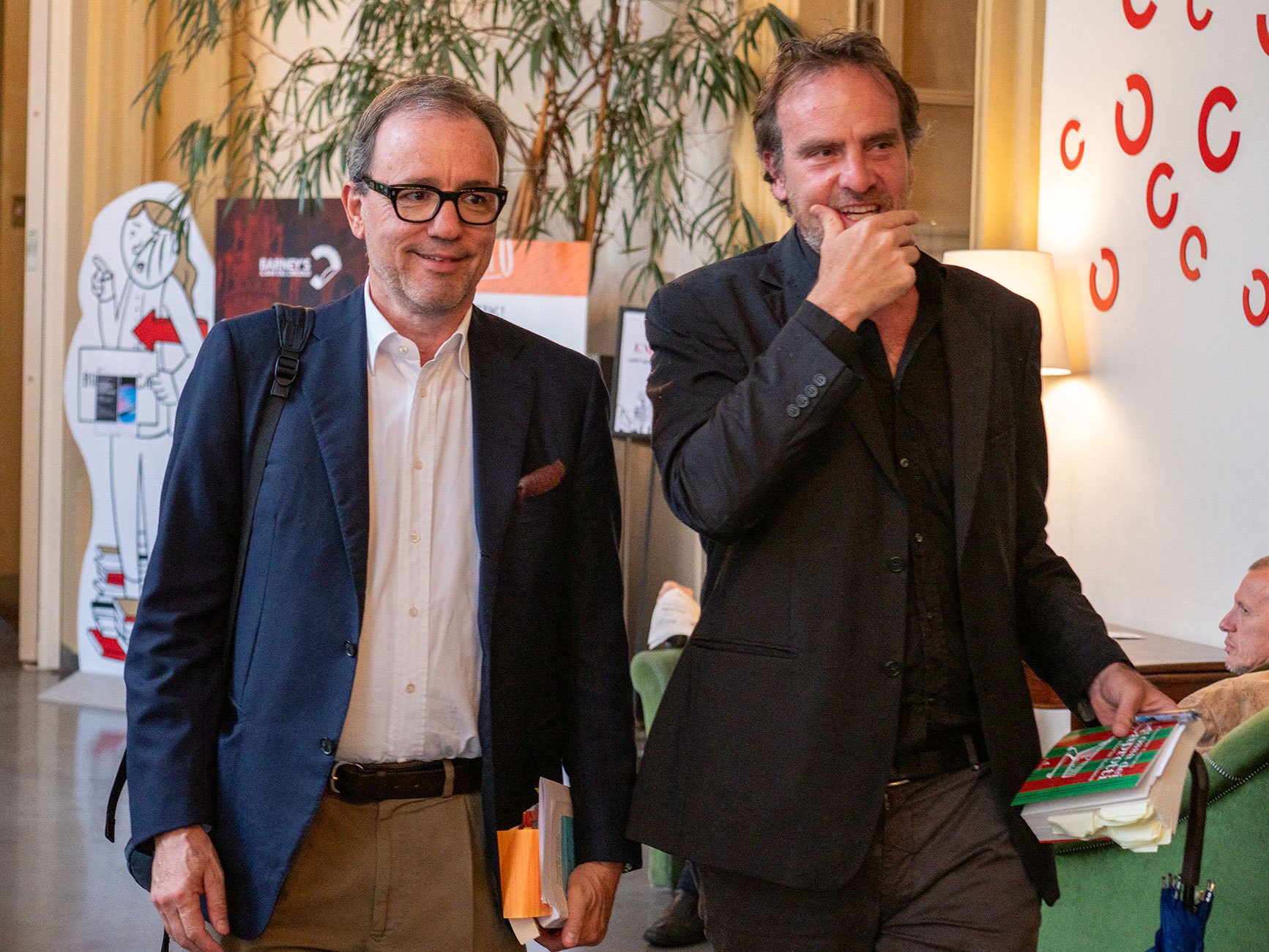
Francesco Casolo talks to Giuseppe Caprotti. Transcript added on 1 August 2024. Article updated 7 August 2024
FRANCESCO CASOLO
Thank you for being here. Let’s talk about this book, Le Ossa dei Caprotti. So, I don’t do this very often to present books, it happens occasionally but I don’t do it very often, and when I got the call from Feltrinelli, I instinctively said gladly, what’s the problem, but I didn’t know much about this story, that is, I knew what you can find out from the press, I obviously knew a bit of background, but I didn’t know much about this book. And the interesting thing was that when I started reading this book I realised something immediately, that there was not just a big story being told, but there was a style, there was a way of telling it, there was a voice, and this is now in my opinion a bit of a condition for a book to go beyond just reading it, beyond just the passing of time. Not only is it a book that I devoured, but it’s also a book that I felt like talking about because in my opinion, starting from such an intimate story, it manages to get to a whole series of themes that in different ways, with different specificities end up speaking to the heart of many of us anyway. The relationship with a parent, the relationship with a brother or a sister, a family that has such an important history but which in some way also traces a certain type of cut, a certain historical period, is a story – we were also talking about it the other day – that is certainly also very northern, that speaks a lot to us who live in this part of Italy and it is a story that in my opinion is really good, and it’s a gift you’ve given us to tell, at a time when in my opinion it’s not simply going to understand what happened in this affair, to this family, but it’s really going to rediscover a certain Italy which, we’ll talk about it later, in my opinion has somehow changed, is disappearing, and is part of a very precise and very interesting historical period. So the first question, so as not to waste too much time, is how did it come to you to write it at this time, how long did you think about it before you did it, how did the drafting also take place, was it something that you did mainly on the spur of the moment or was it the subject of continuous rethinking, continuous rewriting? That is the first thing I would be interested to know from you.
GIUSEPPE CAPROTTI
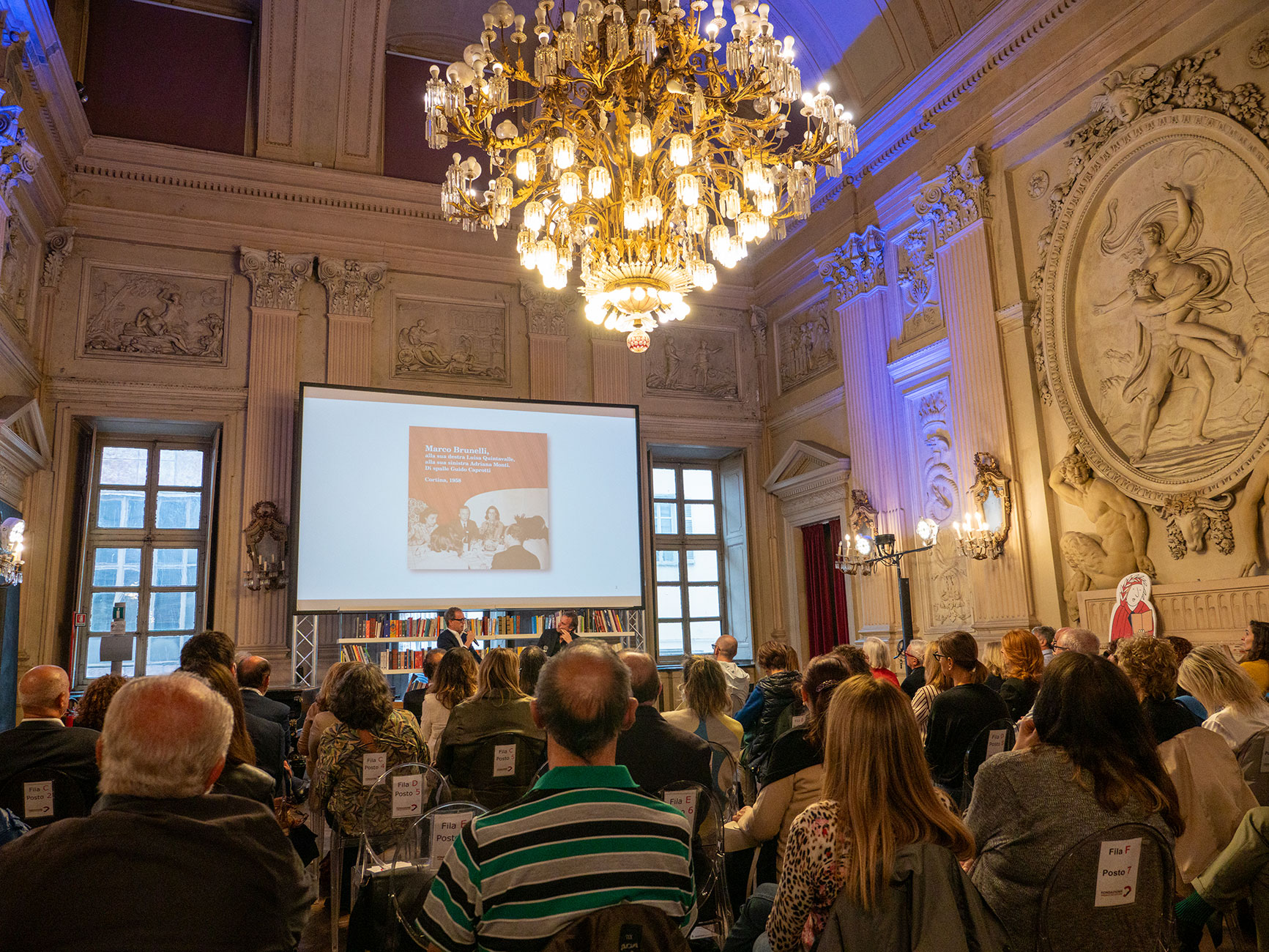
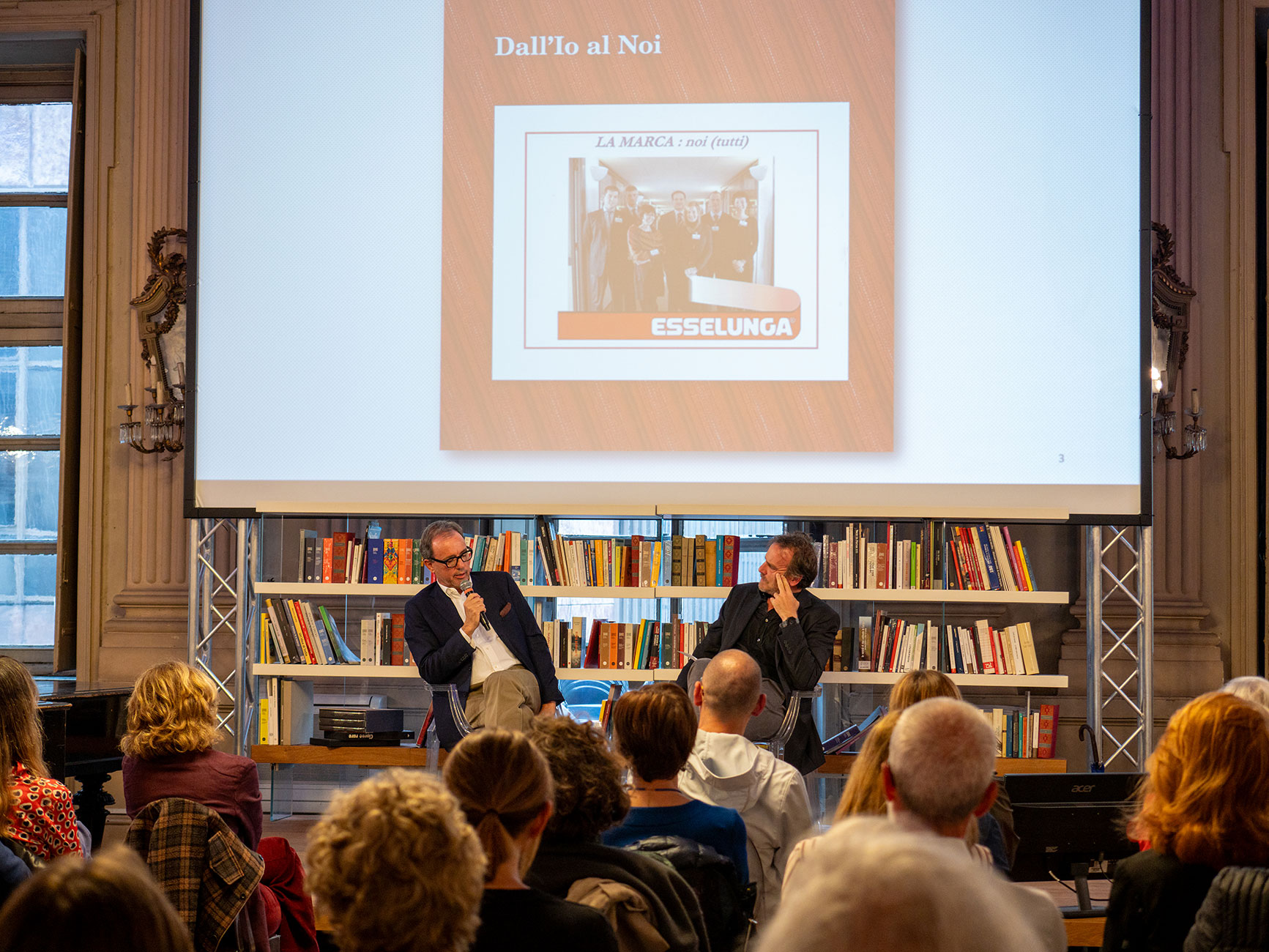
Well, thank you Francesco, thank you to those who helped me organise this evening, so above all Immacolata and Elena, who are here, I also thank Umberto [Allemandi] and Anna who came. Let’s start here, then. The story is a personal one, but as you said it intersects with the economic history of this country – or history tout court. I certainly had an idea to do this for some time because I realised that there were a lot of myths at home, let’s say, and I wanted to understand whether these myths were true or not, that is. Then, and this is a funny thing, I started to write it with a professor from Bicocca, Alessandro Capocchi, who is not here, but I thank him for his contribution, and we went to a publisher in Milan who saw the content, said ah, I really like this part, then he saw some other things, said maybe it’s not for me, and then the problems – or opportunities – began. When La Bicocca came out I took it all over again and with another publisher, who is not Feltrinelli, we built it up to be more of a story and so it went on like that, but when it started in reality everything really took a very strong push when I met this gentleman. Well, this gentleman is called Marco Brunelli. Maybe in Piedmont it doesn’t say much, but in short he was first of all an antiquarian and then he founded three supermarket chains and today he owns two of them, and with his current chain he has had the best results of his life at the age of 96, so he is someone who belies any statement one might make, retire because you are a certain age, maybe you should retire, and it was he who met the Americans who wanted to found this chain and he was the first partner and the first president of our company. So that’s the cue: he gave me let’s say this link with the Americans that I was missing, and that’s where my research started. Regarding the story, keep in mind that he was a family person, next to him [in the photo I show] is my maternal grandmother, my mother’s best friend [Adriana Monti] next to him and my uncle Guido Caprotti in front, here they were in Cortina in 1958; you can also see him in the pictures of my mum and dad’s wedding, he was a great friend of my uncle Guido, the chains he founded as well as Esselunga the GS, I think someone remembers it, today it’s part of the Carrefour group, then he founded Iper and then he bought Unes which is quite well known in Milan, here to give a picture of the people, and I met him in 2019 and he gave me the name of the person who had contacted him from the Americans-
FRANCESCO CASOLO
Curiosity of mine: what kind of objection was made by this first publisher, which I want to tell?
GIUSEPPE CAPROTTI
FRANCESCO CASOLO
But when you started writing it was more or less like what we are reading now, or was it very different?
GIUSEPPE CAPROTTI
In reality it was just an Italian story, it was always called that, there was always the subtitle, but otherwise it changed its face completely, there was no cover. there was nothing. Because you do the cover you do everything when you have the publisher who is convinced, and so we went to Feltrinelli because the publisher was bought. but I have to say that Feltrinelli, whom I thank, believed in the book, he could have said no thanks, but he said let’s go ahead, and so in some ways, while I was reading it, perhaps because it was Feltrinelli, a very different story came to mind, but always starting from a very important family – the book written by Carlo [Feltrinelli], of course, on the story of his father – I instinctively came to think, also for a certain imagery of wealth, the house in Switzerland and so on, obviously that another great book –
FRANCESCO CASOLO
But back to us. So, at a certain point, you decide to tell this intimate story. and another thing I’m curious about is what you’re getting out of it, that is, even in everyday life, at a certain point, one decides to open up or to keep to oneself. How are you experiencing it, are you happy you did it, did it create problems, difficulties?
GIUSEPPE CAPROTTI
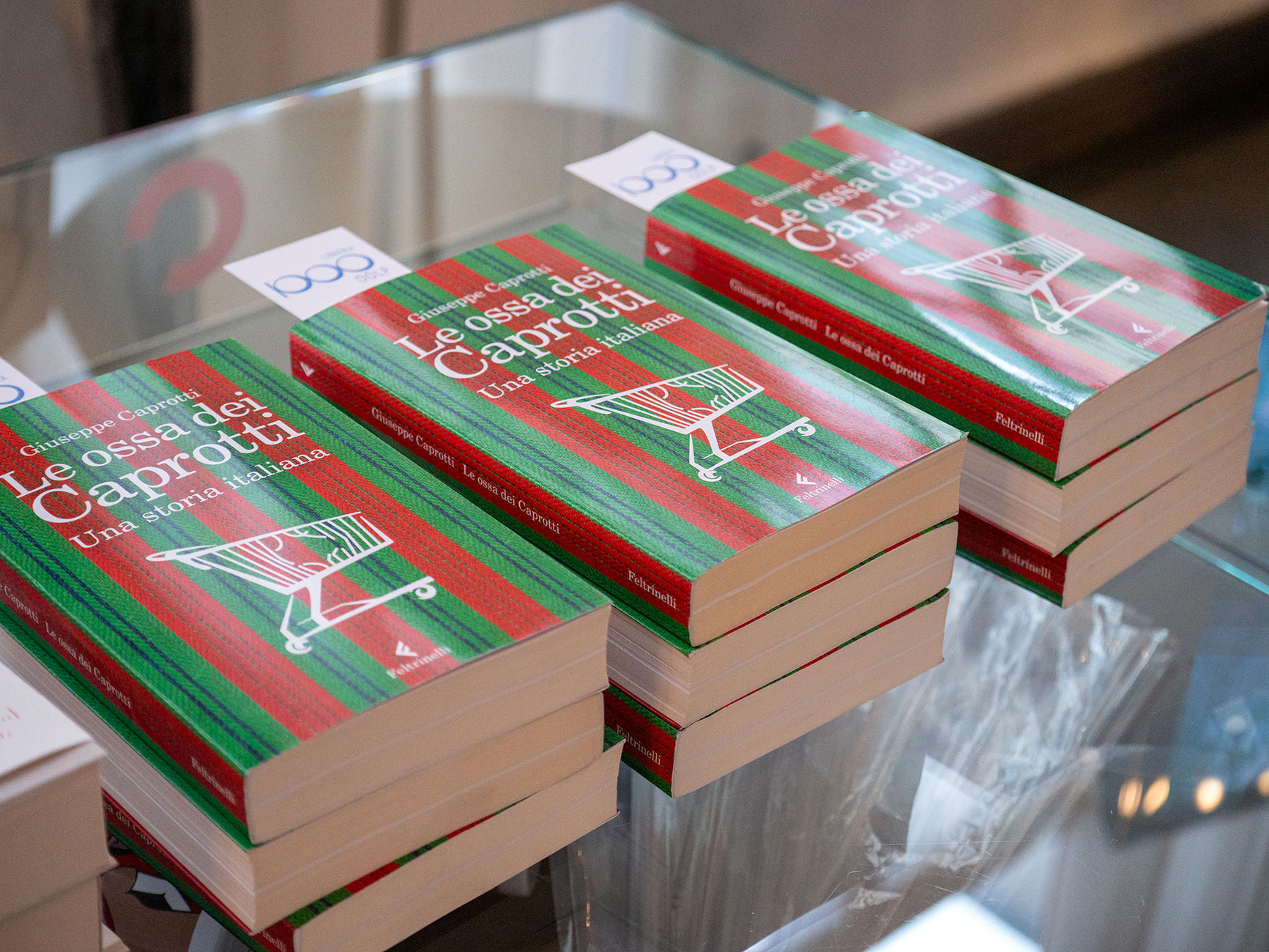
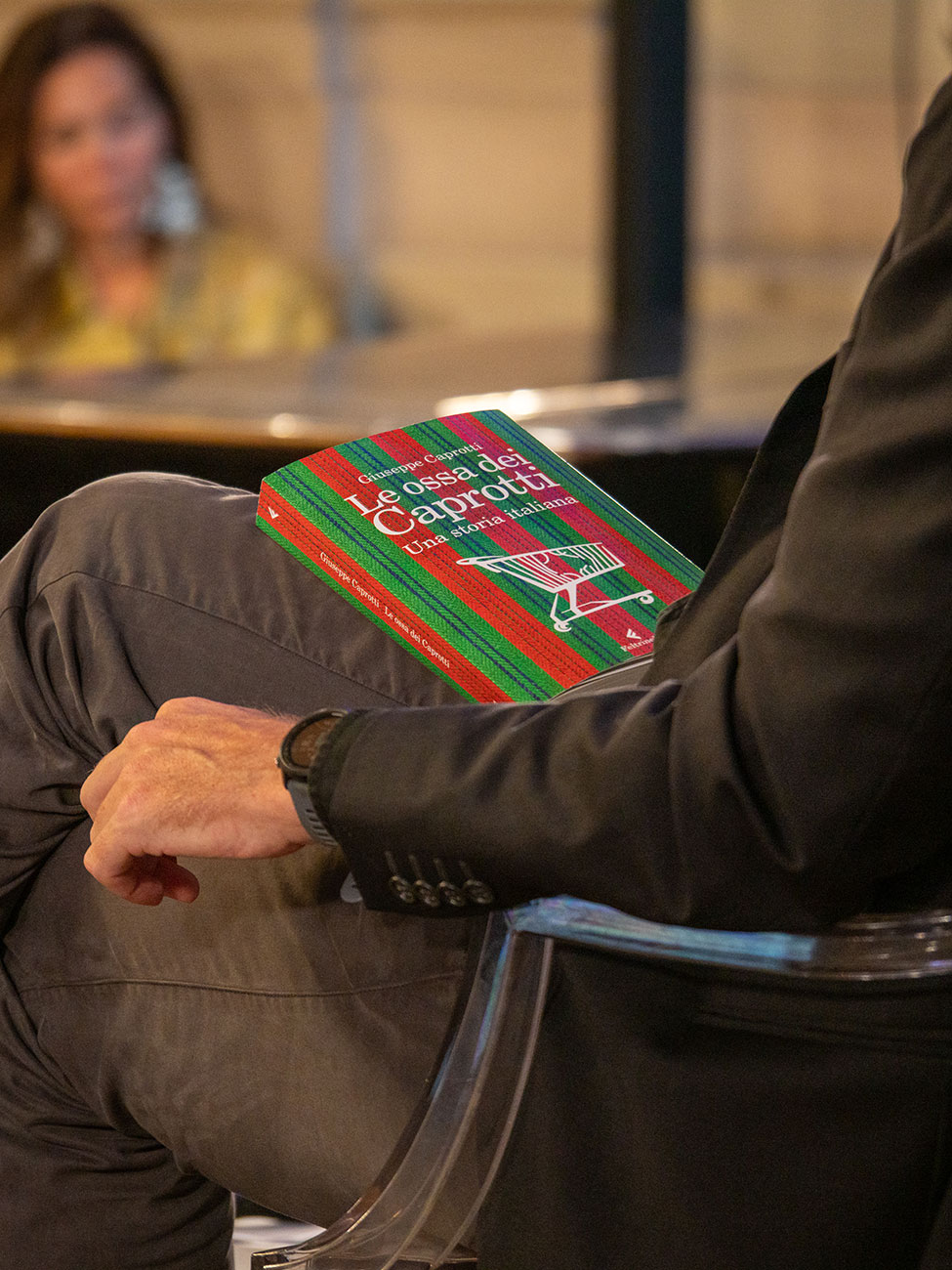
Of course! Surely an answer can be found in the cover, because someone will ask the question about the cover. So, I made the cover with an agency, in the sense that I actually made it, the fabric is the fabric of my childhood, we were born from textiles, I still live near the factory that belonged to my grandparents, my ancestors, even my father and uncles; the ripped trolley, on the other hand, was made by an advertising agency and for the agency – and I’ll get to the point – it meant freedom. That’s probably the right answer, in the sense that the agency saw right through it and understood perfectly well that I needed to get rid of it,
and also someone else said well, you have to come to forgiveness as well because otherwise it will remain a negative weight within you, and that is the next step that happened, in my opinion, right between the release of the book and the several months that passed afterwards. If there are other questions – but it is the title, the [meaning of the] title you will find out if you read [the book].
FRANCESCO CASOLO
Right, you will find out by living it, it also sounds very comforting as a message, let’s open up and we will be better off, we will find relief. Obviously the theme that runs through the whole story is this relationship with the father. It is a relationship that actually begins before, in the sense that it is also the same relationship Bernardo your father had with your grandfather Giuseppe [known as Peppino] – the names recur -, which was in turn a relationship that was anything but easy, and which was suddenly cut short following an accident. Giuseppe, the grandfather, will have an accident in 1952 (later it will be discovered that he was not alone but with a companion who was not exactly official), and what struck me and made me think a lot is the fact that this father figure, your father, from my point of view is a figure that is almost historicised, i.e. now with the same severity, hardness, rigidity of character, no father who would be 40 years old would feel like behaving like that, that is to say, the interesting theme is that there was an era, still quite recent, but which in my opinion is a bit ending, in which it was possible for a father to behave extremely severely and harshly towards his son, and to be socially considered, it is right that he should do so especially towards his son The idea was that life is hard, he will have to face many trials, many obstacles; in my childhood, in my youth, I knew many sons of business leaders and the approach, with differences of course, was more or less the same, the idea [that] I have to prepare you for this world and therefore I have to be a ruthless father to help you face the challenges that will come later. This figure probably exists [still] in the way you behave, it is a figure that has now disappeared, no father in front of a school could mistreat a child or be strict with a child without meeting with [disapproval]. Do you agree with this point of view? What do you think?
GIUSEPPE CAPROTTI
Certainly there has been this, let’s say there has been this approach, and it is not just my father’s doing. I have retrieved all the family archives and ‘have’ an archivist [Eleonora Sàita, whom I thank] who helps me with the contents, which I also develop after the book because I have a site where I write and complete the story; I need it, it’s useful for me but also for those who read it, of course, and to get to the point, one day a woman says to me – or rather we say it to each other – but where the hell is a photo of her maternal grandfather smiling? Grandfather [Guido Venosta] was the creator of AIRC, he took it from zero to 1,700,000 members. In the end he was satisfied that he had been a great entrepreneur and social manager and so he started to smile, but by now he was 80 and more years old, I remember him, with us he was also nicer, kinder, it was just like that.
My father’s real problem, in my opinion, and I’ll tell you something I’m sorry to say this, but [for him] we, me and my ‘big’ sister Violetta (because then there’s a third ‘little’ sister, Marina, who with her mother was the universal heir of the Esselunga empire), were the children of a lesser God, but in my opinion it came from what you said before, that is, he was ashamed, he was ashamed that we had a burden, that we had initiatives. On the one hand he was proud, and on the other hand there was always someone who was more important than us, always someone obviously related to him, not someone he didn’t know, and so there was this dichotomy even in the company. It’s also in the book: at a certain point I take an interest in the company’s accounts, I ask the new CEO [Carlo Salza] for explanations, and he [Bernardo] tells me not to bother him! Now, this gentleman would have deserved to be disturbed, but he was like that, there’s me, and then you are..
FRANCESCO CASOLO
Here, this sort of fear of diversity or unpredictability, of imagining a son who could be different from you. I am reminded of something else that I advise everyone to watch: this wonderful documentary that was made, I think, 20 years ago by Lina Marrazzi, is another very Milanese story in which she recounts the story of her mother who committed suicide, who had grown up in this family, which is the family that would later create the Hoepli bookshops, the Hoepli publisher. In this large, very cultured, very well-to-do family in Milan, this young girl grew up in the 1950s – I would say 40-50, I think she was more or less my mother’s age – who showed weaknesses, frailties that were incomprehensible to them, and the result was that in such a cultured and sophisticated environment they ended up locking her up in a sort of nursing home/asylum, and this story ends with her committing suicide. Alina Marrazzi, who is now well into her fifties, took all the family’s superotto [footage] and reconstructed this climate, which was a climate that I also found in these stories, in which there was always the idea of not making a spectacle of yourself, not showing off, not being silly, not doing anything, which was basically the idea that there couldn’t be anyone who wasn’t like that, no, the photograph with a serious air, with a committed air, with a determined air, with nothing to worry about.
GIUSEPPE CAPROTTI
Well, there is a great Piedmontese entrepreneur – this story was told to me by a friend who was his consultant – who in front of everyone said ah but Giovannino… Giovannino had a good idea, look, listen to him! Here, this is how rivalries start: Giovanni had ideas that were obviously completely different from his father, and then fortunately for him, I say it like this, quietly, his father left, and Giovanni went his own way, right or wrong – it seems right to me at the moment, very right – but there is this belittling.
FRANCESCO CASOLO
Here it is exemplified in a perfect way also crossed, as actually listening to you speak, by an ironic vein, there is a lot of irony as well, or a sort of black humour that combines bitterness; it is such an absurd sentiment that almost the only alternative is to put it into a bit of a laugh, and so I really recommend beyond listening to the story, to perhaps reconstruct the pieces, I really recommend that you buy this book and read it if you haven’t done so because it is really nice to read, pleasant to hold in your hand because of the way it is told. Let us come to the enterprise. If I’m not mistaken, between 1986 and 2004 you worked for Esselunga after a period of study that included Switzerland. After a work experience abroad in the United States you joined the company at a time when it was already an absolutely consolidated reality, but with challenges that you will later tell us about, they were just around the corner because in any case in the mid-1990s the world was changing so much, if it wasn’t already doing so in the early 1990s. Would you like to tell us about what’s going on in the field?
GIUSEPPE CAPROTTI
So many things happen in the field, and in my opinion one of the fundamental starting points of my entire management has been to try to enhance human resources. I remember a first visit I made to a shop in Florence: I was following my father, the manager came to greet us, my father didn’t shake his hand and I was amazed. After a period in Esselunga I go to the United States again, I learn and understand what my project for Esselunga can be, I come back and find an atmosphere –
FRANCESCO CASOLO
We are still in the ‘years of lead‘..
GIUSEPPE CAPROTTI
Eh, I experienced two or three strikes in the late ’80s, but with ‘S lunga SS’ outside the supermarkets, so there is a very heavy atmosphere, but I immediately think that we need to move towards this goal, which is the involvement to be able to improve the atmosphere of that part of the staff that is, let’s say, on our side, because a part obviously continues to swing. There was a period in which there was also Radio Popolare, red flags, anything and everything, strikes every day, and so on, so the ‘good’ part, let’s say, to involve it.
Here we already started to have big differences of opinion because my father considered his group to be those four or five people around him. Here, I’ll give you an example: at a certain point I made a film to train the cashiers, these upset cashiers who say but someone has thought of us, no one has ever thought of us, some of them came to cry, I mean really something..
FRANCESCO CASOLO
What was this film like?
GIUSEPPE CAPROTTI
Well, it was a training film, but above all there was attention to them. I remember that I also changed the seating arrangement of the cashiers because sitting for four hours straight (because then they had shifts, then they had a break, then there was the other shift 4 hours – 4 hours) was just banal. So they were very impressed by these innovations, which is not to say that there was no esprit de corps within the company, so I take nothing away from either the Americans or my father, that is to say, my father had in any case followed the example of the Americans and there was a strong attachment to the company on the part of those who wanted to save it, because at a certain point there was a moment when it seemed as if it was going to hell in a handbasket. So that was one of the fundamental points, but I will continue with the directors. The directors in my recollection are in the first meeting (I also remember where it was) that we had, and it was on wine… Bear in mind that our directors didn’t even have access to the data, i.e. they didn ‘t know what the turnover of their supermarket was, and I obviously changed this, because it’s like having a factory manager who doesn’t know how much he produces, which is crazy. That was because the network of inspectors above wanted to keep the data because the data was power. Another small episode: I was working in Camaiore, I was making dairy products, that is, I was supplying dairy products because after I came back from America I was a factory worker for a year, I ended up being a factory worker also in Esselunga for three months, and my director did not have a rest day. That is, he worked from Monday to Monday, there wasn’t a day in the summer, above all there was no rest, poor thing, he practically slept standing up. So these things here I absolutely tried to change. Then I changed the whole purchasing part, the marketing part, and marketing didn’t exist, I created the office. Mine was an epochal transition that lasted precisely 15 years and at a time when everything was changing, and my father couldn’t stand it.
FRANCESCO CASOLO
But what couldn’t he stand, the fact that you had, let’s say, a leading role in this evolution, or the fact that he couldn’t like these changes?
GIUSEPPE CAPROTTI
i explain it very well in the book, I say, I think maybe at the end, I don’t remember, but anyway, today I talked to someone who had been in Esselunga for 40 years who told me in the book, Doctor, your father is feared and respected, you are respected and loved, and this was something that probably triggered it, because you feel that, and it’s not just that (that is, there were 13.000 people!), there was a whole series of things that not only really bothered him, I for example used to have meetings in the supermarket, not in the head office, I would go to the directors with all the managers reporting to me and we would go and ask the various foremen what was wrong, what needed to be done, and for my father this was something that was on the moon. Here, I remember, one day he came in and made a joke about my purchasing manager at the time and said ‘eh he’s much more important than me’, I said ‘Madonna!’, and that was it.
FRANCESCO CASOLO
And in fact there’s a passage where you’re interviewed, they call you ‘Mr Esselunga’ and someone in the family puts their hands in their hair and says here it’s over. What happens?
GIUSEPPE CAPROTTI
Yes yes, my mother said it – she’s not here any more, and by the way [with my father] you couldn’t grieve – and she said ‘you committed suicide’. That was the end of everything, I realised that, but I must say it was very difficult because nothing was ever right. So I’ll just tell you one thing: my sister did a lot of other things but not profitability, profitability in the sense of EBIT. EBIT was multiplied two and a half times from the 1990s to the beginning of the 2000s, and this was something we couldn’t talk about, an absolute taboo, in the sense that we couldn’t talk about this [from ‘I’ to ‘we’], we even did surveys – I can see Umberto looking at me with a puzzled look – but we couldn’t talk about this, about the change of climate because my father said it wasn’t true, we couldn’t talk about the results, I explain it in the book. At one point I say look dad I would like to present the balance sheet figures, it seems normal to me in a company of 13,000 people with a few billion in turnover: no, I won’t be there, you see, you see. But you see you can’t, I mean with Bernardo Caprotti you couldn’t see, me alone, with whom then, sorry. That’s also why the sisters followed him, by the way the sisters didn’t work in the group so it was a bit complicated.
FRANCESCO CASOLO
Slight parenthesis: another very amusing passage came to mind. Son of both a father and a mother with, let’s say, very good contacts, at a certain point you are introduced to a series of people as a kid: I have Nureyev in mind, I have David Gilmour in mind, I have… can you tell about the evening with Nureyev and how your father took it?
GIUSEPPE CAPROTTI
My father had a beautiful set of Bohemian glassware and Nureyev at one point did as they do in Russia, when you make the toast then you smash everything. Bernardo didn’t say anything, but in short he wasn’t very happy in front of so much prestige and magnificence [which was falling apart].
FRANCESCO CASOLO
At a certain point among the innovations that you manage to introduce somehow you realise that you are going in the direction of e-commerce, and there is a small company, a small American gentleman [Jeff Bezos] who is already thinking about it, one who by now has also taken possession of our soul.
….
How do you lose this race to try to make it ourselves and not be subjected to it from the outside, what happens, what resistance do you encounter in this attempt?
GIUSEPPE CAPROTTI
So actually I didn’t encounter crazy resistance because first of all I went, I discovered it through Belgium, it may not sound very sexy actually compared to America but I discovered e-commerce through Belgium, we had allies in Europe, we had a purchasing centre where we had allies in Belgium to whom we also sold Italian products, they were very nice and all, and they had launched their initiative which was working very well. So what did I do, I went to Belgium and I saw this thing, then I saw a page of ‘Time’ that had put the Internet, that is, instead of being the man of the year it simply said ‘Internet’, I took this photo – I still have it in my archives – I took this photo and sent it [to my father] because bringing it to him was not really simple and the daily dialogue was not really ..- so we were exchanging many, many, too many letters, too many letters, but otherwise there wouldn’t have been this book – anyway I came with this thing, ‘Internet’. At one point I said look, there’s this thing and then you also have to do the institutional website, and he says institutional website? What do I need it for, and I say look the Coop has it, ah well then let’s do it now, let’s not fall behind, heaven forbid. And then we got the site (maybe it came later, I don’t remember exactly now), but within [the project] there was a man who was a good friend of Roger Abravenel of McKinsey, since they were both born in Libya, and I must say that McKinsey was fundamental in helping my father to think about this thing, and so we went ahead with the e-commerce venture.
But to get back to Bezos, I didn’t even know who he was, I found out later, but the incredible thing is that I founded – no one knows – an online bookstore in the ’90s, then my father dismantled it, but to say that you do, you could do it like this, that is, today on “Affari e Finanza” of “Repubblica” a ranking of e-commerce companies came out, Esselunga is not there, but there is Amazon! Marketplace, i.e. the fact of selling by direct e-commerce of products and instead making others sell their products to your customers, this is the winning thing that Alibaba has done, that Amazon has done, that others have done and that unfortunately Italy has lost; there is not a ‘big’ of the large distribution in this ranking, not one.
FRANCESCO CASOLO
What are you most proud of in your work at Esselunga?
GIUSEPPE CAPROTTI
Well, some things I have already said, but certainly, returning to the social theme, the social balance sheet done in 2003. The other evening at Franco Parenti, another gentleman came to see me who was trading in Fair Trade products. Well, we were very moved because I made the first Fair Trade products in Italy, perhaps even the only ones in the large-scale retail trade, I don’t know if Coop then followed, maybe Conad, anyway the fact remains that these were big innovations, there was the whole organic part and ‘Naturama’ which at one point invoiced 10% of the food,
and then I did something else which is funny, which nobody knows, but I did some very innovative things. What does this apple have to do with innovation? It has something to do with it, because before I came [into Esselunga] you couldn’t buy a product in bulk in supermarkets, that is, you went in and had to buy six apples or four apples – No! (I always see Umberto looking at me, but luckily at least there’s someone I did this with), and it was also very important from a commercial point of view because , as some customers told me recently – this one in Florence says but the Coop had the least good quality, you had the best quality, so the fact of putting an apple at a good price was obviously also a social service [as well as giving us a competitive advantage].
Here, let’s say, if you go into an Esselunga you will also find the serving cheeses. Those weren’t cut up, i.e. you can buy a tray with 100 g of cheese today , you’ll say banal, but I mean, not so much at the time, because that gives Esselunga a competitive advantage and allows people to buy things cheaply, to have a cheap lunch. Then I don’t know, maybe I had put something else in there as well…
Ah, this is non-food. You will say that too, but what are you talking about, but when I left the company it had a turnover of EUR 700 million and a third of Esselunga’s final result, of the operating result, so it’s certainly an interesting thing. There was a lot of crazy work behind it.
FRANCESCO CASOLO
And then you also tell another thing, let’s say in extremis, when you are about to leave, regarding another big American group that, let’s say 50 years after the Rockefeller family, casts an eye on this big Italian company… and what happens?
GIUSEPPE CAPROTTI
Eh, I had already left the company there, and I got the tip because someone working inside found the Americans on St. Ambrose’s Day, I think it was 2005, in the Data Room. They were already showing the Americans the accounts. There, they phoned me and then I set up with a friend, the lawyer Filippo Donati (obviously with a bank behind), we set up an offer and put it on record. By the way, I put it on record again, it’s the highest offer Esselunga has ever received, so maybe they should have thought about it, here.
FRANCESCO CASOLO
But in the meantime Walmart didn’t get in. That’s already an important result for Italy, I think at least for the workers. I read two lines that are not particularly significant for what is being said, but which I think somewhat describe the tone. We are talking about Grandpa Peppino. “It is certain, however, that grandfather Peppino, after the end of the war, managed to rebuild the family wealth and carve out a prominent place for himself in the world of Milanese entrepreneurs. People who knew him have told me that he had great charisma and, at the same time, a character that could be very hard, even hellish for some. It’s a pity I didn’t get to know him.” I turn instead to the letter of this Peppino’s brother, who, when Peppino got married, says: “Peppino’s mentor, an unrepentant bachelor, took it gracefully: ‘I know other people’s wives and that’s why I didn’t take one. However, I know that starting a family is the lesser of evils when one is lucky, and you can be among them. Indeed, I wish it with all my heart’ he wrote to him, also wishing that Peppino’s chosen one was ‘healthy and robust’ and that she could give him ‘great-grandchildren at least worthy of my muscles’.” So these are touches in the midst of tragic and dramatic events, which give us the idea of a view that you have managed to have, it is also very personal, that is, it is a reconstruction, I believe, very precise of the events but with much, much, as I said before, voice, much style. I mean, if it had been written by anyone else, if it had been done by anyone else, it certainly wouldn’t have these characteristics, so congratulations on that.
GIUSEPPE CAPROTTI
Thank you. But by the way the grandfather I discovered, he was really quite an incredible character. … he lived in Turin … because with the crisis of 1929 he had to close the textile factory and managed to get the Richard Ginori representative in Turin, and he had a shop there for a few years, where he practically had a lot of friends, including Felice Casorati. He also had a taste for art, which also came from his grandmother Marianne, who was with him for a long time, until he died. And he died when he was president of the Permanente in Milan. But he was the one who made the socio-economic leap of the family. He became a friend of the Pirelli family, a friend of the Falck family, and created the fortune that then allowed the family to participate in this distribution adventure.
FRANCESCO CASOLO
I’ll ask one last question, then I’ll leave it to you. I read in an interview that you said I think I had two ideas that I’m proud of: one you were referring to e-commerce, two to this business idea after the Esselunga experience linked to these bistros, and then you said now I’m waiting for the third idea. Do you have it, a third idea?
GIUSEPPE CAPROTTI
I have a very good idea, which is to follow in my maternal grandfather’s footsteps. Here, in the wake of the work that he did his wife Carlo Fossati Bellani, an internationally renowned designer, set up this foundation that bears his name, he set it up almost 25 years ago because his grandfather passed away in 1998, and I took it over during Covid. We’ve carried on, we’re carrying on a total of three or four big projects, one of which I find very interesting, which is to help young adolescents: it’s in zone 7, which is the most deprived area of Milan, the area near San Siro, Piazza Selinunte, that area there, and then it’s in two towns, Sovico and Seregno, in Brianza. It should involve 5,000 adolescents, and we are mainly collecting the needs, that is, the needs of the children and the families of the parents of the children, but also of the teachers because the teachers are the leaders, let’s say, of the children outside the family, and so the objective is precisely to make a contribution and also to go beyond that, probably to be able to create [social] networks. This is already done, there are already five subjects, there is the Foundation, but there is also Minotauro, the Health Communities in Brianza and two CSV, which are voluntary organisations, so there are already five of us, but the idea is to continue, to be able to aggregate possibly others, very complicated but in my opinion very challenging, interesting and important.
FRANCESCO CASOLO
Are there any other projects?
GIUSEPPE CAPROTTI
Definitely. One deals with mental health, again in Brianza, but it’s not just for adolescents but for teenagers and adults, and especially for poor people who can’t afford it [to access specific care].
Then another important project is definitely related to climate change, which no one ever hears about anymore: it’s 47° in New Deli these days, but everything is fine. In reality, Brianza has been hit very hard, the land near my house – I’ve monitored it, it’s 25 hectares – has lost 15 per cent of its tall trees [in one year] and now I’m trying to convince the Valle del Lambro Regional Park to change [tree] species, it seems like a trivial thing but it’s not trivial at all, it’s a huge project also because then it only needs to rain like in the last three months and suddenly the water is a problem, the wind is a problem and the species have huge problems due to these constant changes and the invasions of diseases that I have at the moment, so there is a huge problem that nobody talks about. Of course teenagers are fortunately talking about it, as this article in the ‘Corriere della Sera’ a few days ago shows, but instead I have the impression that this country on the climate change side is very much like that, with its head in the clouds, and instead it’s a problem that’s affecting us now. We were talking earlier, I can’t remember with whom, about fruit and vegetable prices. You see, on fruit and vegetable prices it affects inflation, it affects people’s standard of living, I mean now, jokes aside, but these are very important things. Well, in my opinion – even from where I live there is a certain perception of it, eh well of course, we see the glacier thinning, apart from this year, from March onwards it has snowed a lot, but I have been there for 6 or 7 years and the change is really visible to the naked eye, because to reach the glacier the distance is increasing.
I don’t want to make a rally, but I would simply like to say that abroad – because I read foreign newspapers a lot – abroad it is an established fact what is still being questioned in Italy, that there is climate change. I read the ‘Wall Street Journal’ which is really Fox-oriented [a conservative newspaper], and it’s not a discussion, it’s how to deal with it, that is, the whole approach to the thing is not called into question, it’s more pragmatic and less ideological, there’s no ideologising, simply what do we do given that we have a problem in Florida rather than in New Mexico or rather than in India.
FRANCESCO CASOLO
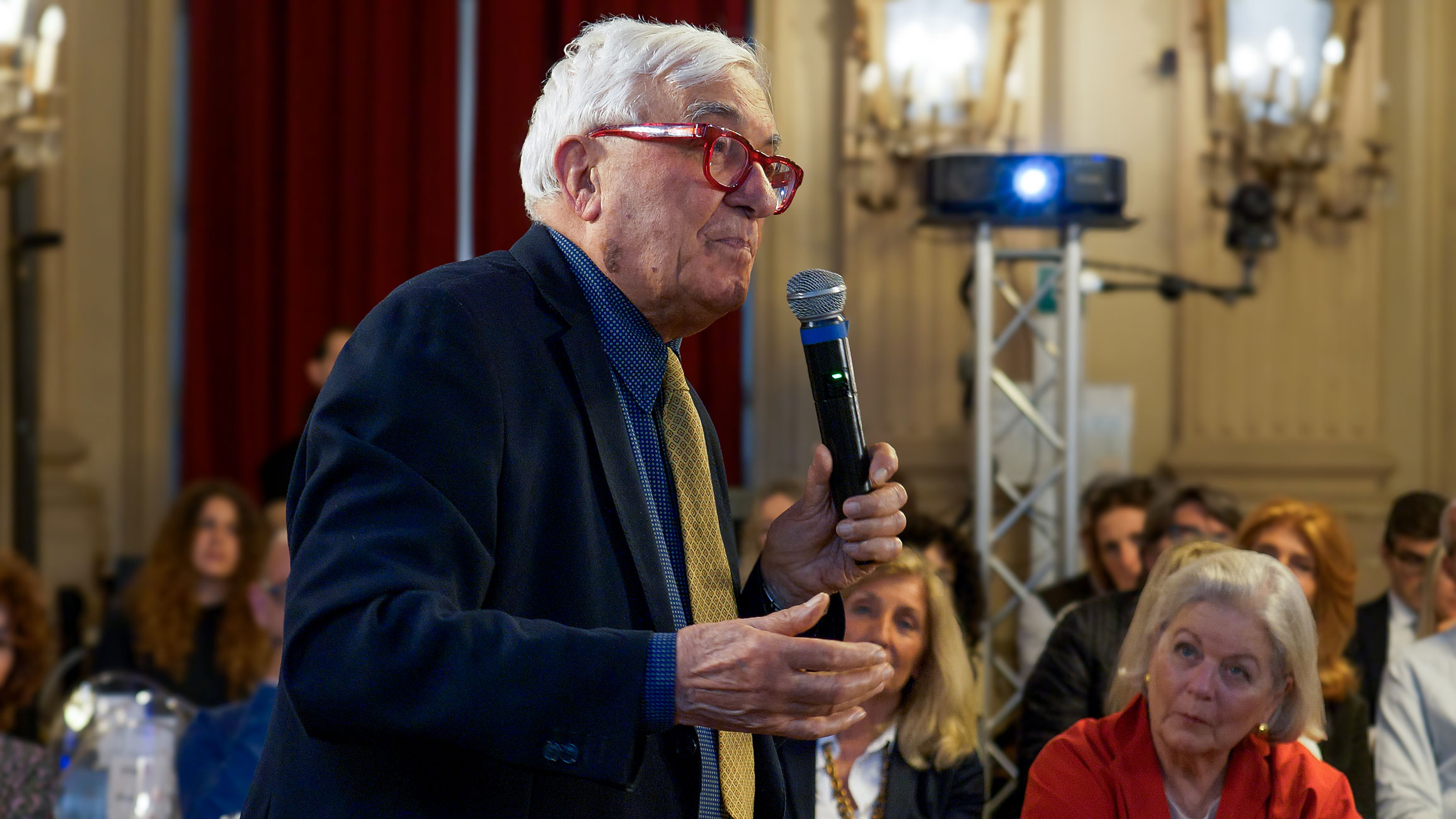
Here, as I said before there are some questions, does anybody want to ask some questions, have any curiosity, want to ask some questions? Here, thank you.
QUESTION
I had already had the pleasure and the honour of meeting Dr. Caprotti in Verona on 23 January, and as you can see, I have read the book very carefully, which I recommend to all those who have not yet done so, to read it because it is written with the rigour of a historian and with the attention of a reporter and I must say with a great deal of, how shall I say, objectivity. However, I would like to ask you a question regarding a joke you made in the closing stages of the Verona meeting, that Esselunga, and perhaps also a large part of Italian distribution, is losing shares or at any rate there is a crisis underway. I start a little further back because I don’t deal with large-scale food distribution but with the distribution of auto parts, which clearly have a longer self-life, so in this respect it’s less of a problem, but compared to that family finance model of the economic boom years – and you very accurately refer to IBEC, to Rockefeller, so also to the search at the time by these American entrepreneurs who were looking for local partners to finance the Americans to rebuild Italy, they designated the partners, they put up capital, let’s say, and then later, once the objectives had been achieved, your father managed to take over Esselunga, let’s say – but what I am interested in understanding is today. In addition to the climate problem we have a demographic problem. Italy has a median age of 48, Europe 44, India 28, China 39, and we are all quite worried about the future. In the light of this substantial change, which also has financial implications, because the era of, to quote a text by Alan Friedman when he was still the correspondent of the Financial Times, ‘everything in the family’ financial model seems to have waned. In the light of your considerable experience, how do you see the next not say 20, but the next 5 or 10 years in the world of food retail?
GIUSEPPE CAPROTTI
Exactly. So I don’t think it’s just a food distribution problem. it’s a broader problem. Let me give you an example: a great French pundit wrote recently – you can find it all on my site – that brands, the big brands, in 2023 expressed just 0.6% of their turnover with new items. This figure was five times higher four years ago; it means that the big brands, like large retailers, like ordinary people, have suffered a very strong crisis, we have not ended up in a major recession, fortunately, but the big brands before launching a product take great care, that is, they have to be much safer because otherwise it is money down the drain, in the sense that a new detergent, any new product, a new type of biscuit is likely to be a huge flop, so it is a problem that concerns everyone. Large French retailers have lost almost 2 billion in turnover in the last five years. And the problem [ comes] back to the question of quotas, it’s not so much a problem of Italian distribution, it’s a global problem because new players have entered, we spoke earlier about Amazon, there are the Chinese, we don’t talk about them but in Europe they are very strong with the Internet, Temu, Shein, and then there are the German or Dutch discounters in France, the most popular chain is a Dutch chain that is also in Italy, it’s called Action, that in French Action – if you want in English, whatever you want, but no one hears about it, but it’s a company that among other things doesn’t advertise, it has had such a strong success on social networks, it goes on its own, that is, people do the tam-tam about new openings, they say look go and buy in that shop there because they like the offer, they like the prices, so the market is shrinking, as you say demographics don’t favour us because the population is going down, but it’s a shrinking glass. Where Procter and Gamble, Coca-Cola, Ferrero, before launching anything they look carefully so it’s not a problem of loss of share, Italy has lost the train on the technological part that’s for sure, that’s the serious thing, it’s not a question of having lost market share it’s just a question that it has lost but it’s above all, in my opinion, a technological question. You are welcome.
QUESTION
I would like to talk about this book because it is a very extraordinary book, very special, it is a book that crosses at least three important strands, in my case a fourth because I am fortunate enough to be a good friend and acquaintance of Giuseppe, I discovered that Giuseppe is the son, who I did not know was the son, of a very dear friend who was Giorgina Venosta and we meet again with the Foundation, but let’s remove the personal aspects that in any case here there are three stories that cross. I have listened with great interest to the emphasis given to the commercial, operational, industrial components, let’s say, to the financial economy, but here there is the story of a son and a father of a family and then there is the story of an evolution, so a story of feelings and relationships and not just feelings of education, and then there is the story of a contrast that is very strong which has been spoken about a lot even publicly, but which concerns a son and an intelligent entrepreneur, open-minded and innovative against another form of another mentality of conceiving an enterprise of this size, this importance, so here is the third thing, the fact that a person who has such a complex story, so extraordinarily complex – because we are talking about characters of great stature -, is the story of a storyteller, of one who has written a book, an autobiography basically And whoever writes a book or a book has requirements of a certain type of result. There are three perspectives in reading this book: the reading of an autobiography, of a narrator and I must tell you, dear Giuseppe, very good, as a publisher I tell you, but it is the tormented story of a [Applause] son, the terrible story of a son, now I do not want to bring these things in public, but also on the level of personal, intellectual suffering, I must say [a story] not easy, therefore, as these poor words of mine perhaps [make] understand ,it is a book of a complexity and a commitment that you have rightly said has paid dearly, [ you] have also emphasised, and you yourself say so, [it is] the intersection with the history of our country and in particular of this part of Italy, so I allow myself to say these few words – which are slightly propagandistic but they are because the fourth personal factor is not involved – but I must say that the book really deserves to be read, and it is very interesting to read under these three strands. I am left with a doubt: does the problem of the relationship between the son and the father, and the problem of the innovative entrepreneur vis-à-vis an entrepreneur who holds back, have the characteristics that you mentioned, that is, a relationship of a son towards a father and of a father towards a son? It is a very complex thing. Thank you.
GIUSEPPE CAPROTTI
Umberto, thank you. I don’t know what I could clarify. Yes, very, very [complex] because then every time, apart from the children of a lesser god, unpleasant things are not spoken of, but rightly so, I think it is also so, but in short [the father-son relationship] has had a very, very strong criminal degeneration, too, very much, and that was one of the reasons, you know, it gives an explanation why I could not start writing it [the book] before 2019; it is the time, by the way, when I met Marco Brunelli who gave me the assist, let’s say. Here, I don’t know.
FRANCESCO CASOLO
Here, yes, of course, there is that gentleman – there are two gentlemen.
QUESTION
On Brunelli’s assist it would be interesting to see what it was.
GIUSEPPE CAPROTTI
Of course. My grandfather, I was saying, was in Turin for a long time, then he came back from Albiate with his wife and this happened before the Second World War. A lot of things happened during the war; one of the important facts is that the Americans tested their companies, and we return to the topics of consumer goods and distribution. Rockefeller had already invested in both agriculture and supermarkets in the 1930s and 1940s, because the Americans’ goal was to lower the price of food. His big training is in the Second World War precisely, and there’s a beautiful film you can find on my site for those who are interested, by Will who I think you all know, who are a group of young journalists who explain this, and I participated in this explanation in which you understand that the Americans counter, they want to counter the Soviet Union also with distribution.
So in 1947, immediately after the war, Rockefeller founded IBEC, which was to be his company, which would later found Esselunga 10 years later, and in 1947 my grandfather [Peppino], because a cousin of his wife[Marianne Maire] was in Truman’s office, so he had access to the Marshall Plan funds and was one of the first to access it (so: from Washington a telephone call came to Albiate…. so he gets access to the Marshall Plan and at the same time relaunches the factory, relaunches the textile business and from there the development of the family starts because he from Albiate arrives in Milan, becomes for example a member of the Clubino but it wasn’t taken for granted from Brianza, and therefore he also makes his social ascent;
and at the same time Rockefeller in ’55 contacts a former member of the spy service – this is the symbol of American counter-espionage before the CIA, OSS-Office of Strategic Services. This gentleman’s name was James Hugh Angleton, I have not put it there because it is not beautiful, I preferred to put the logo. James Hugh Angleton was the head of the American Chamber of Commerce in Italy as well as the representative of the NCR which sells crates to merchants, so he was right in the business.
His son will be the head of the CIA’s global counter-intelligence; he is represented in a film starring Matt Damon and directed by Bob De Niro, … which presumably [the NCR representation], in my opinion, is a cover but for goodness sake we will never know, the fact is that he was in counter-espionage, he was in Italy during the war, he speaks Italian quite well because he had been in Italy 7 years before the war always as head of the NCR, he was in Corso Venezia at 47, there are all the archives.
What happens: this ex-colonel of the OSS shows up at an exhibition that Brunelli is putting on, an exhibition of the Venetian 18th century of which I still have the catalogue, the promoting committee of this exhibition [includes] the Crespi family, Brunelli, my grandmother and a whole series of – So Brunelli puts together a parterre of Italians who could be the minority partners of Rockefeller, who is sounding out the Italian market to see if he should set up a business in Italy. He already had the company. He had founded it eight years earlier, and this company in the 1960s had 12,000 employees on five continents, IBEC is a very big thing, and so in 1955 he sent his man who was to be the first managing director of Esselunga, whose name was Richard Boogaart, and who came from Kansas.
And so the Americans put in 51% of the capital, all their know-how. The management at the beginning will be only American or almost exclusively, for example on the cutting of meat, the purely operational management of certain things, they are the ‘kings’, they are the ones who invented supermarkets in the ’30s in South America but also above all in America and so in ’57 [the company] is founded, the Italian partners have passed the exam of non-communism. Yes, because that is a small problem. We were in the midst of McCarthyism among other things, so there was a contrast with the Soviet Union, i.e. the witch-hunt of the famous Senator McCarthy in America, and this company was founded where for eight years the Americans took over the management, but then my father took over, while one of the brothers, Guido Caprotti, remained in the textile business, which was only closed in 2009, and the other brother took over the Florentine branch which was opened in 1961.
That’s kind of the picture. Brunelli was the turning point. he was the first president, he was also the largest shareholder. In the beginning he was the man of contacts with Nelson Rockefeller, he and the Crespi administrator called Bertolini were the two trusted men in Italy, and there was this relationship with him. I must say, to tell the truth, that the Americans didn’t even know who our family was. At the beginning there is a telegram, in the family, from Rockefeller thanking them for a dinner, sent to my uncle Guido who was the second son, who was absolutely not the leader of the family, and so to say that my father they hardly even knew who he was. Among other things, there’s an episode on page 60 where they say who is this guy, who are the two brothers and so on, i.e. the role, the myth of the birth of FMCG distribution in the hands of the Europeans is really a myth, in the sense that it’s the Americans who brought them the know-how, the capital and the men.. Yes yes, but this seemed clear enough to me, in the sense that well, 51% with an American company, the American CEO, I think he underestimates it a little bit, it’s clear, I don’t know, it seems clear to me, more clear than that…here they were Rockefeller’s advisors. If you like, instead of using McKinsey that I mentioned, they used these people; by the way, this James Hugh Angleton is in the minutes of Rockefeller’s archives, in the sense that he actually attended the meetings. Now, he had retired from the OSS by then, but let’s say that there was a certain mixture of secret service and – please!
QUESTION
I read the book with great interest and I also found some passages from my own history, because I was one of the founders of Rai Infoscan in Italy. I was very intrigued by the passage because I remember that Esselunga was already active in Italy even before there was the activation of, let’s say, the activities and so, as I continued reading, I found many insights and I wanted to ask you: those early years of the 90s in which you had a wonderful experience in Chicago, I think, and directly in the United States, how did you get the idea to bring this innovation of data, basically of market analysis, in advance? Thank you.
GIUSEPPE CAPROTTI
So, there, you’ve brought me back many years, thank you [Music]. As I was saying before, talking about the directors, we had a very strong cultural problem inside, obviously, because the staff, let’s say what could be defined as the hall or the supermarket staff, knew absolutely nothing, but neither did the head. Let’s say Purchasing: Purchasing was thinking in very coarse terms, in terms of gross margin, we had people inside who had sectors and they thought they were earning a lot of money or making the company earn a lot of money, in reality it wasn’t like that, and so I just saw what was happening in Chicago and I said this is one of the projects that I have to bring to my company, that is to go to the stage of widespread knowledge in the company. So we implemented with a group of young people the famous industrial accounting throughout the company. It took me 10 years to do this work, it was bloody hard work, and it was also supported by companies such as Iri because they gave us an important market vision on all categories in all sectors, especially FMCG. On fresh food, of course, it was much more complicated. As Umberto says, the book is very wide-ranging, perhaps – indeed certainly – I take things for granted because having given 20 presentations, you will understand me, I don’t even know what the previous one said any more, so sometimes I take things for granted. Through these methods, which I won’t go into here because it would be boring, we have arrived at a net result for each product, which means the profitability of each product – water loses a lot of money, batteries make money, or wine makes money and pasta doesn’t, just to give some very banal examples – and where we should focus our efforts, where we are not strong enough to strengthen ourselves commercially. I don’t know if I answered..
QUESTION
Then it’s my turn. The American supermarkets have ruined nutrition in the United States [perhaps the producers started it?], this is unfortunately a fact, favouring exactly this approach instead of the Italian approach, I hope eternal, of looking for good food even fresh, raw materials instead of secondary ones. They have focused on making ultra-high-processed food, which now turns out to be highly poisonous. The results can be seen when Americans get off a bus, they weigh 2 tons because they eat this crap, but I must say that I see in Italian supermarkets an encroachment – encroachment – with the arrival of more industrial food, and advertising for snacks, all this crap. So my question is this: in your opinion, will you Italians be the exception to this rule and will you fight against it, despite the need also to have supermarkets, or will the rules of economics, of – as they say – the decline to the lowest impose themselves? Here is my question.
GIUSEPPE CAPROTTI
So, we have been talking fornewspapers about advertising promo budgets, aboutthe industry that commands even in the editorial offices of newspapers, because that is how it is, because the news is not given or it is given – I give an example. Just the other day, the day before yesterday, Saturday I think, there was a huge page in the ‘Corriere della Sera’ about McDonald’s. Now, since I wasn’t born yesterday, it’s obvious that this comes from a promotional budget, i.e. I give you a lot of money and you make me a big page in which you say that McDonald’s uses Italian products, uses PDO products, uses PGI products – for those who know what they are, because then you go and look up what they are! – but still try to say that it sells quality Italian food. McDonald’s! There, so the logic is unfortunately a bit like that. We are talking about the editorial part, but in distribution I did, among many things I did, a very heavy fight against Coca-cola, but very strong. How does Coca-cola regulate work with distributors? With promotional budgets. But it’s not just Coca-Cola, every distribution company has at least a 15% promotional contribution on their turnover, I bill a billion I get 150 million a year to do promotions.
All those shelves you find at Christmas taken from a certain supplier in Piedmont to sell Mon Cheri rather than Rocher or whatever are bought at the beginning of the year. This is the system that is used, by the way, it was invented in France, but who cares, it’s something from the 80s, but it’s a phenomenon that has been growing and therefore these big companies have a very strong weight, they condition the shelves a lot, I understand, I hope it’s clear it’s like that for everyone, Barilla, Unilever..
LAMBERTO [VALLARINO GANCIA]
Let me ask you two questions.
But this heritage of extraordinary experience that you have, I have also experienced it with you personally, because you really turned large-scale distribution around when you took over the company. Do you continue to give this heritage in some way in your sector or have you really closed a chapter, and why? You still have a lot to give if you represent one of those entrepreneurs who can really turn things around, and also improve the quality of life that we are all living today, because sustainable products, all the work that you have done also on the profitability of products, is important because then the company has to stand up and has to give work, and this is my first question. The second one: coming from a family business, having had similar and different experiences, in my opinion this book is a useful one – you did 20 presentations! -it is very useful for other entrepreneurs who are either going through the generational transition or who have these hot topics in the family, or who have, as you are doing, also reinvented themselves a bit with new businesses that are social but also positive, which is also our mission as entrepreneurs, which is to never give up and always try to do good for others, for the company and for the people around you. Thank you.
GIUSEPPE CAPROTTI
Well, I obviously have some ideas on projects that interest me, but I can’t talk about them yet. I have two in mind, and among other things they are somewhat related to information, so perhaps they will be useful over time to counter this deterioration in the quality of food that I see, because that’s what I feel. Here, then in distribution maybe it won’t be on the side, it will be something different.
Maybe I now have the mind of the writer rather than the critic and the actual distributor, also because it costs so much to be a distributor and honestly the market is a bit saturated.
On the other hand, what concerns the third sector is definitely there – perhaps I answered a little bit earlier – because I honestly think I’m getting more and more into this, I must be honest, at one point I considered it diminutive, but I discovered my grandfather [Guido Venosta] and this journey was important because beyond the book, I used one of the important words, entrepreneur and manager when I spoke of my maternal grandfather, and this completes the picture, social enterprise completes the economic picture, that is, it was a bit of an answer I gave to that gentleman earlier; well, maybe there is a real need since the funds have also been lowered so much especially for youth distress.
Because we’re talking about people who have problems with anorexia, who have problems with suicide, that’s what we’re talking about, we’re not talking about, spoilt young people who scratch their bellies, there will be some, but we deal with those who are taken care of by their parents or teachers, if they can. That’s why that’s another problem, by the way, the one that was found from the first approach to the territory of this project that really started a short time ago, what I was talking about before is that the teachers have a great need of support even more perhaps than the parents because they find themselves hours, hours and hours with these children who really have very strong problems, and then we take into account, as I said before, that 80% do not speak the same languages, there is Ukrainian with Russian and Arabic, and the various Arab ethnic groups do not speak each other, Chinese, that is, there is really everything and more. That’s it, so I don’t know I didn’t answer, if I didn’t answer take it back.
FRANCESCO CASOLO
I would say that we started by talking about father and son relationships that are perhaps coming to an end, we talked about the origins of this great company, this great story, and how, you see we find ourselves two hours later talking about the present and the future. I think this is confirmation of what has been said in the last two hours, that this book, this story raises a lot of issues. It raises a lot of interesting aspects to read and decipher reality. So I repeat the invitation to read it, and thank you for your attention and patience and all that.
Watch the full video of the presentation:
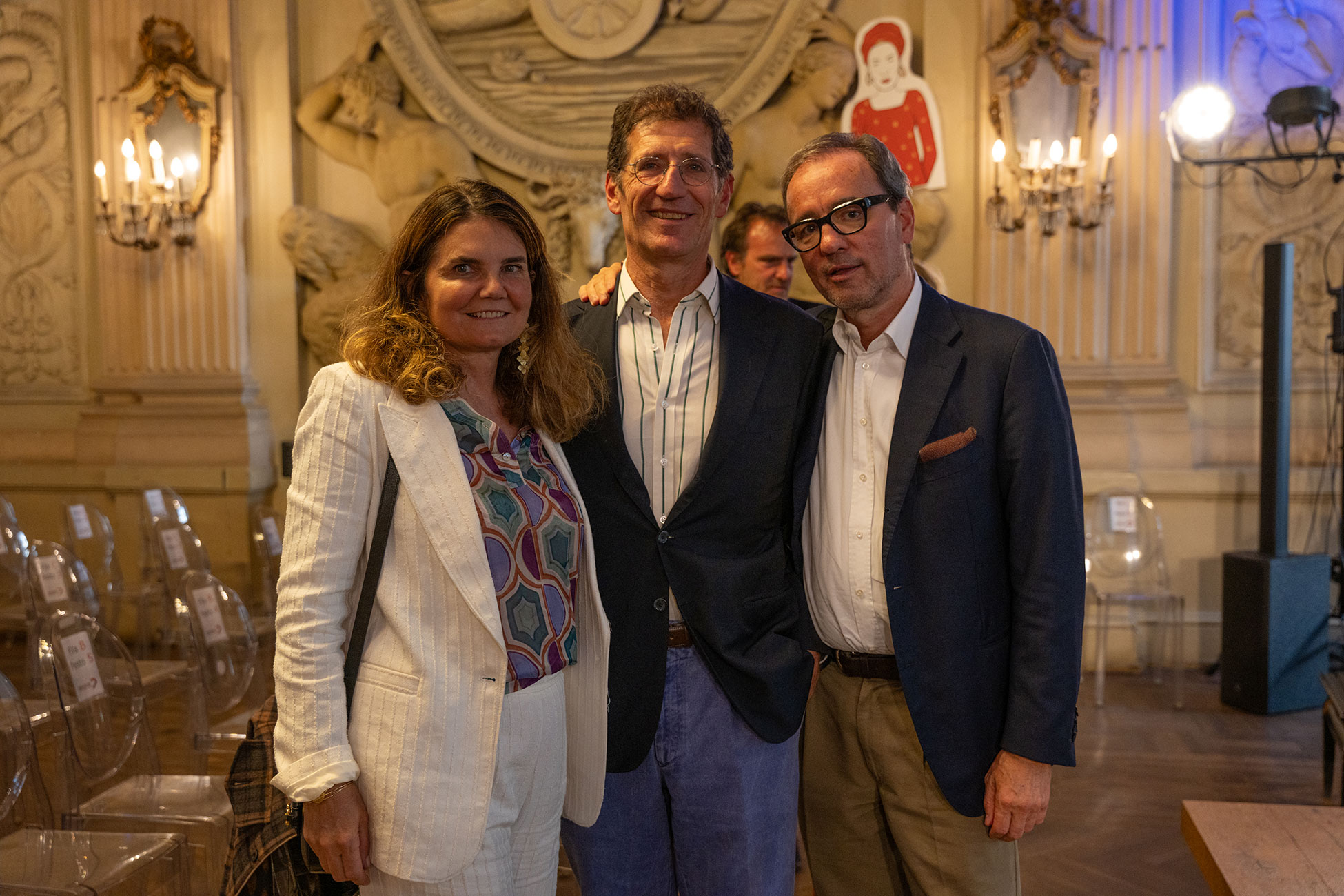
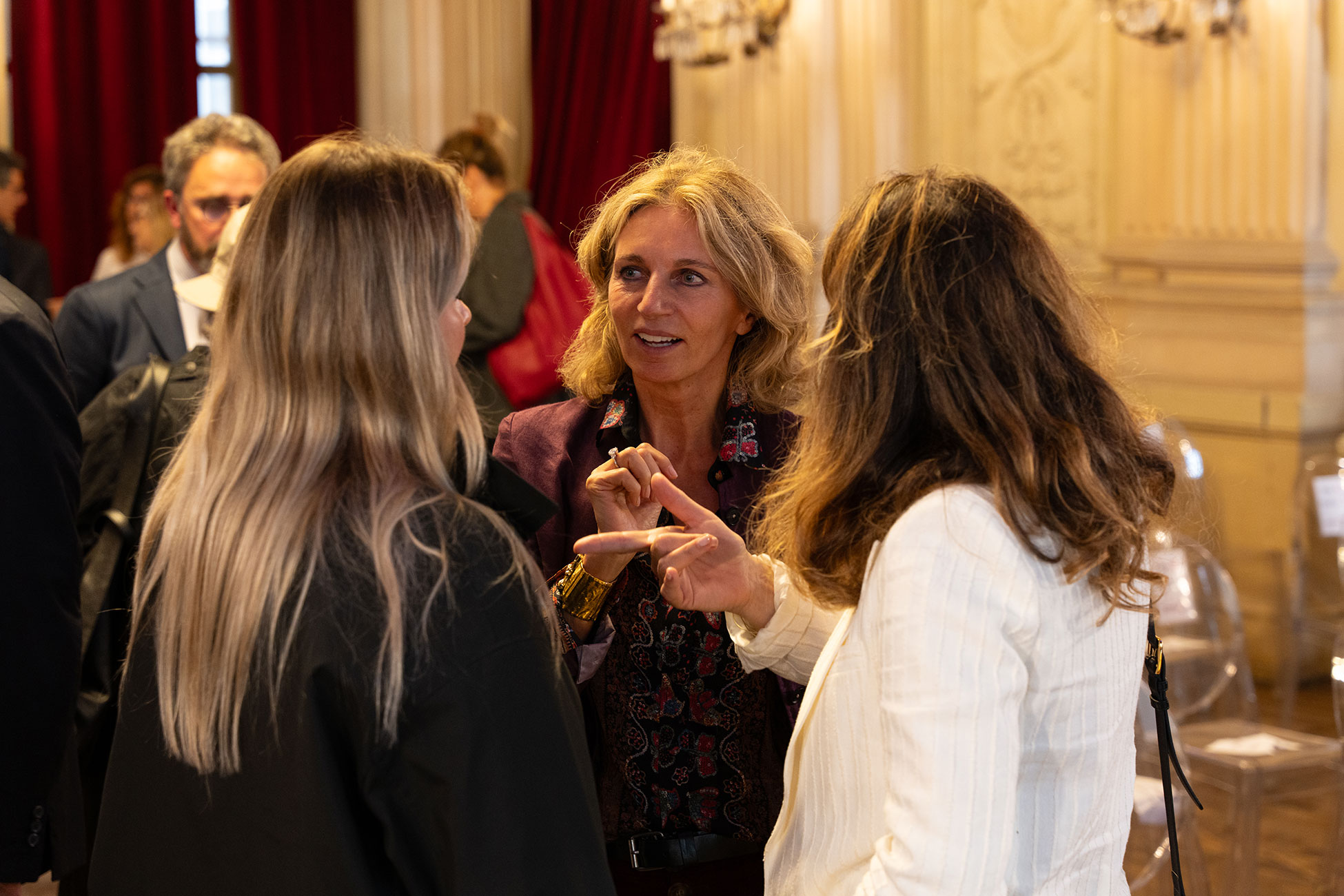
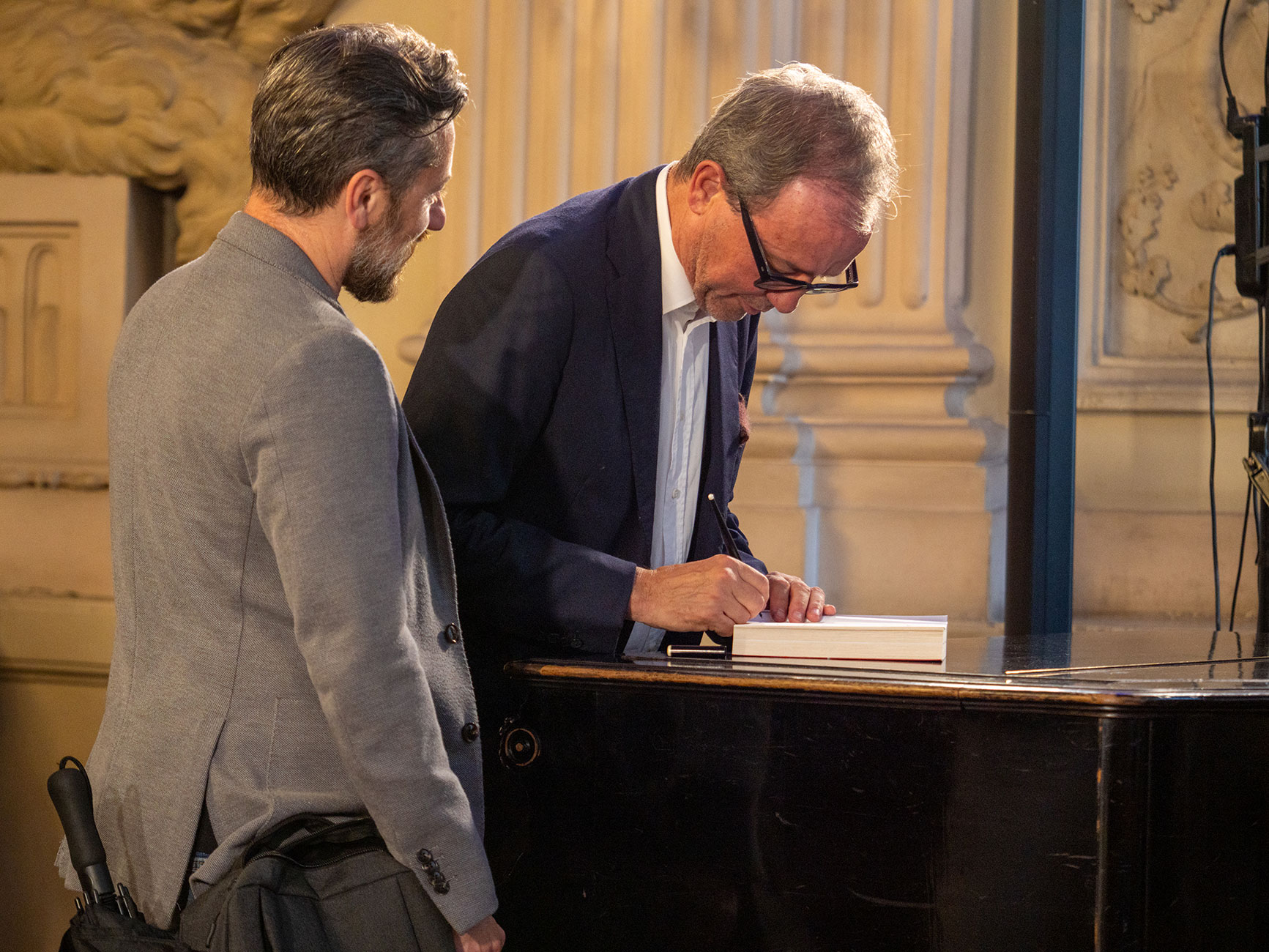
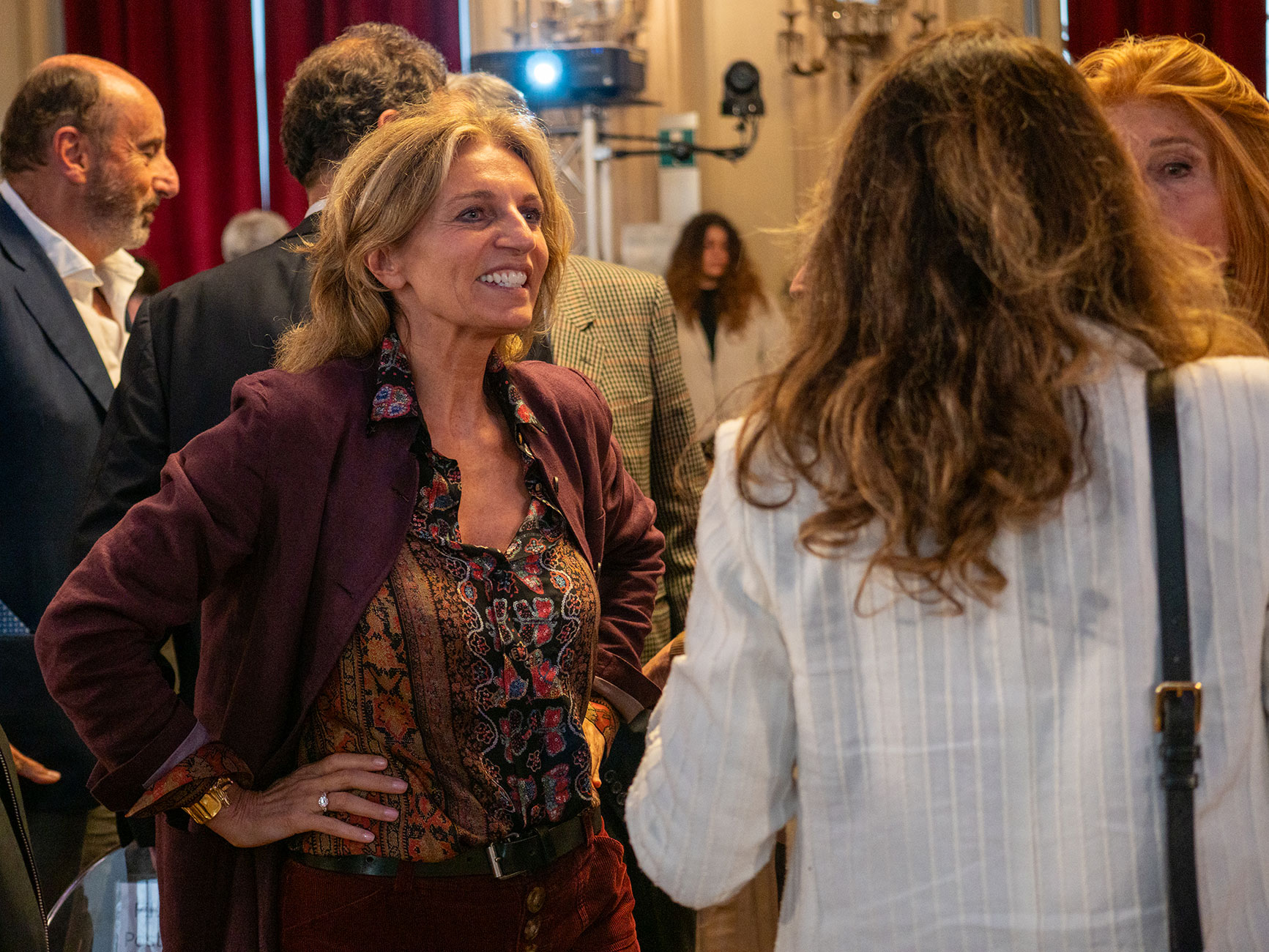
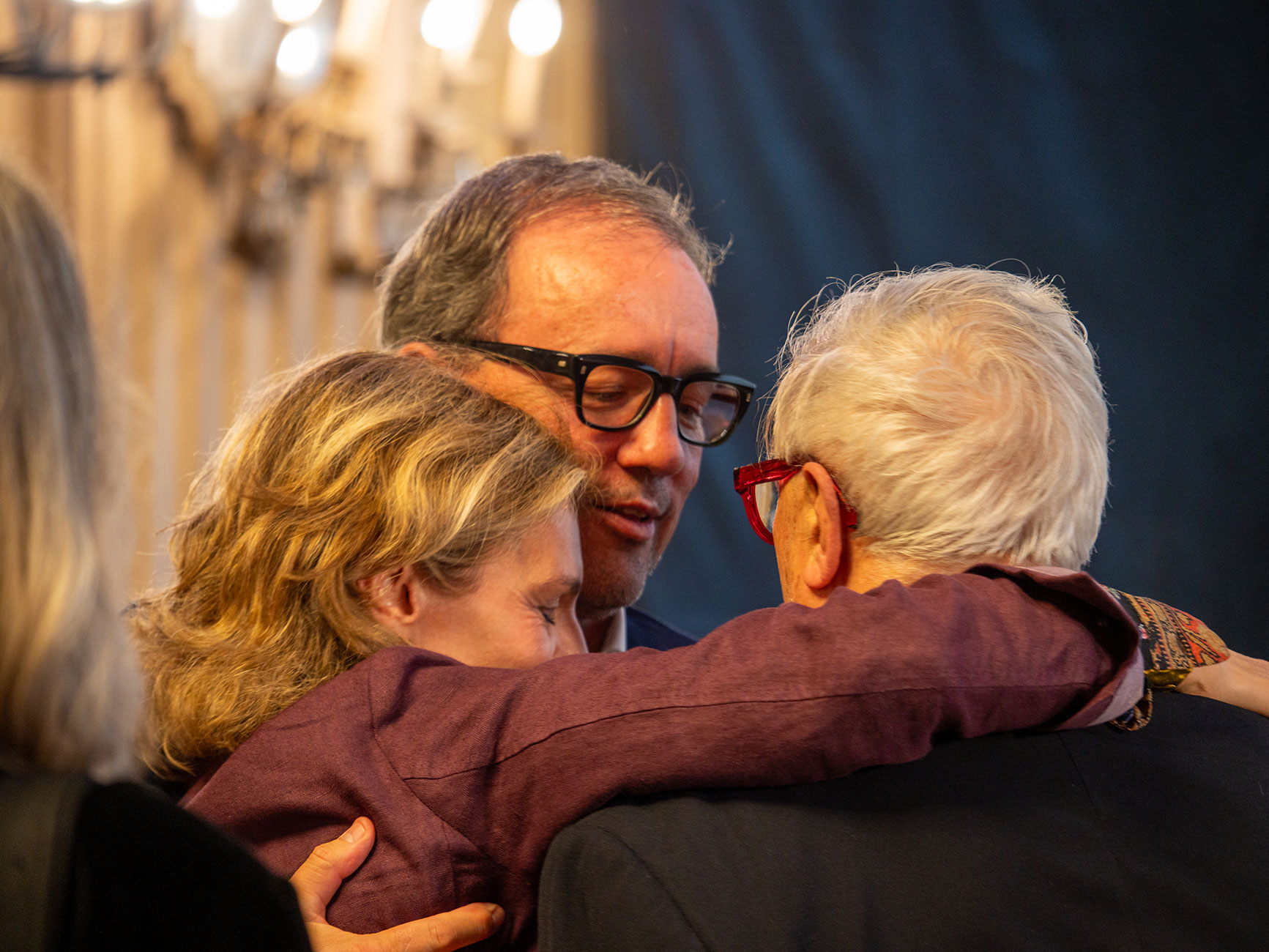
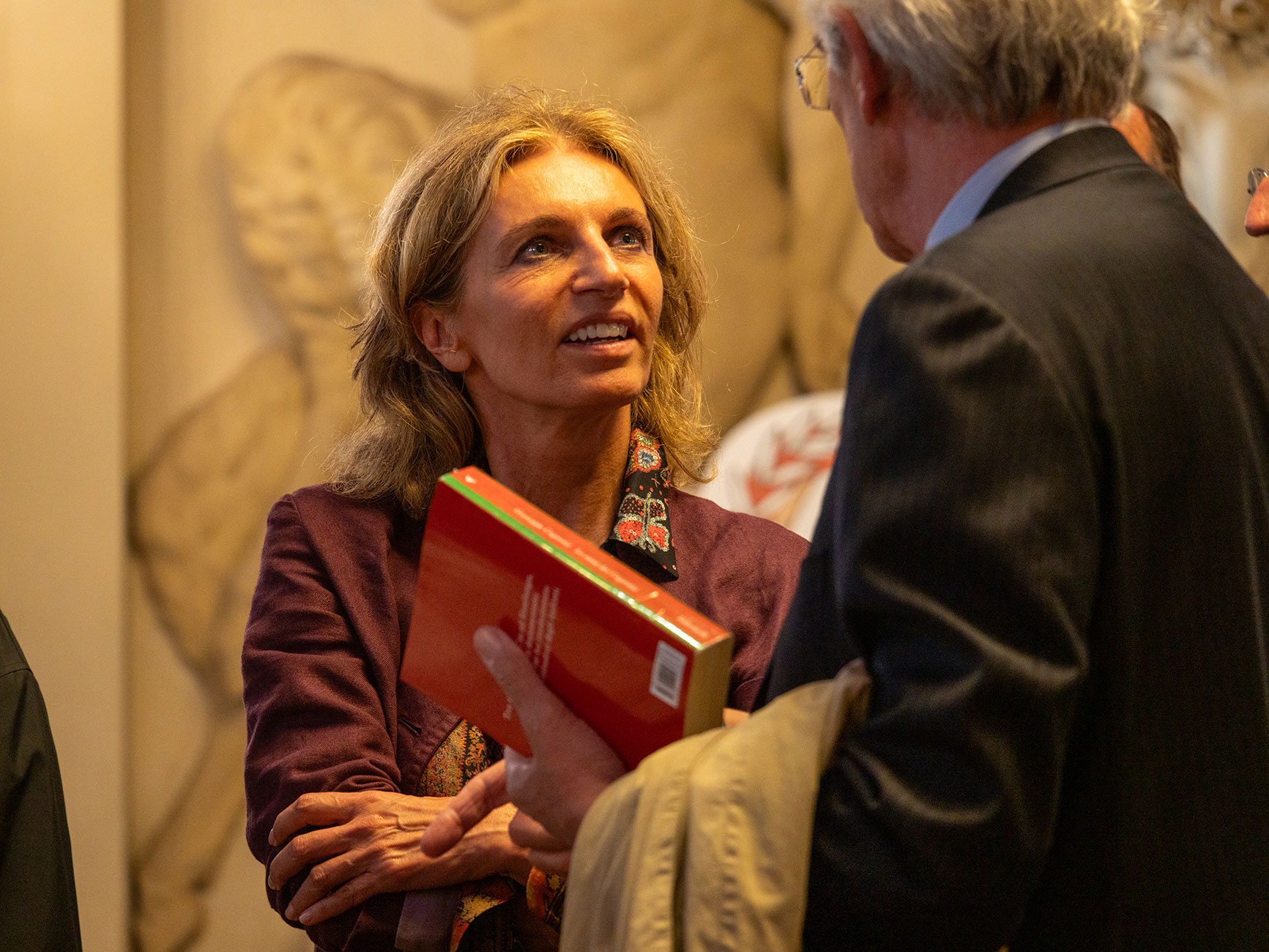
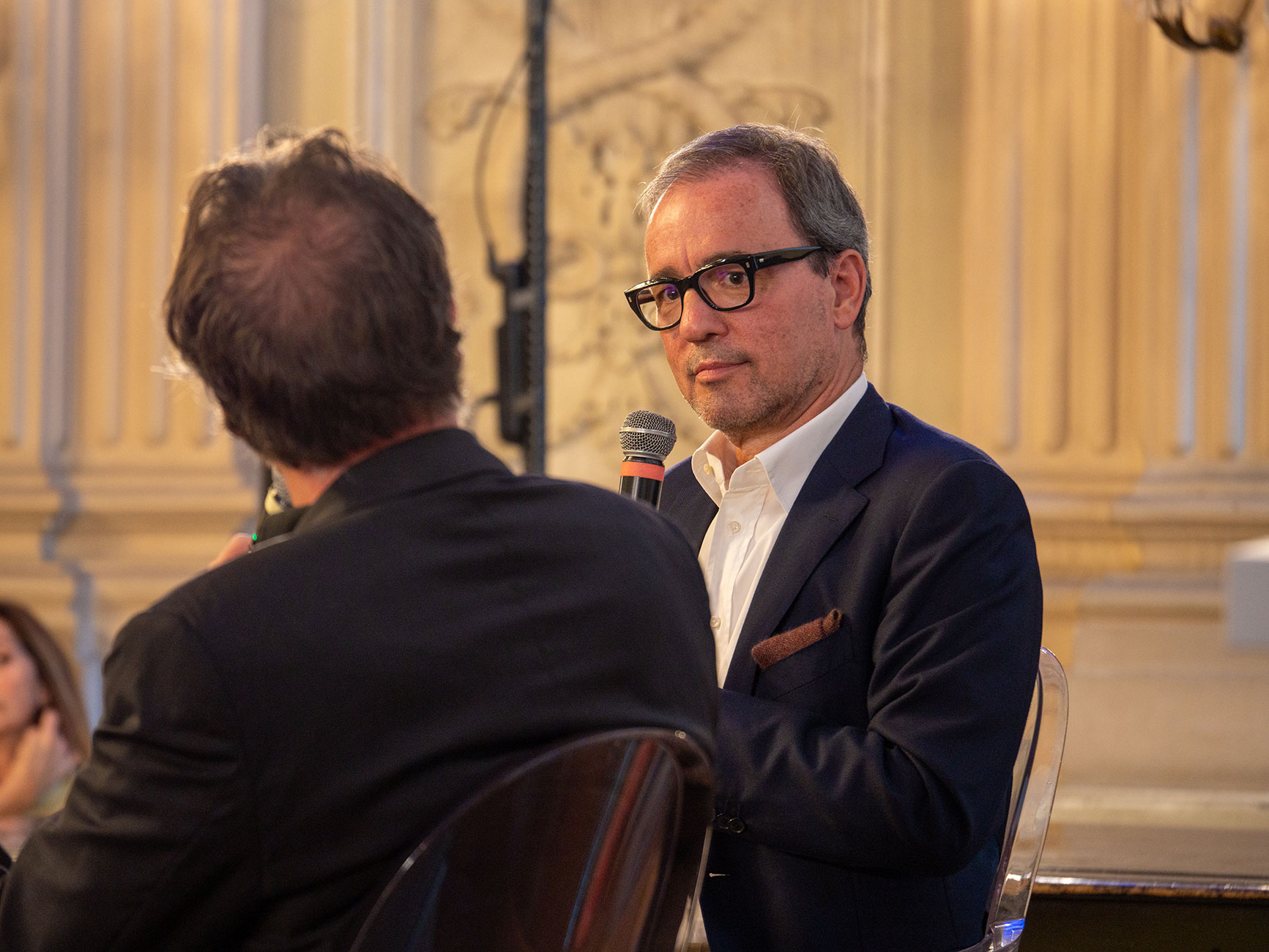
See photos from the evening:
Watch the reels:


